Nected vs DecisionRules

DecisionRules Stalls at Integrations. Nected Connects in Minutes.

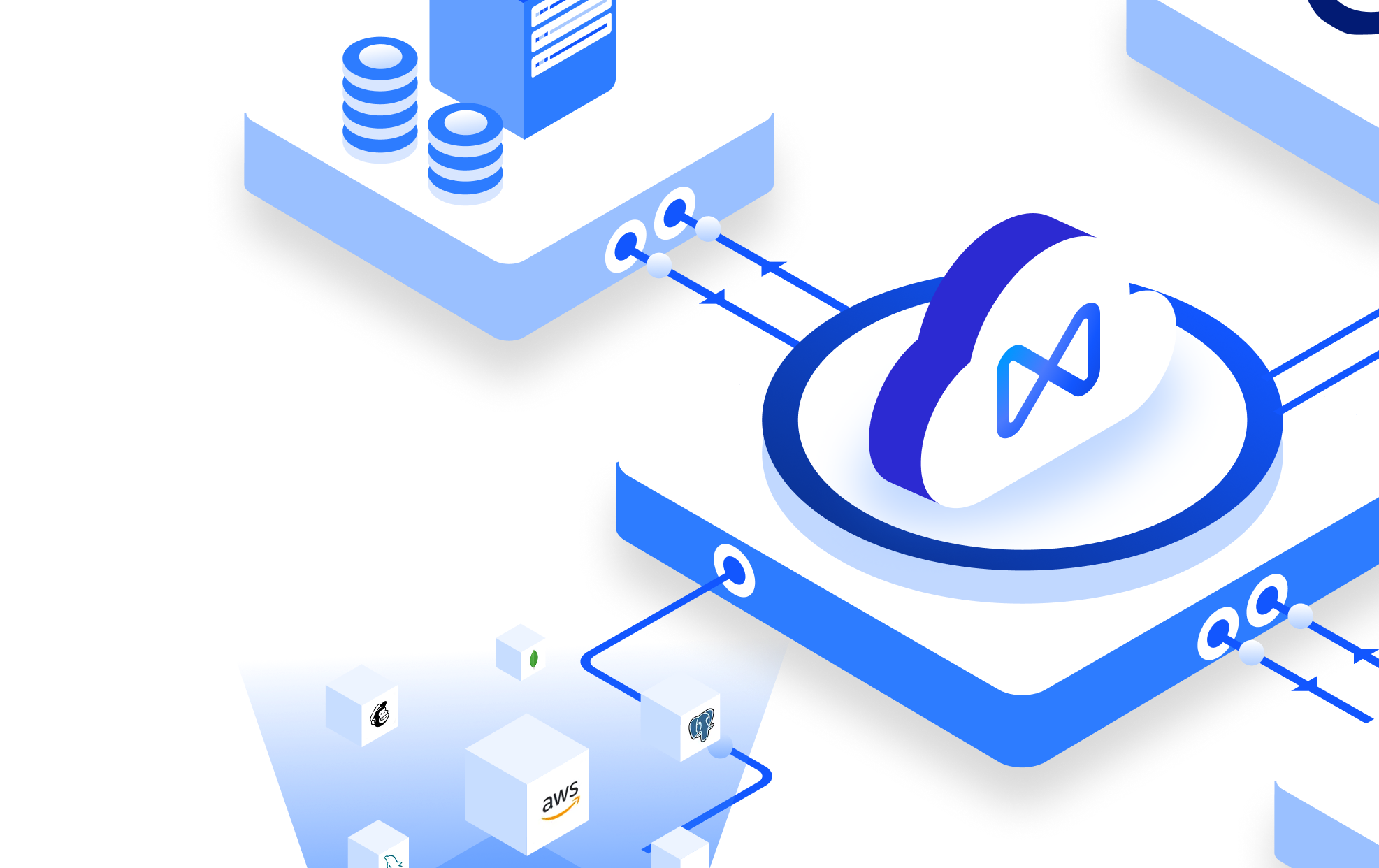
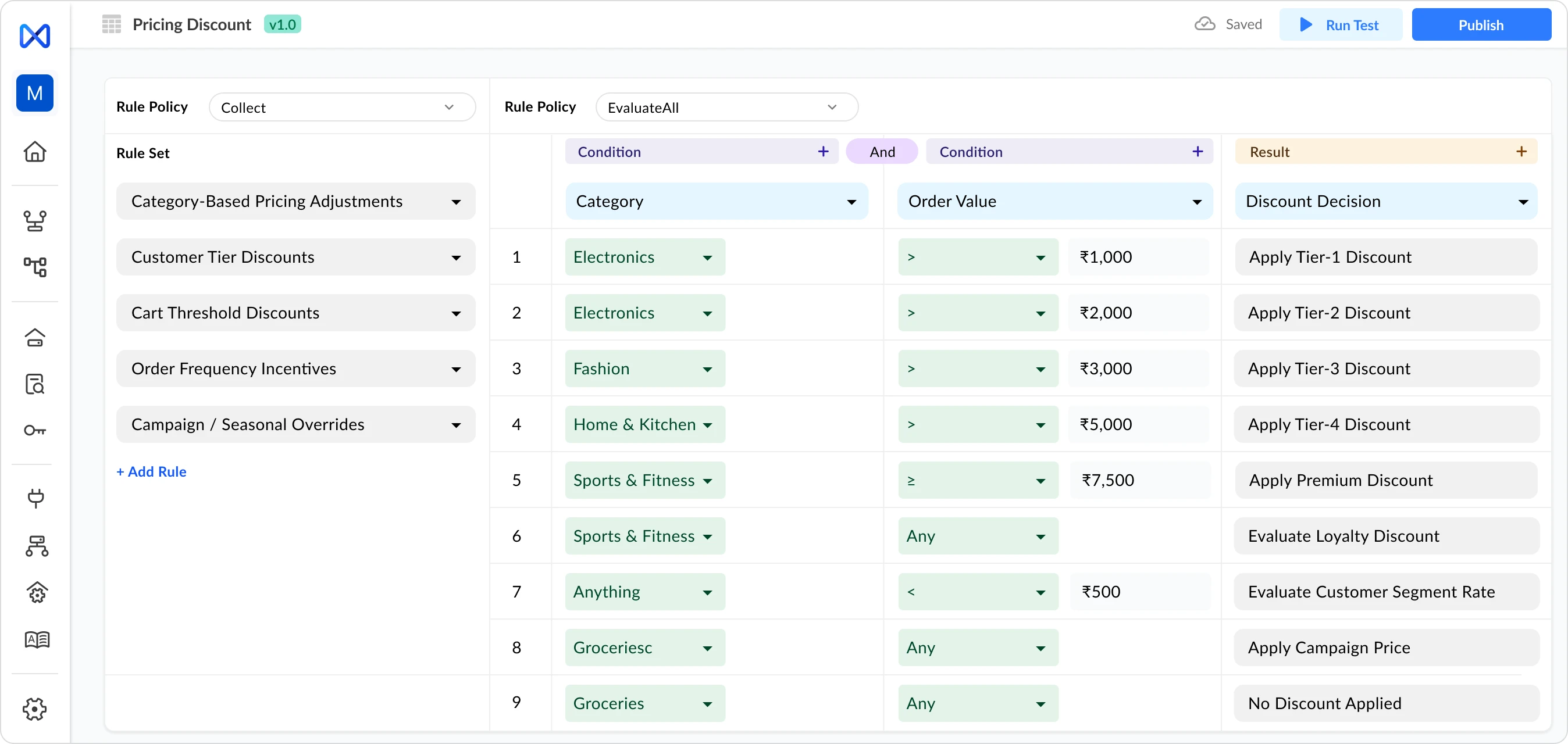
DecisionRules is good at decisioning, but plugging live data into those tables—or piping results back to your apps—means custom code and middleware. Nected changes that with ready-made connectors, real-time APIs, and event webhooks that let teams integrate databases, CRMs, and payment gateways in just a few clicks, then iterate safely with built-in versioning.

  • Real-Time Assessment using API Connector
  • Customize Scoring Rules in No-code/low-code
  • Automated Decision-making via CRON
  • Built Complex Scoring Models in Minutes
  • Integration with Third Party Systems
  • Iterate Conditions Instantly
Used by teams across 500+ companies globally

DecisionRules Looks Lightweight—Until Your Use Case Isn’t

What feels simple in a sandbox can turn restrictive once real traffic and complex logic arrive. As use cases grow, DecisionRules introduces hard limits, hidden costs, and performance gaps—forcing teams to rethink the tool right when they need it most.

Data Security & Compliance
It is not SOC2 Type 2 or ISO compliant, which may impact security and regulatory requirements.
Workflow Fragmentation
DecisionRules limits each rule-flow to 30 nodes on-prem and 150 in the cloud, constraining how far you can decompose logic before hitting a wall. :contentReference[oaicite:0]{index=0}
Scaling & Maintenance Overheads
Performance hinges on the cloud setup; users report higher latency when complex tables run at scale—especially across regions. For real-time SLAs, extra provisioning becomes the workaround. Not ideal for batch processing workloads.
Low-Code Limitations for Complex Logic
DecisionRules shines for plain decision tables, but conditional branches, loops, or data transforms still need JSON scripting or external services—adding complexity for business users.
Schedule a Call for Your POC

Users Share Issues with DecisionRules and
Look for Alternatives

Aditya S.

Management Team Member

★★★★★
“Steep Ramp-Up & Slow at Scale”
“The learning curve surprised us, and the platform slows down when lots of rules run. Pricing also feels stiff for small teams.”
Amit Kumar B.

Product Data Manager

★★★★
“Bulk Edits & External Calls Hit Limits”
“Duplicating large rule sets is tedious, and the input/output cap on external API calls makes some features unusable.”
Riya D.

Senior Content Writer

★★★★
“UI & Docs Need Work”
“Great scalability, but the UI could be smoother and documentation has gaps that slow onboarding.”
Pratik M.

Senior Engineer

★★★★
“Not Yet No-Code for Everyone”
“Still difficult for non-technical people; lots of warnings pop up while editing decision tables.”

Built for Teams, Not Just Engineers

Unlike IBM ODM, Nected gives both developers and business users the tools to create, manage, and scale decision logic—without writing full applications or relying on DevOps.

Full Control & Flexibility
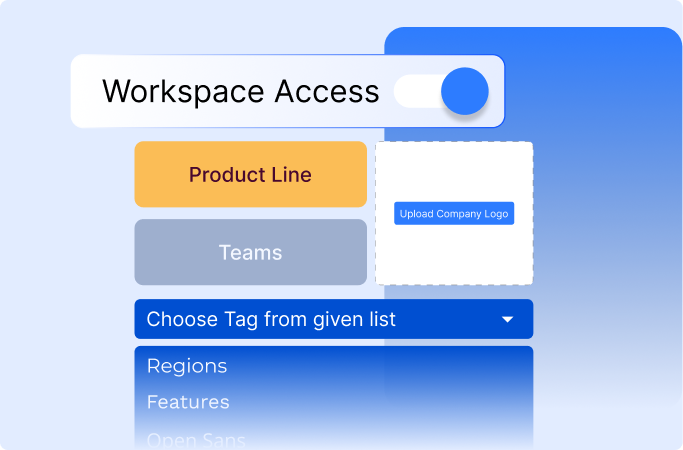
Nected provides developer-level control through a low-code/no-code interface—allowing both technical and non-technical teams to define and manage rules easily.
Cost Savings with Open-Source Tools
Open-source tools seem affordable but increase long-term maintenance effort. Nected delivers predictable pricing and reduced overhead.
Rapid Deployment
Pre-built integrations and a clean UI allow Nected to go live in days, not months—avoiding delays common with in-house builds.
Business-Friendly Interface
In-house UIs can slow down business teams. Nected’s intuitive, no-code dashboard puts rule control directly in their hands.
Built-In Experimentation & Testing
A/B testing in custom builds is difficult to implement. Nected has native experimentation tools—enabling logic testing without added effort.
Comprehensive Governance & Compliance
Audit trails, version control, rollback, and certifications are built in—ensuring governance and compliance from day one.

COMPARE

Capabilities Nected Delivers That Other Solutions Don’t

Feature
Rule Ownership
Change Velocity
Implementation Time
AI-Native Decisioning
Workflow & Automation
TCO (Annual)
Scalability / Performance
Security & Governance
Cloud-Native Language-Agnostic
No-code, Low-code UI
Deployment Options
24x7 Support
Migration
Nected
Owned by engineers, support & business
Minutes to hours
2-3 Days
Built-in
Built-in workflow and automation
$40K-$95K/year (80%+ savings)
Optimized for rule evaluation with auto-scaling options (3x faster P95 latency)
Built-in security and governance
Significant infrastructure work
No-code UI with Low-code,Full-code options
AWS Marketplace, Helm, Terraform for Self hosting along with SaaS
Support Plan available with Expert Consulting as well as Development Support
Automated DRL conversion + parallel run support
Hard Coded/Open Source
Owned by engineers
Weeks
Months
No / Manual / Limited
Need to use another workflow automation
$200K-$1M/year
Depends on code complexity. To be Fine-tuned by Engineers
Custom development required (5+ months)
No / Manual / Limited
Only Full Code
Custom Deployment, CI/CD (2+ months)
N/A
N/A

DecisionRules Costs Rise as Your Workloads Grow

Before dedicating budget or developer time, look closely at how plan limits on API calls, environments, and rule versions can increase total cost as usage scales.

Year 1 Year 2 Year 3 Year 4 Year 5

ROI Comparison

Total Cost of Ownership

$132,000
cumulative
$43K–$130K license + support / year
In-house
(Drools / Open source)
$588,000
cumulative
Drools (open-source). $0–$80K support; middleware & DB $60K–$180K/yr
$90,000
cumulative
$50K–$100K license + support; middleware & infra included
License + Support per year $43K–$130K $0–$80K $50K–$100K
Middleware & Databases $0 $60K–$180K $0 (included)
Infra per year (100 tps; 1000 tps scale) $50K–$75K $85K–$105K $25K–$35K
Implementation (one-time) $35K–$60K $80K–$200K $15K–$36K
Implementation Time 1–2 days – weeks 3–9 months 1–2 days – weeks
Upgrades per year $4K–$15K $15K–$60K $0
Training & Onboarding $0 $48K–$144K $0
Ops & Admin per year $0–$60K $100K–$200K $0–$36K
Change Mgmt & Deployments per year $0–$60K $100K–$200K $0–$36K
Enterprise-grade (audit, RBAC, versioning, multi-tenancy) Built in $50K–$150K custom Built in
Time to Enterprise-grade features Built in 6–12 months Built in
Tech Debt (ongoing) N/A $50K–$180K N/A

Don’t take our word for it—hear it from teams who’ve switched

Ayan S.

Chief Product Officer

★★★★★
“80 % Faster Iteration”
“Nected’s modular rule engine let us launch incentive-payout changes in real time. We saved weeks of dev effort and cut rollout timelines by 80 %.”
Greg R.

Software Engineer

★★★★★
“Fast Development & Zero DevOps”
“We moved pricing and routing rules from code to Nected. URLs for staging and prod are auto-provisioned—no DevOps work, just focus on logic.”
Rakshit P.

Team Manager

★★★★
“Workflows in Minutes”
“The no-code UI let new hires build Oracle-to-Sheets workflows on day one. Manual data pushes that took hours now run automatically.”
Storm W.

Freight Broker

★★★★★
“Seamless Database & API Connections”
“Nected’s interface is refreshingly simple. We plug in multiple databases and APIs, get real-time updates, and keep workflows compliant—no code required.”

Build your first Decision Flow within 15 Minutes

Getting started with Nected’s Decision engine is simple and efficient. Follow the video to create and deploy your Decision flow within minutes.

Try #1 DecisionRules alternative, Try Nected now
Switch Now

FAQs

What is the best alternative to DecisionRules?

+

Nected stands out as the best alternative to DecisionRules. It offers a user-friendly, low-code/no-code platform for rule management, significantly reducing the complexity and overhead associated with traditional rule engines. Nected also provides robust customer support and a scalable infrastructure at competitive pricing.

Which rule engine is better for startups and small businesses?

+

For startups and small businesses, Nected is the ideal choice. It simplifies rule implementation and management without the need for extensive coding expertise, making it accessible for teams of all technical levels. This ease of use, combined with cost-effectiveness, makes Nected a powerful tool for businesses looking to automate their processes efficiently.

Are there free alternatives to DecisionRules?

+

Yes, there are several free rule engines available, but they often come with limitations in features, scalability, and support. Nected, while not free, offers a value-rich plan that includes comprehensive features, scalability, and dedicated support, making it a worthwhile investment for businesses seeking a powerful and efficient rule engine solution.

How does Nected compare to DecisionRules?

+

Nected offers a more accessible and user-friendly approach to rule management compared to DecisionRules. While both platforms provide low-code/no-code environments, Nected excels in several areas such as faster rule execution, higher number of supported users, and more comprehensive support options. Additionally, Nected includes features such as real-time analytics, scalability, and robust integration capabilities, all supported by reliable customer service. This combination of features, ease of use, and support makes Nected a superior choice for businesses and developers alike.

What do you mean by invocations? And how is it better than other products?

Invocations refer to the number of times your workflows/rule is triggered via API, cron or other trigger. It will count the parent rule/workflow and can have as many rules, nodes within it. This metric is often used for billing purposes. Compared to other products, invocations as a billing metric can be more cost-effective and transparent, aligning closely with your actual usage and needs. It ensures you pay for the value you receive, rather than flat rates or less relevant metrics.

What if I exceed my plan quota?

If you exceed, you'll be charged based on additional usage and will be added in your monthly charge. In case of payment failure after grace period, your plan will be reverted to free trial limiting your monthly execution and # of rules/flows as per free plan, however all your existing rules/workflow data would be kept intact.

What if I decide to cancel? Can I cancel anytime?

Firstly, we do not have a vendor lock-in, so you can cancel anytime you want. However, if you decide to cancel once your subscription for a given period has started then you would be able to cancel at the time of the next billing cycle only.

Can I upgrade my plan in between?

Yes, you can typically upgrade your Nected plan at any point during your billing cycle. The upgrade process is usually straightforward, often involving just a few clicks in your account settings. Upgrading mid-cycle may involve prorated charges for the higher-tier service.

Which plan should I go for?

The best plan depends on your specific needs, such as the expected number of invocations, the complexity of your workflows, and the level of support you require. It’s a good idea to start with a basic plan and upgrade as your needs evolve, especially if you're new to Nected. Moreover, you can also write to us at assist@nected.ai and we will help you figure out the best plan for your brand.

Would I be getting assistance in setting up Nected or building my POC?

Yes, Nected usually offers assistance in setting up and creating a Proof of Concept (POC), especially under certain plans. This assistance can include access to customer support, documentation, and possibly dedicated account management.

What level of support does the Startup and Growth plan have?

The Startup and Growth plans typically provide basic to enhanced support, including access to customer service through email or chat, a knowledge base, and possibly community forums. Response times and the extent of personalized assistance may vary between these plans.

What level of support does on-premise plan have?

The on-premise plan generally offers the most comprehensive support, including dedicated account managers, 24/7 support, and tailored assistance for deployment, maintenance, and troubleshooting. This plan is best suited for businesses with extensive, mission-critical use of Nected.

Users Share Issues with Camunda and
Look for Alternatives

Adam J.

Project Manager

★★★★
“Limited Collaboration for Non-Technical Teams”
“Camunda’s complexity makes it difficult for non-technical team members to participate in rule management, limiting overall project efficiency.”
Leo M.

Business Analyst

★★★★
“Slow Iterations”
“Adapting to rapidly changing business requirements is challenging with Camunda. The need for technical intervention at every step slows down the process."
William R.

IT Consultant

★★★★
Scalability Issues”
“As our project scaled, we faced significant performance issues with Camunda. Optimizing for scalability required considerable effort and resources.”
Lucy C.

Investment Banker

★★★★
“Learning Curve”
“It requires a lot of effort to learn how to use it. I don't see good integration with cloud solution. It looks not enough resource/doc on how to run on distributed systems”
Adam J.

Project Manager

★★★★
“Limited Collaboration for Non-Technical Teams”
“Camunda’s complexity makes it difficult for non-technical team members to participate in rule management, limiting overall project efficiency.”
Leo M.

Business Analyst

★★★★
“Slow Iterations”
“Adapting to rapidly changing business requirements is challenging with Camunda. The need for technical intervention at every step slows down the process."
William R.

IT Consultant

★★★★
“Scalability Issues”
“As our project scaled, we faced significant performance issues with Camunda. Optimizing for scalability required considerable effort and resources.”
Lucy C.

Investment Banker

★★★★
“Learning Curve”
“It requires a lot of effort to learn how to use it. I don't see good integration with cloud solution. It looks not enough resource/doc on how to run on distributed systems”