.svg)

.svg)


.png)
.webp)
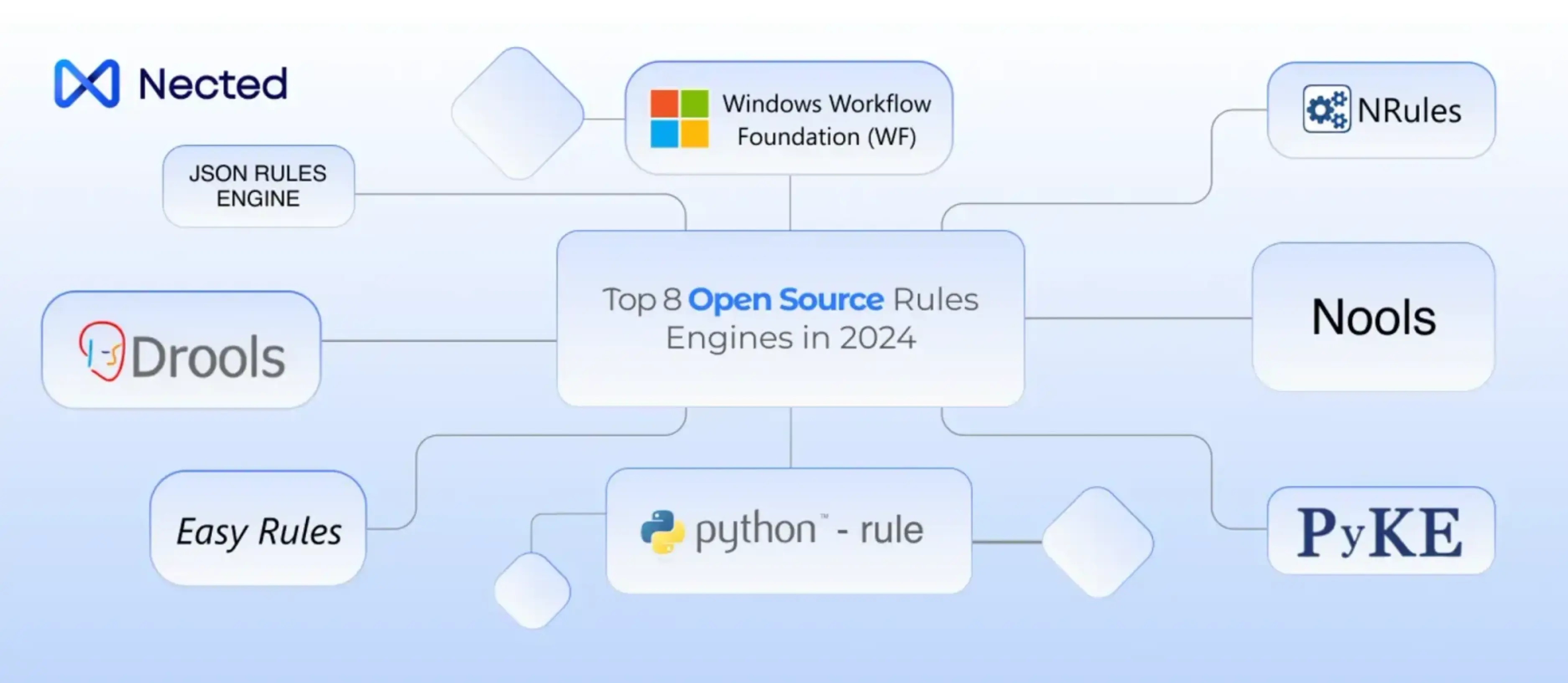
A rule engine automates decision-making processes by applying a series of predefined logic rules to data. These engines evaluate conditions and execute actions based on these evaluations, streamlining complex decision-making or computational tasks. Rule engines can be open-source, offering the source code freely for modification and distribution. Open source rule engines allow developers to inspect, modify, and enhance the engine's capabilities, contrasting with closed-source engines where the source code remains inaccessible, limiting customization and transparency.
What Is a Rule Engine?
A rule engine is software that evaluates a set of IF-THEN conditions against input data and executes the corresponding action or decision automatically. It separates business logic from application code — so rules can be changed without redeployment, without a developer, and without breaking the system.
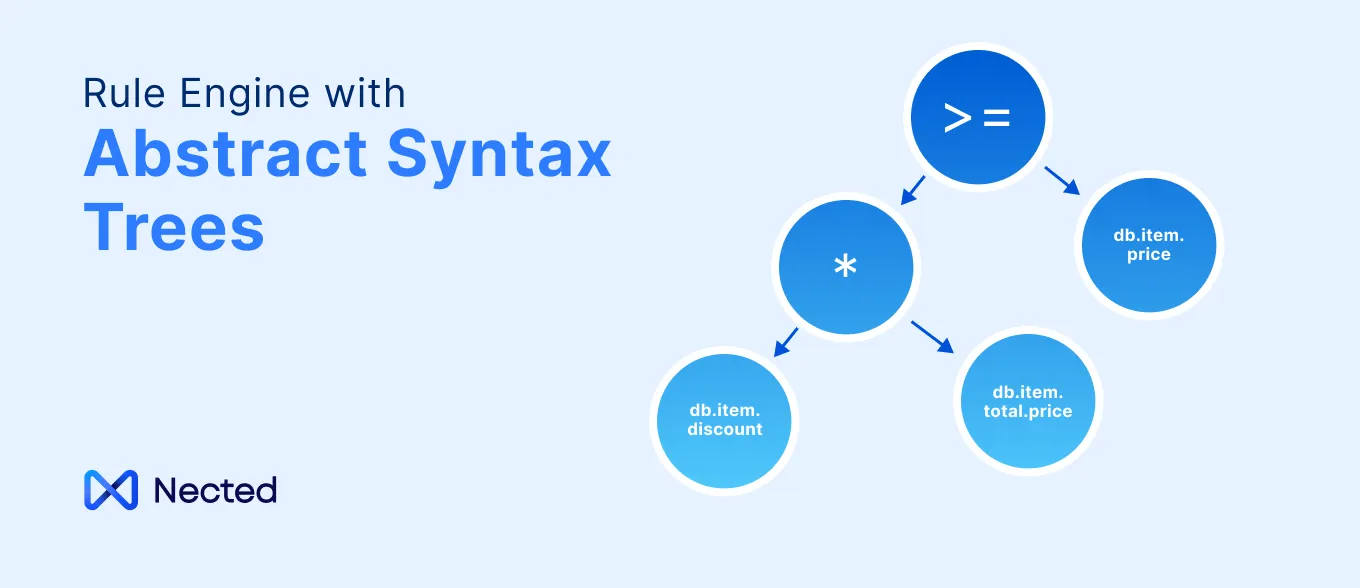
Here's the basic loop: the engine takes in data, matches it against a set of conditions, picks which rules apply, and fires the corresponding action. That's it. Match → resolve → act. Most production-grade engines implement this using the Rete algorithm — a pattern-matching method that avoids re-evaluating every rule from scratch on every run. Drools, NRules, and Nools all use Rete under the hood, which is a big part of why they hold up under load.
Why do teams actually reach for a rule engine instead of just writing if-else logic?
- Externalise decision logic — rules live outside the application code, so they can be updated, versioned, and audited independently
- Change rules without a deployment — ops teams, compliance teams, or business analysts can modify logic without touching the codebase
- Let non-developers own the logic — in a lot of organisations, the people who understand the rules aren't the people writing the code. Rule engines close that gap.
The last point is underrated. A fraud analyst who knows exactly which transaction patterns are suspicious shouldn't need to file a ticket and wait two weeks for a developer to hardcode a threshold. A rule engine lets them own that logic directly.
What Is an Open Source Rule Engine?
An open source rule engine is one where the source code is publicly available — usually under a license that permits use, modification, and redistribution. You can inspect how it works, fork it, extend it, and deploy it without paying licensing fees.
The "open source" part affects more than cost. It affects how you adopt it, who maintains it, how you handle security vulnerabilities, and what your long-term support looks like.
License types matter more than most teams realize
Not all open source licenses are the same:
- MIT — permissive, minimal restrictions, you can use it in commercial products without releasing your modifications
- Apache 2.0 — permissive, includes an explicit patent grant, widely used in enterprise open source
- LGPL — allows use as a library in proprietary applications without requiring you to open source your own code, but modifications to the library itself must be shared
- GPL — if you modify the code and distribute it, you have to release those modifications under GPL too
This matters when you're embedding a rule engine into a commercial product. Some licenses are fine. Others create legal obligations. Check before you build something substantial on top of a project.
Open source rule engine vs. proprietary rule engines
The differences come down to a few real tensions. Neither is universally better — the right call depends on your team's technical depth, your support requirements, and how central the rule engine is to your product.
Open Source isn’t for everyone:
Open source rule engines are highly relied upon by developers and engineers across the globe, usually for their perceived value in flexibility and community driven environment.
Although open-source rule engines offer transparency, control, and short-term cost advantages, they are not universally suitable for everyone because:
- Resource and Expertise Needs: Successful implementation of a robust rule-engine often requires considerable technical skills and resources.
- Support Limitations: The absence of formal support channels can introduce risks for critical applications and flows, depending on community forums and user-contributed documentation instead.
- Security and Compliance Challenges: Open-source projects necessitate proactive security and compliance management by the adopters.
- Integration Complexities: Achieving seamless integration with existing systems might demand extensive customization, potentially raising the complexity and associated costs.
- Sustainability Concerns: Relying on an engine with limited contributors or a small community might risk the project's long-term viability and support.
- Long-Term Costs: Open-Source based rule-engines can never be offloaded to non-tech, and demand constant enhancements and architectural upgrades, making it costlier in the long-run (12 months)
So basically the appropriateness of the Open-Source platforms depends on an organization's specific needs, technical expertise, and resource availability. Open-source solutions demand a thorough understanding of the technology, along with an ability to manage potential security risks and the need for possibly extensive customization.Before choosing a rule engine, consider its integration capabilities with existing systems, the complexity of rules it can handle, its performance and scalability, community support, and the licensing model. Here are a few things that you might need to consider before choosing a rule engine:
- Project Requirements: Evaluate the complexity and specific needs of your project.
- Technical Expertise: Assess your team’s capability to implement and maintain the chosen solution.
- Community and Support: Consider the size and activity level of the engine’s community.
- Security and Compliance Needs: Ensure the engine meets your security and regulatory requirements.
- Integration and Compatibility: Verify compatibility with your existing tech stack and ease of integration.
- Cost and Resource Implications: Account for potential costs related to implementation, maintenance, and required modifications.
These factors critically influence the success of rule engine implementation in automating business processes and decision-making.Now, in this blog we’ll explore various open-source rule engines, providing insights to help you select the right one for your needs.
Open Source Rule Engine Comparison: All 10 Tools at a Glance
Picking a rule engine without comparing them side by side is how teams end up migrating six months later. The table below covers the ten engines from this guide across the dimensions that actually matter for a real adoption decision — language, license, chaining support, whether business users can touch it without a developer, community health, and what each one is genuinely best at.
A few things worth noting before you read it. GitHub stars are a rough proxy for community size, not quality. "Last Active" reflects recent commit and maintenance activity — a "Limited" rating here means the project still works, but don't expect fast responses on issues or regular releases. And "No-Code Editor" means a visual interface for non-developers to define or manage rules directly, not just a UI for monitoring.
A few patterns stand out. The JavaScript engines — json-rules-engine especially — have strong community traction relative to their age. The Python options are thinner on community support and maintenance activity; if you're going Python, factor in that you'll be more on your own. GoRules is newer but actively maintained and one of the only open source options with a real no-code editor out of the box.
License-wise, most of this list is MIT or Apache 2.0, which are both commercially permissive. The exception is Windows WF (proprietary, obviously) and OpenRules, which uses a custom OSS license worth reading carefully before you build anything commercial on top of it.
If you're still narrowing down after this, the next section breaks it down by use case — which engine fits which kind of team.
Top 10 Open Source Rule engines
1. GoRules
Gorules is an efficient rule engine based on the Go programming language. Gorules is easy and quick to build business rules on, taking the simplicity and speed of Go into consideration. Gorules is ideally an engine to tackle high-velocity rule execution which can be integrated into applications easily. The simplistic approach of Gorules makes it the right technology for developers looking toward quick implementation of rule management.
import "github.com/gorules/zen-engine"

engine := zen.NewEngine()

result, err := engine.Evaluate("loan-approval.json", map[string]interface{}{
    "creditScore": 750,
    "loanAmount":  50000,
})Key Features:
- Permits business users to define and manage rules without coding.
- Offers quick, real-time rule execution.
- Very easy for developers to create and customize rules.
- Easy integration with APIs.
- Encourages cooperation among business and technical teams.
- Scalable for expansion with business needs.
- Free to use as well as customized plans available.
Pros:
- Empowers non-technical users to manage rules.
- Supports real-time decision-making.
- It integrates well with existing systems.
- Handles increasing complexity and load.
- Open-source and free of licensing fees.
- Automates and speeds up the decision-making process.
Cons:
- Support from the community is smaller than compared to other rule engines
- Works mostly for Go limiting language crossing.
- More advanced rules may require coding.
- Less resourceful compared with older engines.
GoRules vs Nected
GoRules is a developer-oriented rules engine that allows building an application using dynamic rule management but doesn't support advanced features, like knowledge-based systems. It is hence most suitable while being simpler and having coding expertise available. On the flip side, Nected provides a full-fledged solution for a rule engine with dynamic rule management capabilities. In addition to supporting a vast range of integration, it has other features of low/no-code with user-friendly interface, so a developer and non-developer can work with it.
2. Drools
Drools is an influential and widely recognized open-source business rule management system (BRMS) tailored for the Java ecosystem. It excels in the development and management of complex business rules, decision processes, and workflows. Drools distinguishes itself with its comprehensive set of features that facilitate sophisticated rule and decision management capabilities, making it an ideal choice for enterprise-level applications across various industries.
Quick start:
Maven dependency:
<dependency>
  <groupId>org.drools</groupId>
  <artifactId>drools-core</artifactId>
  <version>9.44.0.Final</version>
</dependency>
Rule file (LoanApproval.drl):
rule "Loan Approval"
when
    applicant : Applicant( creditScore > 700 )
then
    approve( applicant );
end
Java execution:
KieSession session = kieContainer.newKieSession();
session.insert(applicant);
session.fireAllRules();
Key Features:
- Advanced rule engine that supports complex rule evaluation and decision logic.
- High-performance rule execution with support for real-time and batch processing.
- Rich set of tools for rule authoring, testing, and management, including a powerful IDE.
- Supports decision tables for rule definitions, enabling non-developers to contribute to rule creation.
- Extensive documentation and a large, active community for support.
Pros:
- Offers a robust and feature-rich environment for managing complex business logic.
- Provides tools and interfaces accessible to both developers and business analysts.
- Highly scalable, capable of handling large volumes of data and complex decision processes.
- Flexible integration options with other Java-based applications and services.
- Strong community support ensures continuous improvement and extensive resources for troubleshooting.
Cons:
- Steeper learning curve due to its comprehensive feature set and capabilities.
- Integration complexity might be higher compared to lightweight rule engines.
- May require significant resources for setup and maintenance in large-scale deployments.
- The extensive feature set can be overkill for simple applications with basic rule needs.
- Rule management and deployment processes might be complex without proper governance.
Drools vs. Nected
Drools provides a powerful platform for businesses that require advanced rule and decision management capabilities, particularly those operating within the Java ecosystem. Its robust feature set and scalability make it a strong contender for complex, enterprise-level applications. However, Nected emerges as a more user-friendly and accessible solution, especially with its low/no-code platform that significantly reduces the barrier to entry for non-technical users. Nected's ease of integration, resource efficiency, and advanced user interface further highlight its advantages, offering a streamlined experience for both rule development and management. This comparison underscores Nected's appeal to a broader audience, prioritizing ease of use without sacrificing powerful rule processing capabilities.
3. Nools
Nools is a performant and user-friendly rule engine tailored for the Node.js ecosystem. It facilitates the definition and execution of complex decision-making logic in a JavaScript-like syntax, appealing to developers familiar with JavaScript and Node.js. Nools is particularly effective in scenarios that demand immediate rule evaluation and adaptive decision-making processes. It offers a versatile solution for diverse applications, from simple to moderately complex systems.
var nools = require('nools');

var flow = nools.flow("Loan Approval", function(flow) {
    flow.rule("Approve Loan", [Applicant, "a", "a.creditScore > 700"], function(facts) {
        facts.a.approved = true;
    });
});

var session = flow.getSession(new Applicant({ creditScore: 750 }));
session.match().then(function() {
    session.dispose();
});
Key Features:
- JavaScript-like syntax for intuitive rule definition.
- Immediate, real-time rule evaluation and execution.
- Support for forward chaining, enabling dynamic decision processes.
- Easy integration with existing Node.js applications.
- Designed with JavaScript developers in mind, leveraging familiar concepts.
Pros:
- Highly accessible to developers familiar with the JavaScript ecosystem.
- Efficient execution for complex decision-making.
- Smooth integration with Node.js, allowing for a cohesive development experience.
- Flexible in accommodating various rule definitions and management approaches.
- Active community contributing to ongoing development and support.
Cons:
- Documentation may not be as thorough or comprehensive as other engines.
- Feature set might lack the breadth found in more extensive rule engines like Drools.
- Predominantly suited for the Node.js environment, which may not align with all technical requirements.
- Performance considerations for very large-scale or complex applications.
- Rule management interfaces are less developed compared to more mature engines.
Nools vs. Nected
Nools provides a strong foundation for developers looking to implement rule engines within the Node.js framework, featuring real-time evaluation and forward chaining. However, in a direct comparison with Nected, it is evident that Nected delivers superior capabilities across several crucial dimensions. Notably, Nected's comprehensive documentation, extensive feature set, scalability, advanced user interface, and, importantly, its low/no code platform significantly enhance usability and accessibility for users beyond the developer community. This makes Nected a more versatile and user-friendly option, ensuring broader applicability and ease of use across various user segments.
Also Read: JavaScript rule engine
4. json-rules-engine (Node.js)
json-rules-engine is a powerful, forward-thinking rules engine designed for Node.js applications, offering a unique approach to defining and managing rules using JSON. This engine is particularly appealing for projects that require dynamic rule configuration and external rule management, catering to both developers and non-developers alike. It simplifies the integration of complex logic into applications, making it a popular choice for those looking to implement customizable, rule-based decision-making processes.
const { Engine } = require('json-rules-engine');

const engine = new Engine();

engine.addRule({
  conditions: {
    all: [{
      fact: 'creditScore',
      operator: 'greaterThan',
      value: 700
    }]
  },
  event: { type: 'loan-approved' }
});

engine.run({ creditScore: 750 }).then(({ events }) => {
  console.log(events); // [{ type: 'loan-approved' }]
});
Key Features:
- Rules defined in a straightforward JSON format, enhancing readability and manageability.
- Supports complex conditional logic, including all, any, and none conditions for rule execution.
- Easy to integrate with existing Node.js applications, allowing for flexible deployment.
- Offers a clean and intuitive API for rule evaluation and execution.
- Dynamic rule loading from external sources, enabling runtime rule updates without redeployment.
Pros:
- Highly accessible rule definition in JSON, understandable by both developers and non-developers.
- Enables dynamic and external management of rules, supporting real-time updates.
- Comprehensive support for complex logical conditions, catering to a wide range of use cases.
- Seamless integration with the Node.js ecosystem, ensuring a smooth development experience.
- Facilitates the creation of highly customizable and adaptable rule-based applications.
Cons:
- Lacks a graphical user interface for rule management, potentially hindering less technical users.
- Documentation, while sufficient, may not cover all advanced use cases comprehensively.
- May require additional development effort to implement custom interfaces or integrations.
- Performance in very large-scale environments needs careful consideration and testing.
- Relies heavily on the structure and quality of JSON rule definitions, requiring meticulous attention to detail.
json-rules-engine offers an innovative approach to rule definition and management through JSON, making it a powerful tool within the Node.js ecosystem for implementing dynamic and complex decision logic. However, when compared to Nected, it becomes apparent that Nected provides a broader set of features, superior documentation, enhanced scalability, and, critically, a low/no-code platform that significantly lowers the barrier to entry for users without a technical background. The advanced user interface of Nected further distinguishes it by facilitating easier rule management and a better overall user experience. These advantages position Nected as a more comprehensive and accessible solution, catering to a wider audience while maintaining the flexibility and power required for complex rule-based systems.
5. Easy Rules (Java)
Easy Rules is a lightweight, open-source framework for Java designed to simplify the process of working with business rules. It prioritizes ease of use and straightforward integration, making it an excellent choice for developers seeking a minimalistic approach to rule engine implementation. Easy Rules stands out for its focus on simplicity and rapid development, offering a lean alternative to more complex rule engines.
Key Features:
- Simple API that facilitates quick setup and integration with Java applications.
- Annotation-driven approach to define rules, enhancing readability and maintainability.
- Support for basic rule operations, making it suitable for applications with straightforward rule requirements.
- Lightweight design, ensuring minimal impact on application performance.
- Active community providing adequate support and documentation.
Pros:
- Highly intuitive for Java developers, with a low barrier to entry.
- Facilitates rapid development and deployment of rule-based logic.
- Minimalistic design, avoiding the overhead associated with more complex engines.
- Enhances code readability and maintainability through annotations.
- Adequate for projects where simple rule processing is needed without extensive features.
Cons:
- Limited in scope and features compared to comprehensive rule engines like Drools.
- Lacks support for more advanced rule evaluation and decision logic capabilities.
- Not suitable for enterprise-level applications requiring complex rule management.
- Documentation and community support may not be as extensive as larger projects.
- Integration with non-Java systems and applications might be less straightforward.
Easy Rules offers a straightforward and efficient solution for developers looking to implement basic rule-based logic within Java applications. Its simplicity and lightweight design make it a viable option for projects with modest rule processing requirements. However, when compared to Nected, Easy Rules falls short in areas such as advanced rule and decision logic, scalability, and comprehensive documentation. Nected's low/no-code platform and advanced user interface significantly broaden its appeal, catering to both technical and non-technical users alike. Furthermore, Nected's superior integration capabilities and support structure ensure a more seamless and effective rule management experience, making it a more versatile and powerful solution for a wide range of applications.
Read more: Java rule engines
6. NRules
NRules is an open-source, flexible forward-chaining rules engine for .NET that aims to bring a powerful yet intuitive approach to rules execution in C# applications. It focuses on providing a robust framework for managing complex logic and decision-making processes, facilitating the development of dynamic, rules-based systems. NRules stands out for its expressiveness and efficiency, making it a suitable choice for developers looking to implement sophisticated rule-based solutions in the .NET ecosystem.
Key Features:
- Fluent API for defining rules, promoting readability and maintainability.
- High-performance execution engine capable of handling complex scenarios.
- Supports dependency injection, enhancing flexibility and testability.
- Provides extensive tools for debugging and testing, ensuring reliability.
- Active community offering guidance, support, and continuous improvements.
Pros:
- Powerful and expressive syntax for rule definition, tailored for C# developers.
- Capable of efficiently managing and executing complex decision logic.
- Integrates seamlessly with .NET applications, leveraging existing .NET infrastructure.
- Encourages clean architecture and separation of concerns through dependency injection.
- Comprehensive debugging and testing tools aid in developing reliable applications.
Cons:
- Steeper learning curve for those new to rules engines or NRules specific syntax.
- Documentation, while thorough, can be overwhelming for beginners.
- Primarily focused on the .NET ecosystem, which may limit cross-platform capabilities.
- Setting up and maintaining a large set of rules may require additional effort.
- Community size and support, though active, might not match that of more widely adopted frameworks.
NRules provides a sophisticated environment for developers within the .NET framework to build and manage complex rule-based applications. It offers a powerful suite of features designed to accommodate intricate decision-making processes. However, compared to Nected, NRules has a steeper learning curve and its documentation, while detailed, may not be as accessible to novices. Nected distinguishes itself with a more user-friendly low/no-code platform, broader documentation, and support network. Additionally, Nected's advanced user interface and cross-platform capabilities make it a more adaptable and intuitive choice for a wider audience, including those without extensive technical backgrounds. This makes Nected a preferable option for organizations looking for an efficient, scalable, and accessible rules engine solution.
For a full C# rule engine implementation guide, see our rule engine C# guide.
7. Windows Workflow Foundation (WF) (C#)
Windows Workflow Foundation (WF) is a Microsoft technology integrated into the .NET framework that provides a robust workflow engine and a set of tools for creating, executing, and managing workflows. While not exclusively a rules engine, WF incorporates rules and decision logic as part of its workflow management capabilities, making it a versatile choice for developers looking to implement complex process automation and decision-making scenarios in .NET applications.
Key Features:
- Comprehensive workflow management, supporting sequential, state machine, and flowchart workflows.
- Integrated rules engine for defining and executing decision logic within workflows.
- Visual designer integrated with Visual Studio, allowing for drag-and-drop workflow and rule creation.
- Extensible architecture, enabling the addition of custom activities and workflow services.
- Strong integration with the .NET ecosystem, leveraging other .NET features and libraries.
Pros:
- Offers a visual approach to workflow and rule design, enhancing understandability and ease of use.
- Supports a wide range of workflow patterns, catering to complex business processes.
- Tightly integrated with the .NET framework and Visual Studio, providing a seamless development experience.
- Highly extensible, allowing developers to customize and extend functionality to fit specific needs.
- Facilitates the development of scalable and maintainable workflow-based applications.
Cons:
- The learning curve can be steep, especially for developers new to workflow concepts.
- Visual Studio dependency for the visual designer may limit development environment options.
- Focused primarily on workflow management, with rules being a component rather than the core feature.
- May introduce complexity in projects where simple rule processing is needed.
- Development and maintenance require a thorough understanding of both .NET and WF specifics.
Windows Workflow Foundation (WF) offers a comprehensive solution for workflow management with integrated rules capabilities, making it a powerful tool for developers working in the .NET framework. However, when evaluated alongside Nected, WF's focus on workflows rather than purely on rule processing is evident, and it may introduce unnecessary complexity for projects with primary rule engine needs. Nected's strengths lie in its low/no-code platform, advanced user interface, and overall focus on ease of use, scalability, and maintenance simplicity. These features make Nected a more accessible and versatile solution, especially for users seeking a straightforward and efficient way to implement rule-based logic without deep diving into workflow intricacies or being limited by a specific development environment.
8. Pyke (Python)
Pyke is a dynamic, open-source, knowledge-based inference engine (expert system) written in Python. It enables developers to integrate rule-based logic and knowledge systems into their Python applications efficiently. Pyke stands out for its approach to separating the declarative knowledge from procedural logic, making it a valuable tool for creating complex expert systems, decision support systems, and automating knowledge management.
Also read: Python Rule Engines
Key Features:
- Forward-chaining and backward-chaining logic inference for flexible problem solving.
- Knowledge bases defined using a straightforward Python syntax, accessible to developers.
- Compilation of knowledge bases into Python bytecode for efficient execution.
- Support for dynamic creation and modification of facts and rules at runtime.
- Extensive documentation and examples to help developers get started.
Pros:
- Enables sophisticated knowledge-based system development within Python applications.
- Efficient problem-solving with both forward and backward chaining.
- Dynamic handling of facts and rules allows for flexible system evolution.
- Integrates naturally with Python projects, leveraging familiar syntax and structures.
- Provides tools and documentation that facilitate a smooth learning curve for Python developers.
Cons:
- May require additional learning for developers unfamiliar with expert systems or inference engines.
- Focused on knowledge-based systems, which might be more specialized than general-purpose rule engines.
- The community and ecosystem around Pyke, while supportive, are smaller than more widely used Python libraries.
- Performance considerations for very large-scale or complex knowledge systems.
- Limited graphical user interface for managing and visualizing rules and knowledge bases.
Pyke vs. Nected
Pyke offers specialized capabilities for developing knowledge-based systems within Python, leveraging the language's strengths for dynamic and efficient inference. However, when evaluated against Nected, it becomes clear that Nected provides a broader set of features aimed at general-purpose rule engine applications, along with a more user-friendly approach. Nected's low/no-code platform and advanced user interface make it accessible to a wider audience, including those without deep programming expertise. Furthermore, Nected's support for performance in large-scale applications and its robust community and support infrastructure underscore its advantages over Pyke for a diverse range of rule engine use cases.
9. python-rule (Python)
python-rule is a lightweight, open-source rule engine library for Python that offers a simple and straightforward way to add rule-based logic to Python applications. It focuses on ease of use and rapid development, allowing developers to quickly implement and execute business rules without the need for complex setup or configuration.
Key Features:
- Simple API for rule definition and execution, promoting quick integration.
- Supports basic rule operations and logical conditions, suitable for straightforward applications.
- Minimalistic design, ensuring ease of use and low overhead.
- Easily extendable to fit custom requirements or applications.
- Documentation and examples to help get started.
Pros:
- Quick to set up and integrate within Python projects, minimizing development time.
- Intuitive rule definition, making it accessible to developers of all skill levels.
- Lightweight and unobtrusive, not adding significant complexity or performance overhead.
- Flexibility to extend and customize for specific application needs.
- Useful for projects that require basic rule processing without extensive features.
Cons:
- Limited in terms of advanced rule processing and decision logic capabilities.
- Lacks the feature depth and flexibility of more comprehensive rule engines.
- Community and support resources may be limited compared to more established libraries.
- Not ideal for complex or enterprise-level rule engine requirements.
- Documentation, while helpful, might not cover advanced use cases or configurations.
python-rule provides a practical solution for developers looking to implement rule-based logic with minimal fuss in Python applications. Its straightforward approach and minimalistic design make it a viable choice for simple projects. However, compared to Nected, python-rule shows limitations in handling advanced rule processing, scalability for complex applications, and support resources. Nected's comprehensive feature set, including a low/no-code platform and advanced user interface, along with a supportive community, positions it as a more capable and versatile choice for a wide range of rule engine applications, from simple to highly complex.
10. OpenRules
OpenRules is a powerful open-source business rule management system (BRMS) built to facilitate decision management and business rule automation across diverse industries. OpenRules is a Java-based platform that allows your organization to manage and automate their decision-making processes by creating, executing, and monitoring rules in real-time. OpenRules provides an extremely flexible and effective way of integrating business rules in enterprise applications, thus streamlining decision logic while not requiring any extensive programming knowledge.
Key Features:
- OpenRules enables both technical and non-technical users to define, manage, and execute rules without any deep coding knowledge.
- Supports dynamic execution of rules for fast data processing.
- Provides an easy way to structure business logic with tools like decision tables, decision trees, and rule flows.
- OpenRules can be integrated completely into Java-based systems and includes REST API for external applications.
- User-friendly web-based interface for rule management and monitoring execution.
- Rules execution is exposed for transparency and auditing.
- OpenRules is a high-performance solution for small and large rule management applications.
Pros:
- This is free and open-source software that could be modified and redistributed, to escape licensing fees.
- Simple rule-based languages, making it easy for business analysts and developers to learn and use.
- Provides speed and reliability for mission-critical decision-making processes.
- Works nicely with Java applications, REST APIs, and other applications.
- Several resources of information to get users started quickly.
- It can be hosted on the premises or in the cloud.
Cons:
- Non-Java environments provide very little integration, so some extra development efforts might be needed for compatibility across platforms.
- It is hard to manage large-scale rule-based logic without dedicated rule management processes; hence it provides rich features.
- OpenRules has a much smaller community and hence lesser peer support and resources when compared to more mainstream vendors.
OpenRules is a powerful open-source BRMS tool highly structured in complex rule management and well-suited for Java-based environments. It provides strong tools for both business users and developers, enabling business users to automate decisions and execute changes in real time. But its technical complexity and Java-based focus might make it much less ideal for teams without strong development resources. Nected presents, on the other hand, a more customizable approach, having an intuitive GUI for both non-technical and technical users. It allows a vast range of integration and comes in a comprehensive mode with low/no-code features. Nected is capable of executing complex workflows while allowing scaling for your organizations. Hence it is the go-to tool for any team that aims to build a large scale in-house customer-facing application without technical expertise.
Read Also: Top 10 Business Rules Engine 2026 | Expert Recommendations
Open Source Rule Engine vs Nected: Which Should You Choose?
The honest answer is that most teams overthink this decision. Your stack and your team's technical depth will rule out most options on their own. The table below is meant to shortcut that process.
Best Practices for Choosing an Open Source Rule Engine
Choosing the right open-source rule engine for your project involves careful consideration of several factors. Open-source rule engines offer flexibility, cost-effectiveness, and community support but selecting one solely because it is free might not always yield the best outcomes for your specific needs. Here’s a list of the things you should take in consideration this decision-making process effectively.
- Assess Complexity and Scale of Decision Logic: If your project involves complex decision-making with numerous rules, look for engines with advanced logic capabilities, scalability, and efficient performance under load. For simpler projects, a lightweight engine might be more appropriate.
- Consider Development and Maintenance Resources: Evaluate your team's expertise and the resources available for implementing and maintaining the rule engine. Some engines require a steep learning curve or significant setup, which could impact project timelines.
- Integration Capabilities: Ensure the rule engine integrates smoothly with your existing technology stack. Check for API support, language compatibility, and the ease of embedding the engine into your applications.
- Community and Documentation: A vibrant community and comprehensive documentation are invaluable for troubleshooting, learning best practices, and staying updated on the latest features and security patches.
- Evaluate for Future-Proofing: Consider how the rule engine will scale with your project over time. Flexibility to modify rules, adapt to new requirements, and handle increased loads are critical for long-term viability.
- Review Licensing and Compliance: Understand the licensing terms to ensure they align with your project's needs and avoid potential legal or financial issues down the line.
Read Also: Workflow Automation Best Practices - 5 Things To Keep in Mind
When Open Source Rule Engines Add the Most Value?
- Dynamic Decision-Making Requirements: Projects that require frequent updates to business logic or rules based on evolving conditions.
- Collaborative Development: Environments where leveraging community contributions and support can enhance development efficiency.
- Customization Needs: When proprietary solutions are too rigid, open-source engines offer the flexibility to tailor the solution to precise project needs.
When an Open Source Rule Engine May Not Be Ideal?
- Minimal Rule Processing Needs: For projects with very basic rule processing that can be handled with simpler programming constructs.
- Lack of Expertise: If the team lacks the technical expertise to implement and maintain an open-source engine, the learning curve and maintenance might outweigh the benefits.
- Critical Support and SLA Requirements: Projects that require guaranteed response times or dedicated support may need commercial solutions with SLAs.
Below is a table that rates the discussed open-source rule engines and Nected out of 10, taking into consideration the best practices for selecting a rule engine. This rating system aims to highlight where each engine excels and its suitability for various types of projects, ensuring Nected stands out appropriately through its broad applicability and ease of use.
Conclusion:
In conclusion, open source rules engines offer a compelling alternative to closed-source counterparts, providing flexibility, cost-effectiveness, and transparency. These open-source solutions empower organizations to tailor rule management and execution to their unique needs while benefiting from vibrant open-source communities.While open-source rules engines have their merits, it's crucial to consider factors such as licensing, support, and customization when making a decision. Whether opting for open source or closed source, the choice ultimately hinges on aligning the technology with the organization's goals and requirements.As technology continues to evolve, the landscape of rules engines will evolve too. Staying informed about the latest developments and understanding the nuances of open and closed-source options will enable businesses to make informed decisions that drive their success
Frequently Asked Questions: Open Source Rule Engines
What is a rule engine?
A rule engine is software that evaluates IF-THEN conditions against input data and automatically executes the corresponding action or decision. It separates business logic from application code — rules can be changed without redeployment, without a developer, and without breaking anything downstream.
What is the best open source rule engine in 2026?
Depends on your stack. Drools for Java enterprises with complex rule requirements. json-rules-engine for Node.js teams that want JSON-based rule definitions. GoRules for polyglot, cloud-native systems where performance matters. NRules for .NET applications.
What is an open source business rules engine?
A business rules engine (BRMS) manages complex decision logic — eligibility criteria, pricing rules, approval workflows — and makes it manageable outside application code. Open source BRMS options include Drools (Apache 2.0) and OpenRules (custom OSS license).
Is Drools the best open source rule engine?
For Java enterprise teams, yes — it's the most mature and feature-rich option available. For lightweight JavaScript or polyglot systems, json-rules-engine or GoRules are better fits with significantly lower overhead and easier onboarding.
What is an open source decision engine?
A decision engine extends a rule engine by adding orchestration, analytics, and governance on top of basic rule evaluation. Open source options include GoRules (which supports DMN) and OpenRules (which uses Excel-based decision tables). The line between "rule engine" and "decision engine" is fuzzy in practice.
How does a rule engine work?
The core loop is match → resolve → act. The engine takes input data, matches it against defined conditions, determines which rules apply (and in what order, when multiple rules fire), and executes the corresponding action. Most production rule engines implement this using the Rete algorithm — a pattern-matching approach that avoids re-evaluating every rule from scratch on every cycle, which is what makes engines like Drools perform well at scale.
What is the difference between open source and commercial rule engines?
Open source means no licensing fees, full source visibility, and you own the maintenance. Commercial means SLA-backed support, managed infrastructure, visual editors, built-in governance tools — and you're paying for those things. Neither is universally better. It comes down to what your team can own and what your support requirements actually are.
Can I use a rule engine with Python?
Yes. Pyke and python-rule are both Python-native. GoRules offers a Python SDK. And json-rules-engine can be called via REST from any Python application if you want something more fully-featured on the rule management side.


.webp)
.svg.webp)
%2520(3).webp)
.webp)


.webp)



.webp)