.svg)

.svg)



.png)
.webp)
Rule engine microservice has become an important aspect of modern software architecture and in the area of microservices. Companies can directly build a scalable system with microservices. Developers can develop an application by externalizing and managing business rules efficiently.
As most organizations are moving towards a microservices architecture, rule engine microservices have become an important part of building a scalable software system. Microservices have modular and independently deployable components and provide a framework for developing complex applications that can evolve and scale properly. In this article, let us learn about rule engine microservices, modern microservices architecture, implementation and best practices.
What is a Rule Engine Microservice?
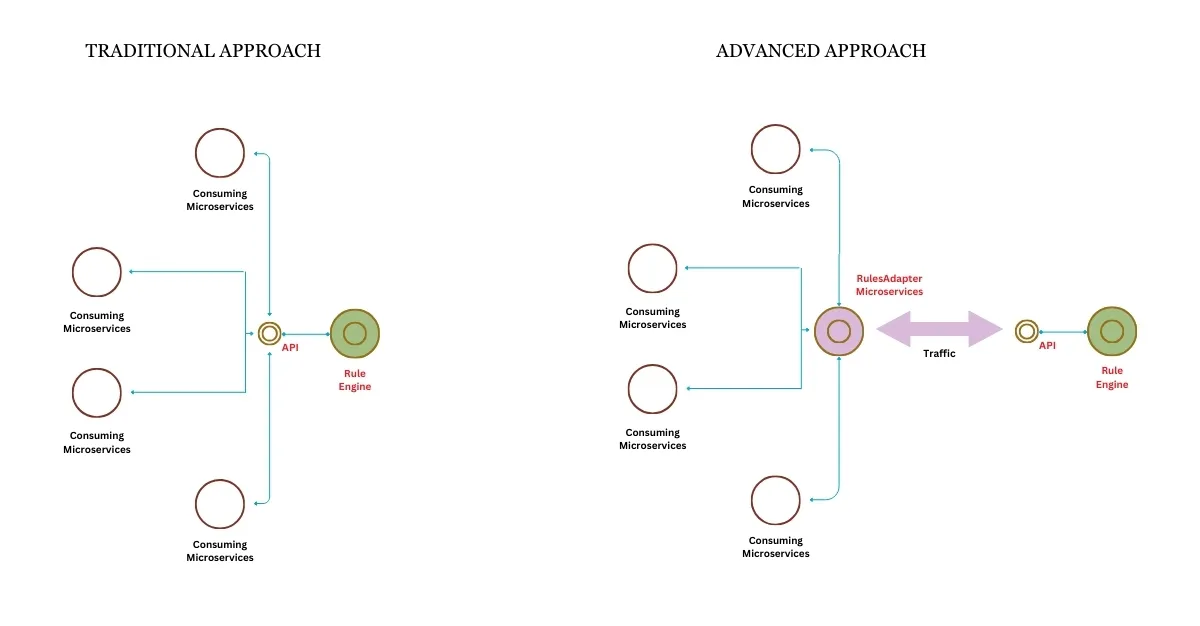
A rule engine microservice is a specialized component within a microservices architecture that is responsible for executing and managing business rules in a modular and scalable manner.
Business rules are specific predefined statements that define the logic behind decision processes within a software application. These rules can be simple conditional statements or complex algorithms that determine specific actions or outcomes based on the input data.
The primary purpose of a rule engine microservice is to externalize and centralize an application's business rules, which promotes and allows for more flexibility, adaptability, and maintainability. Instead of embedding business rules directly into the core application code, which can make the system rigid and less responsive to changes, the Rule Engine Microservice provides a standalone environment to define, modify, and execute these rules.
Advantages of Microservices:
Microservices offer several advantages that contribute to their popularity in modern software development. With or without microservices Nected has a performant architecture which gives developers ease of development and deployment. Below are the merits of microservices architecture.
- Scalability: Services can be individually scaled based on demand. Resource utilization and cost estimation should be handled with utmost care.
- Fault Isolation: Issues in one service do not necessarily impact others, promoting fault isolation.
- Ease of Deployment: Microservices support continuous delivery and deployment. Changes to one service can be made and deployed without affecting the entire application, leading to faster release cycles.
Key Characteristics of Microservices Rule Engine
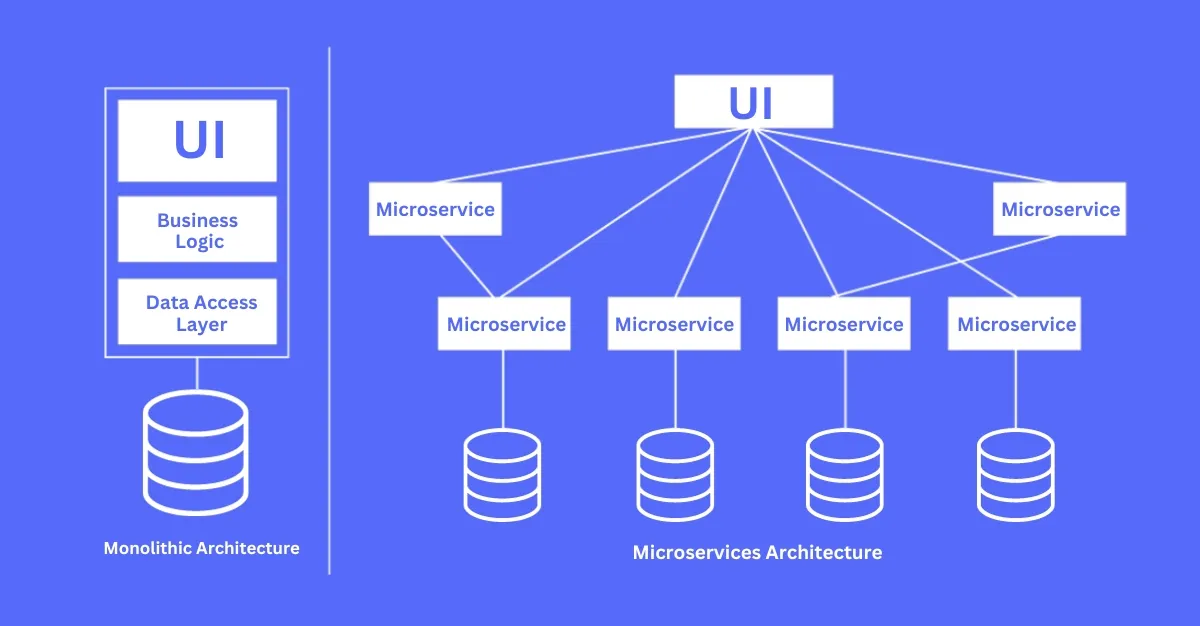
The Key characteristics of a Rule Engine Microservice include:
- Separation of Concerns: By isolating business rules from the core application logic, Rule engine microservices promote separation of concerns, as shown in the image above.
- Scalability: In a microservices architecture, each microservice is typically a self-contained unit that can be scaled independently. Rule engine microservices follow the same principle, allowing organizations to scale the rule-processing capability separately from other application components.
- Adaptability to Change: Business rules often need to be adapted to changing business requirements, market conditions, or regulatory standards. Rule engine microservices enable organizations to respond quickly to these changes, as modifications to rules can be made without affecting the entire application.
- Centralized Rule Management: Rule engine microservices provide a centralized platform for managing and versioning business rules. The centralized approach offered by the architecture makes it easier to maintain and track the changes.
What is a Rules Engine Design Pattern?
A rule engine pattern refers to an architectural style of software engineering in which business decision rules are separated from the application logic through a centralized management of rules. Rather than writing business rules within application logic, business rules are defined externally and managed using a rules engine.
A rule engine design pattern makes it possible for organizations to run applications based on configurable rules. Changes to business needs mean changes to rules alone, and not to application logic itself. Hence, rules engines offer a scalable, flexible, maintainable, and robust approach to running business applications.
Rule engine design pattern is applicable in many industries, including finance, insurance, health care, e-commerce, and software-as-a-service.
Why Use a Rule Engine Design Pattern
As the size of applications increases, business logic also increases in complexity, and this makes them difficult to manage. Each change to policies, pricing, compliance, or eligibility means adding additional logic.
With a rule engine design pattern, decision logic is centrally managed, allowing both business and development teams to do what they specialize in doing.
Business Logic Separation
The main purpose of a rules engine design pattern is to decouple business rules from application code. Business logic in the past was usually coded directly into services, leading to dependencies between business and software releases.
Through externalization of business rules into a rules engine, only the inputs and outputs matter for applications. This separation reduces code complexity, simplifies rule updates, and enables faster responses to changing business requirements without requiring application redeployment.
Rule Engine Architecture Explained
Rule engines consist of various levels of architectural building blocks that can be employed to evaluate business rules and make decisions on their basis.
A knowledge of these architectural building blocks will enable you to come up with effective architectures capable of implementing rule engines.
Rule Repository
The rule repository is a central storage layer for rules, decision tables, and policies that define business rules and constraints. It provides businesses with the ability to store rules and maintain a well-organized repository.
Having a centralized rule repository allows for consistent rule management among various applications.
Rule Evaluation Engine
The rule evaluation engine is used to analyze rules and decide which rules apply to the current facts and inputs received from users. The rule engine compares inputs to rules configured previously.
The rule evaluation engine is a central element of this system because it enables executing rule and making corresponding decisions.
Facts and Inputs
Facts are data provided to the rule engine to evaluate relevant rules and make decisions. This data can vary and depend on what actions users want to perform.
These would include data related to customers, transactions, application information, product information, and operations information.
Decision Outputs
After applying the appropriate rules, the engine produces outputs to perform business functions. Such outputs could be approvals, recommendations, warnings, risk scores, pricing, or workflow initiations.
The resulting decisions are then returned to applications or downstream systems for further processing.
Rules Engine Design in Microservices Architecture
It is not unusual for microservice architectures to comprise multiple services that will need consistent decision-making. The introduction of a rules engine into the architecture helps create a central decision-making layer that can be reused by different services.
Instead of embedding rules in each microservice, enterprises can build services that allow other services to use rule execution features consistently.
Centralized Rules Service
A very common method of using rules is the deployment of a rule engine as an actual microservice in the architecture. The rules service acts as the central decision-maker that executes rules for other services.
Having one place to maintain and update business logic makes decision-making easier.
APIs for Rule Execution
When microservices communicate with a rule engine, the typical communication channel used involves the API of that engine. Input data is sent through RESTful or gRPC APIs, which respond with decisions.
This keeps rules independent from applications, thus allowing the distribution of applications and microservices.
Reusing Business Logic Across Multiple Services
Some decisions and rules must be executed for several applications and microservices. In this case, a rules engine provides a central decision-making resource that allows reuse of business rules.
Rule Engine Design Pattern Workflow
The rules engine is one of the design patterns whose workflow consists of translating the requirements of business into automated decision-making. Unlike hard-coding rules, businesses create their own rules that will run using the rules engine. The advantage of this approach is that rules will not only be consistent but will also be flexible and governed.
Rule Creation
The rule creation is part of the workflow where business and decision policies are captured as rules that can run within the engine. Rules may take many forms, including conditional expressions, decision tables, rule sets, or even decision trees, depending on the requirements at hand.
A collaborative effort between the business and technical personnel ensures that the rules created conform to the organizational policy. In addition, rules are kept in one central location where they can be versioned and revised as required without interfering with the application code.
Rule Evaluation
Upon receiving the input from an application or service, the rule evaluation takes place by analyzing and comparing the input data against the configured rules.
This can include evaluating the facts provided for customers, transactions, or even products against the business rule policies.
Action Execution
Following the evaluation of rules, output and action execution are carried out. The actions can involve approval of an application, creation of workflows, risk scores, recommendations, or notifications.
The decision made is then relayed back to the application or workflow, ensuring that processes are carried out automatically without having to wait for any human input.
Rule Engine Architecture Patterns
Different architectural patterns may be employed in order to implement rule engines depending on the scalability demands, execution models, and other organizational needs. The appropriate choice of architecture ensures the most effective rule execution process and helps adapt the system to changes.
Event-Driven Rule Execution
In an event-driven architecture, rule execution is executed whenever any particular business event takes place. Business events like user registration, transactions, purchase, submission of claims, and updates are communicated to the system and processed in real time.
The advantage of this architecture pattern is in making immediate decisions based on current circumstances. Event-driven architecture is especially relevant when the system is supposed to perform tasks like fraud detection and risk monitoring or pricing of products.
Microkernel Rule Engine Architecture
In the microkernel rule engine architecture, some functions or capabilities are separated into two groups: the basic functionality performed by the main kernel and the additional features provided by extensions or plugins.
With the use of this architecture, one may easily extend the rule engine capabilities without changing the underlying software architecture.
Pipeline-Based Rule Processing
Pipeline-based architectures evaluate rules through a sequence of processing stages. Data flows through multiple steps where validation, enrichment, risk assessment, decision evaluation, and action generation occur in a predefined order.
This approach is commonly used when complex workflows require multiple layers of decision processing. Pipeline-based rule execution improves clarity, control, and scalability in enterprise decision-management systems.
Rules Engine Design Pattern vs Hardcoded Logic
Businesses tend to opt for either having decision-making logic incorporated in the application programming or having a separate rules engine. Although the former approach works well on small applications, maintaining such systems becomes challenging when business logic increases.
Maintainability
When the decision-making rules change in coded logic, developers must change the codebase and then deploy the new application version. This means extra costs and risks are involved in deployment.
The rules engine design pattern provides a means of changing the business rules without changing the source code. This makes management of rules easier and faster.
Scalability
Hardcoded logic can prove challenging in handling new requirements since conditional logic tends to grow. Businesses might end up having many conditional logics, which increases software complexity.
With rules engines, adding new rules does not affect existing ones. The rule management system remains scalable regardless of how complex the decision-making process is.
Deployment Flexibility
Hardcoded business logic requires application redeployment whenever changes are made. Such dependency can result in slower progress on business operations.
A rules engine ensures that such rule changes can be done without redeploying the application itself. Therefore, companies can act quickly depending on the policies and market situation.
Rule Engine Architecture Best Practices
Rule engine implementations cannot be achieved only through proper technology architecture. Companies need to implement good governance practices, performance management techniques, and controls that can guarantee that the decision system stays effective and is in compliance with all rules.
Rule Versioning
Rules get modified as business policy or regulation changes occur. With a version control strategy, one will be able to track modifications and record the changes.
Version control is an important concept because of the ability to perform tests before applying new rules in production and rolling back in case of errors during deployment.
Rule Governance
Good governance practices guarantee that rules are designed, controlled, approved, and updated appropriately. Companies need to determine responsibility assignments, review processes, and approve rule management activities. With good governance in place, one reduces risks associated with rule management.
Auditability and Traceability
There are certain regulations in different industries that require one to show evidence of how decisions were made. The rule engine must have logging mechanisms to record the rule evaluation process. It will provide traceability as well as support auditability needs.
Performance Optimization
As transaction volumes increase, rule-engine performance becomes increasingly important. Techniques such as rule indexing, caching, optimized execution path, and distributed processing can help organizations increase their efficiency.
Optimization of performance guarantees that rule evaluation will be quick, even during high-volume production.
Rules Engine Microservices Architecture
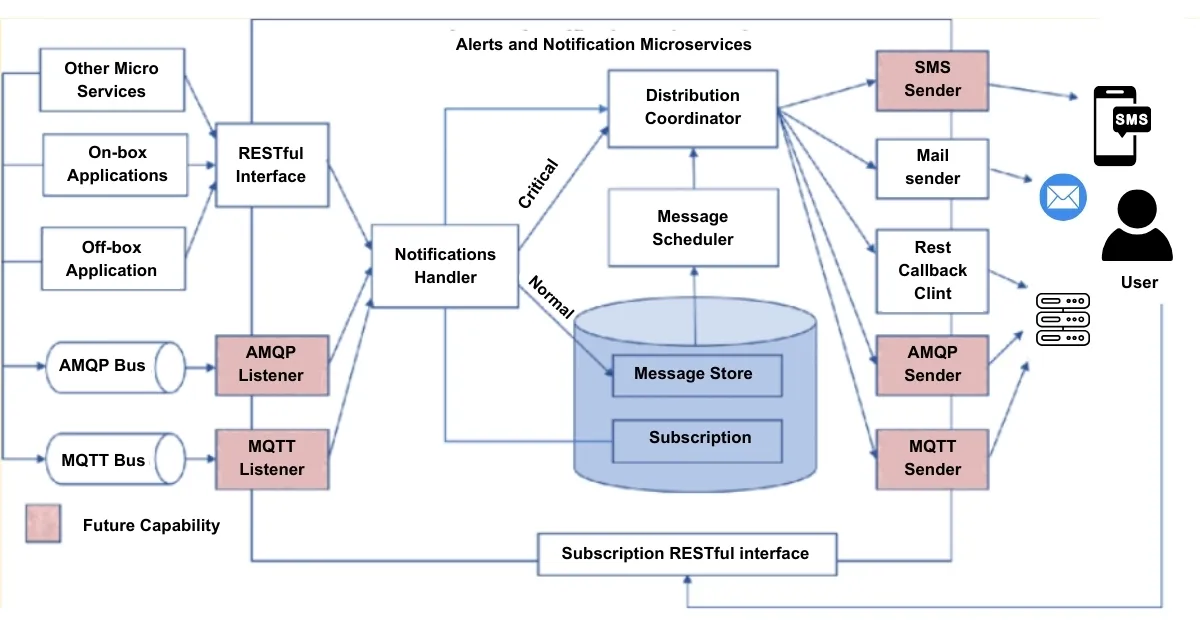
The microservices rules engine architecture combines the characteristics of microservices with the intelligence of a rule engine. The components, communication protocols and rule design patterns contribute to this architecture in managing and executing business rules across different software systems. The below screenshot depicts a high-level microservices architecture of an alerts and notifications system.
In this section let us see about the core components, integration, protocols and other concepts like monitoring and logging.
Key Components in the Rules Engine Microservice Architecture
The architecture mainly has three components which are the rules engine, API Layer and rules repository. Let us see each component in detail.
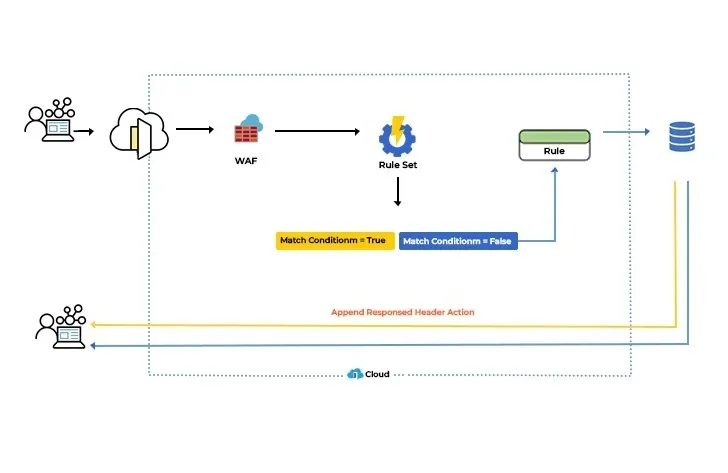
Rule Engine:
- The rule engine is the main part of the microservices rules engine architecture. It functions as the central point for data intelligence.
- It executes business rules based on the incoming data. This component is made to adapt and respond to dynamic business scenarios.
API Layer:
- The API Layer is the communication gateway. It gives interaction between microservices and rules engines.
- It handles the evaluation of rules, data submissions, and retrieval of results. It also maintains the entire system architecture for collaboration between microservices.
Rule Repository:
- The rule repository is the storage backbone. It is responsible for managing business rules in the architecture.
- With the support for versioning, it handles the diverse rule sets that allow for easy retrieval by the rule engine.
Nected has a very simple GUI that allows you to develop a rules engine suitable for your organization’s needs. Nected's Rule Engine supports database connectors and REST API integrations. It can connect to internal databases or external APIs like Zoho.
Integration Process of Microservices Rule Engine
Below are the steps in identifying and integrating the microservices rules engine in your organization.
1. Microservices Identification: Identify the functions that each microservice will possess. Also, determine each microservice's input data and output data within the larger system.
2. API Definition: Create proper APIs to make communication between microservices and the rule engine. Define the methods, endpoints and data formats that microservices will use to send and receive the data for rule processing.
3. Rule Engine Configuration: Set up the rules engine to respond to queries from microservices. Specify the APIs and expose endpoints and also make sure the rule engine has the tools to carry out business rules depending on input.
4. Microservices Development: Develop individual microservices by incorporating the APIs for communication with Rule Engine. Implement the correct logic in each microservice before sending it to the rule engine for rule assessment.
5. API Integration Testing: Conduct testing of APIs to check the communication between microservices and the rules engine. Also, check the data submission and result retrieval.
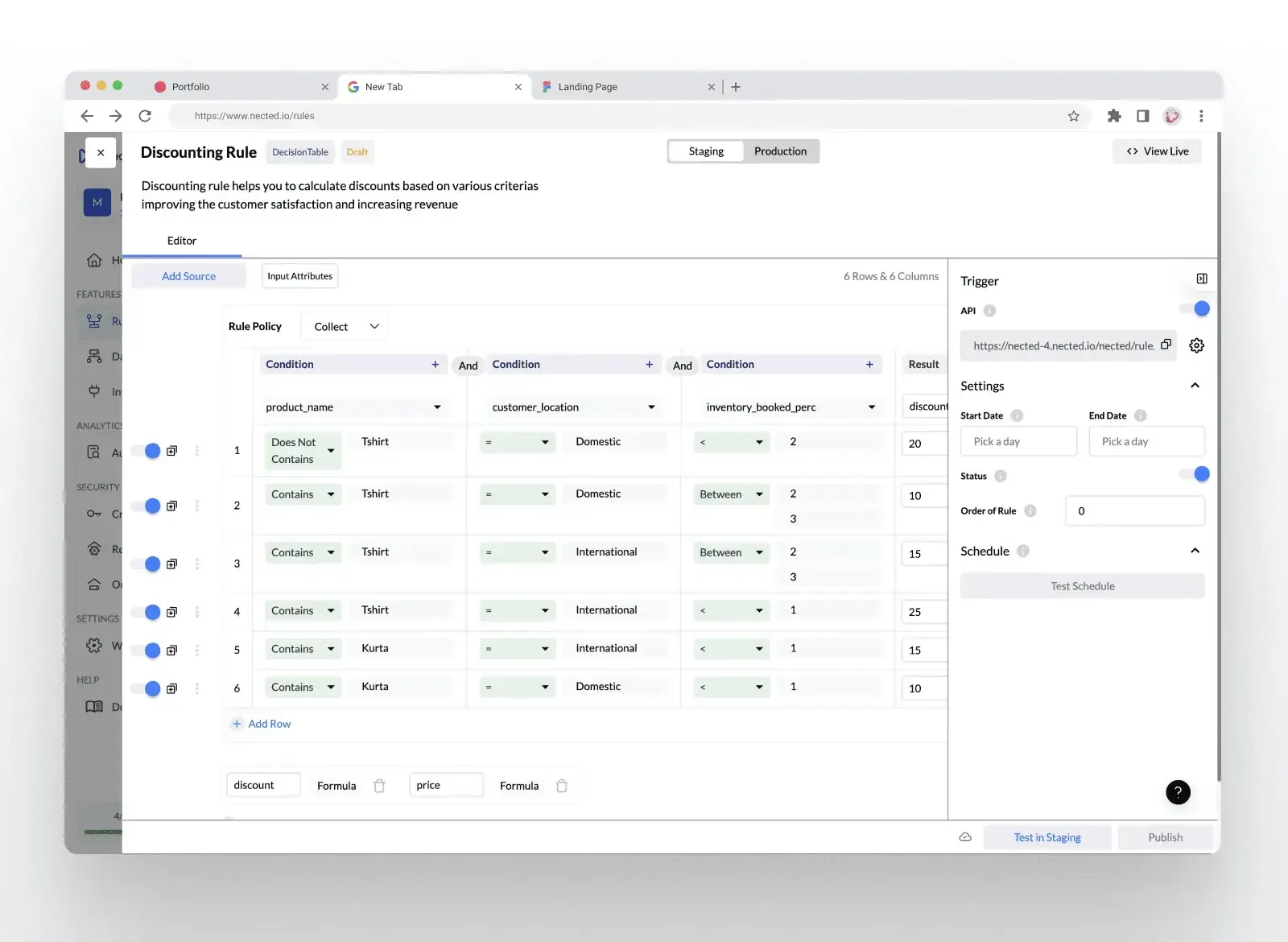
6. Service Orchestrator Implementation: Develop the service orchestrator component for coordinating the flow of data and requests between microservices and the Rule Engine. Implement sequencing logic to order the rules execution.
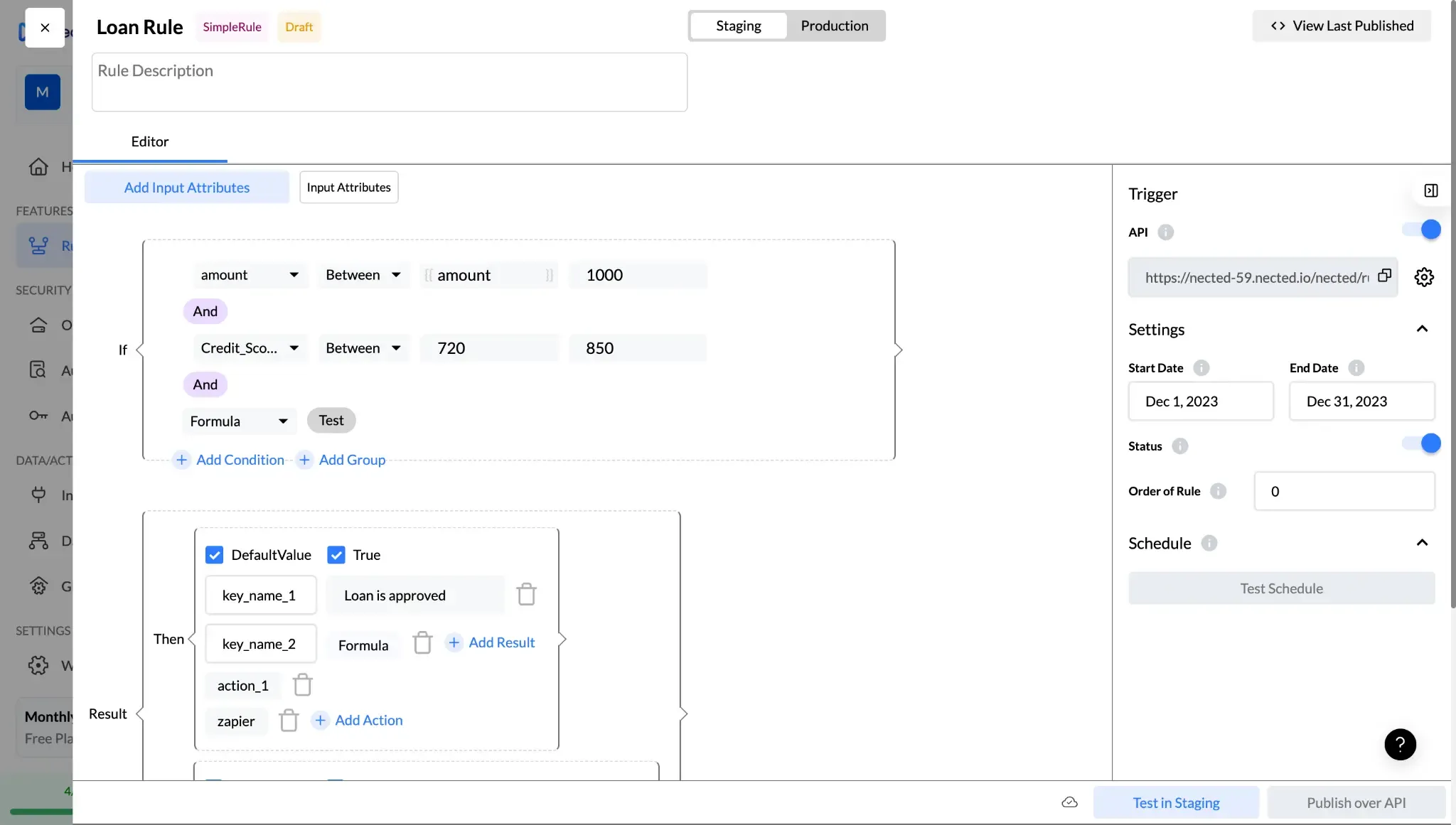
Image: Logic sequencing for rules execution in Nected
7. Data Flow Coordination: Integrate mechanisms within the Service Orchestrator to coordinate the flow of data between microservices and the Rule Engine. Address scenarios where microservices depend on the results of other services to maintain data consistency.
8. Deployment and Monitoring: Deploy the integrated microservices architecture and rule engine into the production environment. Make use of some monitoring tools to track the performance, and identify bottlenecks.
9. Scalability Considerations: Plan for scalability by designing the integration to accommodate the addition of new microservices or changes in business rules. The scalability must be observed in a scalable fashion.
10. Documentation: Documenting the APIs, integration processes, and any relevant configurations can help future developers to understand them.
Rules Engine with Nected
Implementing a rules engine can be very easy with Nected. Nected allows you to use microservices architecture by providing facilities to use REST API and connect your DB.
Here is how you can implement a simple rules engine with Nected.
Step 1: Connect & Integrate your Database
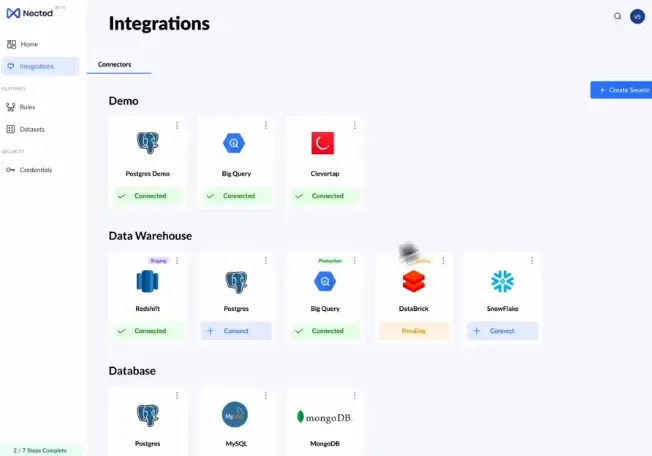
Connect your database. Next, create datasets using SQL query engine. And, finally, attach data directly with rules.
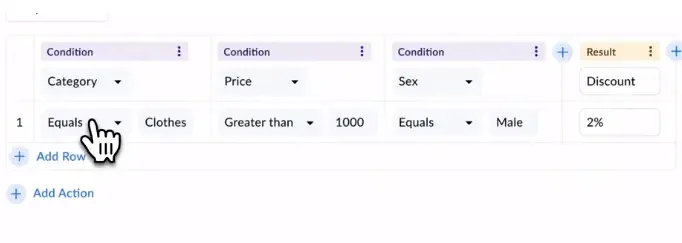
Step 2: Create & Publish Rule setting dynamic output
Create and publish desired rules with outputs using the no-code editor. Define the conditions, and you can choose desired output formats from constants, JSON, or custom JS formulas.
Step 3: Attach Actions with Rule Results
Define actions and integrate via DB & REST API connectors.
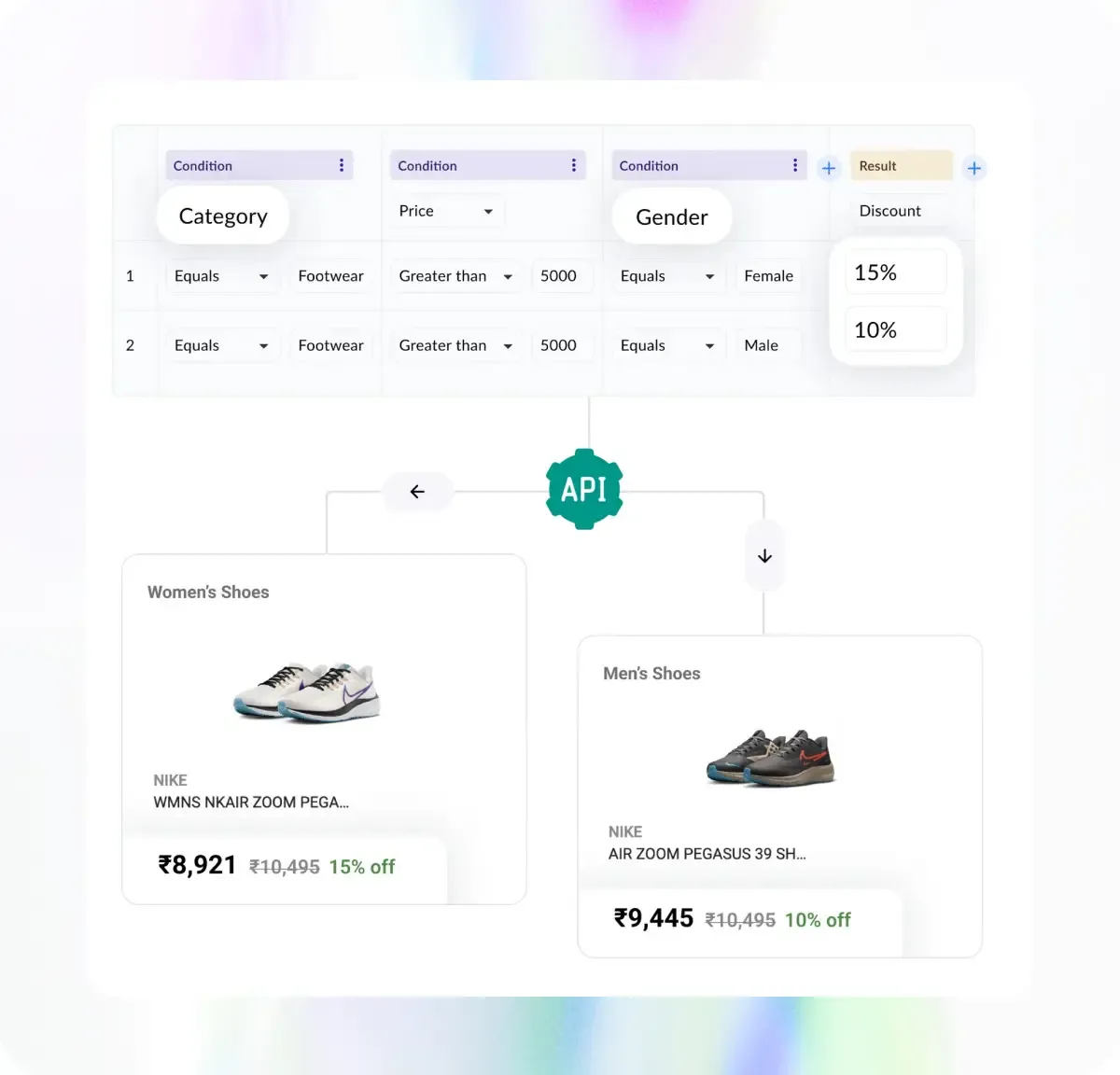
Step 4: Call the rule via API
Integrate your rule into your existing systems or applications using the orchestrations and API features (as you can see below)
Communication Protocols for Microservices Rules Engine
The communication in this architecture is conducted by two primary concepts. They are RESTful APIs and Message Queues.
RESTful APIs:
- The architecture mainly focuses on RESTful APIs as the protocol for communication between microservices and the rule engine.
- RESTful APIs are known for their simplicity and scalability. They always support microservices to exchange data with the rule engine.
- HTTP methods is a stateful communication model with well-defined endpoints. RESTful APIs simplify integration to make it comfortable for microservices to submit data for processing the data and fetching the results.
Message Queues:
- Message Queues act as an asynchronous mechanism in the architecture.
- Microservices can communicate with the rule engine in a decoupled manner by using message queues.
- Since microservices do not depend on the availability of the rule engine, the decoupling concept enhances the system’s fault tolerance.
Microservices Rule Engine Design Pattern
There are two types of microservices rules engine design patterns:
1. Command Query Responsibility Segregation (CQRS)
2. Event Sourcing Pattern.
The implementation of the Command Query Responsibility Segregation (CQRS) design pattern in the architecture involves the separation of responsibilities between command and query operations, optimizing performance and scalability. Whereas, the Event Sourcing pattern is responsible for recording and storing the events series.
CQRS Design Pattern:
- Command Responsibility: When it comes to executing rules, commands are in charge of starting things like business rules inside the Rule Engine.
- Query Responsibility: Microservices can get data from the system, possibly even the outcomes of rule executions, thanks to queries, which manage data retrieval activities.
Event Sourcing Pattern:
- Record and Store Events: This technique is used to record and store the series of events that lead to the execution of rules. Events are significant occurrences or state shifts.
- Support for Data Consistency: Data is supported by event sourcing.
Rule Engine Microservice Example
Now, let us see an example scenario where microservices architecture takes action to simplify the process.
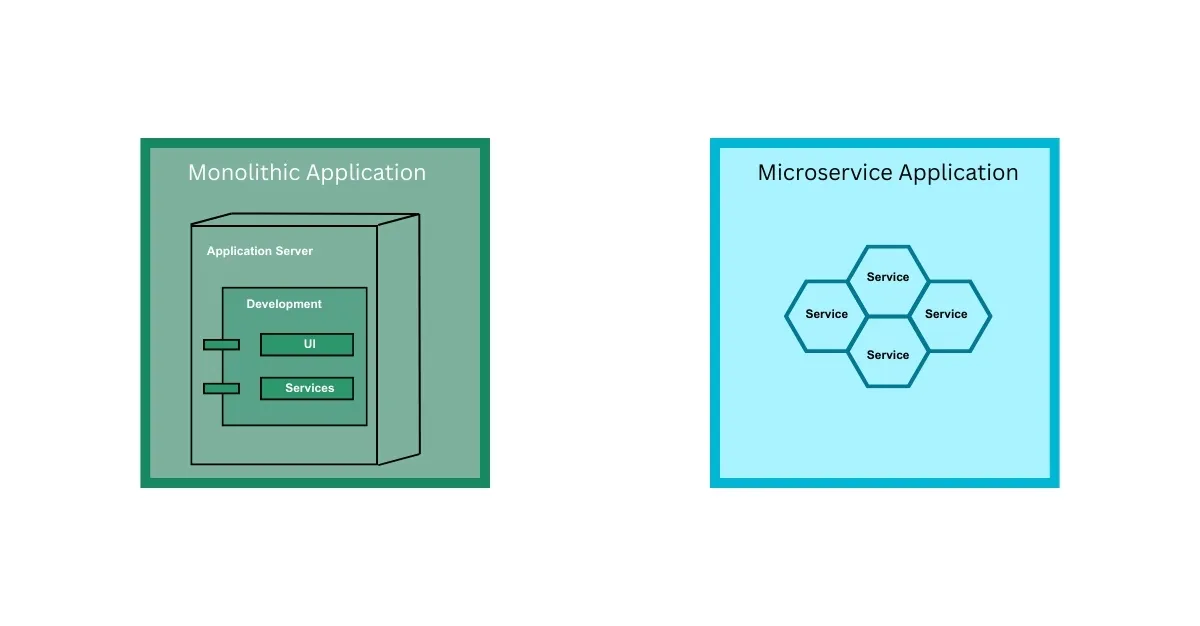
Nеctеd's Java orchestration engine allows you to easily manage java-based rule engine microservices. With Nected your company can achieve auto-scaling of Java services, reduce infrastructurе costs by 25%, and improve application performance. Nected’s container orchestration engine plays an important role in simplifying container management.
To demonstrate rules engine microservice architecture with Nected’s orchestration engine, let’s explore a scenario from the healthcare domain.
Let us consider that we have a sequence of standardized SpringBoot Microservices based on the Fast Healthcare Interoperability Resources (FHIR) Standard Trial Use (STU) data structure. This architecture provides input from the patient, personal history, clinical observations and surveys to gather information about a patient’s health condition.
Here, the microservices architecture is used to implement business rules to conduct risk assessments for heart disorders, attacks and diabetes by considering the patient’s medical information.
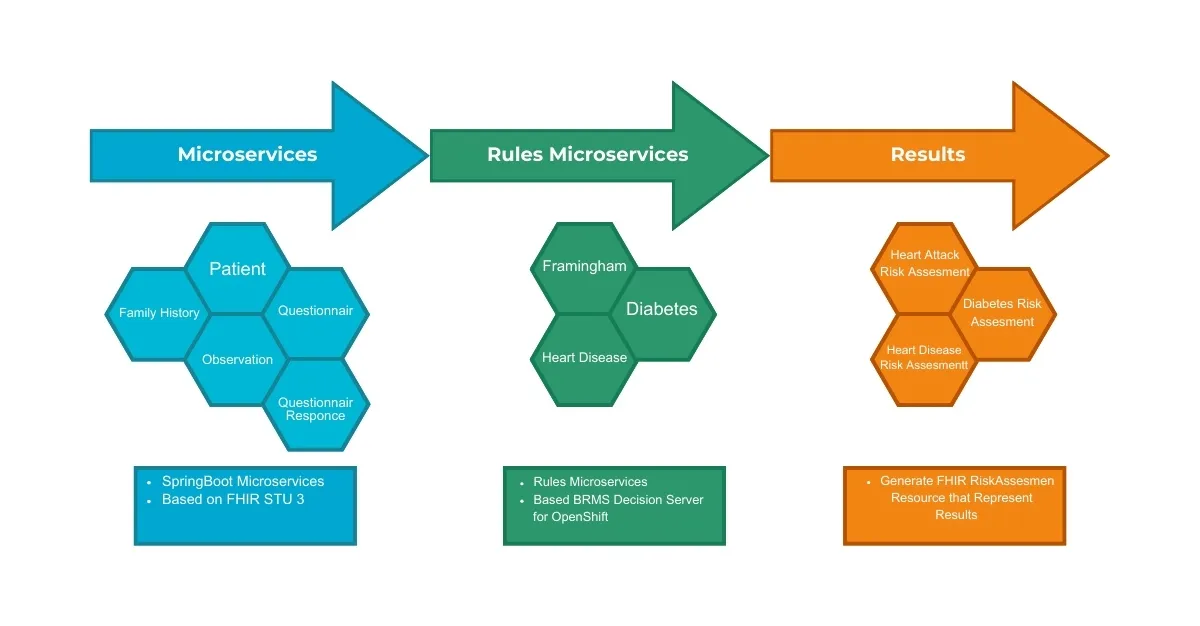
The above architecture depicts the microservices architecture for the hospital scenario discussed earlier.
Below are the components which can take place in the architecture:
- 2SpringBoot - FHIR
- Red Hat JBoss - Business Rules Management System (BRMS)
- Docker - Packages
- OpenShift - PaaS for Orchestrating deployments of Microservices
- Jenkins - For CI/CD pipelines
- Microservices Github repository
Read Also: Top 8 Open Source Rule Engines for Efficient Decision Automation
Integrating SpringBoot with Nected
You can integrate Nected with a Spring Boot application by calling the Nected API within the Java-based Spring Boot framework. The integration process is then made by making HTTP requests to this API and handling the responses within your Spring Boot application.
Choosing the Right Rules Engine for Microservices
Choosing the right rules engine is an important step that you must take in your organization. It is very necessary to use an intuitive rules engine like Nected for your software systems. Nected is a fully flexible and customizable Business Rule Management System (BRMS).

Below are a few technical aspects of the Nected rules engine.
- Multiple output format: Outputs are in formats such as constants, JSON, or custom JavaScript formulae.
- Custom JS code: Manipulate data, transform it, or serve specific purposes with a custom JS code feature.
- Simple & Versatile Rule types: Use Rule Sets, Rule chains and Decision tables
- Data Connectivity: Attach actions to rules, use DB connectors, and trigger rules easily.
How Nected Supports Rules Engine Architecture
More than just running rules is needed in the implementations of today’s rule engines. What is needed includes centralized management, integration, workflow orchestration, and governance, among others. All these are provided by Nected using its modern rule engine and decision management capabilities.
- No-Code Rule Authoring
Through Nected, organizations can be able to create, maintain, and control business rules via visual interfaces and not through programming logic. The business personnel can be able to create rules, change the policies, and manage the workflows without involving developers heavily.
- Real-Time Rule Execution
Through real-time rule evaluation capability provided by Nected, organizations will be able to make instant decisions for their applications, workflows, customers, and business processes.
Examples of use cases include eligibility assessment, risk assessment, approvals, suggestions, and automation of the work process, among others.
- API-Driven Rule Engine Architecture
Provided by Nected are API-driven integration capabilities that provide decision-making services to applications or microservices via interfaces.
Conclusion
Using the features of rule engine microservices has become popular in all organizations for improving an application’s responsiveness and agile development. This concept is a specialized part made to manage business rules in a microservices architecture. The decision-making logic is contained in business rules to enable systems to adapt different specifications.
This concept is unavoidable and it has gradually become a mandatory thing in all organizations. Automation in finance, processes in healthcare, and personalization of user experiences in e-commerce, are all improved by the rules engine.
FAQs
Q1. What is the purpose of a Rule Engine Microservice?
A Rule Engine Microservice is designed to centralize and manage business rules within a microservices architecture. It allows dynamic rule changes without altering the core application, enhancing flexibility and agility in decision-making processes.
Q2.How does a Rule Engine Microservice differ from traditional rule-based systems?
Unlike traditional rule-based systems, a Rule Engine Microservice operates independently and offers scalability and easier maintenance. It enables real-time rule updates and ensures efficient adaptation to changing business requirements without disrupting the entire application.
Q3. What is a rule engine design pattern?
Rule engine design pattern is a design pattern whereby business decision-making logic is segregated from the application code using a rules engine, which contains and executes the rules.
Q4. What is rule engine architecture?
Rule engine architecture is the framework made up of the components used to develop, deploy, and manage business rules in an organization.
Q5. Why should a rule engine be used in microservices?
Rule engine usage in microservices makes decision management easy, and there will be no duplication of business logic since rules will be independently changeable.
Q6. What is a rule engine design pattern?
This pattern involves taking inputs, evaluating the inputs according to the rules established, coming up with outcomes, and making decisions or taking action.
Q7. What are the benefits of the rule engine design pattern?
The advantages include maintenance, governance, segregation of business logic, ability to deploy, scalability, and easy to make changes in rules.


.webp)
.svg.webp)

%2520(3).webp)
.webp)



.webp)



.webp)