.svg)

.svg)




.png)

NBFCs love to pitch themselves as agile fintechs, but look under the hood and their loan approvals usually rely on a chaotic mix of manual spreadsheets and brittle, hardcoded SQL.
If your engineering team is drowning in Jira tickets just because the risk department needs to tweak a Debt-to-Income (DTI) ratio, your architecture is broken. A Credit Decision Engine (CDE) solves this by ripping that volatile risk logic out of your core app and isolating it into a standalone, testable API service.
The Anatomy of a Decision Engine
At its core, a credit decision engine (CDE) is just a specialized rule engine wrapped in an orchestration layer.
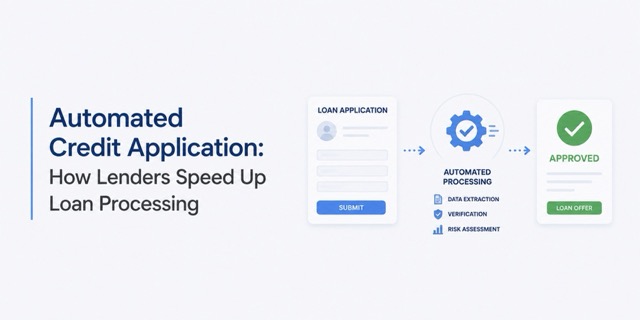
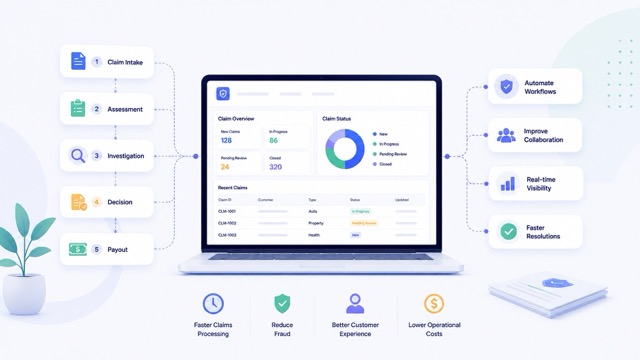
You pass it a raw JSON payload representing a loan application. The engine automatically fires off asynchronous requests to third-party APIs (like Experian or Plaid), normalizes the messy XML/JSON responses, runs the aggregated data against the risk team's algorithms, and returns a final state: Approve, Reject, or Manual Review.
It essentially stops developers from having to act as human compilers for business logic.
Non-Negotiable Engineering Features
When you're evaluating an engine to replace your homegrown if/else monolith, the marketing brochures will try to sell you on flashy drag-and-drop dashboards. As an engineer, you should only care about these four things:
- API-First Orchestration: NBFCs run heavily on alternative data. The engine must natively handle HTTP callouts, parse unstructured responses, and inject them into its working memory before evaluating a single rule.
- Shadow Testing: You can't just push a new credit policy to production. You need the ability to run "champion/challenger" experiments against live traffic without actually mutating the borrower's state.
- Explainable Outputs: Black-box machine learning is completely useless here. If regulators audit a denied loan, the engine must return a clear, deterministic trace of exactly why the payload was rejected.
- Immutable Execution Logs: When a cohort of loans defaults, the risk team will inevitably blame your code. The engine must log the exact payload state and the specific rule versions that fired at that exact microsecond so you have a bulletproof defense.
Also Read: What is Credit Decisioning?
Where It Actually Sits in the Stack
You don't use this for basic CRUD routing. NBFCs slot these engines into their highest-volume, latency-sensitive pipelines.
- Point-of-Sale (BNPL): Latency is everything here. You can't leave a user hanging at a checkout screen while a cron job runs. It requires sub-second synchronous evaluations.
- SME Working Capital: Business data is messy. The engine ingests OCR-parsed tax returns, normalizes the cash flow arrays, and scores the business instantly without manual underwriting.
- Dynamic Limit Management: The engine continuously evaluates active borrowers in the background, slashing credit limits automatically if alternative risk scores drop.
The Architectural Trade-Off
If you are trying to convince your CTO to make the switch, here is the reality of the trade-off.
Implementing a decision engine adds serious weight. You are introducing network latency, a new vendor dependency, and complex state management.
But look at the alternative. Hardcoded lending logic requires a full sprint, a code review, and a deployment just to change a risk multiplier. It forces devs to write custom API wrappers for every new data vendor, and it usually chokes on database locks during volume spikes. By building the API pipes and letting a dedicated engine handle the math, you completely decouple the business release cycle from your engineering deployment cycle.
FAQs
Q: Will this engine completely replace our Loan Origination System (LOS)?
A: No. The LOS is your system of record. It stores the documents, handles the UI, and manages the loan lifecycle. The decision engine is just a stateless brain that the LOS calls via a synchronous REST or gRPC API when it needs an immediate yes/no answer.
Q: How do we handle API failures from credit bureaus?
A: A solid engine lets you define fallback rules. If Experian times out after 2000ms, the engine can either route the application to a manual review queue, trip a circuit breaker to prevent cascading timeouts, or automatically attempt to pull data from Equifax instead.
Q: Should we build our own decision engine?
A: Almost never, unless your proprietary risk algorithm is literally your only competitive advantage. Building a reliable, auditable, highly concurrent rule evaluator from scratch (and managing the underlying Rete algorithms or AST parsers) is incredibly difficult. You will spend all your time maintaining infrastructure instead of tweaking risk models.
Q: Can these engines handle messy alternative data, like scraped SMS logs?
A: Yes, but you usually have to write a lightweight middleware (like an AWS Lambda or a small Python microservice) to parse and clean the unstructured data into a structured JSON payload before hitting the decision engine. Don't force the engine to do heavy string manipulation.
Q: Does it add too much latency to the checkout flow?
A: The actual rule evaluation takes a fraction of a millisecond. The latency almost always comes from the external network calls to the credit bureaus. You have to aggressively parallelize those API calls and cache recent bureau pulls (e.g., in Redis) before feeding the final data object to the engine.


.svg.webp)


.webp)


.webp)
.webp)
.webp)






%20(1).webp)