.svg)

.svg)



.png)
.webp)
Offering lending has become one of the fastest ways for B2B platforms to increase customer retention and create new revenue streams. Whether you operate a marketplace, payment platform, SaaS product, or procurement solution, your customers already need access to working capital. The question is whether they'll get it through your platform or somewhere else.
If you are wondering how to launch a lending program quickly, the good news is that you no longer need to become a bank or spend a year building lending infrastructure from scratch. With embedded lending solutions, APIs, and workflow automation tools, the time needed to launch your lending offerings has been greatly shortened.
This is a guide to implementation, various types of lending, and issues to watch out for when launching an offering.
Why Are Businesses Launching Embedded Lending Programs?
Businesses increasingly expect financial services to be available where they already work. They do not want to leave the platform and go searching for lenders on the Internet. As such, the rise of embedded lending has made it one of the most popular and rapidly developing segments of fintech.
Platform providers get multiple benefits from lending apart from earning money on interest. In particular, it helps them retain customers, makes the platforms sticky, and provides monetization opportunities through revenue sharing and referral models.
For instance:
- A B2B marketplace may offer inventory finance to its vendors before the peak season;
- An accounting platform may suggest working capital loans according to cash flow metrics;
- A payment platform may offer merchant cash advances based on the historical transaction data;
- A procurement platform may allow its users to make purchases using embedded credit.
This way, the customers of the platforms do not need to look for lenders or fill lengthy applications on other websites.
One more reason why embedded lending gets popular is the rise of specialized infrastructure providers. These companies are capable of providing platforms with an underwriting engine, loan servicing platform, compliance framework, and payment processing services using APIs and customizable workflows.
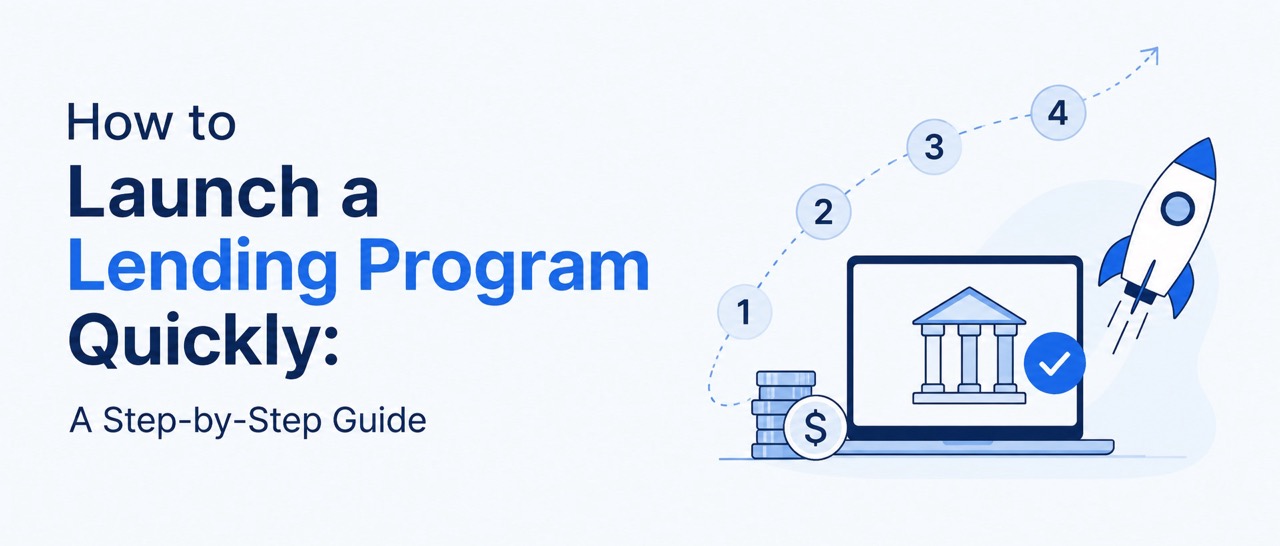
How to Launch a Lending Program Quickly?
Launching a lending program doesn't start with choosing a lender. Understanding the requirements of your customers and then selecting the right approach will be important. The points below may help reduce the development cycle and the subsequent need for costly modifications.
Step 1: Determine the use case for your lending business
Understand the problem you are solving. Each type of company requires its own lending product. The most common include:
- Working capital loans
- Merchant cash advance
- Invoice financing
- Revenue-based financing
- Buy Now, Pay Later (BNPL)
- Equipment financing
The lending business you choose must meet a certain customer need rather than provide financing just because your competitors offer that product. Thus, the e-commerce platform will benefit from inventory financing, and the SaaS platform for small businesses can find success with short-term working capital loans.
Step 2: Decide how you will offer lending
You don't necessarily need to become the lender. Most businesses choose one of these approaches:
- Refer customers to lending partners.
- Embed a lender's application flow within their platform.
- Use lending APIs to create a fully integrated experience.
- Have and develop their own funding source.
The right answer will depend on many things, including time, proficiency, and objectives of your company.
Step 3: Choose a lending partner
Select lenders based on the type of loans they offer, along with other factors like APIs, Coverage, Compliance, Underwriting, Loan Servicing, Reporting, Integration, and Customer Experience.
Step 4: Create the customer experience
The process of lending must be an organic one from your existing platform. These Include:
- Financing Opportunity Discovery
- Eligibility Check
- Required Documents
- Approval
- Loan Repayment
Step 5: Go Live with Pilot
Instead of offering loans to all customers at once, begin with a limited number of them. Pilot enables measurement of the following metrics:
- Applications
- Approvals
- Feedback
- Operational problems
- Repayment behavior
Choosing the Right Embedded Lending Model
The right lending model depends on how much control you want over the customer experience, how quickly you need to launch, and how much responsibility you're prepared to take on. There's no single approach that works for every business.
- Referral Model
This is the easiest approach to execute. Your platform redirects the customer to a financing partner that manages the application, underwriting, funding, and servicing.
Best for:
- Businesses evaluating customer interest
- Businesses that lack engineering talent
- Companies in need of a quick time to market
Advantages:
- Easy to implement
- Little compliance risk
- Little development risk
Disadvantages:
- Your customer leaves your platform while applying.
- Not much control over the financing process.
- Fewer opportunities for customization.
- White-Label Lending
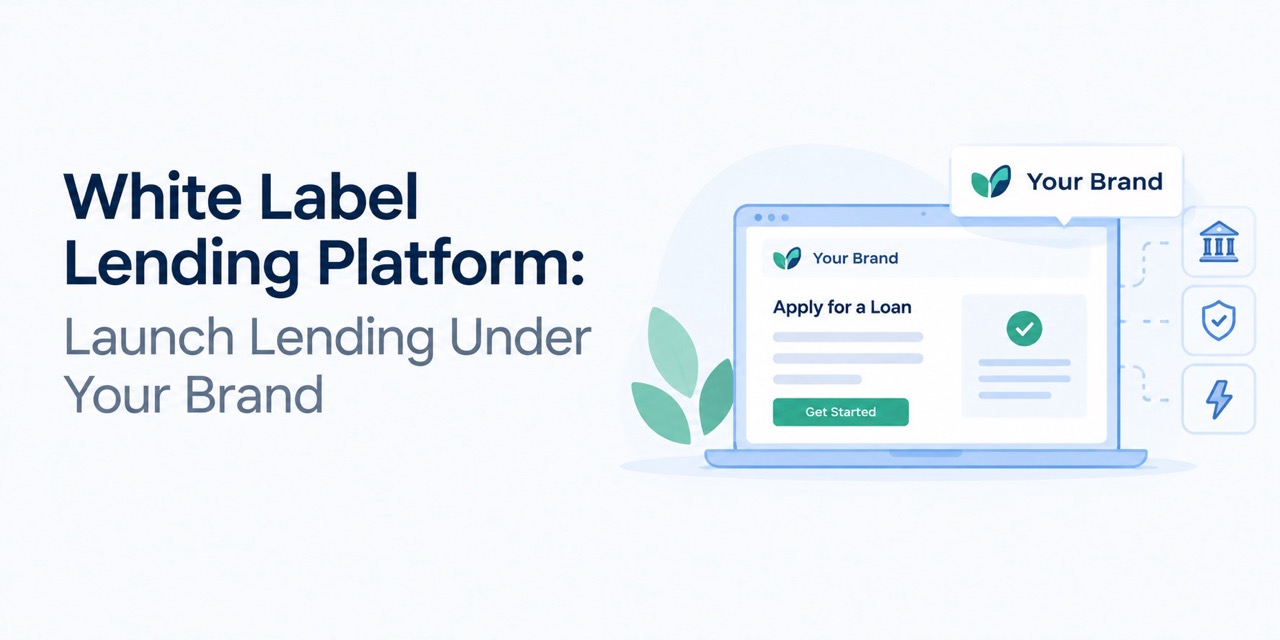
The white-label strategy allows branding of the lending process as yours, but the lender is responsible for its implementation in the backend. The users stay within your ecosystem, allowing for a seamless customer experience without having to build a lending system yourself.
Best for:
- Software-as-a-service platforms
- Business-to-business marketplaces
- Payment service providers
Advantages:
- Better user experience
- More rapid deployment than developing internally
- Simplified solution
Disadvantages:
- Inability to customize.
- Restricted product range of the financing partner.
- Embedded API Integration
Embedded API integration allows companies to have more flexibility because lending services can be embedded directly into existing processes using APIs.
While the business can figure out when to show financing options, how to calculate eligibility criteria, and how clients will proceed through the application process, the lender will be responsible for the funding and regulatory compliance.
As an example, the online payments platform may offer a working capital loan to the merchant as soon as they reach a certain number of transactions.
Best for:
- Fintech platforms
- Vertical SaaS platforms
- Platform businesses that have their own engineering teams
Advantages:
- Highly customizable customer journey
- Better integration into existing processes
- More control over the lending process
Disadvantages:
- Higher implementation complexity
- Requires API integration
- Build Your Own Lending Infrastructure
Some organizations choose to develop underwriting systems, servicing platforms, repayment infrastructure, and compliance processes internally. This offers maximum flexibility but also introduces significant technical, operational, and regulatory complexity.
Best for:
- Large financial institutions
- Established fintech companies
- Businesses with dedicated compliance and risk teams
Advantages
- Complete product control
- Flexible underwriting policies
- Full ownership of customer experience
Limitations
- Long implementation timelines
- High development costs
- Ongoing compliance obligations
- Continuous maintenance
Build vs Buy: Which Approach Is Faster?
One of the most crucial steps to consider when introducing a lending program is whether you are going to construct the solution from scratch or leverage a pre-existing one.
With in-house development, full flexibility is ensured, but at the same time, the whole lending process chain will have to be developed from scratch. Leveraging an already available lending platform speeds up the whole business dramatically.
Build In-House
Buy or Integrate
Development can take several months or longer
Implementation can often be completed in weeks
Responsible for compliance and regulatory requirements
Provider typically handles much of the compliance infrastructure
Full control over underwriting logic and customer experience
Some customization within the provider's capabilities
Higher engineering and maintenance costs
Lower upfront investment
Requires ongoing support for servicing and repayments
Loan servicing is generally included
Suitable for organizations with dedicated lending expertise
Suitable for businesses entering embedded lending quickly
The right choice depends on your priorities. Building can be the right move if loan origination is your core business and full control over the entire process is needed.
On the other hand, buying will definitely be a better way to go when you want to diversify products, retain customers, or generate income without months of building financial infrastructure.
A good starting point is to work with an embedded lender first, see what kind of traction customers get, and consider customization later on.
How Nected Helps Accelerate Embedded Lending Workflows
Launching a lending program involves more than integrating with a lender. Businesses also need to automate eligibility checks, approval rules, document verification, and customer notifications while ensuring decisions remain consistent and auditable.
That’s where the orchestration of workflow comes into play. Nected gives the ability to set up and automate lending workflows in the application without hardcoding business rules. The decision logic that is scattered all across many services can be controlled from one place by setting up a rules engine.
For instance, lending workflows will be able to:
- Check customer eligibility according to transaction history and other business rules.
- Route suspicious applications for manual review.
- Run document checks when needed.
- Offer loan calculations using configurable decision logic.
- Inform applicants of being approved or denied.
Work with external underwriting, KYC, and fraud detection services using API. As these rules may be easily changed without any need to rework the code, businesses can adjust lending policy depending on customers’ behavior and new regulations.
Unlike taking a position of replacing lenders, Nected is an orchestration layer that connects the customer data, business rules, third-party services, and lending approval workflows together into one automatic chain.
Best Embedded Lending Providers for B2B Payment Platforms
The right embedded lending provider depends on your customers, geography, regulatory requirements, and the level of control you need over the lending experience. Some providers focus on infrastructure, while others offer complete lending solutions that include underwriting, funding, and servicing.
Here are some commonly used lenders and their appropriate settings.
Stripe Capital
Stripe Capital would be an ideal choice for companies already on Stripe. This lender gives loans depending on the payment history of the business, thus allowing businesses to receive funding without applying for a loan.
Best for:
- Companies already using Stripe Payments
- Marketplaces
- E-commerce
Pros:
- Easy integration
- Repayment through payment processing
- Customer-friendly process
Cons:
- Only available in certain countries.
- Ideal for companies already on Stripe.
Finmid
Finmid allows SaaS providers and marketplaces to integrate lending into their products via an API platform. It provides infrastructure for offering working capital and other financing products without becoming a lender.
Best for:
- SaaS-based solutions
- B2B software firms
- Fintech companies from Europe
Pros:
- An API-first solution
- Ability to integrate easily
- Can work with different lending services
Cons:
- Regional availability must be checked before adoption.
Unit
Unit provides infrastructure for banking with the inclusion of lending services alongside accounts, cards, and payments. Unit is often selected by businesses whenever there is a need to develop more than one embedded finance solution.
Best for:
- Fintech firms
- Digital banks
- Financial software providers
Pros:
- Wide financial infrastructure
- Robust API solutions
- More than one embedded finance solution
Cons:
- Could include additional functions that businesses do not require whenever lending is the sole purpose.
LoanPro
LoanPro focuses on loan servicing rather than originating loans. It allows businesses to manage repayments, schedules, customer accounts, and servicing operations while integrating with external underwriting or lending systems.
Best for:
- Organizations managing large lending portfolios
- Custom lending products
Pros:
- Flexible servicing capabilities
- Extensive configuration options
- Suitable for complex lending operations
Cons:
- Additional integrations may be required for underwriting and funding.
TurnKey Lender
TurnKey Lender offers a full-scale lending solution encompassing application processing, underwriting, decisioning, servicing, and collections.
Best For:
- Banks
- Credit unions
- Online lenders
Pros:
- Support of the entire lending life cycle
- Automation out-of-the-box
- Customizable workflows
Cons:
- Can be more difficult to implement than API-based companies.
- Lendflow
Lendflow helps to connect businesses to various lending partners through one single integration. Through this, platforms can offer various types of loans without making individual connections with all lending partners.
Best for:
- SMB platforms
- Marketplace platforms
- Embedded finance players
Pros:
- Connectivity to various lenders
- Easy to deploy
- Financing flexibility
Cons:
- Availability of products based on lending partners.
While selecting a lender, consider not only the loan products but also the integration, compliance assistance, servicing, reporting capabilities, etc.
Common Challenges and Best Practices for Launching a Successful Lending Program
Despite the presence of modern lending facilities, a lending program is still bound to have some preparatory considerations. More often than not, the problem lies in underestimating operational and compliance aspects rather than the technicalities involved.
The following are some common problems and their solutions.
Challenge 1: Selecting an Inappropriate Loan Structure
There are cases where companies invest in developing lending capability without proving customer demand. Such investments increase costs and elongate the time of implementation.
Best practice: It is advisable to begin with an embedded solution or pilots before expanding your operations.
Challenge 2: Considering Compliance as a Secondary Issue
Requirements concerning regulations affect every aspect of lending operations from customer onboarding to servicing. If the problem of compliance arises at a later stage, there might be a need for workflow restructuring.
Best practice: Engage compliance and legal experts from the onset of the planning process.
Challenge 4: Inability to Track Lending Performance
Not tracking certain metrics makes it difficult for improvement and identifying bottlenecks. The metrics that you should track are:
- Percentage of applications completed
- Approvals
- Average decision making time
- Loans use
- Loan repayment performance
- Retention after loan disbursements
Reviewing the metrics periodically will enable you to improve your performance.
Challenge 5: Scaling without automation
As the number of applications increases, reviewing them manually becomes a bottleneck.
Best Practice: Automate all repetitive tasks like eligibility, document verification, notifying, and routing while doing a manual review only for risky applications.
Companies that automate their operational processes early will be able to scale their lending program better without increasing their cost of operations.
Key Takeaways
- A lending program need not have its entire lending framework built from scratch at launch.
- To begin with, you need to comprehend the financing needs of your clients and identify the method of financing that fits your goals as a business.
- For the majority of B2B marketplaces, it is the quickest way to launch a lending program without the burden of developing the engineering and compliance frameworks from scratch.
- Ensure that your program enables a smooth customer experience based on easy-to-understand eligibility requirements and an application process.
- As you scale up your lending program, ensure decision-making, approvals, and workflows are automated.
FAQs
How long does it take to launch an embedded lending program?
The duration that it will take depends on how you implement your project. Integration of an embedded lending service provider with available APIs takes several weeks, whereas development of an internal lending system might take several months and even longer.
Is a bank license required for the implementation of embedded lending?
Usually not. Enterprises cooperate with banks that provide services of licensing, regulation, and financing.
Which businesses need embedded lending?
Examples of businesses using embedded lending include B2B marketplaces, payment platforms, SaaS businesses, procurement platforms, and fintechs providing their clients with recurring loans.
What should be considered while selecting an embedded lending service provider?
Apart from the lending products, the following aspects should be considered: API, compliance, geography, loan servicing, reporting, integration, and customer experience.
What is the difference between referral lending and embedded lending?
In referral lending, the client is referred to another lender where application and approval happen. In embedded lending, the entire financing process remains in your product.
Can I customize lending eligibility criteria?
Of course. Most of the suppliers let the organization set its own qualification criteria based on transaction, behavior, performance, or any other predefined criteria.
How does automation help in lending?
Automation increases efficiency because it is responsible for conducting such activities as eligibility, documentation, approval, notification, and third party system integration. It allows businesses to make decisions in a more effective manner.
Can embedded lending be adopted by small and mid-size businesses?
Yes. Many vendors provide APIs to enable SMBs to have their lending program without creating any lending infrastructure.


.svg.webp)


.webp)

.webp)