.svg)

Quick Summary
Nools is a JavaScript-native Rete-algorithm rules engine for Node.js, originally built by C2FO and released under the MIT license. Its two real strengths are clear: it is genuinely free and open-source, with a permissive MIT license and no JVM dependency for JavaScript teams that wanted Rete-style inference; and it provides real forward-chaining inference, which is a meaningful capability that simple if/else evaluators don't offer. For teams evaluating rule engines that run natively in Node.js, those two properties were legitimate differentiators when Nools was actively developed.
The problem is that Nools was archived after C2FO dropped it, and the project has had no meaningful development since. It predates async/await, ES modules, and TypeScript — the foundational patterns of modern JavaScript — and has received no updates to accommodate them. Business teams cannot touch it; every rule lives in a .nools DSL file or programmatic JavaScript that requires an engineer to change. There is no governance, no observability, no connectors, no scaling primitives — every capability a production rule system needs beyond raw Rete evaluation is your team's responsibility to build from scratch, on top of a codebase that will never be patched. The library is hard to scale and increasingly difficult to maintain as the Node.js ecosystem evolves around it.
What Is Nools?
Nools is a JavaScript implementation of the Rete algorithm, designed to run inside Node.js applications as an embedded library rather than as a standalone platform or service. It has no server component, no UI, and no concept of deployment beyond npm install into your application.
The core components of Nools are:
- Nools Engine: The Rete-algorithm rule evaluator, responsible for matching facts inserted into working memory against rule conditions and firing matching rules.
.noolsDSL Files: A domain-specific language for defining rules —rule,when, andthenblocks that describe conditions and consequences, parsed and compiled into the rule flow at runtime.- Flow / Working Memory API: A programmatic JavaScript API for creating a "flow" (the compiled rule network), instantiating sessions, asserting and modifying facts, and firing rules.
- Agenda Groups & Salience: Mechanisms for controlling rule execution order, conceptually similar to Drools' agenda groups, but implemented in a much smaller codebase with far less tooling around them.
There is no authoring UI, no decision table support, no rule management console, no built-in persistence layer, and no packaged deployment artifact beyond the Node module itself. Everything beyond "evaluate these rules against this data" — connectors, governance, observability, scheduling, multi-environment promotion — is left entirely to the implementing team. Nools solves one narrow problem (in-process Rete evaluation in JavaScript) and solves it adequately for small-scale use; it does not attempt to solve any of the surrounding problems that production rule systems eventually run into.
How We Analyzed Nools's Abilities?
For this Nools review, we focused on what actually determines whether a team can run production decisioning on this library in 2026 — not just whether the Rete algorithm works in a demo, but whether the project, the ecosystem, and the operating model around it can support a real business over multiple years.
We structured our analysis around the eight parameters that define a production-ready decisioning system. Each maps directly to the in-depth feature sections that follow.
Our analysis draws from the Nools GitHub repository (commit history, issue tracker, and documentation), npm package statistics, comparison datasets maintained in this workspace, and real-world engineering estimates modeled at production scale.
How Nools Works
Nools uses the Rete algorithm — the same pattern-matching approach used by Drools and other forward-chaining inference engines — implemented entirely in JavaScript for the Node.js runtime. Here is how a typical Nools decision flow operates:
1. Rule Authoring: Developers write rules in .nools DSL syntax, defining rule blocks with when (conditions over fact types) and then (consequence JavaScript code) sections. Rules can also be constructed programmatically via the JavaScript API, but the DSL file format is the more common pattern.
2. Flow Compilation: At application startup (or build time), the .nools files are parsed and compiled into a "flow" — an in-memory Rete network representing the rule set. This compilation happens inside the Node process; there is no separate build artifact or packaging step beyond your normal application deployment.
3. Session Creation: The application creates a working session from the compiled flow. Facts (plain JavaScript objects or class instances) are asserted into the session's working memory.
4. Pattern Matching & Execution: Nools' Rete network evaluates inserted facts against rule conditions. Matching rules are added to an agenda; the engine fires rules according to salience/priority ordering, executing the JavaScript consequence code for each match. Consequences can assert, modify, or retract facts, triggering further rule evaluation (forward chaining).
5. Output: There is no built-in output or decision response format — the consequence code is plain JavaScript, so output is whatever the implementing application chooses to do with it (mutate an object, call a function, push to a queue, etc.).
6. Change Management: A rule change means editing the .nools file or JS rule definition, redeploying the Node application (or hot-reloading the flow if the application is built to support that), and verifying behavior — typically via custom test scripts the team has written, since Nools ships no built-in test harness.
This architecture makes Nools genuinely lightweight to embed — there is no separate server, no database, and no infrastructure beyond your existing Node deployment. It also means every operational concern beyond raw rule evaluation is the implementing team's responsibility, with no platform-level tooling to lean on.
Who Uses Nools?
Nools' realistic user base in 2026 is narrow and shrinking. It is generally found in:
Small engineering teams with existing legacy integrations: Teams that adopted Nools years ago for a specific Node.js service and have not had a strong enough reason to replace it, even as the project's maintenance status declined.
Hobbyist and small-scale projects: Developers building proof-of-concept rule-based systems, side projects, or internal tools where production reliability, compliance, and long-term support are not requirements.
JavaScript-only shops avoiding a JVM dependency: Teams that specifically wanted Rete-style inference without introducing Java/Drools into an otherwise all-JavaScript stack, and accepted Nools as the available (if imperfect) option at the time.
Teams in early-stage exploration of rule engines: Organizations evaluating whether a Rete-based approach fits their problem before committing to a more substantial platform, using Nools as a low-friction way to prototype.
Nools is a poor fit for any organization with compliance requirements (financial services, insurance, healthcare), any organization where business users need to participate in rule authoring, any team that needs production support guarantees, and any team for whom "this dependency might receive a critical security patch in days, weeks, or never" is an unacceptable risk profile — which, in 2026, should be nearly everyone running production decisioning.
Reviews
- Free, open-source, JavaScript-native Rete rule engine with no JVM dependency
- Supports genuine forward-chaining inference for complex rule evaluation
Nools does what it says on the tin for small rule sets—Rete matching in JS without pulling in a JVM. We've had it running quietly in a service for a few years and it hasn't fallen over. The problem is everything around it: no decision tables, no UI, nothing. We built our own thin layer on top just to make it usable by anyone other than the original author.
If you need a quick embeddable rules engine for a small Node app and don't want to deal with Drools/Java, Nools technically works. Just go in knowing it's basically frozen—last time I checked the repo, issues from years ago were still open with no maintainer response. Fine for a side project, I wouldn't put new production logic on it for anything that matters.
 Verified Community Reviews
- No business-user interface or self-service rule authoring
- Archived project with no active maintainer or commercial support
- Production capabilities such as governance, connectors, and observability must be built from scratch
- No native RBAC, audit trails, approvals, or versioning
- Outdated ecosystem with limited support for modern JavaScript tooling
- Scaling and performance tuning are entirely the user's responsibility
Opened an issue about a memory growth pattern with large fact sets over a year ago—still open, no response. At this point I think the project is community-in-name-only. We're planning to migrate off it before it becomes a liability nobody wants to own.
The DSL is fine until you need anything beyond basic conditions—then you're writing JS inside .nools files that nobody who isn't a backend dev can read. Combine that with zero tooling for testing rule changes safely, and every "small" rule update becomes a mini-deployment with crossed fingers.
Verified Community Reviews
In-Depth Drools Features Analysis
1. Execution & Scale
For small rule sets and low request volumes, Nools' Rete implementation performs adequately — it is, after all, just JavaScript executing pattern matches in-process. The challenge appears as fact volume and rule complexity grow: interpreted JavaScript Rete evaluation does not have the JIT-compiled execution path that JVM-based engines benefit from, and Nools provides no built-in profiling, tuning guidance, or scaling abstraction. Teams report latency that is fine in testing but becomes unpredictable under production load with larger working memory sets — and because the project is unmaintained, there is no upstream path to performance fixes.
Strengths:
- In-process execution avoids network hops to a separate rules service, which can be an advantage for very low-latency, low-volume use cases.
- Stateful sessions support scenarios where facts accumulate and rules fire incrementally over time within a single session.
- No infrastructure overhead beyond the hosting Node application — there is no separate engine process to provision or monitor.
Drawbacks:
- No P95 latency guarantees, no auto-scaling, and no built-in performance tooling — all scaling work falls on the team hosting the Node service.
- Performance degrades unpredictably as fact counts and rule complexity grow, and there is no upstream maintainer to address performance issues.
- Horizontal scaling means scaling your application servers generically; Nools has no session-sharing, clustering, or distributed working-memory concept.
2. Build & Author
Nools' authoring model is the most restrictive of any engine in this comparison series. There is no UI of any kind — rules exist as text files or JavaScript objects, edited in a code editor, version-controlled in the application's repository, and deployed as part of the application build. Decision tables, which even Drools supports as a more accessible authoring format, do not exist in Nools at all. For a team of one or two backend engineers maintaining a small rule set, this is workable. For any organization where rule logic needs to be reviewed, changed, or owned by non-engineers — which is most organizations with meaningful business rule complexity — Nools offers nothing.
Strengths:
- Rule consequences are plain JavaScript, so engineers already fluent in the application's language do not need to learn DRL or another DSL for the logic portion.
- Forward-chaining inference and agenda groups provide genuine Rete-style rule chaining for interdependent rule sets.
- Rules live in the application's source repository, giving engineers a familiar code-review workflow for changes (though only for engineers).
Drawbacks:
- Zero authoring accessibility for business users, analysts, or compliance teams — every change is a code change.
- No decision tables means even simple tabular rule sets (rate cards, eligibility matrices) must be hand-coded as conditional logic.
- No shared attribute library, no AI-assisted authoring, and no roadmap for either — these gaps are permanent absent a new maintainer.
3. Operate & Govern
Operate-and-govern capabilities are not a "gap" in Nools so much as an entirely absent category — the library has no concept of a rule management lifecycle separate from the hosting application's own deployment process. Rule changes are tracked exactly as much (and as little) as any other code change: via Git history, code review, and your existing CI/CD pipeline. There is no draft/publish concept, no maker-checker approval, no audit trail of "who changed this rule and when" beyond git blame, and no way for a compliance team to review rule history without reading source control directly. Building any of this from scratch on Nools means building it on a foundation with no upstream support — every governance feature becomes permanent in-house tech debt.
Strengths:
- Git-based change tracking is familiar to engineering teams and integrates naturally with existing code review processes.
- Because rules are application code, environment promotion follows the same CI/CD pipeline as the rest of the application — no separate promotion tooling to learn.
- Architecturally unconstrained — a team with enough time could build any governance pattern on top, in theory.
Drawbacks:
- No governance capability exists at any level — RBAC, audit trails, approval flows, and versioning are entirely custom projects with no library support.
- Non-engineers have zero visibility into rule history or current rule state without direct code/repository access.
- Building governance on an unmaintained dependency means maintaining a custom layer indefinitely, with no chance of future upstream improvements reducing that burden.
4. Integrations & API
Nools has no integration layer whatsoever — it is a library that evaluates facts you hand it, full stop. Every data source — databases, third-party APIs, internal services — must be wired up with custom JavaScript in the hosting application before facts are asserted into the Nools session. There is no connector catalog, no webhook system, no scheduler, and no REST API surface specific to Nools (any API exposure is whatever the hosting Node application already provides). For teams that already have a data access layer in their Node application, this is "no extra integration burden from Nools" in one sense — but it's also "no integration value-add from Nools" in another. The engine evaluates; everything else is your application.
Strengths:
- No proprietary integration format to learn — data flows in and out as plain JavaScript objects, using whatever data access patterns the hosting application already has.
- No vendor lock-in at the integration layer — Nools imposes no constraints on how facts are sourced or how outputs are consumed.
- Works naturally inside an existing Node.js service mesh or monolith without introducing new integration protocols.
Drawbacks:
- Every new data source is custom engineering work with zero acceleration from the platform — there is no equivalent of a connector marketplace.
- No webhook, event, or scheduler primitives mean all orchestration logic must be built and maintained by the application team.
- No standardized API surface for rule execution — exposing Nools' decisions to other systems requires building and maintaining your own API layer.
5. Support / SLA
This is the dimension where Nools' status as an effectively abandoned project is most consequential. There is no commercial entity behind Nools, no paid support tier, and — in practice — no active maintainer responding to GitHub issues. If a critical bug surfaces, if a security vulnerability is discovered in a dependency, or if a Node.js runtime upgrade breaks compatibility, there is no one whose job it is to fix it. Teams running Nools in production are, whether they realize it or not, the de facto maintainers of their own fork of an abandoned library. For any organization where "what happens when this breaks at 2am" needs an answer beyond "whoever's on call reads the source code," Nools' support model is a structural risk, not an inconvenience.
Strengths:
- The codebase is small enough that a competent JavaScript team can read and understand it in full, which lowers the barrier to self-support compared to larger frameworks.
- MIT license permits forking and patching the library directly if a fix is needed and won't come upstream.
- Existing GitHub issues and old documentation, while not actively maintained, still provide some historical troubleshooting context for common problems.
Drawbacks:
- No support channel produces responses in any reliable timeframe — GitHub issues routinely go unanswered for months or years.
- No security patching process means known vulnerabilities in the library or its dependencies may remain unaddressed indefinitely.
- No migration assistance, training, or onboarding resources exist for teams adopting or maintaining Nools today.
6. Security & Compliance
As a library with no maintainer, Nools carries no compliance certifications and never will unless ownership changes — there is no entity to undergo a SOC 2 audit or pursue ISO 27001 certification on the project's behalf. More materially, "no active maintainer" is itself a security finding many compliance and procurement reviews will flag: a dependency with unpatched vulnerabilities, no disclosure process, and no update cadence is a recognized supply-chain risk. Teams in regulated industries that still run Nools typically do so only because the dependency is old enough to predate current vendor risk review processes — new adoption in 2026 would struggle to clear most security review checklists on this basis alone.
Strengths:
- Self-hosted deployment gives full control over data residency and network isolation, same as any embedded library.
- MIT license permits internal forking, allowing a security-conscious team to patch vulnerabilities themselves if discovered.
- No external network calls or telemetry from the library itself — Nools does not phone home or transmit data anywhere.
Drawbacks:
- No compliance certifications exist or are realistically attainable for the project as currently maintained (or unmaintained).
- No vulnerability disclosure or patching process — security issues in Nools or its dependencies may go unaddressed permanently.
- Procurement and vendor risk reviews increasingly flag unmaintained dependencies as a compliance issue in their own right, independent of any specific vulnerability.
7. Logs / History / Reports
Observability in Nools does not exist at the library level — there is no event hook for "rule X fired on fact Y," no structured execution trace, and no dashboard. Anything resembling rule execution observability must be built by instrumenting consequence code with custom logging, then building a pipeline to collect, store, and visualize that data — effectively a small internal analytics platform, built and maintained indefinitely, just to answer "why did this rule fire?" For organizations that need to produce that answer for a compliance auditor or a customer dispute, this is not a minor gap; it is a multi-month engineering project with ongoing maintenance cost, on top of a library that itself receives no updates.
Strengths:
- General Node.js observability tooling (structured logging libraries, APM agents, OpenTelemetry) can be wired into consequence code by teams willing to invest the engineering time.
- The small codebase makes it feasible (if tedious) to instrument every rule firing point manually.
- No proprietary log format — whatever logging the team builds is standard JSON/text, portable to any logging stack.
Drawbacks:
- No built-in execution trace, dashboard, or reporting of any kind — 100% custom build for any observability need.
- Explainability for compliance or customer-facing "why was this decision made" questions requires a dedicated engineering project.
- No log retention policy or storage — teams must build and operate their own logging pipeline from scratch, with ongoing infrastructure cost.
Pricing & ROI
Nools carries a $0 license tag — but that only applies to the library itself. Every governance control, connector, observability tool, and test harness a production rule system needs must be built and maintained by your team, with no offsetting reduction from a vendor or community. The table below compares the real total cost of ownership across four paths: Nools (abandoned open-source), IBM ODM (enterprise BRMS), Pega (enterprise platform), and Nected (modern decisioning platform).
Total Cost of Ownership Comparison
What the Numbers Actually Mean
Nools' Year 1 TCO of ≥$320K is perhaps counterintuitive for a $0-license library — but it reflects the reality that "free to install" and "free to run in production" are different things. Every governance control, connector, observability pipeline, and test harness that Nools doesn't provide must be custom-built and maintained indefinitely by your team. The abandoned codebase also adds a unique cost that no other engine in this comparison carries: the ongoing risk of unpatched vulnerabilities and compatibility breaks, which eventually forces either a full migration or a permanent internal fork. That's a cost line that doesn't appear in Year 1 estimates but accrues with every Node.js LTS upgrade and every npm audit.
GoRules (≥$250K Year 1, ≥$750K over three years) and DecisionRules (≥$200K Year 1, ≥$600K over three years) are more expensive than Nools on paper — but for different reasons. GoRules, like Nools, is open source with no license fee; its cost comes from the engineering overhead of building governance, middleware, and ops tooling from scratch on a maintained codebase. DecisionRules is a SaaS platform that eliminates infrastructure cost but still requires your team to build governance controls that don't ship out of the box. Critically, both GoRules and DecisionRules are actively maintained and updated — giving them an immediate operational advantage over Nools' abandoned codebase regardless of any cost comparison.
Nected's Year 1 cost of ≥$20K is dramatically below Nools' fully-loaded figure (≥$320K) — a gap that compounds over three years (≥$60K vs. ≥$960K). At Nected, the only charge is the license and support — middleware, infrastructure, implementation, ops and admin, change management, and enterprise features are all included. Where Nools requires your team to build and maintain governance, connectors, and observability indefinitely on a frozen codebase, Nected ships all of it built-in on an actively maintained platform with compliance certifications already in place.
Top 3 Nools Alternatives
The table below compares Nools against every major alternative across the seven capability dimensions that determine real production-readiness — not whether a feature technically exists, but whether it ships with the product, is actively maintained, or lands in your engineering backlog indefinitely.
Looking for the full list of Nools alternatives? See our deep-dive → Top 10 Nools Alternatives for 2026
Why Teams Compare Nected Against Nools
When teams running Nools in production start evaluating alternatives, it is rarely because the Rete evaluation itself stopped working — it's because the operating model around an abandoned library becomes untenable. Four gaps consistently trigger the comparison with platform alternatives like Nected:
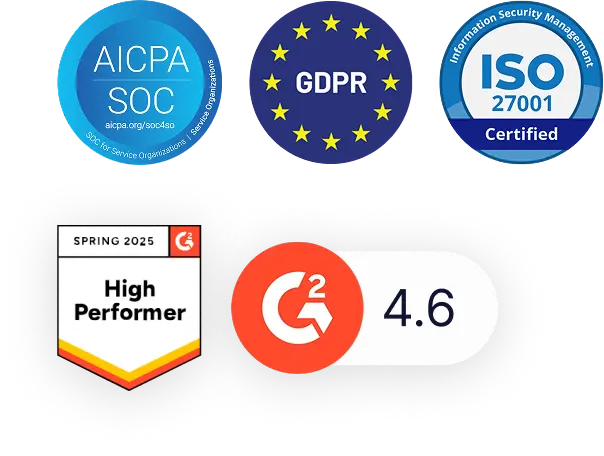
Maintenance risk: Nools has had minimal meaningful commit activity for years, with no maintainer triaging issues or addressing vulnerabilities. Nected ships continuously, with active development, a public roadmap, and SOC 2 Type 2 / ISO 27001 / GDPR certifications maintained on an ongoing basis.
Rule ownership: Every Nools rule lives in a .nools DSL file or JavaScript code, meaning every change — no matter how small — is an engineering ticket. Nected's no-code rule editor lets product, ops, and compliance teams build, test, and publish rules directly, with changes going live in minutes.
Everything built from scratch: Nools provides Rete evaluation and nothing else — no connectors, no workflow engine, no governance layer, no UI, no audit trail, no test harness. Teams running Nools in production have effectively built (and must maintain indefinitely) a small platform around a library that itself receives no updates. Nected ships all of this built-in.
Zero observability: Nools offers no execution log, dashboard, or trace — debugging means reading console output. Nected provides real-time dashboards, execution tracing, and a compliance-ready audit log out of the box.
Nected is used by 500+ teams including PUMA, Bajaj Auto, and TATA 1mg. It is API-first, which means it integrates into existing backends without rearchitecting data layers. Because Nools rules are readable JavaScript/DSL, migrations typically map cleanly to Nected's rule types — condition-action rules, rule chaining, agenda groups, and Rete-style inference all have direct equivalents — and most teams complete migration in 2–3 weeks while running Nools in parallel until cutover.
Final Verdict
Nools served a real purpose for a period: a lightweight, embeddable Rete engine for JavaScript teams that didn't want a JVM dependency. For teams that already have it quietly running in a low-stakes service, there's no urgent need to rip it out overnight. But for any new evaluation in 2026 — or any team currently building new production decisioning logic on top of Nools — the calculus is straightforward and largely unfavorable.
The core problem is not that Nools' Rete implementation is bad; it's that Nools is, for practical purposes, a frozen codebase with no one responsible for its future. Every governance, observability, connector, and authoring capability that a real production rule system needs must be built from scratch — on a foundation that won't receive security patches, performance improvements, or compatibility updates as the Node.js ecosystem moves forward. That combination — high custom-build cost plus indefinite unaddressed risk — is a worse position than Drools' "engine works, ecosystem around it doesn't" problem, because at least Drools has Red Hat, a large community, and a path to commercial support if needed.
For teams currently on Nools, the practical question isn't "is this engine fast enough" — it's "are we comfortable running new business-critical logic on a dependency that may never be patched again, while we continue paying engineers to build and maintain governance, connectors, and observability around it indefinitely?" For most organizations, the honest answer points toward a platform-first alternative with active maintenance, built-in governance, and a substantially lower fully-loaded cost.
Frequently Asked Questions
Cloud SaaS on AWS (US East default; EU on Growth+). Self-hosted on Enterprise — Docker, Kubernetes, on-prem on your VPC. Air-gapped deployments supported for regulated industries.


Prabhat Gupta is the Co-founder of Nected and an IITG CSE 2008 graduate. While before Nected he Co-founded TravelTriangle, where he scaled the team to 800+, achieving 8M+ monthly traffic and $150M+ annual sales, establishing it as a leading holiday marketplace in India. Prabhat led business operations and product development, managing a 100+ product & tech team and developing secure, scalable systems. He also implemented experimentation processes to run 80+ parallel experiments monthly with a lean team.