.svg)
.png)
Quick Summary
Pega Platform is one of the most sophisticated enterprise software platforms available — and that sophistication is both its greatest strength and its most significant liability for teams evaluating it purely for decisioning. Built by Pegasystems over four decades of enterprise software development, Pega combines low-code application development, business process management, case management, and AI-driven next-best-action decisioning into a single integrated platform. For large enterprises running omnichannel customer engagement programs at scale — particularly in financial services, telecom, and insurance — Pega's Next-Best-Action engine is genuinely best-in-class. The AI model management, adaptive learning, and cross-channel orchestration capabilities are difficult to match in isolation.
The reality check is harder to hear but important to understand: Pega is a full enterprise platform that costs like one. License fees start at $200K/year and typically reach $400K–$600K+. Full implementation — including the Pega Center of Excellence required to sustain it — routinely costs $500K to $2M before any business value is delivered. If your organization needs comprehensive customer engagement decisioning, case management, CRM, workflow automation, and AI all governed under a single platform with deep audit controls, Pega may genuinely justify that investment. But for teams that need just decisioning — a fast, governed, maintainable rules and decision engine with AI capabilities — Pega is almost certainly the wrong answer. You will be paying for extensive capabilities you will never configure, and the operational complexity of supporting the full platform will consume engineering and budget that a focused decisioning platform would not require.
What Is Pega?
Pega Platform is an enterprise low-code application development and BPM platform developed by Pegasystems Inc. It has been in active development since the 1980s and is used extensively across financial services, insurance, telecommunications, retail, government, and healthcare. The platform is organized around several major component layers:
- Pega Platform: The core low-code development environment for building applications, workflows, case management solutions, and automation on top of Pega's model-driven architecture (PRPC — PegaRULES Process Commander).
- Pega Decision Hub (Customer Decision Hub / CDH): The AI-driven real-time decisioning and Next-Best-Action component. CDH evaluates customer context, propensity models, business constraints, and channel rules to deliver real-time action recommendations across web, mobile, contact center, and email.
- Pega AI / Process AI: Embedded machine learning model management, adaptive learning, predictive analytics, and AI-driven process automation capabilities integrated into the decisioning and workflow layers.
- Pega Customer Service: CRM and case management functionality built natively on the Pega Platform for contact center and service team workflows.
- Pega Infinity: The cloud-delivered version of the full Pega Platform, including all components in a SaaS and hybrid deployment model.
- Pega Launchpad: A simplified entry-point experience designed to make Pega more accessible for newer adopters and smaller-scale initial deployments.
- NBA Designer: Pega's no-code interface for configuring and managing Next-Best-Action strategies, intended to allow business users to define decision logic without writing code.
- Pega Connect: Integration framework for connecting Pega applications to external systems via REST, MQ, Kafka, and other protocols.
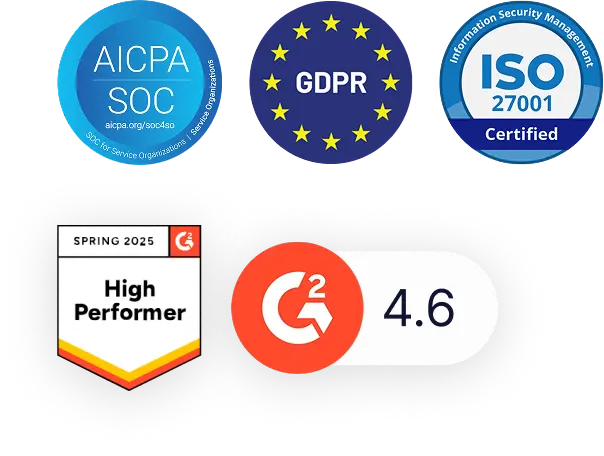
Pega is certified for SOC 2 Type 2, ISO 27001, GDPR, and FedRAMP (US Government cloud deployments) — a compliance portfolio comparable to IBM ODM and broader than most lightweight decisioning platforms.
How We Analyzed Pega's Abilities?
For this Pega review, we focused on the questions that matter most when a decisioning team is evaluating Pega: does the AI decisioning capability justify the platform cost, can business users genuinely self-serve in a platform built primarily for certified Pega developers, and is the TCO defensible when compared to focused decisioning alternatives that do not require a full enterprise platform footprint? A governance feature that ships with the platform is not equivalent to a governance feature that also works without months of PCSA-led configuration. And an enterprise license that bundles BPM, CRM, and case management is not comparable to a license priced for decisioning alone.
We structured our analysis around the eight parameters that define a production-ready decisioning system, with specific attention to whether Pega's enterprise capabilities actually reduce operational burden — or whether they shift it from infrastructure engineering to license, certification, and Professional Services overhead. Each parameter maps directly to the in-depth feature sections that follow.
Our analysis draws from Pega product documentation, the Pega Community, G2 and TrustRadius verified user reviews, comparison datasets maintained in this workspace, and real-world implementation cost models built from production-scale deployments across financial services, telecom, and insurance.
How Pega Works
Pega's decisioning model is built around Next-Best-Action — a real-time AI evaluation framework that determines the optimal action to deliver to a customer across channels. Here is how a typical Pega Decision Hub deployment operates:
- Strategy Definition in Decision Hub: Business users (with NBA Designer) and Pega-certified developers configure decisioning strategies — defining the actions available, the business constraints (engagement policies, volume constraints, fairness controls), the customer segments, and the AI propensity models that rank available actions.
- Model Training and Adaptive Learning: Pega AI trains and manages propensity models using historical customer interaction data. Adaptive learning models update continuously based on real-time customer response signals — click-throughs, acceptances, rejections — without requiring manual retraining cycles. Pega Prediction Studio provides a UI for managing the model lifecycle.
- Next-Best-Action Evaluation at Runtime: When a customer interaction triggers a decisioning request — a web visit, a call to the contact center, an email open — the Decision Hub evaluates the active strategy in real time. It scores all eligible actions against the propensity models, applies the configured business constraints, and returns a ranked set of actions in milliseconds.
- API / Channel Integration: The NBA decision output is delivered to the relevant channel — web personalization, contact center agent desktop, outbound email, mobile push — via REST APIs or pre-built channel integrations. Pega Connect manages the integration layer with external systems and data sources.
- Audit Logging and Governance: Every decision is logged with full context — what actions were considered, what models were applied, what constraints filtered the output, and what was ultimately recommended. This audit trail is critical for regulated industries and is built into the platform.
- Continuous Learning Loop: Customer response data flows back into the adaptive learning models, continuously improving propensity predictions over time. This closed-loop optimization is one of Pega's most differentiated capabilities and is a primary justification for the platform investment in large enterprise use cases.
Who Uses Pega?
Pega is used by large enterprises with the following profile:
- Global financial services institutions: Major banks, credit card companies, and wealth management firms use Pega Decision Hub for customer retention, cross-sell, upsell, and next-best-action personalization at scale. These organizations typically have multi-year Pega relationships and dedicated Center of Excellence teams.
- Large telecommunications providers: Telcos use Pega for customer engagement, churn prevention, and real-time offer management across contact center, web, and mobile channels — leveraging the omnichannel orchestration capabilities that are central to the Pega CDH value proposition.
- Insurance carriers and brokers: Pega's case management and decisioning capabilities are widely used for claims processing, policy administration, and customer service workflow automation in complex insurance operating environments.
- Government and regulated public sector organizations: Federal and state agencies use Pega for case management, workflow automation, and citizen service delivery — supported by Pega's FedRAMP authorization for government cloud deployments.
- Retail and healthcare enterprises: Large consumer-facing organizations use Pega for customer service case management and personalized engagement at scale.
Pega is generally a poor fit for mid-market organizations, startups, or any team that needs just decisioning without the full enterprise platform. The implementation complexity, certification requirements, and cost structure are calibrated for organizations with $100M+ annual technology budgets and multi-year enterprise software contracts. It is also a poor fit for teams that need business and risk teams to own rule changes without routing every meaningful change through PCSA-certified developers.
Reviews
- Real-time AI decisioning with built-in predictive analytics and adaptive learning
- Unified platform combining BPM, decisioning, case management, and AI
- Proven at enterprise scale with millions of real-time decisions per day
- Mature governance with versioning, audit trails, approval workflows, and RBAC
Pega's Next-Best-Action engine is genuinely impressive. We use it across our contact center, web, and mobile channels to deliver personalized decisions in real time. Once it's configured correctly, the AI continuously improves without manual intervention—that's a real competitive advantage.
The governance model is comprehensive. Our compliance team and our IT team can both sleep at night because Pega has audit trails, version control, and approval workflows built in. For a platform of this complexity, it's surprisingly well-governed.
 Verified Customer Reviews
- Meaningful changes require certified Pega architects and specialists
- Long implementation cycles with high upfront consulting costs
- Among the highest total cost of ownership in the decisioning market
- Overly broad platform if you only need business rules and decisioning
- Integrating with non-Pega systems adds engineering complexity
Pega is powerful but it is not cheap, and it is not fast to implement. We spent 14 months before our first production rule set was fully live. You need a dedicated Center of Excellence just to maintain it. If you don't have that, you will struggle.
The total cost of ownership is significant. License, implementation services, certified developers, infrastructure—it adds up to several million dollars before you've fully deployed. The ROI case requires very large volumes and real AI-driven value to justify it.
Verified Customer Reviews
In-Depth Pega Features Analysis
1. Execution & Scale
Pega Infinity, the cloud-delivered version of the platform, delivers managed auto-scaling and enforces latency SLAs for Next-Best-Action decision evaluations. For large enterprises running production CDH deployments, sub-100ms P95 response times are achievable and contractually supported in cloud tiers. This is a genuine strength — Pega has invested heavily in the infrastructure required to make AI-driven decisioning fast and reliable at enterprise scale. The adaptive model scoring, constraint evaluation, and channel routing that happen inside a single NBA call are architecturally complex, and Pega has made that complexity invisible at the application layer.
On-premises deployments tell a different story. Organizations running Pega on-prem or in private cloud configurations own the infrastructure management, capacity planning, and performance tuning responsibilities — and Pega's operational footprint is significantly heavier than lightweight decisioning engines. The platform requires multiple application server nodes, a dedicated Pega database tier, and supporting middleware that must be sized and maintained by the internal team. At production volumes, this is a non-trivial operations burden.
Pega's cloud-managed SLA also depends on case-volume-based capacity provisioning, which makes infrastructure cost difficult to forecast as transaction volumes grow — a contrast to platforms with predictable, throughput-based scaling tiers.
Strengths:
- Cloud-managed SLA for sub-100ms NBA decisioning at enterprise volumes is a genuine differentiator vs. self-hosted alternatives.
- Auto-scaling in Pega Infinity removes infrastructure management from the operational model for cloud deployments.
- Stateful session support enables complex multi-step case management and long-running workflow scenarios that simpler decisioning engines cannot handle.
Drawbacks:
- On-prem and private cloud deployments require significant infrastructure investment and operational expertise to match cloud performance guarantees.
- Heavy platform footprint means infrastructure costs are substantially higher than focused decisioning platforms at equivalent throughput levels.
- Performance tuning for on-prem deployments requires certified Pega infrastructure expertise that commands premium hiring costs, and capacity planning is harder to forecast than throughput-based pricing models.
2. Build & Author
Pega's authoring story is more accessible than a pure engineering platform like Drools — but significantly less accessible than the "business-user self-service" framing in Pega's marketing suggests. NBA Designer and App Studio provide a structured interface for configuring Next-Best-Action strategies: defining action libraries, setting engagement policies, configuring propensity models, and managing eligibility rules. For the specific task of maintaining an already-configured CDH deployment, business-facing roles can make updates within the bounds App Studio enforces.
Where the self-service boundary breaks down is in non-trivial configuration changes: new data integrations, new channel connections, changes to the underlying customer data model, new adaptive model pipelines, and custom business logic beyond what App Studio's structured UI supports. These all require certified Pega developers (CSA, CSSA, or PCSA) who understand PRPC, Pega's model-driven architecture, and the full configuration layer beneath App Studio. The implication is that business teams can manage day-to-day decisioning adjustments but remain dependent on engineering for anything structural — and PCSA contractors typically bill at $200–$500/hour. This is meaningfully better than Drools, but it is not the business autonomy that most organizations are looking for when they evaluate modern decisioning platforms.
Pega's GenAI Blueprint and Pega AI capabilities represent a genuine investment in AI-native authoring support — using generative AI to accelerate case type and workflow creation. For decisioning specifically, the adaptive learning and propensity modeling capabilities (ADM) are best-in-class. These are genuine architectural advantages for organizations where the AI self-improvement loop is the primary value proposition, though GenAI Blueprint is sold as a separate add-on with its own contract and is still early in maturity.
Strengths:
- App Studio / NBA Designer provides a structured, accessible interface for managing Next-Best-Action strategies without writing code — a meaningful step beyond developer-only platforms.
- Adaptive learning models (ADM) update automatically from customer response data, removing the manual retraining cycles that burden less sophisticated decisioning systems.
- Centralized Customer Data Model and property library reduce the maintenance overhead that plagues distributed rule sets in lower-maturity platforms.
Drawbacks:
- Non-trivial configuration changes require PCSA-certified developers — the self-service boundary is narrower than the platform marketing implies, and contractor rates add up quickly.
- Pega's expression language is proprietary and not transferable; engineers who learn it are invested in the Pega ecosystem, not a portable skill.
- JavaScript and general-purpose code are not natively supported in rule logic; teams with existing scripting investments face a re-authoring requirement, and AI Copilot/GenAI features require a separate platform contract.
3. Operate & Govern
This is one of Pega's strongest dimensions on paper. The governance controls that Drools requires six months of custom engineering to build ship with Pega out of the box. RBAC, audit trails, approval workflows, versioning, and SSO are all native platform features — which is critical for regulated industries where these controls are compliance requirements, not nice-to-haves. For financial services, insurance, and government organizations where every rule change needs a documented approval chain and every decision needs a retrievable audit record, Pega's governance maturity is a genuine differentiator versus open-source alternatives.
The practical qualification is that Pega's governance model is sophisticated, Pega-specific, and not always business-accessible. The audit trail is platform-wide rather than rule-specific, and surfacing "who changed this rule and why" in a business-readable way typically requires additional configuration. Operating these controls at scale requires the Pega Center of Excellence — trained administrators who understand DCO processes, Pega Deployment Manager, and the PRPC configuration layer. Organizations that have invested in the Center of Excellence get significant operational value from built-in governance. Organizations that try to run Pega with a small team of uncertified administrators find that the governance tools become sources of operational risk rather than guardrails, and that one-click rollback in practice means "open a ticket for a PCSA developer."
Pega Deployment Manager integrates with CI/CD pipelines (Jenkins, Azure DevOps, GitLab) for automated testing and deployment, though Pega's native version control (DCO) is distinct from Git and requires translation tooling for organizations running Git-first workflows. This is a friction point for engineering teams expecting standard Git-based governance.
Strengths:
- Full maker-checker approval routing, RBAC, audit trails, and environment promotion ship with the platform — no custom build required.
- Enterprise SSO support eliminates the custom IdP integration work that plagues open-source platforms.
- Pega Deployment Manager provides structured CI/CD integration for automated testing and controlled production deployments.
Drawbacks:
- Governance tooling requires a trained Pega Center of Excellence to operate reliably at scale — it does not run itself, and rollback in practice routes through PCSA developers.
- The platform-wide audit trail is not rule-specific and lacks a business-readable UX, limiting self-service for compliance teams.
- Native version control (DCO) is distinct from Git, creating friction for teams expecting standard Git-based workflows and branching strategies, and the governance model does not transfer if you ever need to migrate.
4. Integrations & API
Pega's integration story is comprehensive but proprietary. The Pega Connect framework supports REST, MQ, Kafka, SOAP, and file-based integrations, and Pega has pre-built connectors for major enterprise systems (Salesforce, SAP, Genesys, Adobe). For organizations deeply embedded in the Pega ecosystem, these integrations provide genuine value. For organizations running modern API-first microservices architectures, the Pega integration layer adds a translation overhead — your team must work through Pega Connect's connector model and PCSA-managed configuration rather than calling APIs directly or using a no-code connector.
The most significant integration gap for engineering teams expecting modern development practices is the absence of native GitHub Sync. Pega uses its own Deployment Change Order (DCO) model for version control and deployment — which integrates with CI/CD pipelines but does not support the Git-native branching and code review workflows that modern software teams rely on. Import and export of rule entities produces Pega-proprietary, environment-specific RAP or ZIP archives that are not portable outside the Pega ecosystem and have no cloud-native export path. This is less a technical limitation and more a reflection of the platform's design philosophy: Pega is a closed ecosystem by intention.
Strengths:
- Pre-built connectors for major enterprise systems (Salesforce, SAP, Genesys) reduce integration effort for organizations in standard enterprise technology stacks.
- Native Kafka and MQ support enables event-driven decision architectures for high-volume streaming use cases.
- Pega data pages provide a structured data federation model for combining customer data from multiple sources in NBA evaluations.
Drawbacks:
- No no-code DB or API connectors — Pega Connect configuration requires PCSA-certified developers, eliminating self-service integration setup.
- No native GitHub Sync; Pega's proprietary DCO model requires additional tooling for Git-first engineering organizations.
- Import/export produces Pega-proprietary, environment-specific artifacts with no cloud-native export — reinforcing vendor lock-in and complicating multi-environment promotion.
5. Support / SLA
Pega's enterprise support model reflects its pricing tier: 24/7 support, contractual SLAs, dedicated account teams, and the full weight of Pegasystems Professional Services behind production deployments. For organizations that have made a $500K+ platform commitment, this support model is appropriate and expected. The Pega Community is active, the documentation is extensive, and the certification pathway (CSA to CSSA to PCSA to LSA) provides a structured career track for Pega-specialized developers.
The practical qualification is cost. Pega Professional Services engagements are not included in the license fee — they are charged separately at consulting rates that typically run $150–$500/hour depending on the certification level required. For organizations that rely heavily on Professional Services for implementation and ongoing feature development, this represents a significant additional cost layer that must be factored into the TCO. Migration assistance exists, but it is a paid engagement; Pegasystems does not offer migration tooling or cost-free transition support.
Pega Academy provides a comprehensive training curriculum, but certification programs carry their own cost — typically $50K–$150K/year across a Pega team, depending on team size and certification level mix. Organizations that need to build internal Pega capability from scratch should budget training costs explicitly, as uncertified developers operating Pega in production are a meaningful operational risk, and many organizations end up keeping PCSA contractors on retainer as a permanent staffing line rather than a one-time cost.
Strengths:
- 24/7 enterprise support with contractual SLAs is the expectation at Pega's price point — and Pegasystems delivers it.
- Pega Community, Pega Academy, and a large global partner ecosystem provide extensive knowledge resources.
- Dedicated account teams and CSMs for enterprise contracts provide proactive engagement that goes beyond reactive ticket resolution.
Drawbacks:
- Professional Services are separately charged and expensive ($150–$500/hour) — organizations that depend on them for implementation and ongoing development face significant cost escalation beyond the license fee.
- Pega Academy certification costs are substantial and represent a recurring investment as the team grows or turns over; PCSA contractor retainers often become a permanent staffing dependency.
- Migration assistance requires a paid Professional Services engagement; there is no lightweight migration tooling or cost-free transition support.
6. Security & Compliance
Pega's security and compliance posture is one of the strongest in the enterprise software market. SOC 2 Type 2, ISO 27001, GDPR, and FedRAMP certifications are maintained and documented — providing regulated industry organizations with the compliance artifacts their security and legal teams require without a custom instrumentation project. For financial services organizations subject to DORA, for healthcare organizations subject to HIPAA, and for government agencies requiring FedRAMP, Pega's compliance coverage is a genuine differentiator versus open-source and many lightweight platforms.
Multi-tenancy support and white labelling capabilities make Pega viable for organizations running platform-as-a-service businesses or multi-brand deployments — use cases that require enterprise-grade tenant isolation that open-source and lightweight platforms do not provide out of the box. Encryption at rest and in transit with enterprise key management options rounds out a security posture that passes the scrutiny of large enterprise security review processes.
The qualification is deployment model coverage. Cloud deployments (Pega Infinity / Pega Cloud) carry the full compliance posture as documented. On-premises and private cloud deployments shift the compliance burden — the security architecture is the customer's responsibility, and maintaining the same compliance posture in a self-managed environment requires significant investment in security tooling, configuration management, and audit infrastructure. Unlike platforms that support deployment to any third-party cloud, Pega's deployment options are limited to Pega Cloud or on-premises.
Strengths:
- SOC 2 Type 2, ISO 27001, GDPR, and FedRAMP certifications provide pre-built compliance coverage for regulated industries — broader than most competitors.
- Enterprise-grade multi-tenancy and white labelling support complex multi-brand and platform-as-a-service deployment models.
- Flexible deployment model — Pega Cloud, private cloud, and on-prem — accommodates diverse data residency and sovereignty requirements.
Drawbacks:
- On-premises deployments shift the compliance responsibility to the customer — the platform certifications do not automatically transfer to self-managed infrastructure.
- Deployment is limited to Pega Cloud or on-premises; there is no option to deploy on a third-party cloud of the customer's choosing.
- Security review for new Pega deployments is a lengthy process — regulated organizations should budget for 3–6 months of security and compliance validation before production approval.
7. Logs / History / Reports
Observability is a genuine strength in Pega compared to open-source alternatives, though it is more developer- and analyst-oriented than business-facing. The Decision Hub provides built-in analytics for Next-Best-Action performance — showing action acceptance rates, propensity model performance, channel effectiveness, and engagement volume over time via Pega ADM. The decision audit trail logs the full context of every NBA evaluation — which actions were considered, which models were applied, which constraints filtered the output, and what was ultimately recommended. For compliance teams in regulated industries who need to answer "why did this customer receive this offer?" or "what constraints governed this decision?", Pega provides this visibility without a custom engineering project.
The NBA analytics in particular are sophisticated: data scientists and product owners can see which actions are performing, identify engagement policy constraints that are filtering too aggressively, and monitor adaptive model drift — all within ADM. This is meaningfully more accessible than the custom observability builds required by open-source platforms, but it leans toward data-scientist tooling rather than a business-readable dashboard.
The qualification is that accessing the full depth of Pega's reporting and monitoring capabilities requires training and, in many cases, additional licensing. Pega Tracer is a developer tool, not a compliance-ready audit interface. Non-trivial customization of dashboards, custom report definitions, and integration with enterprise BI tools (Tableau, Power BI, Snowflake) require Pega Insights — sold as a separate add-on — or Pega configuration expertise. Tags and folders for organizing rule and strategy assets are not available, which becomes a navigation problem as the rule estate grows. Organizations that want reporting that extends beyond Pega Pulse's pre-built templates should budget for Pega Insights licensing and configuration work in their implementation scope.
Strengths:
- Pega ADM provides business-accessible visibility into decisioning performance — acceptance rates, model drift, and constraint impact — without a custom build.
- Full decision audit trail with action scoring and constraint evaluation history satisfies compliance and explainability requirements for regulated industries.
- Real-time operational health monitoring via Pega Pulse and integration with enterprise monitoring platforms provides proactive alerting for platform issues.
Drawbacks:
- Tags and folders are absent — large rule and strategy repositories become difficult to navigate and manage as the estate scales.
- Pega Tracer is a developer-only debugging tool, not a business-readable or compliance-ready audit interface.
- Custom report definitions and BI tool integration require the separately-licensed Pega Insights add-on or Pega configuration expertise — not self-service for business analysts.
Pricing & ROI
Pega does not publish pricing, and there is a reason for that: the numbers are large enough that Pegasystems prefers to present them in the context of an ROI conversation rather than a product listing. License fees for Pega Platform with Decision Hub access typically range from $200K to $600K+ per year, depending on deployment scale, channel scope, and contract structure, and are often indexed to case volume and user count rather than a flat rate. Annual platform fees often sit on top of usage-based fees for transaction volumes, AI model calls, and channel interactions. Implementation costs — including Pega Professional Services, system integration, and the time required to stand up a Pega Center of Excellence — routinely run $200K to $1M+ before go-live, with full enterprise CDH programs reaching $2M+. The total first-year investment for most enterprise Pega deployments exceeds $1M, and frequently exceeds $2M.
The core problem for teams evaluating Pega for decisioning specifically is that you are buying a full enterprise platform to access the decisioning layer. The BPM engine, the case management framework, the CRM layer, the low-code app development environment, the full Pega Deployment Manager toolchain — all of it comes with the license, and all of it contributes to the implementation complexity, the Center of Excellence requirement, and the operational overhead. If your requirement is governed, scalable, AI-assisted rule and decision logic, you are paying for capabilities three to five times larger than what you need — and every expansion (new business unit, new use case, new environment) triggers a new commercial conversation rather than a predictable rate card.
Total Cost of Ownership Comparison
What the Numbers Actually Mean
Pega's TCO reflects what you are buying: a comprehensive enterprise platform with best-in-class AI decisioning, built-in governance, enterprise support, and a broad compliance certification portfolio. Every line item in the Pega column is real — but so is the scale. A $600K–$1.5M Year 1 investment requires a clear, quantified ROI case. For global financial institutions deploying NBA across millions of customer interactions with measurable revenue impact, that ROI case closes. For most organizations, it does not — and the cost is further compounded by PCSA contractor rates ($200–$500/hour) for the rule and strategy changes that are supposedly business-accessible.
IBM ODM is Pega's closest peer in cost profile (≥$540K Year 1) — but for different structural reasons. IBM's costs are concentrated in license, middleware, and ops overhead. Pega's are concentrated in Professional Services, PCSA contractor dependency, and certification training that recurs every year regardless of how mature the deployment is. Both are defensible for the specific organizations they were built for; neither is defensible for organizations that need decisioning rather than a full enterprise platform.
InRule sits at a meaningfully lower Year 1 floor ($250K–$650K) — but the savings are partly illusory. InRule's lower license cost is offset by $30K–$100K in enterprise feature build (maker-checker is not built in) and $20K–$80K in tech debt that compounds as the .NET integration tax accumulates. For regulated industries where Pega's governance model is overkill, InRule's lighter posture is attractive — but the governance gap it creates has to be filled by process workarounds that add their own overhead.
Nected sits in a fundamentally different category. The license fee is real but modest — $20K–$80K per year — and it replaces the middleware, PCSA dependency, Center of Excellence, certification training, and most of the operational overhead that Pega carries as separate, recurring cost lines. The implementation timeline is days to weeks, not 6–18 months. At 100 TPS, Nected's Year 1 TCO of $60K–$223K represents roughly 70–90% in savings versus Pega's $600K–$1.5M. At 1,000 TPS over three years, the gap widens to $180K–$669K for Nected versus $1.8M–$4.5M for Pega — a saving of up to $3.83M.
Top 3 Pega Alternatives
The table below compares Pega against the three most commonly evaluated alternatives across the seven capability dimensions that determine real production-readiness — not whether a feature technically exists, but whether it ships with the product or lands in your engineering backlog.
Looking for the full list of Pega alternatives? See our deep-dive → Top 10 Pega Decisioning Alternatives for 2026
Why Teams Compare Nected Against Pega
When teams evaluate Pega for decisioning — or when organizations already running Pega examine whether the platform investment is still justified — four gaps consistently trigger the comparison with Nected:
Cost and time-to-value: Pega's Year 1 TCO at 100 TPS runs $600K–$1.5M with a 6–18 month implementation timeline. Nected's Year 1 TCO runs $60K–$223K with a deployment timeline measured in days to weeks. At 1,000 TPS over three years, Pega runs $1.8M–$4.5M versus Nected's $180K–$669K — a saving of up to $3.83M. For organizations that need governed decisioning but cannot justify a multi-million dollar platform investment with an 18-month ramp, the cost comparison alone ends the evaluation quickly.
Platform overhead for decisioning-only use cases: Pega bundles BPM, case management, CRM, low-code app development, and AI decisioning into a single platform. If your requirement is decisioning, you are inheriting the operational complexity of a full enterprise platform. Nected is purpose-built for decisioning — there is no BPM engine to maintain, no case management framework to configure, and no low-code app development platform to govern alongside your rule sets.
Business-user accessibility without a Center of Excellence: Pega requires a dedicated Pega Center of Excellence — certified CSA/CSSA/PCSA developers, Professional Services engagement, and Pega Academy training investment — to operate reliably, with PCSA contractors billing $200–$500/hour for routine CDH changes. Nected's no-code editor enables business and compliance teams to author, review, and publish decision logic without engineering in the critical path. The accessibility gap is real: teams that move from Pega to Nected consistently report that rule change velocity increases dramatically when the authoring dependency on certified platform developers is removed.
Vendor lock-in and migration risk: Pega's model-driven architecture, proprietary DCO version control, and Pega-specific expression language create migration risk that compounds with every year on the platform. Organizations that want to maintain architectural optionality — or that have already recognized the lock-in risk and want a clear migration path — find Nected's API-first, standards-based architecture significantly more flexible. Migrations from Pega CDH to Nected, scoped to the decisioning layer, typically complete in 6–10 weeks, with Pega staying live as the system of record throughout the parallel-run validation phase.
Nected is used by 500+ teams including PUMA, Bajaj Auto, and TATA 1mg. It is API-first, which means it integrates into existing backends without adopting a new application architecture. Rule changes go through a visual builder with a draft/publish lifecycle and maker-checker approval flows, giving business and compliance teams real ownership over policy without engineering acting as the bottleneck on every update.
Final Verdict
Pega Platform and Pega Decision Hub are genuinely impressive enterprise software. The Next-Best-Action engine is best-in-class for AI-driven customer engagement decisioning. The governance controls, compliance certifications, and adaptive learning capabilities are difficult to match in isolation. For Global 500 financial institutions, large telecommunications providers, and major insurance carriers running omnichannel customer engagement at massive scale — with the budget, staffing, and multi-year commitment that entails — Pega may be exactly the right answer.
But for the overwhelming majority of organizations evaluating decisioning platforms in 2026, the real question is not whether Pega is a good platform. It is whether your organization needs a full enterprise BPM + CRM + AI + case management platform, or whether it needs governed, scalable, maintainable decision logic that can be built and changed by business and engineering teams together — quickly, affordably, and without a Center of Excellence and a standing PCSA contractor bill.
On that question, Pega's architecture, cost structure, implementation timeline, and vendor lock-in profile consistently push it out of scope for teams that need decisioning without the full enterprise platform overhead. The three-year TCO gap between Pega and Nected — $1.8M–$4.5M vs. $180K–$669K at 1,000 TPS — represents a difference in organizational investment that most teams cannot justify when the requirement is decisioning, not platform transformation.
If you are certain your organization needs everything Pega offers — the BPM engine, the case management framework, the CRM layer, the AI decisioning, all governed under a single model-driven architecture — then Pega deserves serious evaluation. If you are evaluating Pega because you need decisioning and Pega is what your legacy evaluation process surfaced, look carefully before committing. The alternatives available in 2026 — including Nected — deliver the decisioning capabilities that matter most at a fraction of the cost, without the platform footprint, the PCSA dependency, or the multi-year implementation commitment that Pega requires.
Frequently Asked Questions
Cloud SaaS on AWS (US East default; EU on Growth+). Self-hosted on Enterprise — Docker, Kubernetes, on-prem on your VPC. Air-gapped deployments supported for regulated industries.


Mukul Bhati, Co-founder of Nected and IITG CSE 2008 graduate, previously launched BroEx and FastFox, which was later acquired by Elara Group. He led a 50+ product and technology team, designed scalable tech platforms, and served as Group CTO at Docquity, building a 65+ engineering team. With 15+ years of experience in FinTech, HealthTech, and E-commerce, Mukul has expertise in global compliance and security.