.svg)

.svg)


.png)

Availability of working capital financing is one of the key pain points for small and mid-size enterprises (SMBs). It can be about financing of inventory purchases, payroll financing, or seasonal cash flow management, and the business needs funding without exiting the applications they work with on a daily basis.
It became clear why more companies opt for embedded credit. Rather than redirecting clients to third-party lenders, platforms now have the ability to provide credit facilities right inside the existing business process.
For software companies, marketplaces, payment gateways, and procurement platforms, embedded credit brings additional value and helps improve client retention. The difficult part is selecting the platform that provides flexibility in underwriting, integration capabilities, and scalable workflow automation.
This guide will help you understand what embedded credit is and the key features to consider when looking at different platforms to implement SMB credit programs.
Why SMB Platforms Are Embedding Credit Lines?
Small businesses can also suffer from short-term cash flow problems despite high revenue. Customer delays, purchase of inventory, expansion, and seasonality usually require quick cash.
Traditionally, businesses sought financing either via the bank or from third-party lenders. Such a process usually involved many documentation requirements, manual underwriting, and long approval periods.
However, with embedded credit, businesses get funding right where they perform their operations.
For instance:
- An accounting solution can provide working capital based on invoicing.
- A B2B marketplace can finance the inventory of its sellers prior to the rush period.
- A payment solution can provide revolving credit via transactional data.
- A procurement platform can offer flexible payment terms at checkout.
Since credit solutions are embedded in existing processes, users spend less time filling in applications and more time doing business.
Embedded credit is also beneficial for the platform.
By providing not only software but a part of the financial operations of its customers, platforms engage its customers better, get extra sources of revenue, and improve its customers' loyalty.
The modern lending infrastructure has also minimized implementation barriers. Instead of building an underwriting system, repayment engine, servicing platform, etc., companies can use configurable services provided by API-first providers.
Key Features to Look for in an Embedded Credit Platform
Not every embedded credit platform offers the same capabilities. There are platforms that place particular emphasis on lending technology infrastructure, whereas some platforms will specialize in underwriting, loan servicing, and workflow automation.
In selecting an embedded credit platform, you should consider the following factors:
- API-first architecture: Easy integration with your product and third-party systems like CRMs, payment gateways, accounting tools, and compliance solutions.
- Flexible underwriting: Support for custom lending rules based on revenue, cash flow, payment history, transaction volume, customer risk, and alternative financial data.
- Loan servicing: Built-in capabilities for repayment schedules, interest calculations, payment tracking, statements, and delinquency management.
- Compliance support: Features such as audit trails, customer verification, consent management, reporting, and regulatory documentation.
- Workflow automation: Automation of identity verification, document collection, underwriting, fraud checks, approvals, and other credit decision processes.
- Scalability: The ability to handle growing application volumes, new lending products, and evolving underwriting policies without major system changes.
How Embedded Credit Lines Work in SMB Workflows?
Although implementations vary across industries, embedded credit generally follows a similar process.
Step 1: Customer eligibility
In determining whether the client is eligible to be financed, the system evaluates the following conditions:
- Business income
- Transaction history
- Activity
- Credit history
- Customer lifespan
Step 2: Application
The client fills out the application documents. This information is readily available for some applications due to the presence of the integration.
Step 3: Underwriting
The lender reviews the application based on financial data, previous repayment, risk models, and business rules. While some applications get automatically approved, others require a manual underwriting process.
Step 4: Credit approval
If the customer gets approved, they will get a line of credit with defined borrowing amounts, repayment schedule, and any fees.
Instead of providing the customer with a loan, most embedded credit products issue a line of credit, which allows businesses to borrow at their discretion when they need extra money.
Step 5: Ongoing monitoring
The platform monitors repayment behavior, account performance, and customer behavior after providing funds.
This data assists the lenders in modifying the limits on credit provided by them and making decisions for future underwriting of credit. It is not only about providing money but also integrating the credit process seamlessly in the operations of the businesses.
Best Platforms for Adding Credit Lines to SMB Workflows
The right embedded credit platform depends on your customers, lending model, integration requirements, and the level of control you want over the credit experience. Some platforms offer lending solutions end-to-end, but others concentrate on lending services, banking infrastructure, and automation of work processes.
Below are some popular platforms that are used to build lending experiences for SMBs.
1. Finmid
Finmid provides a lending integration platform for SaaS companies, marketplaces, and B2B businesses that want to provide lending without being lenders themselves. They can integrate lending services through APIs, and Finmid will take care of the underlying infrastructure.
Best for: SaaS platforms and B2B marketplaces that want to embed working capital or credit offers without building lending infrastructure.
Strengths
- Enables embedded lending through APIs without requiring businesses to become lenders.
- Manages lending infrastructure and partner integrations behind the scenes.
- Supports faster deployment of embedded credit products.
Considerations
- Lending availability depends on supported regions and partner network.
- Businesses should verify supported lending products before implementation.
2. Unit
Unit provides a Banking-as-a-Service framework encompassing accounts, cards, payments, and lending functionalities. Businesses intending to move from lending services to more comprehensive embedded finance offerings tend to opt for this framework.
Best for: Businesses that want to combine embedded lending with banking services such as accounts, cards, and payments.
Strengths
- Provides banking and lending APIs through a single platform.
- Supports building complete embedded finance experiences.
- Offers developer-friendly APIs for custom integrations.
Considerations
- May include more banking functionality than businesses need if they're only offering credit.
- Implementation can be more complex than lending-focused platforms.
3. Nected
Unlike lending providers, Nected focuses on the decisioning and workflow automation that supports embedded credit programs.
Many organizations already have lending partners, underwriting engines, fraud detection services, and KYC providers. The challenge is coordinating these systems into a consistent customer journey without embedding business rules across multiple applications.
Nected is a rule engine and workflow management system that enables automated credit decision-making capabilities within the existing lending infrastructure of the organization.
Best for: Businesses that already have lending partners and need to automate credit decisioning, approvals, and workflow orchestration.
Strengths
- Centralizes lending rules without embedding business logic in application code.
- Automates underwriting workflows, approvals, KYC, fraud checks, and third-party API orchestration.
- Makes lending policies easier to update through configurable workflows instead of code changes.
Considerations
- Does not provide lending capital or underwriting services itself.
- Works alongside existing lenders, credit scoring, and servicing platforms.
How Nected Simplifies Credit Decisioning and Workflow Automation?
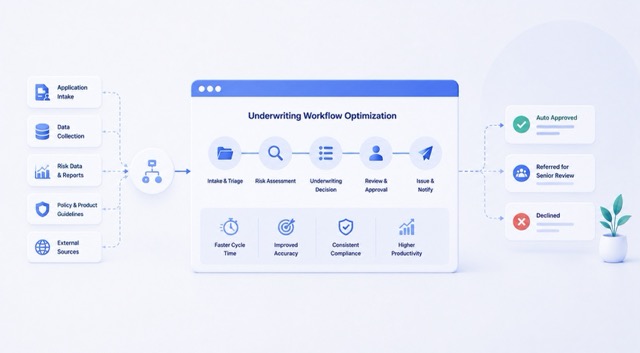
Deploying embedded credit also means more than processing applications. Processing just one credit application could involve:
- Identification check
- Verification of business
- Fraud detection
- Credit scoring
- Analysis of cash flow
- Qualification check
- Approval of risky applications manually
- Notifications to the customers
- Logging audits
Such processing is done via application code, which makes it harder to manage as lending policies change. Nected simplifies this processing by implementing business rules that are configurable.
For instance, an embedded credit process can automatically:
- Determine whether the applicant meets qualification criteria.
- Use credit scoring APIs.
- Verify the registration of the business.
- Generate additional documentation if needed.
- Send high-risk applications to underwriters.
- Notify customers of the lending decision.
- Log all the steps of the process.
These processes are configurable through a low-code application platform, allowing lending policies to be updated without changing application code.
4. LoanPro
Unlike other software that focuses on lending, LoanPro is more about loan servicing than loan origination. Companies that have underwriting systems normally choose LoanPro for repayment management, account management, payments scheduling, and servicing needs.
Best for: Lenders that need a configurable loan servicing platform after loans have been originated.
Strengths
- Supports repayment scheduling, payment processing, and loan servicing.
- Handles complex servicing scenarios for large loan portfolios.
- Offers extensive servicing configuration and reporting.
Considerations
- Does not focus on loan origination or underwriting.
- Typically requires integration with separate onboarding and decisioning systems.
5. Lendflow
Businesses can use Lendflow to connect with multiple lenders through one integration process. There is no need for the firm to have a connection with each lender, as they can get funding from multiple lenders.
Best for: SMB platforms that want to offer financing by connecting customers with multiple lending partners.
Strengths
- Connects businesses to multiple lenders through a single API.
- Expands financing options without individual lender integrations.
- Reduces implementation effort for embedded lending.
Considerations
- Available financing options depend on participating lenders.
- Credit products and eligibility vary across lending partners.
Comparing Embedded Credit Platforms: Features, Pricing, and Use Cases
Choosing a platform involves balancing implementation speed, flexibility, operational complexity, and long-term scalability.
The following comparison highlights the primary focus of each platform.
The pricing mechanisms vary between different service providers and could be based upon:
- Platform charges per month
- Number of transactions
- Revenue sharing
- Loan origination charges
- API charges
- Enterprise licensing
Rather than just comparing the prices, take into account the overall efforts required for implementation and integration. A platform that reduces manual work and accelerates deployment often provides greater long-term value than one with lower licensing costs but limited automation capabilities.
Building and Scaling SMB Credit Programs: Challenges and Best Practices
Launching an embedded credit program is only the beginning. As the number of applications increases, the need to have a consistent process in terms of decision-making, efficient operation, and flexible modification of lending policies without affecting the customer’s experience becomes necessary.
Challenge 1: Inconsistency of Lending Policies
The problem of consistent application of lending policies is difficult to solve in the case of their use in different applications.
Different customer flows use different eligibility criteria, which creates operational inconsistency.
Best practice
Leverage configurable business rules to unify lending policies in a way that will guarantee the same approval flow for every application regardless of its origin.
Challenge 2: Underwriting Workflow Bottleneck
Manual underwriting workflow does not scale as the number of lending transactions grows. Common applications use the underwriter’s time that could be dedicated to complex applications.
Best practice
Implement automated eligibility checks and document verification, approve low-risk applications, and route high-risk applications for underwriting.
Challenge 3: Integrating With Multiple Service Providers
An embedded credit program can involve many external services like:
- Credit bureaus
- Identity verification service
- Fraud detection service
- Banking APIs
- Payment providers
- Loan servicing platform
Integration via custom code leads to extra maintenance effort.
Best Practice
Manage the processes for integration with other external systems.
Challenge 4: Ensuring Compliance With Regulations
Credit decisions have to be transparent and auditable. Without adequate documentation, handling regulatory compliance becomes impossible.
Best Practice
Maintain an audit log of all decisions, comprising eligibility criteria, processing, approval process, and customer contact.
Challenge 5: Scaling Up While Maintaining Operational Costs
The greater number of credit applications may surpass the ability of the operations team to process all applications. Merely increasing the number of employees will not be sufficient to address this challenge.
Best Practice
Automate the mundane process and allow the complicated ones to be managed by seasoned underwriters. This improves scalability without compromising decision quality.
Read more: Business Rule Engine in Banking
Conclusion
Embedded credit enables SMB platforms to offer financing within existing workflows, creating a faster and more seamless borrowing experience. Choosing the right platform depends on factors like integration, underwriting flexibility, loan servicing, compliance, workflow automation, and scalability.
For businesses that already have lending partners but need to automate credit decisions and orchestrate complex workflows, Nected provides a flexible way to centralize business rules, streamline approvals, and scale embedded credit operations without hardcoding lending logic.
FAQs
What is an embedded credit platform?
An embedded credit platform makes it possible for businesses to provide financing directly in their software or platform without sending customers off to a third-party lender.
Who would gain most from embedded credit solutions?
Embedded credit services are often leveraged by SaaS, B2B marketplaces, procurement, payments, and fintech businesses providing small and medium-sized businesses with solutions.
How are embedded credit decisions made?
The majority of platforms rely on the evaluation of business information, financial data, transaction history, credit scores, and defined lending criteria for acceptance or rejection of applications.
Do businesses have to become lenders to embed credit in their platform?
No. Many businesses work in partnerships with lending institutions, which handle lending, compliance, and servicing of loans while the business is embedding it in its product.
What should I consider when choosing an embedded credit platform?
Assess the ability of the API to provide for workflow automation, compliance support, loan servicing, underwriting flexibility, scalability, and integration with current systems.
How is workflow automation helpful for embedded credits?
Workflow automation makes the process of qualification, credit scoring, documentation, authorization, and coordination with third-party organizations automated; therefore, it ensures consistency of the decision-making process and decreases the effort involved.
Are embedded credits scalable without increasing the complexity of operations?
Yes, because decision workflows can be automated, rules can be centralized, and lending services can be integrated, thus allowing businesses to handle more applications without increasing manpower.
Does Nected offer lending services?
No. Nected is neither a lender nor an application origination platform. Nected automates the credit decision workflow with orchestration of business rules, approvals, and integration with lending, fraud, identity verification, and underwriting services.


.svg.webp)






.webp)




.webp)
.webp)
.webp)


%20(1).webp)