.svg)

.svg)



.png)

The scope of fraud has widened beyond lost cards or fraudsters using someone else’s identity. The institutions have to combat synthetic identity, account takeover, APP fraud, mule account, deep fake impersonation, and social engineering among other evolving types of fraud. This makes it hard for traditional fraud detection systems to detect and counter the emerging forms of frauds.
Traditionally, fraud has been detected through rule sets and machine learning models which were very effective in detecting fraud in a certain context but not in explaining complex fraud patterns, investigating alerts or responding quickly to emerging methods.
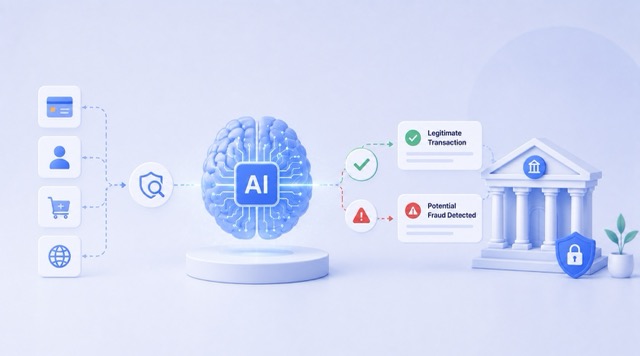
Generative AI brings a new set of capabilities. In addition to being able to classify transactions as fraudulent or legitimate, Generative AI is able to process structured and unstructured data at scale, summarizing an investigation, explain the reason behind an alert, discover connections between entities and help the fraud analyst during an investigation.
As opposed to replacing existing fraud detection systems, Generative AI provides the ability to conduct fraud investigations faster and make more informed decisions while reducing operational burden due to rising alerts.
Why Fraud Teams Are Rethinking Traditional Detection Strategies
Traditional fraud detection relies on business rules and machine learning models to identify suspicious activity. Rules recognize known fraud patterns using pre-defined criteria, whereas Machine Learning algorithms assess the risks based on analysis of transaction behavior history. However, despite being crucial in the fraud detection process, there is a drawback associated with their use, especially in situations where fraud patterns are changing rapidly.
Current challenges of fraud detection go way beyond recognition of potentially suspicious transactions.
- Increasing number of Alerts
The banks produce thousands of alerts about possible fraud each day, however, some of them prove to be false positives. Analysts need to analyze transaction history, customer data, information about the device used and past cases of fraud in order to determine the validity of the alert.
- Changing methods of fraudsters
Fraudsters keep changing their approaches in order to evade detection and rule-based approaches need constant updating.
- Fragmented Investigation Data
Fraud investigations typically require data from multiple systems, including core banking platforms, transaction monitoring tools, CRM systems, KYC databases, device intelligence platforms, and case management solutions. Analysts often spend more time gathering information than investigating the fraud itself.
- Limited Investigation Context
The legacy systems can point out that an activity might be suspicious; however, they cannot provide any reason for the alert. Analysts still have to identify the source of the alert, if there were other examples of such alerts in the past, what change occurred in the customer's activity, and if any other accounts or devices were used for the fraudulent activity before.
- Balance Between Fraud Detection and Customer Experience
It is necessary for the banks to detect fraudulent activities without disrupting the regular activities of their clients. False alerts cause problems for customers as they result in declined payments.
Legacy systems are still a core component of fraud detection, yet modern fraud operations demand new tools.
Also Read: Rule Based Fraud Detection
Where Traditional Fraud Detection Stops and Generative AI Starts
Fraud detection mechanisms detect any potential fraud activity through the creation of an alert and a fraud score. Generative AI does not change this process; it assists the analyst in investigating the created alert.
Generative AI is used to help the fraud investigation team by performing activities such as:
- Providing summaries of recent activity related to the client or the transaction in question
- Explaining the reason for triggering the fraud alert
- Comparing the behavior seen against past behaviors
- Finding connections between accounts, devices, merchant and other prior fraud cases
- Getting information from unstructured data like analysts' notes, emails, chats, etc.
How Fraud Analysts Can Use Generative AI Throughout an Investigation
Generative AI provides value throughout the investigation lifecycle rather than at a single point in the fraud detection process.
- Prioritizing Alerts
Fraud teams often receive more alerts than they can investigate immediately. Generative AI can summarize risk cases, highlight alerts that need to be acted on immediately, and assist analysts in prioritizing investigations on the basis of evidence rather than reviewing alerts one at a time.
- Summarization of Customer Activities
In most cases, understanding a customer's recent activities requires accessing more than one system. Generative AI can help in generating a summary of recent transactions, login history, device details, changes in account information, fraud alerts in the past, and any customer communication.
- Connections between Fraud Cases
Fraud is hardly ever a standalone occurrence. Phone numbers, emails, IP addresses, merchants, devices could all repeat from investigation to investigation. Generative AI will assist in identifying such connections by analyzing the data across different cases and recognizing possible fraud rings that may remain hidden otherwise.
- Supporting Investigation Documentation
Analysts spend significant time documenting completed investigations for internal review and regulatory purposes. Using generative AI, investigation summaries can be written taking into consideration the transaction history, actions of the investigator, evidence, and decisions. The investigator will only have to read and edit these summaries rather than writing them from scratch for each investigation.
- Helping Representatives Verify Customers
The customer who reports suspicious activity needs to be verified by the support team. Generative AI can help by summarizing the recent account activities, explaining why there is an alert, and providing the necessary account information so that the representative can verify the customer.
- Helping to Gain Knowledge About Policy Changes
Regulations about fraud policies and investigations are constantly changing. It becomes difficult for investigators to keep up with these changes by reading several documents. They can simply ask Generative AI to provide them with the necessary procedure or policy change summary depending on the investigation being conducted at the moment.
Generative AI does not substitute the role of fraud analysts. It helps to reduce manual effort to collect and analyze data.
Also Read: Fraud Detection Examples and Use Cases
Why Generative AI Works Best Alongside Rules, Risk Models, and Human Review
Generative AI aids in investigations of fraud; however, Generative AI does not substitute for fraud detection or the process of making decisions. Financial organizations continue to use rules engines to detect fraud patterns, risk models to calculate risks of fraud, and fraud analysts to authorize complicated cases.
Here is the function of each technology:
- The rules engine detects fraud patterns pre-defined, such as abnormal amounts of transactions, velocity violations, or risky geography.
- The risk model calculates risks and the fraud score based on customer behavior, transactions information, device intelligence, and other risk factors.
- Generative AI assists in the investigation context by offering explanations, alerts, summarization, relations discovery, and historical information about the case.
- Fraud analysts analyze data, review exceptions, and make the decision.
All these technologies together become the layer cake of the fraud detection process: rules and models detect fraud activities, Generative AI fastens the investigation process, and fraud analysts make the right decision.
From Fraud Alerts to Action: Why Decision Workflows Matter
Detecting suspicious activity is only the first step. Financial institutions also need to determine how each alert should be handled. The right response will depend on the variables like fraud score, amount of the transaction, customer risk profile, and other factors.
Decision workflows help in automating the right response based on the application of business rules for each alert generated. These include:
- Approval of low-risk transactions
- Multi-factor authentication
- Customer re-verification
- Blocking high-risk transactions
- Escalation to the fraud analyst
- Customer notification
- Investigation case creation
- Audit log creation
This process helps in making the whole fraud management process more streamlined, efficient, and consistent.
How Nected Helps Build Fraud Decision Workflows
While fraud detection tools detect anomalies, there is yet a requirement for the banks to execute fraud response strategies.
With Nected, banks get the capability of setting up custom decision workflows using the combination of fraud scores, business rules, and operational logic in a single decision level.
With Nected, users are able to:
- Centralize fraud rules and responses.
- Combine machine learning generated findings with deterministic business rules.
- Reroute alerts using fraud scores, transaction amounts, customer profiles, and risk levels.
- Automate customer authentication, investigation, and transaction blockage.
- Integrate with fraud tools, core banking applications, CRM, API’s, and case management systems.
- Keep full audit logs for each decision and workflow process.
This will enable the banks to go beyond fraud detection to executing fraud response strategies.
What Financial Institutions Should Evaluate Before Adopting Generative AI for Fraud Detection
Generative AI can improve fraud investigations, but successful adoption depends on more than choosing the right model. The technology must be evaluated in light of its application in fraud cases, the process of governance, and regulations.
- Data Quality
The success of generative AI is highly dependent on data quality.It must be accurate, complete, and available throughout the systems: transaction data, customer information, previous fraud investigations, device data, and analyst reports.
- Explainability
It is important to know why a particular recommendation is generated by the machine learning system. Summaries and insights generated by an AI should be connected to the relevant evidence.
- Human Oversight
Accounts blocking and transaction rejection should not be based solely on the output of the machine learning system. Particularly high-risk cases should still be considered by the fraud analyst.
- Integration with Existing Solutions
The use of generative AI must complement rather than disrupt existing fraud detection systems. The software should have the capability of being integrated with the systems like transactions, case management, decision making, and customer database.
- Security and Data Privacy
Fraud investigation includes sensitive customer data. The bank should assess aspects like data encryption, access controls, model governance, and compliance with regulations such as GDPR, PCI DSS, or even local banking regulations before implementing Generative AI.
- Operational Governance
Fraud policies are continuously evolving. There should be some governance process in place which would allow assessment of AI output, decision rules modification, and performance monitoring of the model in order to keep investigations in line with regulations.
Integrating Generative AI is not just about technology. It is about incorporating the technology into already-existing fraud operations.
Conclusion
Fraud detection is becoming increasingly complex as transaction volumes grow and fraud techniques evolve. While rules engines and machine learning models continue to be the bedrock of fraud detection, they do not negate the operational work involved in investigating alerts, interpreting risk signals, and making decisions.
The power of Generative AI is that it can assist the fraud team in understanding the alert, summarizing the investigation, linking related cases together, and providing them the information they need without going through the process of looking through multiple systems for it.
The true potential of Generative AI emerges when it operates in conjunction with the current fraud solutions. Rules uncover established patterns, machine learning provides risk predictions, the decision workflow determines the course of action to take, and Generative AI provides investigators the context. The goal for financial services companies is not merely to detect fraud but to investigate and respond effectively and efficiently to fraud.
Frequently Asked Questions
What is Generative AI in fraud detection?
Generative AI helps in fraud investigations through analysis of investigation information, summarization of frauds, explanations of alerts, detecting relationships among various entities, and supporting the investigations in an efficient manner.
How is Generative AI different from traditional fraud detection?
While traditional fraud detection is done using rules and machine learning models, generative AI is more about interpretation of the outcomes of such processes.
Can Generative AI detect fraud on its own?
No. Generative AI does not replace fraud detection models. It supplements the models along with rules engines, predictive models, and human investigators.
Why are decision workflows important in fraud detection?
While fraud detection detects any suspicious transactions, decision workflows are required in order to take actions like approval of transactions, additional verifications, blocking of accounts, etc., and maintaining consistency in these decisions across the organization.
What should be considered by banks when using Generative AI for fraud detection?
There are several issues that banks need to review prior to implementation of Generative AI for fraud detection purposes including data quality, explainability, security, regulation adherence, integrations with other systems, governance process, and human supervision.
How can Nected assist in fraud detection workflows?
Nected allows banks to integrate fraud scores, rules, and automated workflow into a single decision layer. Such an approach will allow automating the fraud response and investigations, enforcing policies consistently, and maintaining full audit of all decisions.


.svg.webp)









.webp)





%20(1).webp)