


Mortgage processing is difficult to automate because a loan file rarely moves through one system or one team. A typical file can involve the borrower, loan officer, processor, underwriter, appraisal and title providers, document systems, verification services, closing teams, and the lender's core systems.
The application itself is only the starting point. Income and employment need to be verified, assets documented, credit information reviewed, property information confirmed, underwriting conditions cleared, and closing requirements completed before the loan can be funded. Modern lending platforms can bring many of these activities into a structured workflow, but manual handoffs can remain between them.
Mortgage process automation focuses on those handoffs. It determines what should happen when information arrives, a condition is cleared, a document is missing, or a file becomes ready for the next stage.
Why Mortgage Processing Still Depends on Manual Handoffs
The problem with mortgage processing is not simply the amount of paperwork. It is the number of dependencies between pieces of information.
Take income verification. A borrower may upload the required documents, but the processor still needs to determine whether the file contains everything required for the particular loan. If something is missing, the borrower needs to be contacted. Once the information arrives, the file has to be updated and made available for underwriting. The same pattern appears with assets, credit, appraisal, title, and underwriting conditions.
A processor may spend time checking whether an appraisal has arrived, whether an outstanding condition has been satisfied, whether a requested document is still missing, or whether the file is ready to return to underwriting. These are not underwriting decisions. They are coordination tasks.
The problem becomes more visible as loan volume increases. A missing document on one file is manageable. Hundreds of files requiring individual status checks and follow-ups create a processing queue that is difficult to manage consistently.
Modern mortgage workflows therefore try to make the loan file itself drive the next action. When a required item arrives, or a defined condition is satisfied, the workflow can move the file instead of waiting for a processor to notice the change.
Also Read: Leading Providers of Underwriting Workflow Optimization Solutions
What Happens Across an Automated Mortgage Process?
An automated mortgage process follows the same underlying loan journey, but changes how the file moves between each stage.
The process can be understood as:
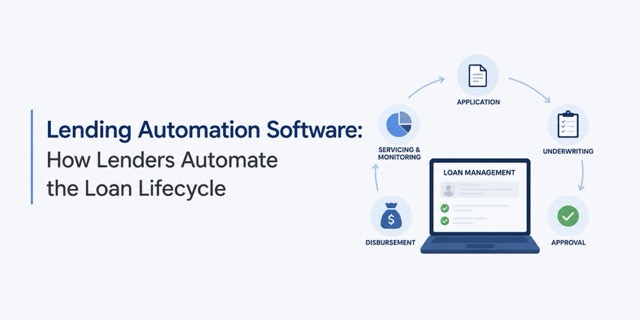
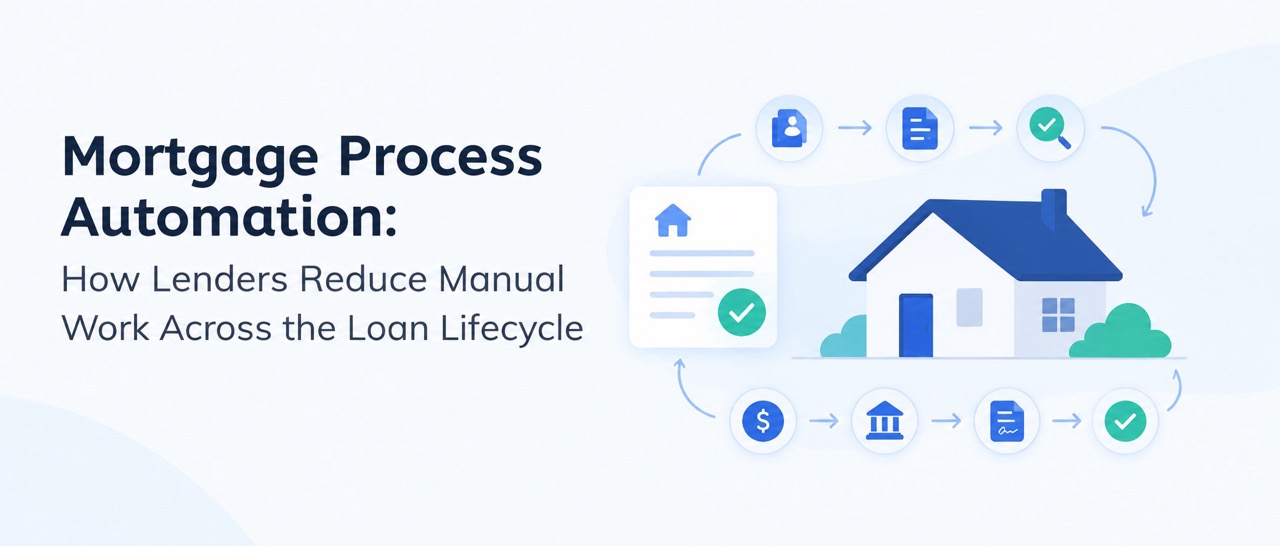
Application → verification → documentation → underwriting → conditions → approval → closing → funding
At application, the system captures borrower and loan information and determines what information is required for that particular mortgage product.
The next stage involves verification. Income, employment, assets, identity, credit, and property-related information may come from different sources. Rather than treating each result as a separate task, the workflow can track which requirements are complete and which are still outstanding.
Once the file contains the information required for underwriting, it moves into credit review. If the underwriter identifies a condition, that condition becomes part of the workflow rather than an item that has to be tracked separately through email or a spreadsheet.
For example, if additional income documentation is required, the file can remain condition-pending until the required information is received. Once it arrives, the workflow can route the file back for the appropriate review.
The same principle applies before closing. A loan can be approved but still not be ready for funding because required signatures, documents, title requirements, or other closing conditions remain incomplete. Automation therefore follows the state of the loan file rather than simply moving every file through the same sequence.
That distinction matters because mortgage files do not all follow the same path. Some move straight through. Others return to an earlier stage because information is incomplete or a condition needs further review.
Where Mortgage Process Automation Removes Repetitive Work
The strongest use cases are the activities that processors perform repeatedly because the same event happens across a large number of files.
Document management is one example. Mortgage files can contain income documents, bank statements, identification, appraisal information, title documents, disclosures, and other records. Structured document workflows can identify what has been received, what remains outstanding, and where the file should go next. Document checklists are already a common part of digital lending workflows.
Verification is another. Instead of a processor manually initiating or checking every verification step, the workflow can trigger the appropriate service when the application reaches the required stage and use the returned result to determine whether processing can continue.
Condition management is particularly important because it sits directly between processing and underwriting. A condition is not simply another document request; it represents something the underwriter needs resolved before the loan can proceed. Automation can track the condition, identify when the requested evidence arrives, and route the file back to the appropriate reviewer.
Status management also becomes less dependent on manual tracking. Rather than maintaining a separate list of files waiting for documents, underwriting review, approval, or closing, the workflow can derive the status from the events recorded against the loan.
This is where mortgage automation creates operational value: the processor spends less time asking what happened to a file and more time dealing with files that actually need intervention.
When Mortgage Process Automation Makes Sense for Lenders
Mortgage process automation makes the most sense when lenders have high file volumes, repeated operational steps, and multiple systems involved in moving a loan from application to closing.
A lender processing a large number of similar mortgage applications may have predictable requirements for income verification, document collection, credit checks, appraisal ordering, condition tracking, and closing readiness. These are strong candidates for workflow automation because the required action is usually known once a particular event occurs.
The value is also higher when different teams own different stages of the file. If processors, underwriters, closing teams, and external providers all work from separate systems, automation can reduce the coordination required between them.
It is less appropriate to automate decisions simply because they occur frequently. An underwriter may need to interpret unusual income, evaluate a complex borrower profile, assess a property-related issue, or decide whether a policy exception is acceptable. Those cases require judgment even when the surrounding workflow is automated.
A useful boundary is: automate the movement and preparation of the file; keep decisions that require credit judgment with the appropriate professional.
Also Read: What is Loan Underwriting?
Mortgage Process Automation vs. Mortgage Underwriting Automation: What's the Difference?
The two are often grouped, but they solve different problems. Mortgage process automation manages the movement of the loan file. Mortgage underwriting automation supports the assessment of whether the borrower and transaction meet defined underwriting criteria.
Consider a borrower whose income documents have been received. Determining that all required documents are present and routing the file to underwriting is process automation.
Evaluating the verified income, liabilities, credit information, property value, and applicable underwriting criteria is underwriting automation. The distinction becomes important when lenders decide what to automate first.
A lender does not need fully automated underwriting to benefit from mortgage process automation. It can automate document requests, verification triggers, condition tracking, queue management, and closing readiness while keeping the final underwriting decision with a human underwriter.
Conversely, automated underwriting still needs a process around it. The system needs reliable inputs, complete documentation, exception routing, and a way to send applications that fall outside the automated path to a person. They are complementary layers, not interchangeable terms.
How Nected Helps Connect Mortgage Rules to Workflow Decisions
Mortgage automation can move a loan file through defined stages, but the workflow still needs rules to determine what should happen when the file meets, fails, or falls outside those conditions.
For example, a lender may require additional income evidence when verified income does not support the application, route a loan above an approval threshold to a senior underwriter, or send a satisfied underwriting condition back to the approval path.
These decisions can be represented as:
Loan data → decision rules → next workflow action
Income evidence complete → Continue to underwriting
Income evidence incomplete → Request additional documentation
Application exceeds approval authority → Senior review
Underwriting condition satisfied → Return to approval path
Nected can complement existing mortgage and lending systems by providing a configurable decisioning and workflow layer for these rules. It can connect application data, external data, business rules, and workflow actions without requiring every decision condition to be embedded directly into the core mortgage application.
This allows lenders to update operational rules as products, approval limits, documentation requirements, or exception policies change, while the existing mortgage systems continue to manage the broader loan lifecycle.
Conclusion
Mortgage process automation is not about turning every mortgage decision into an automated transaction. Its main value is reducing the repetitive coordination that happens around the credit decision: triggering verification, tracking documents, managing conditions, routing exceptions, and confirming that a loan is ready for the next stage.
Standard processing can follow defined workflows, while cases that require credit judgment can still be routed to the appropriate professional.
Nected can complement this process by providing a configurable decisioning and workflow layer that connects mortgage rules, application data, and next-step actions.
The practical goal is simple: fewer manual handoffs, clearer exception handling, and a mortgage process that moves according to defined conditions rather than individual follow-up.
Frequently Asked Questions
What is mortgage process automation?
The automation of the mortgage process is the use of technology to synchronize repetitive tasks within the mortgage process such as application intake, verification, document management, underwriting conditions, approval, settlement, and funding.
What is the main purpose of mortgage process automation?
The main reason for using it is the automation of coordination between the team that works on the mortgages and the systems that are used. Rather than having people keep checking statuses and moving files manually, certain events will trigger the next part of the process.
Can mortgage process automation replace underwriters?
Not at all. It is possible for automation to manage the process of checking certain things and completing certain actions, but there are times when some situations may need an underwriter’s decision.
What mortgage tasks are best suited to automation?
Document and condition tracking, verification triggers, status updates, queue routing, borrower follow-ups, and closing-readiness checks are strong candidates because their required actions can usually be defined in advance.
Is mortgage process automation the same as automated underwriting?
No. Process automation manages how the loan file moves through the mortgage lifecycle. The underwriting automation process emphasizes analysis of borrower, credit, income, property, and other risks against established underwriting criteria.
Is automation possible using an existing mortgage LOS?
Yes, provided the automation layer can connect with the existing LOS and the other systems used for verification, documents, property information, closing, and funding. The goal is to automate processes around the existing LOS rather than replace the core lending system.
How does mortgage automation deal with exceptions?
The workflow may include the use of rules where the exception is sent depending on the cause of the exception. This means that an exceptional case involving a lack of a document may send the loan to the borrower, and a deviation to the underwriter.
Why do mortgage workflows need configurable rules?
The mortgage product, documents, the approval process, and the exception process can differ. The use of configurable rules allows the lender to change these processes without changing the fundamental mortgage process.
How can Nected support mortgage process automation?
Nected can apply configurable rules to mortgage application data and workflow events to determine the next action, such as requesting additional documentation, routing a file for review, or continuing it toward approval.