.svg)

.svg)




.png)
.webp)
The credit underwriting process has gotten much more complicated during recent years. Banks don't limit their evaluation of applications to credit scores and financial reports anymore. Every application needs to be verified, checked according to policies and for fraud, documents should be validated, risk assessment should take place, and regulatory requirements should be met to decide whether to lend money to an applicant or not.
Even though many financial institutions have already adopted digital loan origination systems, underwriting may remain quite scattered. Data needs to be gathered from several sources, policy decision-making is manual, and underwriters waste their time on approving deals rather than analyzing the risks.
Underwriting workflow optimization helps to solve this problem. Unlike simple automation of certain procedures, the modern workflow platform manages the whole underwriting process, from the initial receipt of application to document validation and policy enforcement.
This article will help you to compare five best underwriting workflow optimization providers and choose the optimal one for you.
Why Underwriting Workflows Have Become a Priority for Modern Risk Teams
Credit risk models have become more sophisticated, but the underwriting process surrounding them often remains fragmented.
A single loan application may require bureau lookups, income verification, KYC checks, fraud screening, policy validation, pricing approval, and multiple stakeholder reviews before a lending decision is made. When these activities are managed across disconnected systems and manual handoffs, underwriting slows down, even if risk assessment itself is automated.
For risk teams, the challenge is no longer evaluating credit risk. It makes sure that every application goes through the proper decision workflow while maintaining consistency in terms of lending policies, compliance, and approvals.
It is for this reason that workflow optimization for underwriting has become an important issue. Rather than focusing on automation of individual steps, the modern underwriting workflow platform manages the whole underwriting process by:
- Proper orchestration of verification, risk assessment, and policy evaluation in proper sequence.
- Routinely moving applications based on pre-defined underwriting guidelines.
- Moving policy exceptions and risk-based applications to underwriters.
- Providing complete transparency of underwriting decisions and approvals.
Also Read: Loan Underwriting Software Lists
What Does an Optimized Underwriting Workflow Actually Look Like?
Workflow optimization is often misunderstood as simple task automation. In reality, a streamlined underwriting process integrates several different systems and human decision-making processes throughout the lending cycle.
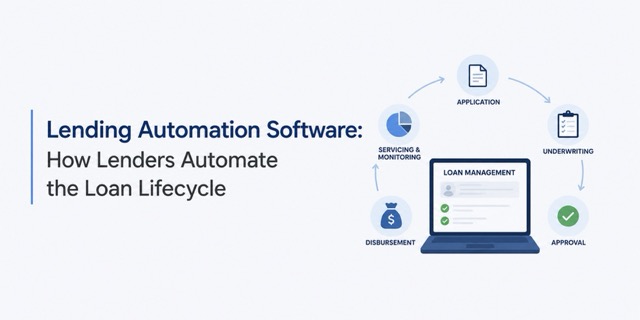
An example of a streamlined underwriting process includes the following:
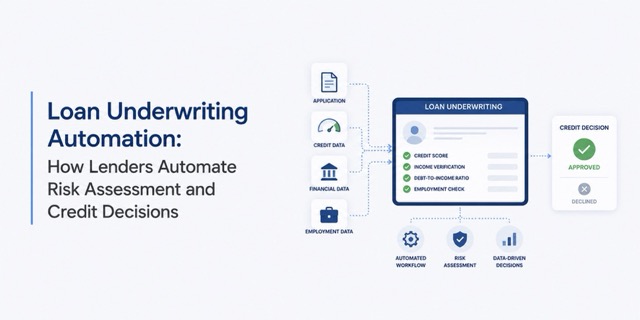
Step 1: Capture and Validate the Application
The applications are made digitally, and at that point, borrower details and necessary documentation are captured. OCR and Document Validation services are used to capture critical data and recognize any incomplete or invalid application before underwriting.
Step 2: Enhance the Application with Third-Party Information
The process pulls information from credit bureaus, banking systems, fraud platforms, KYC vendors, and internal customer databases. The underwriter gets all information regarding the borrower in a single packet as opposed to obtaining the information separately.
Step 3: Risk Analysis and Lending Policy
While the risk model helps in assessing the likelihood of default, the business rules assist in checking the eligibility criteria, debt-to-income ratio, exposures, collateral, and lending policies. It is vital to understand the difference between these two. The risk model estimates the riskiness of an application. Business rules help in determining whether the application fulfills the lending policy requirement. All the above are important before making any credit decision.
Step 4: Routing the Application According to the Decision Outcome
All applications that meet certain criteria will follow straight-through processing. Other applications, which may require further validation, exceptions to policy, and higher levels of authorization, will be automatically routed to the concerned underwriter or risk team member. Optimization of the workflow does not replace human intelligence. Underwriters get enough time to review exception cases.
Step 5: Ensure Complete Tracing of Decisions
All decisions made, starting from document validation and bureau checks through policy assessment to decision approval, are captured as part of the underwriting process workflow.
Leading Underwriting Workflow Optimization Providers at a Glance
Top 5 Leading Providers of Underwriting Workflow Optimization Solutions
All underwriting workflow software addresses the same issue. Some software coordinates enterprise workflows among different business units, others underwriting workflows, document-based operations, and yet others business rule automation.
Identify where the inefficiencies in your underwriting process arise due to workflow management, human review, system fragmentation, policy enforcement, document validation, or routing of approvals.
- Pegasystems: Best for Enterprise Underwriting Process Automation
Pegasystems is built for financial institutions that have complicated underwriting processes involving different products, different teams, and geographic locations. Instead of automating specific underwriting activities, Pega coordinates end-to-end lending processes by coordinating people, systems, and decisions into one workflow.
With the use of case management methodology, every loan application passes through well-defined phases of underwriting, with work being routed dynamically based on the business rules, SLA requirements, and application complexity.
What you can build:
- End-to-end underwriting workflows including origination, verification, approvals, and post-decision activities.
- Workflows that route work dynamically based on the loan value, risk profile, or queue priorities.
- Workflows that escalate based on pending underwriting cases driven by SLAs.
- Approvals workflows at different levels, including credit, compliance, and operations.
Best suited for: Banks and other enterprises that have to do a lot of underwriting work involving several different products and business lines.
Things to consider: Although Pega has great workflow functionality, implementation can sometimes be difficult. It is best suited for organizations with mature enterprise process management initiatives.
Also Read: Pega Overview in Detail
- FICO Platform: Best for Enterprise Credit Decision Management
Even though FICO is popularly known for credit scoring, FICO Platform is essentially an enterprise decision management tool that integrates predictive analysis, business rules, optimization techniques, and governance to provide standardized underwriting decisions within lending portfolios.
In contrast to concentrating on workflow automation, FICO ensures that lending institutions are able to centralize their lending decisioning processes as well as governance processes.
What you can build:
- Enterprise underwriting processes based on centralized business rules.
- Decision flows based on predictive models and lending policies.
- Portfolio-level decision governance across multiple lending products.
- Regulatory audit trails and decision traceability.
- Integrated fraud, collections, and customer lifecycle decisioning.
Best suited for: Financial organizations needing central management of credit decision processes in their enterprise-level lending practices.
Things to consider: While FICO is great at creating enterprise-level decisions, workflow orchestration and process automation usually mean integrating with other workflow systems.
- Nected: Best for Underwriting Decision Orchestration
Most underwriting workflows break down at the point where risk assessment must be translated into an operational decision. A machine learning model predicts default probability. A bureau returns a credit score. A fraud engine produces a fraud score.
None of these systems determine whether the application should proceed, request additional documents, require another approval level, or be declined based on institutional policy.
Nected addresses this orchestration layer. Instead of replacing existing underwriting systems, Nected connects predictive models, business rules, operational workflows, and human approvals into a single configurable decision flow. This makes it possible for lenders to automate underwriting processes while maintaining total control over enforcement and exception management.
What you can build:
- Underwriting processes that incorporate machine learning forecasts, bureau scores, fraud warnings, and lending policies.
- Dynamic underwriting processes that will be determined by the limits of debt-to-income ratio, threshold of exposure, collateral needs, and internal lending policies.
- Condition-based underwriting process which will invoke customer verification checks, income validation, fraud reviews, or additional documentation only if certain conditions are met.
- Straight-through processing of applications that meet certain criteria while diverting policy exceptions for underwriting.
- Flexible business rules that risk teams can modify independently of any software development.
- Complete auditing trail of all rules executed, approval routes taken, and transitions within the underwriting processes.
Best suited for: Banks, NBFCs, and fintech lenders that want to automate their underwriting processes without replacing their existing loan origination or AI platforms.
Things to consider: Nected expands credit scoring and machine learning technologies used by banks, NBFCs, and fintech lenders into the area of executing the decision-making process.
- Newgen: Best for Document-Centric Underwriting Operations
Underwriting teams usually spend much more time on the collection, validation, and review of the documentation than on credit risk evaluation. The problem is solved by Newgen through workflow automation based on documentation.
The solution combines enterprise content management and workflow automation that enables the lender to automate the document-heavy underwriting process and reduce manual intervention throughout the process.
What you can build:
- Digital document intake and document data extraction using OCR.
- Document storage repository.
- Document validation and verification process.
- Underwriting case management.
- Automation of document review and compliance workflows.
Best suited for: Companies having extensive loan origination document processes, including mortgage, commercial, and SME loans.
Things to consider: The Newgen system has an emphasis on document management. Companies looking for decision orchestration for underwriting decisions tend to supplement this tool with a decision management tool.
- Decisions: Best for No-Code Underwriting Workflow Automation
Decision is a platform that helps companies automate underwriting workflows through visual workflow design and business rules.
Its strength lies in giving business teams the ability to model approval workflows, automate operational decisions, and integrate multiple systems through low-code configuration.
What you can build:
- No-code underwriting workflows.
- Business rule automation for lending processes.
- Multi-step approval routing.
- Integration using APIs.
- Workflow management using operational dashboards.
Best suited for: Lenders looking to automate their underwriting processes but do not wish to implement BPM software at the enterprise level.
Things to consider: Decisions is a decision management tool, but it is not an underwriting system specific to lenders.
Also Read: How to Create a Workflow?
How to Choose a Solution That Fits Your Underwriting Process
Before evaluating vendors, identify where your underwriting process experiences the highest operational friction. While some organizations suffer from paper-intensive underwriting workflows, others have problems enforcing policies or approving loans. Ideally, the platform will solve these issues without requiring you to make a complete overhaul of the whole underwriting process.
When you are reviewing underwriting workflow management solutions, the following abilities should be considered.
- Workflow customization ability
The underwriting process can differ based on the type of loan, types of clients, and risk policy. It is essential that you have the ability to customize the workflow, approval process, SLA, and exceptions without changing the application code.
- Integration with Underwriting Decision Rules
The process of underwriting workflow is tightly integrated with underwriting rules. Find platforms that are capable of assessing criteria like eligibility, DTI, exposure, collateral, and pricing within workflow execution.
- Human-in-the-Loop
Every application does not need the same route for approval. While low-risk applications can go through an automatic route, other types of applications such as valuable loans, policy exceptions, missing documentation, or increased fraud risks must be routed to the correct person in charge of the underwriting process.
- End-to-End Visibility
Underwriting teams need visibility into where applications are delayed. Choose a solution that provides workflow monitoring, approval history, SLA tracking, and operational dashboards to identify bottlenecks and improve turnaround times.
- Integration with Existing Lending Systems
Workflow platforms should integrate with loan origination systems, credit bureaus, KYC providers, fraud detection platforms, document management systems, CRMs, and core banking platforms. Workflow optimization should eliminate operational silos—not create new ones.
Why Workflow Optimization Requires More Than Task Automation
The automation of each underwriting task doesn’t necessarily mean that the process becomes efficient.
It happens that some organizations have automated the process of collecting documents, bureau look-ups, and/or KYC. But applications get stopped as policies are reviewed manually, decisions are coordinated via email, or the next step is decided by underwriters after reviewing many systems.
An effective underwriting process needs decision orchestration – workflow progression managed by business rules and not by people. This is where solutions like Nected help.
Nected doesn’t just automate the separate tasks but orchestrates the way decisions progress within your organization via business rules, AI predictions, workflow automation, and human approvals in one decision flow.
Using Nected, lenders could:
- Review lending policies along with ML risk scores, bureau results, and fraud signals.
- Manage routing of the application based on DTI ratios, collateral, exposure, or authority to approve.
- Apply document validation, KYC, and fraud detection where required only.
- Handle policy exception and risky cases through underwriters, but straight-through process other cases.
- Keep full traceability of workflow progression, business rules, and approval decisions.
This allows underwriting teams to spend less time coordinating approvals and more time evaluating applications that genuinely require expert judgment.
Conclusion
Modern underwriting depends on more than faster task execution. A workflow is needed that will bring about a synergy of data gathering, risk evaluation, policy enforcement, authorization, and compliance while eliminating operational chokepoints.
The ideal workflow solution will not only facilitate the automation of routine tasks but will also make sure that each application will take the same path in terms of decision making driven by policies. Whether your area of focus is consumer lending, SME underwriting, or enterprise credit processes, choosing the right workflow solution with embedded decision management capability will serve you better in the long run.
Frequently Asked Questions
What is underwriting workflow optimization?
Underwriting workflow optimization is the procedure that makes sure a loan application goes through all stages of verification, risk assessment, policy evaluation, approval, and compliance checks optimally by making workflow routing and decision execution automated.
What sets underwriting workflow optimization apart from workflow automation?
While workflow automation is concerned with automation of tasks such as document gathering or KYC validation, underwriting workflow optimization allows controlling the entire process of underwriting, ensuring that all applications are validated, analyzed in terms of policy generation, approved, and exceptions are managed in the correct order.
Can underwriting workflows be automated completely?
Absolutely not. Almost all financial companies operate based on the human-in-the-loop principle, whereby ordinary applications are processed via straight-through processing, but applications that have exceptions to the policy, large-value loan applications, and risky applications are automatically sent to underwriters.
Which capabilities does an underwriting workflow platform need to have?
You should expect configurable workflows, business rule management, workflow approvals, integration with lending systems, workflow audit trails, SLA monitoring, and human review of processes within automated workflows.
Why is decision orchestration essential to underwriting?
Underwriting goes beyond passing applications between teams. Each step that is undertaken relies on lending policies, compliance, risk factors, and approval requirements. Decision orchestration ensures that each policy is adhered to prior to taking the next step in the underwriting process.


.svg.webp)