.svg)

.svg)



.png)
.webp)
Claims management is one of the most operationally demanding functions in insurance. A single claim can involve policy validation, coverage checks, document collection, adjuster assignments, fraud reviews, reserve updates, vendor coordination, regulatory compliance, and customer communication before a settlement is reached.
As insurers handle larger claim volumes across multiple products and distribution channels, coordinating these activities becomes increasingly difficult. Delays rarely occur because claims are complex, they occur because decisions, information, and responsibilities are spread across multiple teams and systems.
Claims management system software helps insurers organize this operational complexity. Rather than simply digitizing claim records, it provides a structured environment for managing claims from First Notice of Loss (FNOL) through settlement while ensuring every stage follows consistent operational processes.
Why Managing Insurance Claims Has Become More Operationally Complex?
Claims operations have evolved far beyond recording losses and issuing payments. Every claim now passes through multiple operational checkpoints before it can be approved, investigated, or settled.
Different products follow different claims procedures. The motor claim may be dependent on cost estimates and surveyor inspection, whereas claims for commercial properties are usually dependent on the interpretation of the insurance policy. Health, liability, cyber, and marine claims introduce their own documentation, regulatory, and settlement requirements.
The challenge isn't handling individual claims, it's managing thousands of claims that all follow different operational paths.
Every claim also introduces operational decisions. Coverage needs to be confirmed, reserves set aside, claims adjusters assigned, documentation analyzed, signs of fraud identified, vendors coordinated, approvals completed, and customer communications updated. Each one of those decisions impacts the speed at which the claims process happens.
This becomes more difficult when manual coordination is used. Claims processing teams use emails, spreadsheets, disconnected policy management systems, document management systems, and manual follow-up to process claims across departments. The larger the number of claims, the harder it is because of this disconnected process.
Increased complexity due to regulatory requirements. Insurance companies need to ensure audit trail availability, compliance with claims management regulations per jurisdiction, recording of settlement decisions, and claims consistency and fairness.
Modern claims operations therefore require more than claims expertise. They require operational control over how claims move through the organization, how decisions are applied, and how multiple stakeholders remain coordinated throughout the claims lifecycle.
Also Read: Healthcare Fraud Detection Tools & Techniques
What Happens Between First Notice of Loss (FNOL) and Claim Settlement?
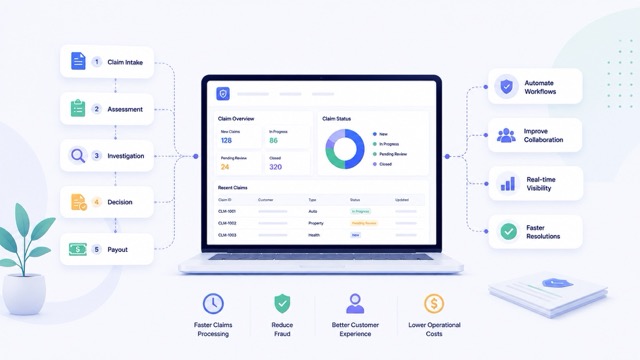
A claim doesn't move directly from notification to payment. Insurers will need to carry out various activities between FNOL and claims settlement, all geared towards confirming coverage, assessing losses, investigating liability and ensuring that claims comply with internal policies and regulations.
The decisions made during each of these activities have an impact on the processing and handling of claims. Handling these activities effectively becomes more difficult as the number of claims increases.
- Registration and Coverage Validation
When a loss occurs, it needs to be reported and registered. The registration process involves validation of the claim by checking such information as coverage, policy limit, any exclusions, deductibles and policy effective dates. It is important to note down coverage problems at an early stage to avoid unnecessary investigation and delays in processing the claims.
- Investigation and Loss Assessment
For different types of claims, insurers employ adjusters, surveyors, investigators or even outside experts for the purpose of assessing the reported loss. Documents, photographs, repairs estimates, medical records and incident reports among others are checked to assess the loss and determine whether more investigation is necessary.
- Reserve Management and Claims Review
As more information becomes available, insurers establish or revise claim reserves to reflect the expected cost of settlement. At the same time, claims are reviewed for coverage exceptions, liability concerns, potential fraud indicators, and approval requirements before settlement decisions are made.
- Settlement and Closure
After completing all the reviews, the claim proceeds towards settlement. Payments are processed, recovery is considered, if any, and the claim is settled after final documentation has been done. Managing such processes effectively is not simply about following the status of the claim.
How Claims Management System Software Brings Structure to the Claims Lifecycle
Claim management is not only about documenting the loss or managing claim status, but it is also important to make sure that every claim goes through the correct operational path even as multiple teams, vendors and external stakeholders are in sync throughout the process.
A claims management system software provides the operational framework by linking activities that are managed in different systems and manual processes. Rather than operating separately, it helps insurance companies handle their claims like an operational workflow.
Below are some of the key operational capabilities that provide the means for creating better consistency and control of the claims lifecycle.
- Centralized Claim Management
Claim management creates information from several sources that include policy management systems, customer communications, adjusters' reports, documentation and payments. A centralized claims environment combines all the information in one place and gives the claims teams visibility into the claim without having to use multiple applications.
- Standardized Claims Workflows
Each claim requires a different process, but each claim needs to go through an operational process. Claims management software helps insurance companies establish their standard assignments, investigations, approvals, documentation and settlements.
- Improved Collaboration within Claims Management Processes
Claims handling is usually associated with various stakeholders such as adjusters, surveyors, repair partners, legal staff, medical personnel, finance team, and customer support staff. A proper claims management system facilitates improved collaboration through the provision of a shared basis of data and processes that everyone must work with.
- Operational Visibility
In order for claims managers to gain an insight into their workload, aging claims, investigation queue, time of settlement, movement in reserve, and approval queue, operational visibility becomes key. The need to gather data from other systems becomes unnecessary with a claims management system in place.
Why Modern Claims Management Depends on Decision Logic, Not Just Workflow Automation?
Automation of the claims process does not necessarily guarantee efficient claims management. Although a workflow describes how a process should be performed, operations dictate what must be done at each step of the process.
Not all claims need to go through the same investigative process. There is no reason why a claim for an unobjectionable motor vehicle, accompanied by full documentation, could not be immediately settled, while a commercial property claim with coverage exceptions would need a different process entirely. The workflow may be similar, but the operational decisions are different.
Many insurers still manage these decisions through application code, spreadsheets, or manually maintained claims guidelines. As products evolve, regulations change, and settlement policies are updated, maintaining these rules across multiple systems becomes increasingly difficult. This is where configurable decision logic becomes essential.
Instead of embedding policies within an application, it has become possible for insurance companies to manage their business rules with respect to handling the claims process centrally.
It is now possible to change coverage validation, adjuster assignment, claims fraud referrals, reserve requirements, authority levels, vendor management, and claims settlement routes according to changes in the business needs without modifying the application.
In this way, a consistent and flexible claims management process can be created. Changes to the operational process can be made fast and assuredly, and every claim is processed in accordance with the latest business rules, regulations, and corporate governance requirements.
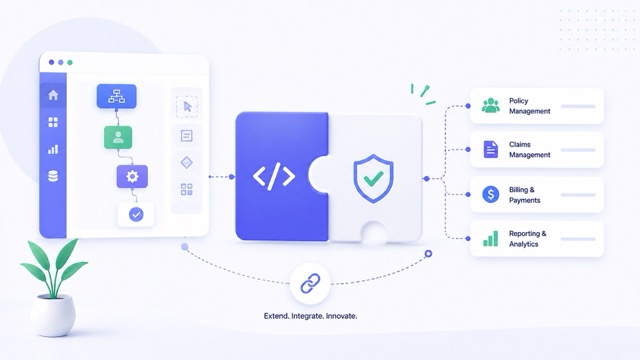
Nected's solution facilitates such an approach by using decision orchestration to manage the insurer’s business rules, workflows, AI algorithms, and external data separately from their existing claims applications. Rather than replacing existing claims management platforms, it helps insurers operationalize claim decisions by making policies, approval logic, and routing rules easier to configure as products, regulations, and business requirements evolve.
Also Read: Types of Workflow Automation
Conclusion
Modern claims operations involve far more than processing claims from notification to settlement. Every claim requires coordinated decisions around coverage validation, investigation, reserve management, approvals, vendor collaboration, and regulatory compliance before a settlement can be reached.
As claim volumes grow and operational requirements become more complex, insurers need more than a system to record claim information. They need a structured approach to managing how claims progress, how operational decisions are applied, and how different teams remain aligned throughout the lifecycle.
Claims management system software provides this operational basis. Coupled with adjustable decision logic, it allows insurance companies to standardize the claims processing process while being sufficiently adaptable to adjust to changing business policies, regulations, and claims processing procedures.
Frequently Asked Questions
What is claims management system software?
Claims management system software is used by insurance companies to process claims that range from First Notice of Loss (FNOL) to claim settlement. The software offers claim registration, claim investigation, document management, reserve management, approval, payment and operational monitoring throughout the claims management process.
How does claims management software assist in claims processing?
It creates a systematic platform to coordinate claim processes, document management, assignment of tasks, operational monitoring and visibility throughout the entire process of claims processing.
What is done between FNOL and claim settlement?
Once the claim is filed by the customer, the insurer verifies the policy coverage, reviews the documents, investigates the loss, creates the reserve, coordinates with the adjusters/vendors, approves the claim and settles the same before closing the claim.
Why isn't workflow automation enough for claims management?
Workflows define the sequence of claim activities, but they don't determine how operational decisions should be made. Coverage validations, fraud referrals, reserve approvals, adjusters’ appointments, and settlement routing require configurable business rules that can be altered as per the changes in the product, regulations, and internal policies.
What features must an insurer consider in the software solution for claims management?
An insurer needs to consider the following aspects when considering a claims management solution: End-to-end claims process, centralized claims data, configurable workflows, operational visibility, integration with policies and payments, and adaptive decision logic.


.svg.webp)





.webp)

.webp)


%2520(3).webp)

.webp)