.svg)

.svg)



.png)
.webp)
Every insurance application passes through a series of underwriting decisions before a policy is issued. Eligibility must be verified, underwriting guidelines applied, supporting documents reviewed, and exceptions referred to the appropriate underwriter. As insurers introduce new products and underwriting policies evolve, managing these decisions across multiple systems becomes increasingly difficult.
Insurance underwriting platforms provide a structured way to manage this complexity. They combine underwriting rules, risk data, workflows, and approval processes to improve consistency, reduce manual referrals, and support faster policy decisions without compromising governance.
This article compares five leading insurance underwriting platforms based on their underwriting capabilities, decision management, and suitability for different insurance operations.
Every Underwriting Delay Starts with a Decision Bottleneck
Most underwriting delays occur when an application falls outside predefined underwriting rules. An application may exceed coverage limits, require additional medical evidence, trigger a fraud review, or fall outside an underwriter's approval authority. Instead of moving forward, it enters a referral process that increases turnaround time.
The challenge isn't reviewing the risk, it's applying underwriting rules consistently. Eligibility criteria, referral thresholds, approval limits, and product guidelines are often managed across different systems or embedded within legacy applications, making policy updates difficult and increasing manual reviews.
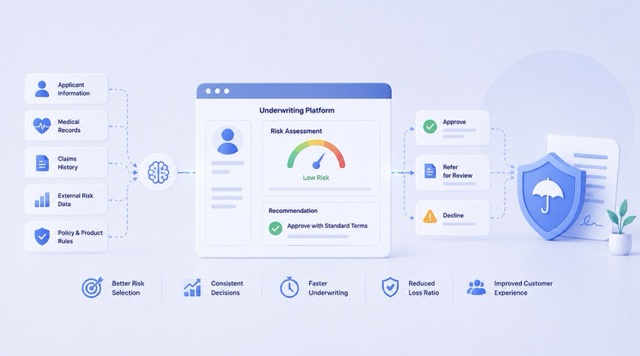
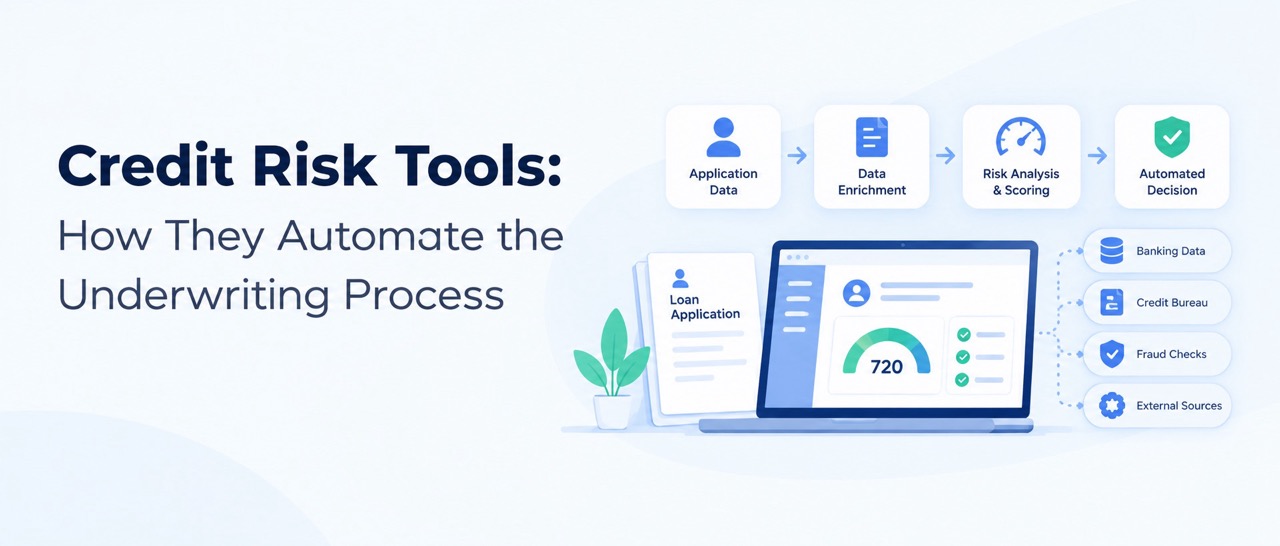
Modern underwriting platforms centralize these decisions. They allow insurers to configure underwriting rules, integrate risk data, automate low-risk approvals, and route exceptions to the right underwriter without changing core policy systems.
The result is more consistent underwriting decisions, fewer unnecessary referrals, and faster policy issuance.
Also Read: What is Loan Underwriting?
The Capabilities That Separate Modern Underwriting Platforms from Legacy Systems
Not every underwriting platform addresses the same underwriting challenges. Some focus on policy administration, while others specialize in underwriting decisions, risk evaluation, or workflow management. When comparing platforms, evaluate the capabilities that directly influence underwriting accuracy, turnaround time, and operational flexibility.
- Configurable Underwriting Rules: Underwriting rules change as products, regulations, and risk appetite evolve. Look for platforms that let underwriting teams update eligibility criteria, referral rules, approval authority, and coverage conditions through configuration instead of application code.
- Data Integration: Underwriters shouldn't switch between claims systems, policy records, fraud tools, inspection reports, and third-party data providers to assess a risk. A strong platform brings relevant data into a single underwriting workflow, reducing manual validation before a decision is made.
- Straight-Through Processing (STP): Routine applications that meet predefined underwriting rules should move directly to policy issuance. The platform should automatically identify exceptions and refer only those applications that require manual underwriting.
- Referral and Approval Workflows: Not every application should follow the same review process. The platform should support configurable referral rules based on coverage amount, product type, risk score, underwriting authority, or missing documentation.
- Audit Trail: Every underwriting decision should be traceable. Insurers should be able to see which rules were evaluated, what data influenced the outcome, who approved the application, and when manual overrides occurred.
Insurance Underwriting Platforms at a Glance
Top 5 Insurance Underwriting Platforms
Different underwriting platforms address different operational priorities. Some focus on configurable underwriting rules, while others emphasize policy administration, enterprise workflow management, or cloud-native insurance operations.
Rather than comparing feature checklists, it's more useful to evaluate where each platform fits within the underwriting lifecycle and the operational challenges it helps insurers solve.
- Nected: Best for Underwriting Decision Orchestration
Underwriting involves far more than evaluating risk scores. Every application passes through multiple business decisions before coverage can be issued.
For example:
- Does the applicant satisfy product eligibility requirements?
- Should additional documentation be requested?
- Does the requested coverage exceed underwriting authority?
- Should the application qualify for straight-through processing?
- Does the risk require specialist review before approval?
These decisions are governed by underwriting guidelines, business policies, regulatory requirements, and external risk data—not workflow alone.
Nected provides the decision orchestration layer that connects these operational decisions into a single configurable process. Instead of embedding underwriting logic across multiple systems, insurers can manage underwriting rules, AI recommendations, workflow routing, and approval policies from one platform.
What you can build
- Rule-driven underwriting workflows based on eligibility criteria, coverage limits, underwriting authority, and product guidelines.
- Decision flows that combine AI risk assessments, fraud indicators, inspection results, and business rules before progressing an application.
- Straight-through processing for low-risk applications while automatically routing complex cases to senior underwriters.
- Conditional document collection triggered only when underwriting policies require additional evidence.
- Multi-level approval workflows based on insured value, product type, or underwriting authority.
- Complete audit trails showing every rule evaluation, workflow transition, approval decision, and manual intervention.
Best suited for: Insurers modernizing underwriting decisions without replacing existing policy administration systems.
Things to consider: Nected complements existing insurance platforms by orchestrating underwriting decisions across systems rather than replacing core policy administration software.
- Sapiens UnderwritingPro: Best for Enterprise Underwriting Management
Enterprise insurers often manage underwriting across multiple products, business lines, distribution partners, and regional markets. Each product may follow different eligibility criteria, referral thresholds, pricing guidelines, and approval hierarchies. Maintaining consistency across these variations becomes increasingly difficult when underwriting policies are scattered across different systems or managed manually.
Sapiens UnderwritingPro is designed to centralize underwriting operations while giving insurers the flexibility to configure product-specific underwriting logic. Instead of creating separate underwriting processes for every line of business, insurers can standardize decision-making while accommodating product-specific requirements.
The platform supports both personal and commercial insurance, allowing underwriters to assess applications using configurable business rules, integrated risk data, and structured referral workflows.
What you can build:
- Product-specific underwriting rules for personal, commercial, life, and specialty insurance products.
- Risk assessments that combine internal underwriting guidelines with external data sources.
- Automated referrals based on underwriting authority, policy limits, or predefined risk thresholds.
- Configurable underwriting questionnaires tailored to different insurance products.
- Collaborative underwriting workflows involving multiple reviewers for complex commercial risks.
- Centralized rule management across multiple underwriting teams and distribution channels.
Best suited for: Large insurers managing multiple insurance products, distributed underwriting teams, and complex governance requirements.
Things to consider: Sapiens UnderwritingPro is best suited for insurers with mature underwriting operations. Organizations looking primarily for workflow automation may not utilize its broader underwriting management capabilities.
- Duck Creek Policy: Best for Product-Centric Underwriting
For many insurers, underwriting changes are closely tied to product changes. Launching a new policy, introducing additional coverage options, or updating eligibility requirements often requires modifications across underwriting, rating, and policy administration. Managing these changes across disconnected systems can slow product launches and create inconsistencies between underwriting policies and policy administration.
Duck Creek Policy addresses this by combining underwriting configuration with product management and policy administration. Instead of treating underwriting as an isolated process, the platform allows insurers to manage underwriting rules alongside product definitions and policy lifecycle operations.
This approach is particularly valuable for insurers that regularly introduce new products or make frequent adjustments to underwriting guidelines.
What you can build:
- Product-specific underwriting rules linked directly to policy configuration.
- Eligibility validation based on customer information, coverage selections, and underwriting guidelines.
- Referral workflows for applications that exceed underwriting authority or fall outside predefined criteria.
- Automated policy issuance for applications that satisfy underwriting requirements.
- Underwriting processes that remain synchronized with product and policy changes.
- Configurable underwriting experiences across multiple distribution channels.
Best suited for: Insurers that frequently update insurance products and require underwriting policies to evolve alongside product configuration.
Things to consider: Duck Creek provides strong product and policy management capabilities. Organizations seeking advanced decision orchestration may integrate additional decision management platforms alongside Duck Creek.
- Guidewire PolicyCenter: Best for Large Property and Casualty Insurers
Property and casualty insurers manage underwriting across multiple products, distribution partners, regulatory jurisdictions, and policy lifecycles. As portfolios grow, maintaining consistency between underwriting decisions, policy administration, rating, and renewals becomes increasingly challenging.
Guidewire PolicyCenter provides an integrated environment where underwriting, policy administration, rating, and policy lifecycle management operate within a unified platform. Rather than requiring separate systems for different underwriting activities, insurers can manage the entire policy lifecycle through a consistent operational framework.
The platform supports configurable underwriting rules while integrating with claims, billing, and customer management systems across the broader Guidewire ecosystem.
What you can build
- Underwriting workflows integrated with policy administration and rating.
- Product-specific eligibility and referral rules.
- Renewal underwriting based on policy history and updated risk information.
- Referral management for applications requiring manual review.
- Policy lifecycle management from quote through issuance and renewal.
- Underwriting operations connected with billing and claims systems.
Best suited for: Large property and casualty insurers already operating within the Guidewire ecosystem or planning enterprise-wide modernization.
Things to consider: Guidewire PolicyCenter offers comprehensive insurance management capabilities but typically requires significant implementation planning and organizational investment.
- OneShield: Best for Property and Casualty Underwriting
Property and casualty insurers often manage diverse product portfolios, each with its own underwriting guidelines, eligibility requirements, referral rules, and regulatory obligations. Maintaining consistency across personal, commercial, and specialty insurance products becomes increasingly difficult when underwriting policies are managed separately from policy administration.
OneShield brings underwriting, policy administration, rating, and product configuration together within a unified insurance platform. This allows insurers to configure underwriting requirements alongside product definitions, helping ensure underwriting decisions remain consistent as products and regulations evolve.
The platform is particularly suited to insurers looking to modernize underwriting operations while reducing the operational complexity of managing multiple systems.
What you can build
- Product-specific underwriting rules for personal, commercial, and specialty insurance.
- Eligibility validation based on policy characteristics, applicant information, and underwriting guidelines.
- Automated referral workflows for applications exceeding predefined underwriting authority or risk thresholds.
- Configurable underwriting questionnaires tailored to different products and distribution channels.
- Underwriting processes integrated with rating, policy issuance, renewals, and endorsements.
- Centralized management of underwriting rules across multiple lines of business.
Best suited for: Property and casualty insurers modernizing underwriting operations while managing multiple insurance products within a unified platform.
Things to consider: OneShield combines underwriting with policy administration and product management, making it well suited for insurers seeking an integrated insurance platform. Organizations looking for standalone decision orchestration capabilities may still complement it with dedicated business rule or decision management solutions.
Also Read: Top 7 Insurance Underwriting Softwares
Choosing a Platform Based on Your Underwriting Complexity
Before comparing underwriting platforms, evaluate how well they support your underwriting process. The following capabilities have the biggest impact on underwriting speed, consistency, and decision quality.
- Product Complexity: Personal auto insurance and commercial liability don't follow the same underwriting process. Choose a platform that supports the number of products, underwriting variations, and decision paths your business manages.
- Configurable Underwriting Rules: Eligibility criteria, referral thresholds, and underwriting guidelines change frequently. Look for platforms that let underwriting teams update these rules without waiting for development releases.
- Third-Party Data Integration: Underwriting decisions often rely on claims history, inspection reports, credit data, fraud checks, medical records, or geospatial risk data. The platform should integrate these sources into a single underwriting flow instead of requiring manual lookups.
- Referral and Approval Management: Not every application should reach an underwriter. The platform should automatically identify exceptions and route them based on underwriting authority, coverage amount, product type, or predefined referral rules.
- Straight-Through Processing (STP): Routine applications that satisfy underwriting rules should move directly to policy issuance. Evaluate how much of your underwriting volume can be processed without manual intervention.
- Governance and Auditability: Every underwriting decision should be explainable. Look for platforms that record rule evaluations, approvals, referrals, and manual overrides to support compliance and internal audits.
Faster Underwriting Comes from Better Decision Orchestration, Not More Automation
Automating underwriting tasks doesn't automatically improve underwriting decisions. Creating a case, collecting documents, or assigning applications to underwriters can be automated. Deciding whether an application qualifies for straight-through processing, requires additional evidence, exceeds underwriting authority, or should be referred for manual review requires business rules.
Decision orchestration combines underwriting rules, risk data, AI outputs, and approval workflows into a single decision layer. This allows insurers to:
- Apply underwriting rules consistently across every application.
- Route exceptions based on referral criteria or underwriting authority.
- Trigger document requests only when underwriting conditions require them.
- Process low-risk applications through straight-through processing.
- Maintain a complete audit trail for every underwriting decision.
Platforms like Nected provide this decision layer without requiring insurers to hardcode underwriting logic into policy administration systems. As underwriting policies evolve, insurers can update decision rules without disrupting existing workflows.
Better underwriting doesn't come from automating more tasks, it comes from making every underwriting decision consistent, transparent, and easier to maintain.
Conclusion
As underwriting operations become more data-driven and product complexity increases, insurers need platforms that support consistent, explainable, and adaptable decision-making, not just faster workflows.
The right underwriting platform depends on your operational priorities. Some insurers need stronger policy administration capabilities, while others require configurable underwriting rules, enterprise workflow management, or cloud-native product flexibility. Organizations managing complex underwriting decisions should also consider how business rules, external risk data, AI models, and human approvals work together throughout the underwriting lifecycle.
Modern underwriting platforms provide the foundation for this shift. By centralizing underwriting policies, integrating multiple data sources, and supporting structured decision-making, they help insurers improve operational efficiency without compromising governance or underwriting quality.
Frequently Asked Questions
What is an insurance underwriting platform?
An insurance underwriting platform helps insurers evaluate insurance applications by combining underwriting rules, risk data, workflows, and approval processes into a structured decision-making system. It supports underwriters by standardizing how coverage decisions are made across different products and business lines.
How is an underwriting platform different from a policy administration system?
A policy administration system manages the policy lifecycle, including policy issuance, endorsements, renewals, billing, and customer records. An underwriting platform focuses specifically on evaluating risk, applying underwriting guidelines, collecting supporting information, and determining whether an application should be approved, referred, or declined.
Can underwriting platforms support straight-through processing?
Yes. Most modern underwriting platforms support straight-through processing (STP) for applications that satisfy predefined underwriting rules. Applications involving exceptions, higher risk, or incomplete information can be automatically referred for manual review, allowing insurers to balance operational efficiency with underwriting oversight.
What capabilities should insurers prioritize when evaluating underwriting platforms?
Beyond workflow automation, insurers should evaluate configurable underwriting rules, integration with internal and external risk data, decision orchestration, human-in-the-loop approvals, auditability, and the ability to adapt underwriting policies without extensive software development.
Why is decision orchestration becoming important in modern underwriting?
Insurance underwriting involves decisions based on product eligibility, risk appetite, regulatory requirements, coverage limits, fraud indicators, and underwriting authority. Decision orchestration ensures these factors are evaluated consistently before an application progresses, helping insurers reduce manual reviews, improve governance, and maintain consistent underwriting outcomes across products and channels.


.svg.webp)




.webp)
.webp)