.svg)

.svg)




.png)
.webp)
A credit application rarely moves directly from submission to approval. Before a lender can make a decision, it may need to validate applicant information, collect documents, verify income, retrieve bureau data, check existing exposure, assess affordability, run fraud controls, and route exceptions to the right credit team. The difficulty increases when these activities happen in different systems.
The application may sit in an LOS, income data may come from another provider, credit information from a bureau, documents from a separate service, and approval decisions may still depend on manual review.
Credit origination software brings these activities into a defined process so the lender can move an application from intake to credit decision without manually coordinating every step.
Why Credit Origination Becomes Difficult When Applications, Documents, and Checks Sit in Separate Systems
The problem is not usually that lenders lack systems. It is that each system holds part of the information required for the credit decision. Consider a personal-loan application.
The borrower submits employment and income information. At this point, the bank must authenticate this income, collect credit information, identify any liabilities, confirm the individual’s identity, and conduct specific product checks.
However, when these processes operate independently, the workflow may resemble this:
Application received → employee checks application → verification requested → result reviewed → bureau data retrieved → information reconciled → credit assessment → approval request
Each handoff creates another opportunity for delay. A verification result may arrive but remain unchecked. A document may be missing but only discovered when underwriting starts. A credit officer may have to compare information from three different systems before deciding whether the application meets policy. This becomes particularly difficult when lenders offer several products.
A personal loan may require income and bureau verification. An auto loan may also require vehicle information and collateral checks. An SME facility may require bank statements, financial statements, business information, and existing exposure.
The underlying systems may be different, but the operational problem is the same: the credit team needs complete, verified information in the right sequence before it can make a decision.
What Credit Origination Software Actually Manages Before a Loan Is Approved
Credit origination software manages the operational steps required to turn an application into a decision-ready credit file. The exact capabilities vary by platform, but the process typically covers five areas:
- Application Intake and Validation
The process begins with collecting the information of the applicant and loan. The system is able to check whether the required fields are present and what checks are needed based on the selected loan.
For instance, an application of a loan meant for a business might need business registration information and financial statements.
- Document Collection and Verification
Documents can be requested based on the application rather than using the same checklist for every borrower. The lender may need:
- Payslips for a salaried borrower
- Bank statements for affordability assessment
- Tax records for self-employed applicants
- Business financial statements for SME lending
- Collateral documents for secured lending
The important part is connecting document requirements to the application state. A missing document should create a defined next action rather than sitting unnoticed in an inbox.
- Credit and Financial Checks
Credit origination workflows can trigger external checks such as:
- Credit bureau reports
- Income verification
- Employment verification
- Bank-account or transaction data
- Existing customer exposure
- Fraud checks
The returned information becomes part of the credit assessment rather than requiring an employee to manually collect it from separate systems.
- Credit Assessment and Decisioning
The loan officer now reviews the application against the lending organization's credit policy, which can involve many factors including income, debts, credit rating, affordability, loan amount requested, product eligibility, exposure levels, and more.
Not every application needs the same path. A straightforward application may proceed automatically, while an application outside a defined threshold can be referred to a credit officer.
- Approval and Pre-Disbursement Conditions
A credit decision does not always mean the loan is ready for funding. The lending institution may require signed papers, conclusive proof, guarantee of collateral, and other conditions before disbursing the loan.
A properly structured origination process keeps these conditions separate from the initial credit decision.
Also Read: Best Loan Management Software Systems
How Credit Origination Software Moves an Application From Submission to Credit Decision
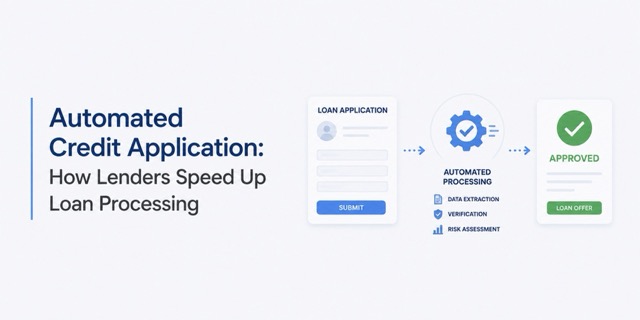
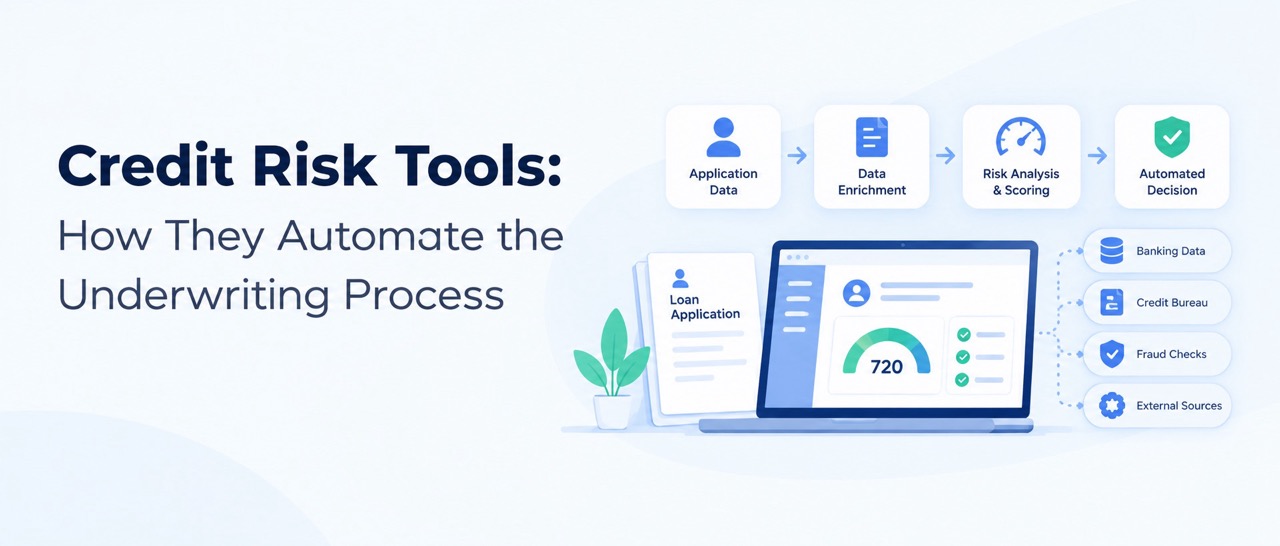
Credit origination software coordinates the information and checks required to move a credit application toward a decision. The process typically follows this path:
Application → Validation → Verification → Credit Data → Policy Assessment → Decision → Approval Conditions → Funding
- Application Submission: The applicant provides data such as salary, job, loan amount required, loan objective, and more, which may be product-related. The system checks if all necessary data is provided by the application.
- Verification: The process will then invoke those checks that are necessary for that particular product. For example, a consumer loan will need identity, income, and employment checks, whereas an SME loan can include bank transactions or financial information of the business.
- Credit Data: Information about the credit bureau, existing exposure, affordability, and other financial information is gathered for credit scoring purposes. Instead of the underwriter gathering information from different sources, the information is made available to the applicant in the process.
- Credit Policy Assessment: The bank compares the verified data with the credit policy of the bank. This may include the income of the customer, current liabilities, DTI, credit history, amount of loan, product eligibility, and limits of approval. For instance, a loan application is compliant with the credit policy of the bank if the verified income and affordability lie within the required limits.
- Decision and Referral: The application can then be followed through the right process. The applications that qualify on the basis of set criteria can then go on to receive approval, whereas failures in verification, discrepancies, excessive publicity, or special cases of policy may warrant further scrutiny.
- Approval Conditions: Approval does not mean that the money is ready for disbursement. There could be more steps involved before the money can actually be disbursed by the financial institution.
- Funding: After the credit decision is approved and the necessary conditions met, the application will be allowed to proceed for disbursal. This separation between credit approval and funding readiness prevents loans from being released before all required conditions are completed.
Where Credit Origination Software Reduces Manual Review and Where Human Judgment Still Matters
Credit origination software is most useful when the lender has clear policies and processes in place. Verification of income, verification of applications, document collection, bureau information retrieval, affordability analysis, and simple eligibility testing can be handled in predetermined ways.
For instance, where the lender has found that applications with certain levels of income, affordability, exposure, and credit requirements can go through without any manual assistance, then the software can test for these criteria.
It requires more human intervention when the application does not meet these criteria. The business borrower may have good cash flows but a very complex ownership structure. The self-employed borrower may have income streams that do not fit within predetermined verification criteria.
A borrower may exceed an automated limit but still warrant approval based on additional information. These cases require credit judgment. The right role for automation is therefore not to eliminate underwriters. It is to keep underwriters focused on applications that actually require their judgment.
Credit Origination Software vs. Loan Origination Software: What’s the Difference?
The terms are often used interchangeably because the two categories overlap. A loan origination software (LOS) typically controls the entire process of loan origination, from application tracking to underwriting and approval.
Credit origination is specifically concerned with the credit application and assessment process that leads to a credit decision.
In practice, a lender's platform may perform functions from both categories. The more useful question is not which label a vendor uses. It is which parts of the actual lending process the software manages and which still require separate systems or manual work.
How Nected Helps Connect Credit Rules to Origination Workflows
Credit origination brings together application data, verification results, financial information, and credit policy. The next challenge is determining what those inputs should trigger when an application meets, fails, or falls outside the lender's defined criteria.
Nected can complement an existing credit origination stack by providing a configurable decisioning and workflow layer for these rules.
For example:
Application data → verification results → Nected rules → approval / additional verification / credit review
A lender could configure rules such as:
DTI within limit + verification passed + amount within approval authority → Continue toward approval
Income verification failed → Additional verification
Loan amount exceeds approval authority → Senior credit review
Conflicting application and bureau information → Manual review
It permits lenders to integrate external information and credit criteria with actions in the workflow process without having to hard-code every single policy criterion into the lending software application.
The existing origination systems can continue to manage the broader application and loan lifecycle, while Nected provides a configurable layer for the decision logic and workflows that determine what happens next.
Conclusion
Credit origination software is most useful when it brings application data, verification, credit information, policy evaluation, and approval routing into a controlled process.
The goal is not to eliminate every manual activity. Routine applications can move through defined checks and decisions, while applications that fall outside policy can be routed to credit teams with the information needed for review.
For lenders that need decision logic to change independently of the core origination application, Nected can complement the existing lending stack with a configurable decisioning and workflow layer.
This gives lenders a more consistent way to move from application intake to a defensible credit decision while keeping human judgment where it is actually needed.
Frequently Asked Questions
What is credit origination software?
Credit origination software manages the process of collecting, verifying, assessing, and deciding on credit applications before a loan or credit facility is approved.
What does credit origination software automate?
Depending on the platform, it can automate application validation, documentation, verification process, credit data extraction, policy evaluation, calculations, referrals, approval, and pre-disbursement processes.
Does credit origination software replace underwriters?
No. It has the ability to perform defined checks and decision-making for applications that are out of policy or need some judgment before passing on to the credit officers or underwriters.
What systems does credit origination software need to connect with?
Integration may include credit bureaus, income and employment verification services, identity verification services, fraud services, bank data services, document services, LOS software, and core banking or servicing software.
What is the difference between credit origination software and an LOS?
Credit origination software focuses on the credit application and assessment process. An LOS generally manages the broader loan origination lifecycle. The capabilities often overlap.
Can credit rules be changed without changing the application?
That depends on the platform. Lenders should specifically check whether eligibility, approval, referral, and affordability rules can be configured independently of the core application.
How does credit origination software handle exceptions?
It can route applications that fail verification, exceed approval limits, contain conflicting information, or fall outside credit policy to a defined manual-review path.
Why is decision traceability important?
Lenders need to understand which data and rules produced a credit outcome. A traceable decision shows the inputs, conditions evaluated, result, and resulting action rather than only recording the final approval or rejection.
How can Nected support credit origination workflows?
The Nected system can use its credit rules to perform actions on the information it has collected from an application and its validation and can either continue with approval or request more validation.



.svg.webp)


.webp)


.webp)
.webp)