.svg)

.svg)


.png)
.webp)
A business does not need to become a lender from the ground up to offer financing to its customers. A marketplace may want customers to finance purchases without leaving its platform. An e-commerce business may want installment financing at checkout. A B2B platform may want to offer working capital to its merchants.
The customer sees the business's brand. Behind that experience, however, lending still requires application capture, identity checks, credit assessment, decisioning, documentation, disbursement, and servicing.
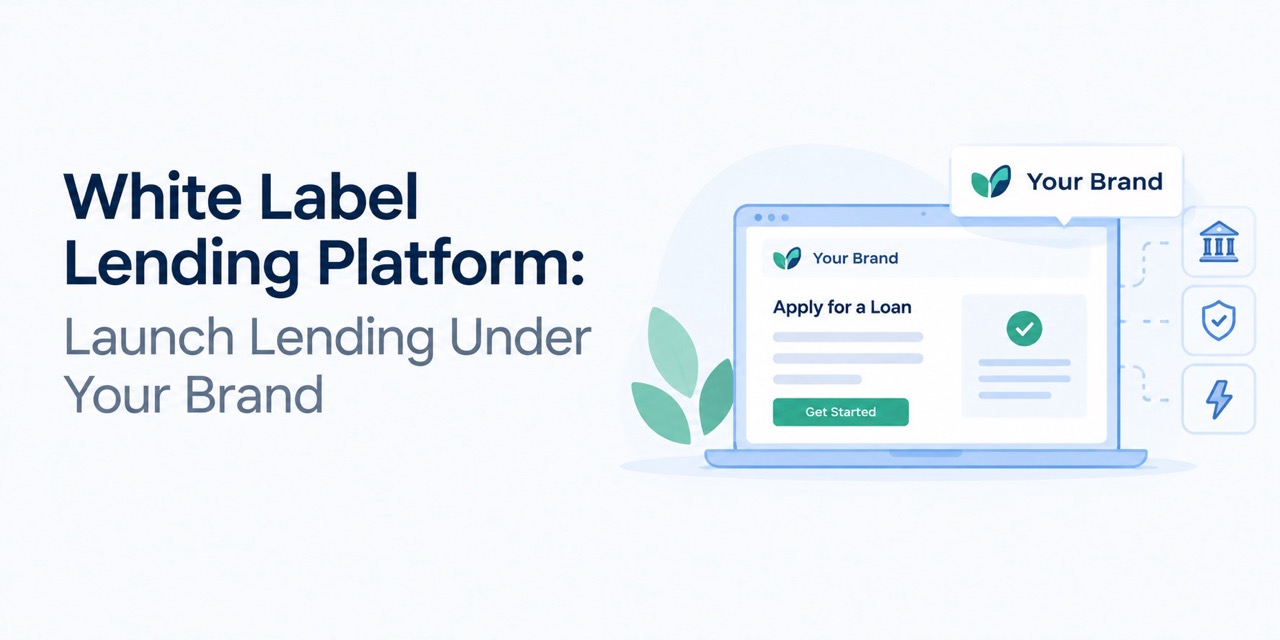
A white label lending platform provides the infrastructure behind that experience while allowing the business to present lending as part of its own product.
Why Businesses Choose White Label Lending Instead of Building Lending Infrastructure From Scratch
Building lending infrastructure internally means solving several problems at once. A business needs an application flow, integrations with credit and verification providers, underwriting logic, approval workflows, document handling, disbursement processes, and ongoing servicing. It also needs to connect these components to its existing customer and transaction systems.
That becomes particularly difficult when lending is not the company's primary business.
For instance, an ecommerce company already knows the value of a client’s order and their purchasing history. Putting in place a whole lending stack in order to derive an offer from this information is not cost-effective at all.
A white label approach lets the business keep its customer experience while using existing lending infrastructure for the processes behind it.
The distinction is important: The business owns the customer-facing experience. The lending infrastructure handles the operational machinery underneath it.
Also Read: Automated Underwriting Systems for Business Loans
What a White Label Lending Platform Handles Behind the Customer Experience
The branded customer experience is only one part of the lending journey. Behind it, the platform may need to manage application processing, verification, credit assessment, decisioning, documentation, disbursement, and servicing.
- Application Processing: The customer information can be gathered from the company’s site, application, checkout, or partner portal and entered into the lending process. The application may then be verified and proceed to the next step.
- Identity and Financial Verification: Depending on the product and market, the lending process may require identity verification, income checks, bank-data access, employment information, or other supporting data. These checks need to happen without forcing the customer to repeatedly provide information that the business or connected systems already have.
- Credit Assessment: The credit report information, information about the debtor, transaction information, and other types of information can be compared to the policy for lending. There may be multiple conditions required for a financing deal besides the credit score.
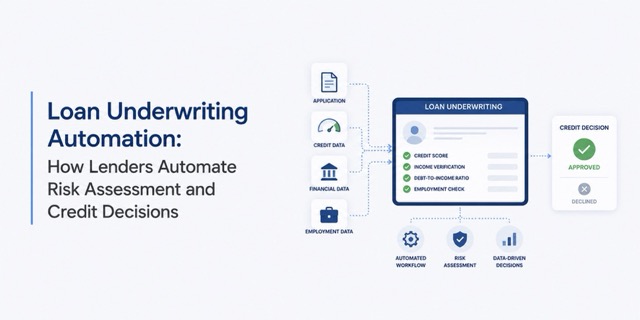
- Decisioning and Approval: The platform decides if the application will be processed, will need further verification, or will require human intervention. For example:
Eligibility passed + verification completed → continue
Required information missing → request additional information
Application outside automated criteria → manual review
- Documentation and Disbursement: After approval, the process may include agreement generation, acceptance, condition checks, and funding. The customer should experience this as one branded journey even though multiple systems may operate behind the interface.
- Servicing: The relationship does not end when funds are disbursed. Depending on the lending model, the underlying infrastructure may also need to support repayment information, account servicing, payment events, modifications, and other post-origination processes.
How a White Label Lending Platform Connects Applications, Credit Checks, Approvals, and Disbursement
The individual lending capabilities only become useful when they work together as one connected process.
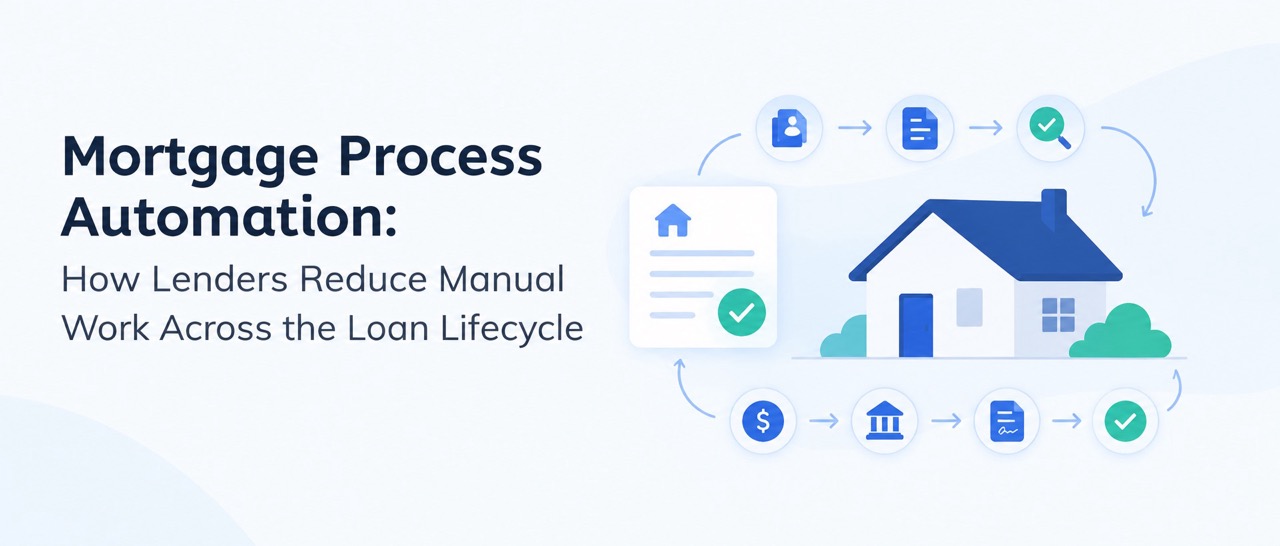
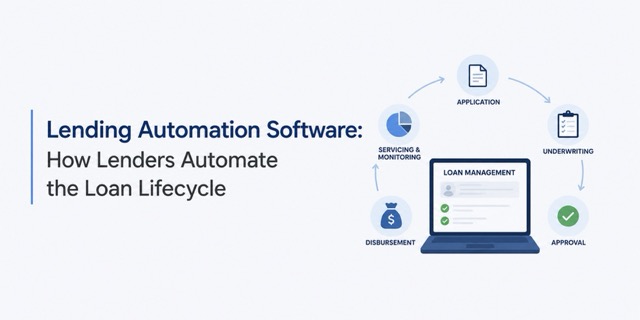
Customer interaction → application → verification → credit assessment → decision → approval → documentation → disbursement
The application or checkout process for the business can start the flow. After the customer provides the necessary information, the identity, credit, income, or any other types of checks can be conducted. The findings can become the input for the next decision.
For instance, the e-commerce site may pass the price of the purchase and the customer’s information to its finance flow.
The lending process may then:
- Validate the application.
- Retrieve required credit information.
- Check eligibility.
- Calculate the applicable financing conditions.
- Approve or refer the application.
- Generate the required agreement.
- Trigger funding after approval conditions are satisfied.
The important part is that each result can trigger the next action. Without this orchestration, a white label lending experience can still leave operations dependent on manual handoffs behind the scenes.
Also Read: Best Platforms for Adding Credit Lines to SMB Workflows
Where White Label Lending Works Best, and Where It Creates New Operational Complexity
White label lending works best when financing is an extension of an existing customer journey. Common examples include:
- E-commerce and marketplaces: Finance can be provided alongside the purchase without having to send the customer to a different lender experience.
- B2B platforms: A business platform can offer financing to merchants or customers based on the transaction and business information already available within the platform.
- Vertical software platforms: Sector specific platform may incorporate financing within their already available process, for example, financing that relates to services, transactions or purchases.
- Consumer platforms: Businesses with an established customer base can introduce financing without building an entire lending operation internally.
But adding lending also introduces operational dependencies. The business now has to coordinate customer data, lending partners, credit decisions, compliance requirements, funding, and post-loan servicing.
There is also a product-design question: who controls the lending decision?
If the business controls eligibility and offer logic, those rules need to remain consistent with the underlying lender's requirements. If a third-party lender controls the decision, the business still needs to understand what information is passed into that decision and what happens when an application is declined or referred.
White labeling changes the customer-facing experience. It does not remove the complexity of lending underneath it.
White Label Lending Platform vs. Building a Lending Stack In-House
The choice is primarily about how much lending infrastructure the business wants to own and operate.
It can be a viable strategy for an organization that wants total control over the lending platform but is willing to invest in building the necessary infrastructure.
A white label platform is more practical when lending is an additional product or revenue stream, and the business wants to focus its engineering effort on its core customer experience. The decision should therefore be based on what the business actually needs to own, not simply how quickly it wants to launch.
How Nected Helps Connect Lending Rules to the White Label Experience
A white label lending experience still needs rules that determine eligibility, offer conditions, approval paths, and what happens when an application falls outside the standard criteria. These rules may also change as products, customer segments, or lending policies change.
Nected can complement the existing lending infrastructure by providing a configurable decisioning and workflow layer for these conditions.
For example:
Customer and transaction data → eligibility rules → lending decision → approval/referral / additional verification
A business could configure conditions such as:
Customer meets eligibility criteria + transaction within limit → Continue
Required information missing → Additional verification
Application outside automated criteria → Manual review
This allows the business to manage changing decision rules separately from the customer-facing application while the existing lending infrastructure continues to handle the broader lending process.
Nected can therefore complement a white label lending setup when the business needs greater control over the rules and workflows that determine what happens after application and verification data are available.
Conclusion
A white label lending platform allows businesses to offer financing under their own brand without building every part of the lending infrastructure themselves.
The value comes from what happens behind the customer experience: applications, verification, credit assessment, decisioning, documentation, funding, and servicing need to work as a connected process.
For businesses that also need control over changing lending rules and workflows, Nected can complement the underlying lending infrastructure with a configurable decisioning layer.
The right approach ultimately depends on how much of the lending stack the business wants to own, how its systems need to connect, and how much control it needs over the decisions that shape the customer journey.
Frequently Asked Questions
What is a white label lending platform?
White label lending platform makes it possible for a firm to offer lending facilities using its own brand. The customer gets to enjoy the services provided by the firm, but the actual lending is carried out by the white label lending platform.
How is white label lending different from embedded lending?
Embedded finance involves placing the finance directly into an already existing customer journey, which includes checkout and a business platform. White Labeling is all about offering the experience in the name of the business itself. The two approaches can overlap.
Who uses white label lending platforms?
Marketplaces, e-commerce businesses, B2B platforms, vertical software providers, and other businesses can use them when they want to offer financing without building all lending infrastructure internally.
Does a white label platform handle underwriting?
It depends on the platform. Some handle underwriting and decisioning, while others provide only parts of the lending infrastructure. Businesses should clarify exactly which functions are included.
Can a white label lending platform work with existing business systems?
Definitely, on the condition that it provides the necessary integrations. Such systems could be customer accounts, transaction systems, CRM, payment systems, accounting systems, etc.
Can businesses control lending eligibility rules?
That depends on the platform and lending arrangement. Businesses should check whether eligibility, offer, referral, and approval rules can be configured or whether they remain controlled by the lending provider.
What happens when a customer fails a credit check?
The platform should have a defined path for declined, referred, or additional-verification cases. The exact outcome depends on the lending policy and the parties responsible for the credit decision.
Does white label lending eliminate the need for lending operations?
No. Lending reduces the infrastructure that may be required to set up, but it is also about credit analysis, regulation, customer service, funding, servicing, and many other operational tasks.
How can Nected support a white label lending workflow?
Nected can provide a configurable decisioning and workflow layer for lending rules such as eligibility, approval conditions, referrals, and additional verification. It may enhance the current lending structure without necessarily changing the overall customer experience.


.svg.webp)



.webp)

.webp)