.svg)

.svg)



.png)
.webp)
In any financial institution, there are millions to billions of transactions every day. Though the majority of them are legitimate, there might be transactions that hint at fraudulent behavior, money laundering, sanctions issues, and suspicious transactions. It has become impractical for financial institutions to detect such transactions manually, particularly when payment transactions occur in real-time through different channels.
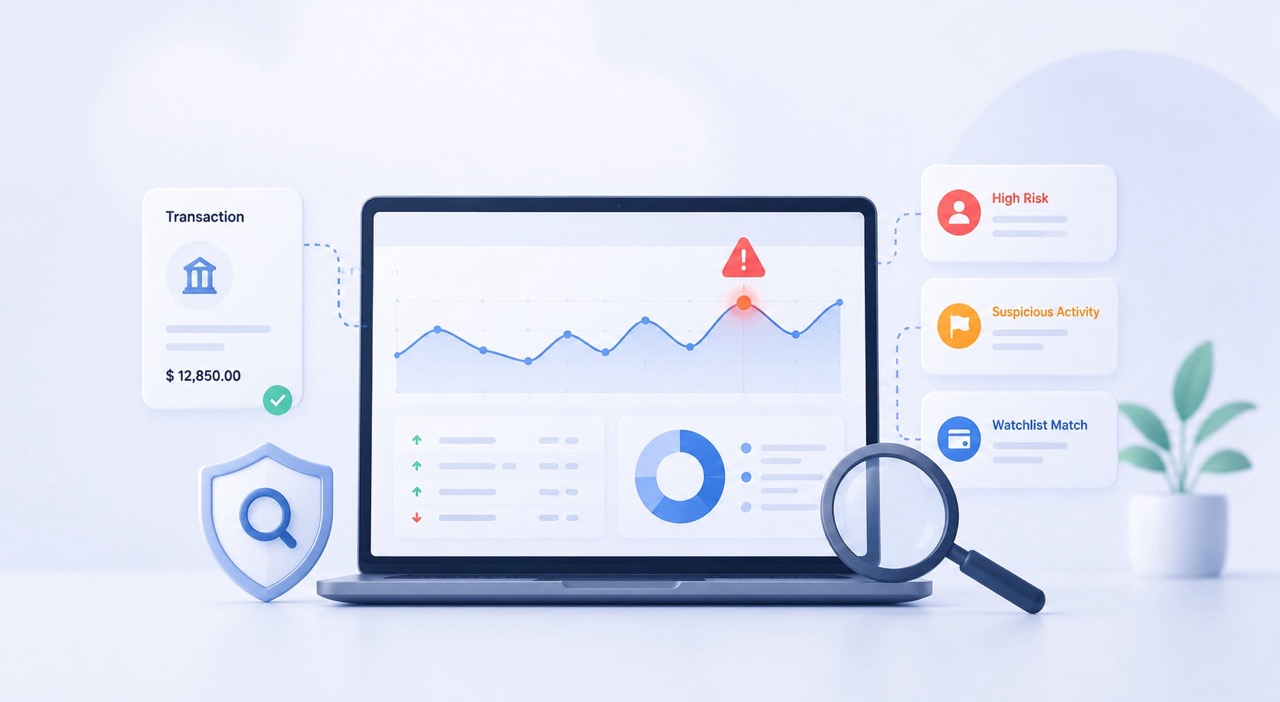
That is where transaction monitoring comes into play. Transaction monitoring systems constantly screen transactions, implement preconfigured risk rules, and detect suspicious activities that need further investigation. Instead of manually reviewing all the payment transactions, the compliance and fraud departments of any organization can concentrate on suspicious transactions only.
Transaction monitoring systems not only screen but also use more complex features like business rules, behavioral analysis, and risk scoring. The following guide sheds light on what transaction monitoring is, which features to look out for, and how transaction monitoring can help you prevent fraud and meet regulations.
What Are Transaction Monitoring Solutions?
Transaction monitoring systems are systems that analyze the nature of financial transactions to identify activities that show signs of fraud, money laundering, sanctions violations, and any other types of financial crime.
Such systems examine the transactions in real-time or near real-time based on their comparison with pre-set rules, customer profiles, historical data, and risks. Upon detecting unusual transactions, the system sends alerts for further review or takes certain predefined actions automatically.
Transaction monitoring is used widely by:
- Banks
- Payment processors
- Fintechs
- Digital wallets
- Peer-to-peer lending platforms
- Cryptocurrency exchanges
While compliance is an important factor driving the usage of transaction monitoring solutions, these tools allow businesses to minimize fraud-related losses and detect suspicious activities more quickly.
For example, when a business account usually makes domestic payments below ₹5 lakhs, multiple international transactions worth ₹40 lakhs would be flagged as a deviation from usual activity.
Modern transaction monitoring systems do not base their evaluations only on a single signal. Usually, the following criteria are taken into consideration:
- Transaction amount
- Transaction frequency
- Transaction location
- Risk profile of the customer
- Device information
- Historical transaction activity
- Beneficiary details
- Payment channel
Read more: Business Rule Engine in Banking: How Financial Institutions Automate Decision-Making
Key Features to Look for in a Transaction Monitoring Solution
Not every transaction monitoring platform offers the same capabilities. The right solution should support real-time detection, adapt to evolving risk policies, and integrate with your existing compliance and fraud systems. When evaluating a platform, look for these essential features:
- Real-time monitoring: Analyzes transactions in real time, enabling detection and action on suspicious activity before fraud or financial loss escalates. This is especially important for instant payments, digital wallets, and card transactions.
- Configurable business rules: Allows teams to define monitoring rules based on factors such as transaction amount, customer risk, payment destination, transaction frequency, velocity, and merchant category without changing application code.
- Risk scoring: Combines multiple risk indicators—such as unusually large transactions, high-risk geographies, new beneficiaries, or unusual transaction timing—to prioritize high-risk alerts for investigation.
- Alert management: Helps compliance teams prioritize alerts, assign investigations, track review status, document outcomes, and maintain complete audit trails, reducing alert fatigue.
- Integration capabilities: Connects with core banking systems, payment platforms, AML screening tools, customer databases, and case management systems through APIs, enabling a unified monitoring workflow.
- Auditability and reporting: Maintains detailed records of monitoring decisions, investigations, and risk assessments to support regulatory audits, compliance reporting, and continuous improvement of risk policies.
How Automated Transaction Monitoring Works
Manual transaction reviews become increasingly difficult as payment volumes grow. Automated transaction monitoring helps organizations evaluate every transaction consistently without requiring analysts to review routine activity.
Despite differences in implementations, the whole procedure tends to follow a general pattern.
Step 1: Capture transaction data
Transaction data is collected by the system using payment systems, banks, card processing companies, or other financial applications. Common data consists of:
- Sender
- Recipient
- Amount
- Currency
- Date and time
- Location
- Method of payment
- Account history
Such data serves as a basis for further analysis.
Step 2: Apply monitoring rules
Every transaction undergoes comparison with pre-defined business rules. Such rules could be:
- Exceeding a certain number of transactions
- Multiple transactions in a short period of time
- Payments related to countries under sanctions
- Unusual customer transaction behavior
Business rules depend on business and regulatory needs.
Step 3: Evaluate customer risk
Even business rules cannot always give enough context for the analysis. The modern monitoring system takes into account such factors as:
- Transaction history
- Customer risk rating
- Account age
- Customer history of frauds
- Geography behavior
- Linked accounts
Step 4: Generate alerts
If suspicious activity is identified, the platform creates an alert. Not every alert represents fraud. Rather, the alerts point to those transactions that need further examination, depending on the risk policies of the company.
The risk score can help decide whether alerts need to be automatically escalated or investigated.
Step 5: Trigger response workflows
After the alert has been issued, certain pre-defined workflows dictate what should happen next. The possible options could be:
- Ask for further verification
- Halt the transaction temporarily
- Escalate to compliance
- Alert fraud investigators
- Create regulatory reports
- Approve the transaction
How Nected Automates Transaction Monitoring Workflows
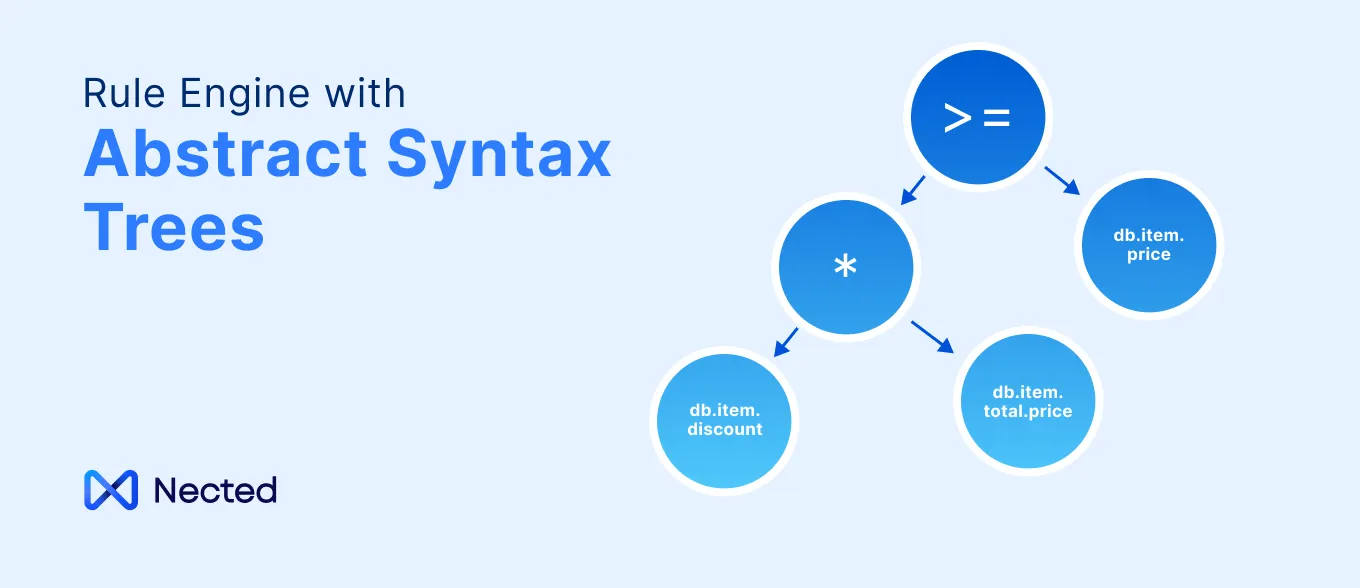
Once a transaction is flagged as suspicious, the next step is deciding how to respond. Instead of hardcoding this logic across multiple applications, Nected uses a rules engine design pattern to separate business logic from application code. . A typical workflow looks like this:
Step 1: Receive the transaction alert
Nected receives a high-risk transaction alert from your transaction monitoring system through an API or event trigger.
Step 2: Enrich the transaction with risk data
Fetch additional information such as customer risk score, transaction history, sanctions screening results, AML status, and other fraud signals from connected systems.
Step 3: Evaluate business rules
Apply configurable rules based on transaction amount, customer profile, geography, payment type, beneficiary details, or any other business-specific criteria.
Step 4: Determine the next action
Based on the evaluated risk, automatically decide whether to:
- Approve the transaction
- Request additional verification
- Hold the transaction for review
- Route it to a compliance analyst
- Reject the transaction
Step 5: Trigger downstream actions
Notify internal teams, update case management systems, initiate investigations, or call external APIs to execute the required action.
Step 6: Record every decision
Log the rules evaluated, actions taken, and workflow history to create a complete audit trail for compliance and future investigations.
Read more: Top Workflow Orchestration Tools in 2026
Real-World Use Cases for Transaction Monitoring
Transaction monitoring requirements vary across industries, but the objective remains the same: identify suspicious financial activity before it leads to fraud, regulatory violations, or financial loss.
Below are three common use cases.
1. Banking: Detecting Unusual Account Activity
Each bank makes numerous deposits, withdrawals, transfers, and international transactions every day. It is not possible to monitor each transaction manually.
The transaction monitoring solution can help identify cases such as:
- Multiple transfers of high value within a short period.
- Unexpected international transactions from a customer account that normally does all domestic transactions.
- Depositing cash and withdrawing immediately afterward.
- Transactions which are not aligned with the customer's past behavior.
The solution does not automatically block every transaction; rather, it evaluates the risk level and sends the suspicious activities for investigation to the compliance department.
2. Payment Platforms: Preventing Fraudulent Transactions
Payment service providers are under continuous attack using stolen cards, breached accounts, and automated transactions on their payment systems.
The monitoring software would consider things like:
- Transaction speed
- Reputation of device being used
- Geographic discrepancies
- Risk from merchant
- History of customer’s payments
For instance, if a customer who frequently makes local small transactions tries making multiple international payments with large amounts in a few minutes, then the monitoring process can initiate some form of verification before completing those transactions.
3. Cryptocurrency Exchanges: Monitoring High-Risk Transfers
The cryptocurrency exchange carries out transaction processing between wallets, blockchain, and cryptocurrencies, which brings along its own peculiarities of compliance.
Such a monitoring platform allows detecting:
- Transaction with the involvement of a sanctioned wallet address.
- Quick flow of funds between different wallets.
- Big transaction from a recently created account.
- Activity linked with high-risk blockchain addresses.
Depending on the compliance policy, alerts produced by such a platform will automatically initiate additional due diligence, restrictions on withdrawals, or investigation of the case.
Common Challenges and Best Practices for Building an Effective Transaction Monitoring Strategy
Implementing transaction monitoring involves more than selecting software. Monitoring should be well thought out, based on good data and effective processes that enable the compliance team to act fast and appropriately.
The following list provides some of the most frequent issues.
Challenge 1: Too Many False Positives
Poor monitoring configuration leads to the generation of huge amounts of alerts that do not have anything to do with the real risk.
As the number of alerts grows, more and more time is spent on investigating usual transactions rather than spotting any suspicious activity.
Best Practice
Consider using customer risk assessment, their past behavior, and various risk factors as opposed to working with static thresholds only. Revisit results of the investigation and adjust monitoring accordingly.
Challenge 2: Static Monitoring Rules
Fraud and money laundering schemes are always changing. Rules which worked a year ago might now be totally ineffective.
Best Practice
Check your monitoring rules periodically and adjust your business rules, taking into account changes in customer behavior and legislation.
Challenge 3: Disconnected Compliance Systems
Many organizations operate separate tools for transaction monitoring, AML screening, sanctions checks, fraud detection, and case management. However, without integration, time is wasted switching back and forth between applications rather than actually solving the case.
Best practice
Integrate the monitoring system into the subsequent workflow to make sure that the alerting, investigating, approving, and reporting functions are integrated.
Challenge 4: Limited Visibility Into Investigations
Audit trails are incomplete because companies are unable to provide explanations of why transactions have been approved or rejected. There is an operational burden and risks in terms of regulation.
Best practice
Keep logs of monitoring rules, risk ratings, investigation comments, workflow activities, and decisions taken. Good documentation will help during audits and reduce inconsistencies in the work of compliance officers.
Challenge 5: Scaling Manual Investigations
Manual investigations become challenging to manage when the volume of transactions grows. Additional hiring of investigators does not solve the issue if the alert system keeps overwhelming them with mundane tasks.
Best practice
Automate repetitive activities like risk assessment, alert routing, notifications, escalations, and leave only manual investigations for those transactions that need human intervention.
Read more: Decision Engine Software: Complete Guide
Conclusion
Transaction monitoring helps financial institutions detect suspicious activity in real time, reduce fraud, and meet regulatory requirements. The most effective solutions combine real-time monitoring, risk scoring, configurable rules, and seamless integrations to enable faster and more consistent decisions.
While transaction monitoring systems identify risky transactions, Nected automates the actions that follow by orchestrating business rules, approvals, investigations, and third-party integrations. This helps teams streamline compliance workflows without embedding decision logic into application code.
FAQs
What is a transaction monitoring solution?
A transaction monitoring system is a tool used to analyze financial transactions for suspicious activity, which could be indicative of financial crimes such as fraud and money laundering.
How is automated transaction monitoring done?
Automated transaction monitoring monitors the transactions based on some business rules, client risk profile, behavior record, and other risk parameters. The suspicious transactions are detected for further investigation and/or processing.
What organizations use transaction monitoring tools?
Transaction monitoring is used by banks, payment service providers, fintech companies, cryptocurrency exchange platforms, loaning services, and all kinds of financial institutions.
What kinds of transactions are monitored?
Deposits, withdrawals, account transfers, card payments, wire transfers, cross-border transactions, digital wallet transactions, and cryptocurrency transactions are some of the examples.
Why do transaction monitoring systems have false positives?
This happens due to rules being based on static threshold values without taking into account customers' behavior or the transaction itself.
How often should transaction monitoring rules be evaluated?
Transaction monitoring rules should be evaluated periodically according to new fraud trends, regulation changes, customer behavior, business risk policies, etc.
How does Nected support transaction monitoring?
Nected does not replace transaction monitoring software. It automates the workflows that follow risk detection by orchestrating business rules, approvals, investigations, notifications, and integrations with fraud detection, AML, and compliance systems.


.svg.webp)




.webp)

.webp)