.svg)

.svg)


.png)
.webp)
Underwriting a business loan goes beyond just evaluating credit scores. The bank needs to analyze financial statements, cash flow analysis, repayment capability, industry risk, collateral, regulatory requirements, and internal guidelines before making a decision. With increased numbers of loans, manual underwriting results in slow processing, inefficiency, and inconsistencies.
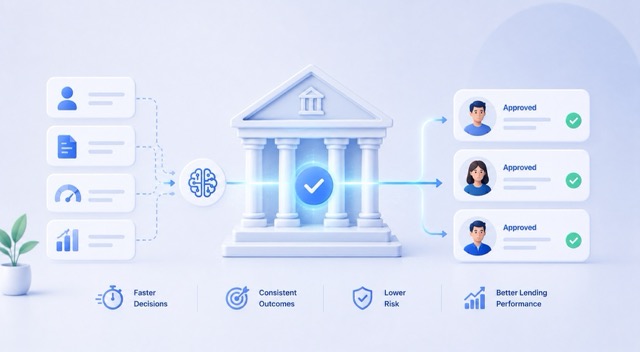
Automated underwriting addresses this challenge by integrating data, business logic, and a risk management model to evaluate the applications objectively. The underwriters are not replaced by automated underwriting; rather, routine decisions that need rule application are done through automation, leaving non-routine decisions for manual underwriting.
This article explains the principles of automated underwriting, how it adds value to the process of business lending, and what banks should know about implementing it.
Why Business Loan Underwriting Is Being Rebuilt Around Automation
Underwriting traditionally entails manual document processing, spreadsheet analysis, and many approval steps. This method works well in small lending volumes but is hard to scale when operations grow.
Business lending itself is becoming more complicated. Now banks analyze applicants considering several aspects, such as:
- Financial performance
- Cash flow sustainability
- Existing debts
- Special industry risks
- Credit history
- Regulatory requirements
- Indicators of fraud
- Lending policies of the bank
Manually examining each application takes more time and makes the process inconsistent. Different companies get different decisions based on the individual approaches of different underwriters.
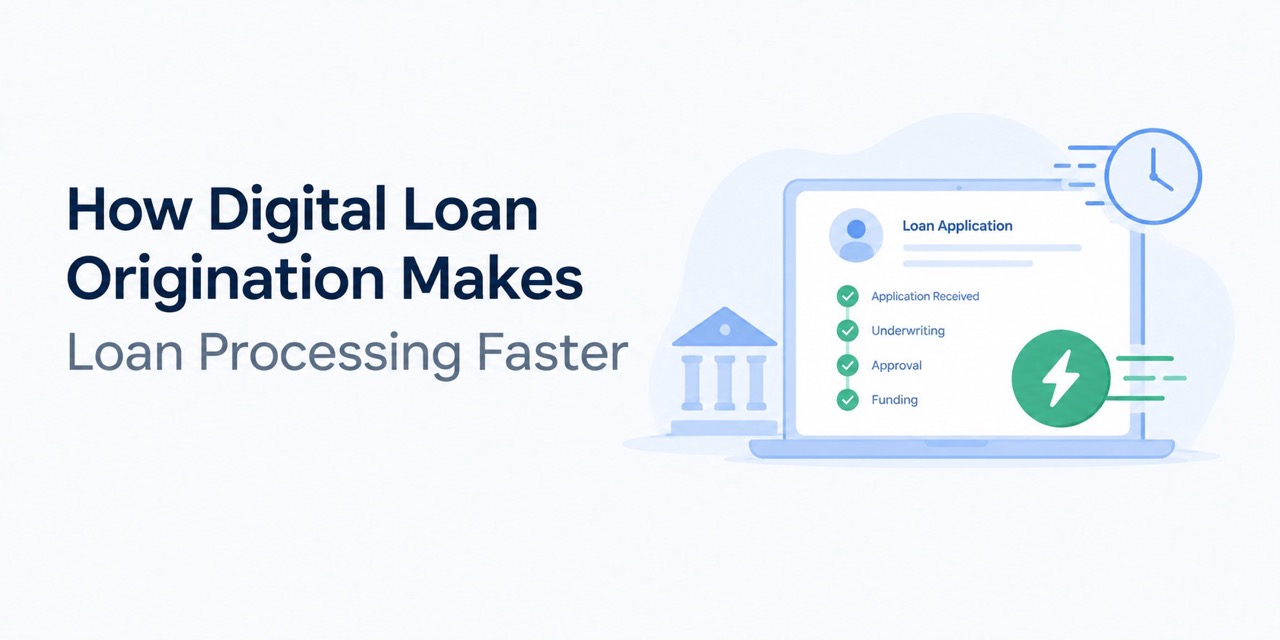
Automation solves these issues by providing a standardized method of application analysis. All loans follow one decision process, making the process less manual and more consistent. Automation also helps in digital lending where companies expect their loan decision within hours.
Also Read: What is Loan Underwriting?
From Loan Application to Approval: How Automated Underwriting Makes Credit Decisions
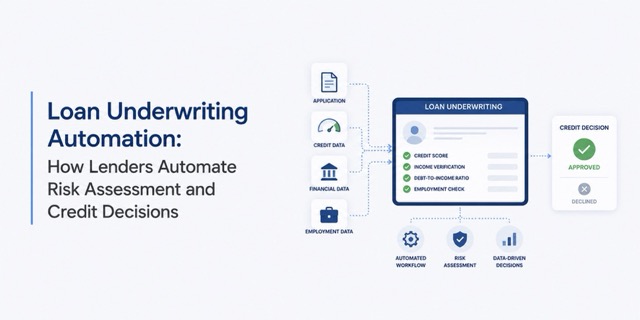
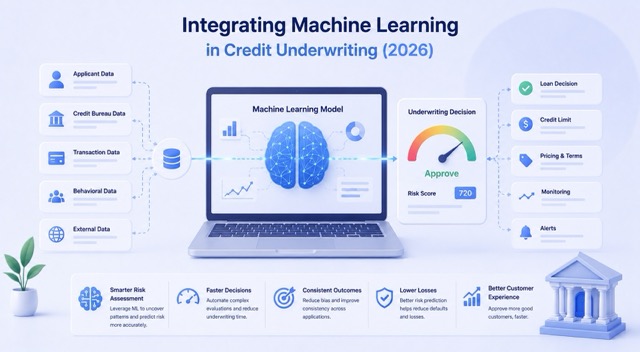
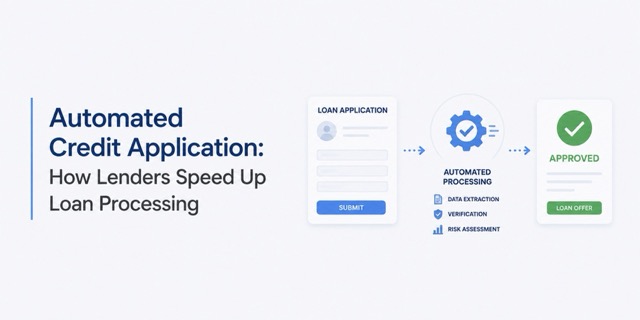
Modern underwriting systems evaluate loan applications through a structured decision workflow rather than relying on a single credit score. Every application passes through multiple validation, policy, and risk assessment stages before the system recommends whether the application should be approved, referred for manual review, or declined.
Step 1: Collect and Extract Borrower Information
The underwriting process begins when a borrower submits a loan application along with supporting documents such as financial statements, bank statements, GST filings, company registration records, income details, and existing customer information.
Modern underwriting platforms automatically collect this information through APIs, digital application forms, and document upload portals. AI-powered document extraction and Optical Character Recognition (OCR) further reduce manual data entry by extracting key fields from financial and legal documents.
Step 2: Verify Identity and Supporting Documents
Before assessing creditworthiness, lenders must ensure the submitted information is accurate and authentic.
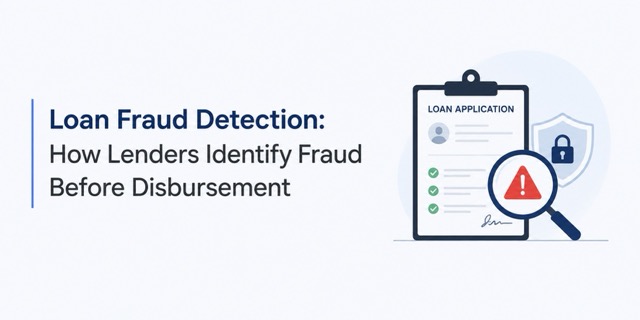
Automated underwriting systems verify customer identity through KYC checks, validate business registration records, identify missing or inconsistent information, and detect duplicate applications or forged documents. Many lenders also integrate fraud detection services, sanctions screening, and identity verification platforms at this stage.
Applications with incomplete documentation or suspicious signals are automatically routed for additional verification, while verified applications proceed to the next stage.
Step 3: Enrich the Application with Financial and Credit Data
Once the application has been verified, the underwriting engine gathers additional information from internal and external data sources.
This may include credit bureau reports, historical customer relationships, repayment history, bank transaction data, GST filings, tax records, existing loan exposure, and other financial information required for underwriting. By consolidating data from multiple systems, lenders gain a more comprehensive view of the borrower's financial position before making a credit decision.
Step 4: Apply Lending Policies and Eligibility Rules
Before predictive models estimate repayment risk, the underwriting engine evaluates predefined business rules that determine whether an application satisfies the lender's policy requirements.
These rules may include minimum credit score thresholds, acceptable debt-to-income ratios, industry restrictions, maximum loan amounts, collateral requirements, exposure limits, and product eligibility criteria.
Because these policies are managed centrally, lenders can update lending rules without modifying application code whenever business strategy, regulations, or risk appetite changes.
Step 5: Estimate Credit Risk Using Scoring Models
Applications that satisfy policy requirements are then evaluated using statistical or AI-based risk models. Rather than relying solely on traditional credit scores, modern models estimate the probability of repayment by analyzing multiple variables, including revenue trends, business cash flows, debt obligations, payment history, company age, industry performance, and behavioral indicators.
These predictive models provide a more granular assessment of borrower risk, helping lenders price loans appropriately and make more informed credit decisions.
Step 6: Route the Application for Approval, Review, or Rejection
Based on the combined outcome of policy evaluation and risk assessment, the underwriting system recommends one of three actions.
Applications that satisfy lending policies and fall within acceptable risk thresholds can proceed through straight-through processing for automatic approval. Applications that violate mandatory policies are automatically declined.
Borderline, high-value, or exception cases are routed to underwriters for manual assessment, ensuring that human expertise remains part of complex lending decisions. This hybrid approach enables lenders to process routine applications efficiently while maintaining appropriate oversight where judgment is required.
Also Read: Top 7 Insurance Underwriting Softwares
Where Automation Creates the Greatest Value in Business Lending
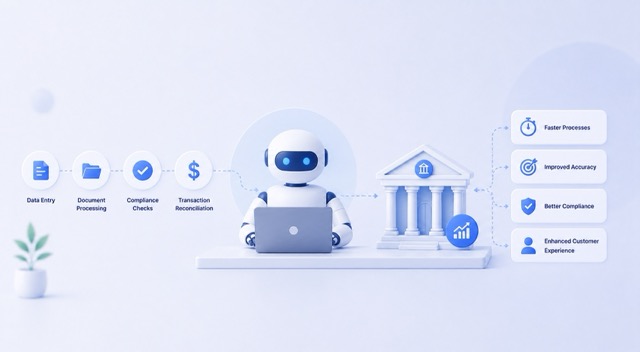
Automation creates the most value in underwriting tasks that are repetitive, policy-driven, and performed at scale. Instead of replacing underwriters, it automates routine decisions while escalating exceptions that require human judgment.
- Straight-Through Processing (STP)
Low-risk applications that satisfy eligibility rules, verification checks, and risk thresholds can move through straight-through processing without manual intervention. Applications with missing documents, policy exceptions, or elevated risk are automatically routed to underwriters.
- Consistent Policy Enforcement
Every application is evaluated against the same lending policies, including minimum credit score, maximum debt-to-income ratio, exposure limits, collateral requirements, and product eligibility. Centralized business rules eliminate inconsistent underwriting decisions and allow policy updates without changing application code.
- Fraud and Compliance Checks
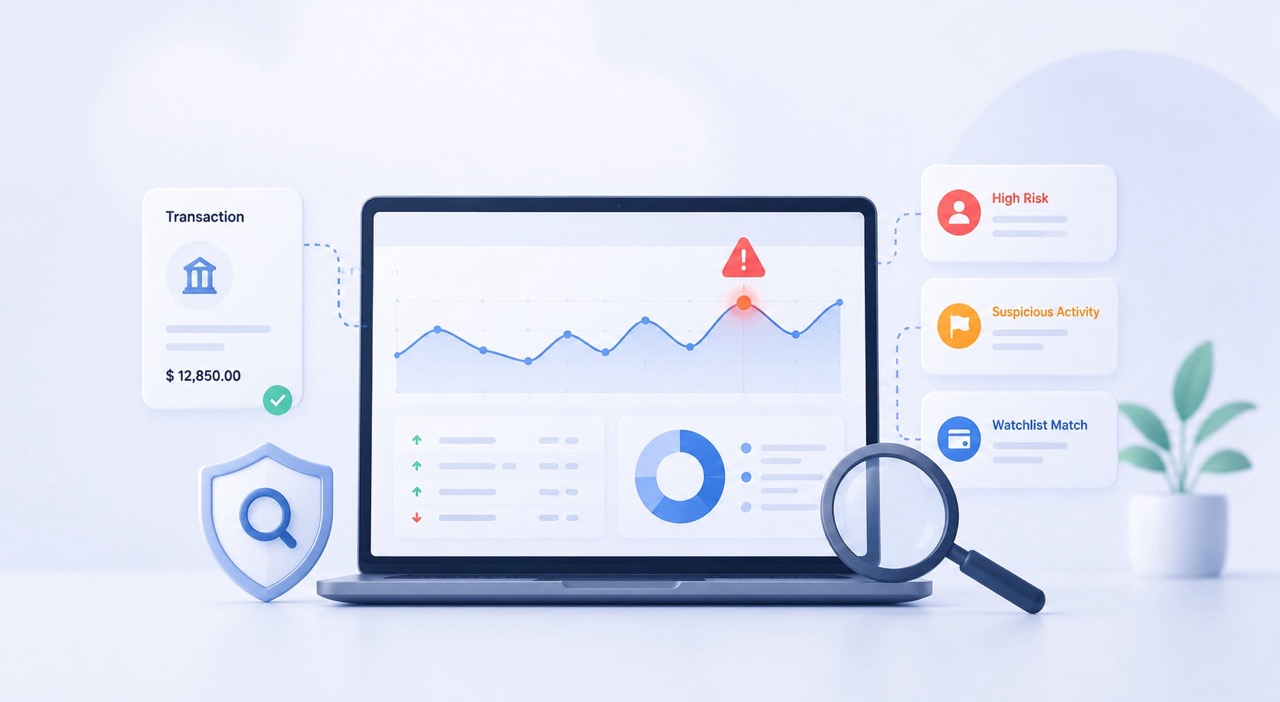
Automation performs KYC verification, sanctions screening, duplicate application detection, document validation, and fraud checks before a loan reaches the approval stage. Suspicious applications are automatically flagged for manual investigation, while compliant applications continue through the workflow.
- Scalable Underwriting Operations
Automation reduces manual effort by extracting application data, validating documents, evaluating business rules, and routing decisions automatically. This enables lenders to process higher application volumes without proportionally increasing underwriting teams.
- Auditability and Governance
Every decision is logged with the borrower data used, business rules evaluated, risk score generated, and final decision. This provides a complete audit trail for regulatory reporting, internal reviews, and policy governance.
What Separates Modern Underwriting Systems from Traditional Loan Processing Software
Though both are used hand-in-hand, automated underwriting systems and loan processing systems have different functions.
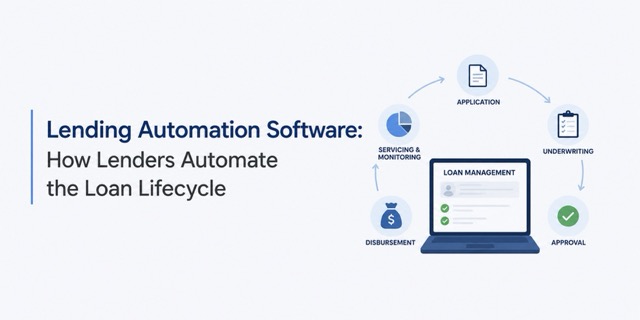
A loan processing system takes care of the administrative aspect of the loan process. It includes application management, document management, task assignment, and tracking of the loan till disbursement. It helps teams manage the process but doesn't determine whether a loan should be approved.
An automated underwriting system sits within that process and makes the credit decision. The decision-making process entails evaluating information about the potential borrower, applying borrowing policies, conducting risk analysis, determining compliance requirements, and making a recommendation regarding acceptance, rejection, or manual review of an application.
In reality, both systems supplement each other because the loan processing system takes care of the workflow, whereas the underwriting system decides how the particular application needs to be evaluated.
What to Consider When Implementing an Automated Underwriting System
While assessing the automated underwriting solution, financial institutions should go past automation and see whether the platform is able to adapt to changes in lending policies, regulation, and the business environment.
- Configurable Business Rules: The solution must be designed in such a way that business rules related to eligibility criteria, approval limits, and lending policies can be easily changed by teams without changing the application code.
- Integration with other Systems: It must be seamlessly integrated into the core banking system, CRMs, credit bureau, fraud management systems, document management systems, and internal databases.
- Explanation for Decision Making: All decisions made should have an audit history, including the rules used, data that was used in making decisions, and the logic behind the decision-making process.
- Underwriter Review of Cases: The system should be capable of having high-value loan cases and exception cases automatically sent for an underwriter review.
- Security and Compliance: You need to test the security measures like role-based access control, auditing, and encryption.
- Scalability: Select a solution that scales easily with increasing volumes of loans.
How Nected Helps Banks and Lenders Build Adaptive Underwriting Workflows
The automation of underwriting involves more than just calculating risk scores; lenders also need a reliable means of combining their business rules, approval policies, compliance rules, and artificial intelligence models in a single process.
Nected offers a low-code decision engine that allows banks and lenders to build, orchestrate, and automate the decision flow in underwriting without implementing business rules directly into the software.
With the use of Nected, lenders can:
- Unify lending policies and eligibility criteria
- Integrate risk scores calculated by AI with deterministic rules
- Automate the approval process for low-risk cases
- Assign applications with exceptions to underwriters according to certain conditions
- Implement document verification processes when necessary
- Perform compliance checks before approving the loan
- Have an audit trail for all the decisions made
Nected is capable of connecting with existing banking solutions, APIs, credit bureaus, anti-fraud platforms, CRM, and internal databases. This gives the opportunity to modernize underwriting processes without rewriting the whole technological stack.
The separation of business rules from the software code leads to quick policy updates and consistent underwriting.
Conclusion
There should be speed in business lending, but at the same time, risk management. Underwriting manually cannot keep up with the increasing number of applications, changes in lending policies, and expectations from customers regarding fast approval of loans.
Automated underwriting systems will make the whole process more effective because they will standardize risk assessment, implement lending policies, automate repetitive decision-making, and forward exceptional cases to humans for analysis. The advantages of such systems are quickness in processing, uniformity in decision-making, reduced costs, and compliance.
Banks and lenders do not have to replace their underwriters but rather provide them with automated tools.
Frequently Asked Questions
What is an Automated Underwriting System?
An Automated Underwriting System assesses loan applications for businesses according to pre-defined criteria, risk models, and borrower information to make suggestions on whether the loan should be approved, declined, or reviewed manually.
How does automated underwriting work to improve business loans?
It saves time, speeds up the approval process, enforces loan policies, improves risk management, and helps lenders deal with rising volumes of applications.
Is automated underwriting capable of automating the entire underwriting process?
No. This technology will automate routine and rule-based decision-making, but it will refer complex cases to underwriters for review.
What data can be used for automated underwriting?
Automated underwriting systems can evaluate financial statements, bank statements, credit bureau data, GST/Tax data, repayment history, cash flows of a business, its collateral, fraud markers, and internal customer data.
Does it require AI to perform automated underwriting?
No. You can implement automated underwriting without using artificial intelligence. The role of AI in automated underwriting is to increase the accuracy of risk predictions and detect patterns.
How does Nected support automated underwriting?
Nected allows banks and other lenders to configure underwriting processes through integration of business rules, AI-based outcomes, regulatory compliance checks, approval processes, and other aspects within the same decision-making engine.


.svg.webp)