.svg)

.svg)



.png)
.webp)
A credit application can be submitted digitally in minutes and still take hours or days to reach a credit officer. The delay usually happens after submission: information has to be validated, documents checked, income verified, bureau data retrieved, and the application assessed against the lender's policy.
When these activities depend on separate systems and manual handoffs, the credit team spends time coordinating the application before it can actually assess it. Modern origination workflows address this by triggering checks automatically and bringing their results back into the application process.
An automated credit application therefore does more than replace a paper form. It connects the processing steps between application intake and credit review, while still allowing cases that need judgment to reach a human underwriter.
Where Manual Credit Application Processing Slows Lending Down
Manual processing becomes a problem when the application depends on several checks that have to happen in a particular order.
Take a personal-loan application. The borrower submits income, employment, identity, and loan details. Before the lender can make a decision, it may need to verify income, retrieve bureau information, check existing obligations, and run fraud or identity checks.
If those checks are handled separately, the application can move through several manual handoffs. An employee may have to initiate a verification, wait for the response, open another system for the credit report, compare the results with the application, and then update the LOS.
The same problem occurs with documents. A missing bank statement may stop an application, but unless the workflow identifies that requirement early, the issue may only be discovered when the underwriter opens the file.
This creates a particularly inefficient situation: the credit team is spending time finding and preparing information rather than evaluating the credit itself.
Manual processing also makes exceptions harder to manage. An application that exceeds an approval limit, contains conflicting income information, or requires additional verification should not sit in the same queue as a standard application. This creates an obvious need to automate the predictable aspects of applications and direct exceptions to the correct reviewer.
Also Read: Details about Automated Credit Scoring
What Happens When a Credit Application Is Automated?
Automation changes what happens immediately after the application is submitted. Rather than having the employee decide on what the next move should be, the application can initiate the necessary tests for this particular lending product. The results then determine what happens next.
A typical process is:
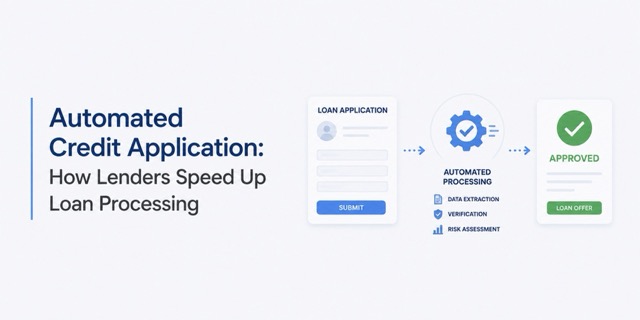
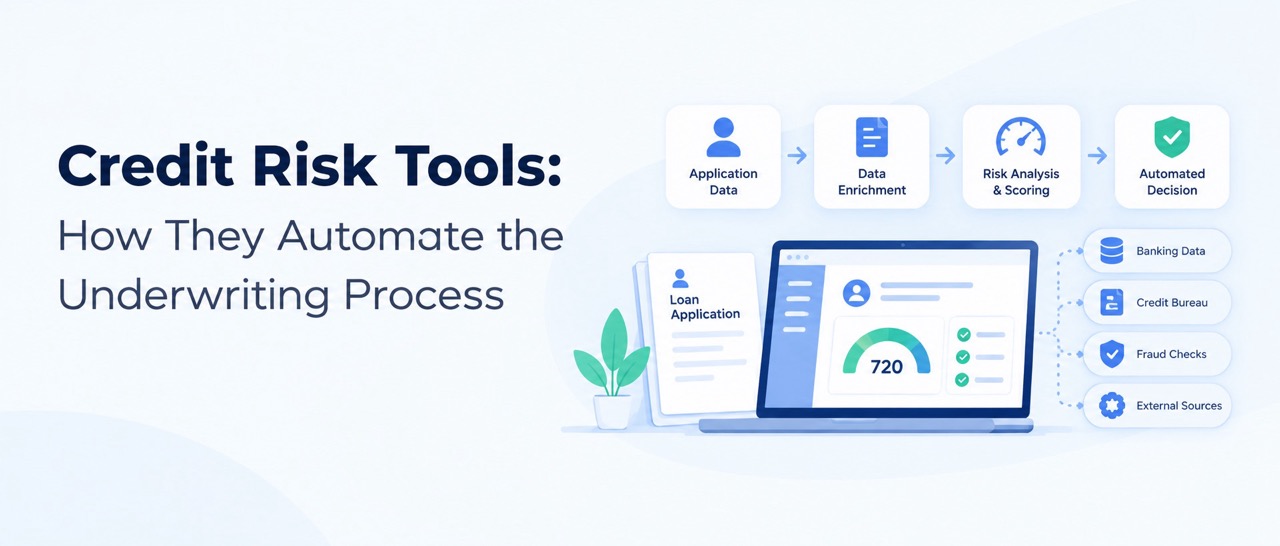
Application → validation → verification → credit data → assessment → decision path → approval
The first step is validation. The system checks whether the information and documents required for that product are present. This matters because an application should not enter underwriting when a mandatory piece of information is already missing.
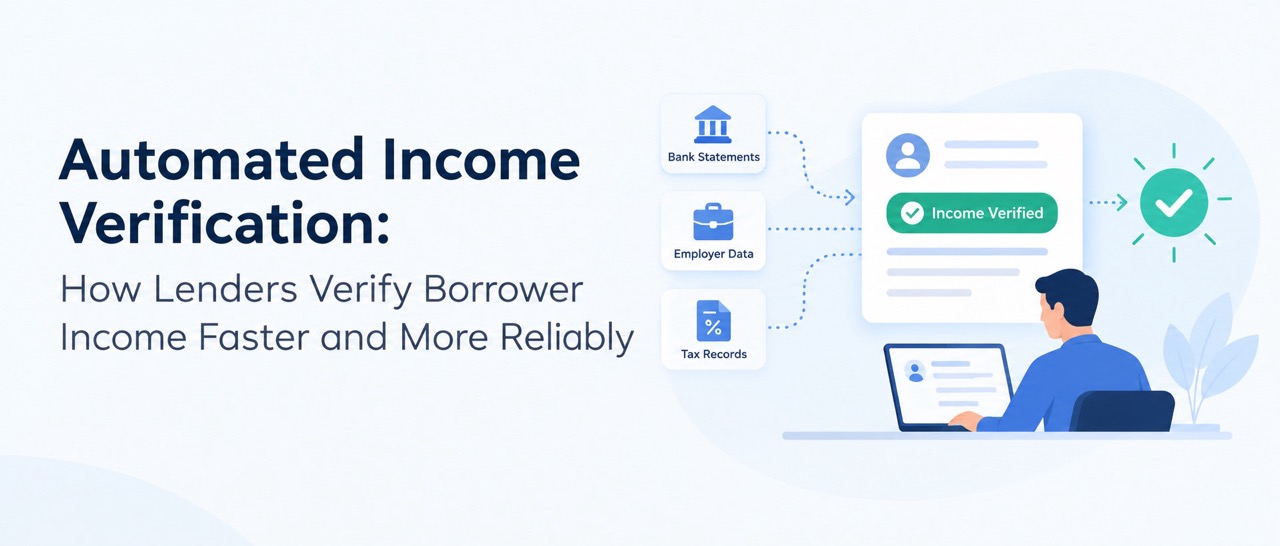
Once the application is complete, the workflow can trigger the required verification services. Depending on the product, that might mean identity, income, employment, bank-account, or other financial checks.
Credit information can then be retrieved and associated with the application. Instead of an employee logging into a separate bureau portal and manually transferring information back into the lending system, the credit data can become an input to the next stage of the workflow.
The application can then be assessed against the lender's defined credit conditions. A straightforward application can continue through the standard path, while an application with missing information or a policy exception can be sent for additional verification or human review.
This is the important distinction: automating the application does not mean removing the credit officer. It means the credit officer receives a decision-ready application instead of a file that still needs to be assembled.
How Automated Credit Applications Handle Data Collection, Verification, and Credit Checks
The value of automation comes from connecting the results of these checks rather than running them as isolated activities.
Consider a borrower applying for a personal loan. The application consists of the borrower’s stated monthly income and desired loan amount. Assuming that the application form is confirmed, the process could start with income verification and credit bureau verification.
Let us assume that the loan applicant claims an annual income of ₹80,000, whereas the source indicates ₹55,000. The application now has a discrepancy that matters to the credit decision.
The system can use that result to change the application's path:
Income verified → No → Additional verification or credit review
If the income is verified and the bureau information also satisfies the lender's requirements, the application can continue to affordability assessment and credit decisioning.
The same approach works differently for an SME loan. The lender may need bank transactions, financial statements, business information, existing liabilities, and ownership details before the application is ready for credit review. The automation should therefore be based on the requirements of the lending product, rather than forcing every application through an identical sequence.
A well-designed workflow also keeps the source of each important piece of information clear. The underwriter should be able to distinguish between what the borrower declared, what an external provider verified, and what the lender calculated from those inputs. That distinction becomes important when the numbers do not agree.
Also Read: Credit Decision Engine Guide
Which Parts of Credit Application Processing Should Lenders Automate?
The best candidates are not simply "repetitive tasks." They are processing steps where the lender already knows what should happen when a particular condition is met.
Application validation is one example. If a product requires specific information before processing can begin, the system can check for it immediately rather than sending incomplete applications to operations.
Verification is another. If every application for a particular product requires an income check, the system can initiate that check as soon as the application reaches the required stage.
Credit-data retrieval and calculations are also suitable. Bureau information, verified income, existing exposure, and affordability calculations can be brought into the same workflow rather than manually collected and reconciled.
Routing is where this becomes particularly useful. A lender may have a defined approval authority for standard applications but require senior review above a certain loan amount. Similarly, an income discrepancy may require additional verification rather than an immediate decline.
The workflow can therefore distinguish between:
Application within policy → standard processing
Application requiring additional evidence → verification
Application outside approval authority → credit review
This approach is more practical than trying to automate the final decision for every borrower. Industry lending workflows commonly combine automated tasks with human underwriting and exception handling rather than treating automation as a replacement for credit judgment.
Automated Credit Applications vs. Fully Automated Credit Decisions
Automated application processing and fully automated credit decisioning are related, but they solve different parts of the lending process. An automated credit application automates the work required to prepare and move the application. It can perform tasks such as collecting data, verifying documents, starting verification processes, retrieving credit information, performing calculations, and guiding the application.
A completely automated credit decision takes it one notch higher: the system is capable of making the credit decision based on preset rules and models.
For example, a lender could automate the entire application preparation process but still require an underwriter to approve every SME loan. That is still automation. The lender has removed manual data collection, verification coordination, and application preparation without pretending that every credit decision can be reduced to a fixed set of conditions.
For standardized consumer lending, however, the lender may choose to automate more of the decision path where policy is sufficiently defined.
How Nected Helps Connect Credit Rules to Automated Application Workflows
Automating a credit application still requires rules that determine what happens when the application meets, fails, or falls outside the lender's defined conditions. These rules may cover eligibility, verification requirements, approval limits, referral conditions, and other credit policies.
Nected can complement an existing lending stack by providing a configurable decisioning and workflow layer for these rules.
For example:
Application data → verification results → Nected rules → standard processing / additional verification / credit review
A lender could configure conditions such as:
Income verified + DTI within limit + amount within approval authority → Continue
Income verification failed → Additional verification
Loan amount exceeds approval authority → Credit review
Conflicting application and bureau information → Manual review
This allows lenders to connect application data, external verification results, credit rules, and workflow actions without embedding every policy condition directly into the core lending application.
Nected can therefore complement the existing origination workflow when lenders need to change decision rules or referral conditions without rebuilding the broader application process.
Conclusion
An automated credit application is more than a faster digital form. It connects validation, verification, credit-data retrieval, calculations, policy checks, and routing into a defined process.
The goal is not to remove human judgment from lending. Standard applications can move through predictable checks and decisions, while applications with conflicting information or policy exceptions can be routed to the appropriate credit team.
Nected can complement this process by providing a configurable decisioning and workflow layer that connects credit rules and application data to the next action.
This gives lenders a more consistent way to move applications from intake to credit review while keeping human judgment where it is actually needed.
Frequently Asked Questions
What is an automated credit application?
An automated credit application uses software to manage defined steps between application submission and credit review, including validation, verification, credit-data retrieval, calculations, and routing.
Does an automated credit application automatically approve loans?
No. Application processing can be automated while the final credit decision remains with an underwriter or credit officer.
What can lenders automate first?
Application validation, document requests, verification triggers, bureau-data retrieval, calculations, and routing are practical starting points because they follow defined conditions.
What happens when an application fails a verification check?
The workflow should route it according to the lender's policy. That may mean requesting additional information, running another verification, or sending the application to manual review.
What is the difference between automated application processing and automated underwriting?
Automated application processing focuses on collecting, verifying, organizing, and routing application information. Automated underwriting goes further by evaluating that information against underwriting criteria to support or make the credit decision.
Can lenders keep human underwriters while automating applications?
Yes. In fact, this is often the appropriate model for products where standard processing can be automated, but exceptions still require professional credit judgment.
What systems can an automated credit application connect to?
Depending on the lender and product, this can include the LOS, credit bureaus, income and identity verification providers, bank-data sources, fraud systems, document services, and core banking or servicing platforms.
Why is configurable decision logic important?
Because lending policies change. Configurable logic allows lenders to modify eligibility, verification, approval, and referral conditions without rebuilding the underlying application workflow.
How can Nected support automated credit applications?
Nected is able to enforce configurable credit rules on the application and verification information and initiate the right workflow action, whether it is continue processing, request further verification, or submit the application for credit review.



.svg.webp)





.webp)


.webp)

.webp)