.svg)

.svg)


.png)
.webp)
Online lending eliminates trips to branches and the processing of documents, but it also increases the number of chances for fraudsters to apply online.
A borrower can use a genuine identity with false income information. A stolen identity can pass basic verification. Multiple applications can share a phone number, bank account, device, or address without looking identical.
For lenders, the challenge is therefore not finding one suspicious field. It is connecting signals from different parts of the application before the loan is approved.
Why Online Lending Creates New Fraud Risks for Lenders
In a digital application, much of the evidence is collected remotely. However, the lender can obtain identity information, uploaded documents, financial information, and device information without physically meeting the applicant.
This leads to some particular types of fraud:
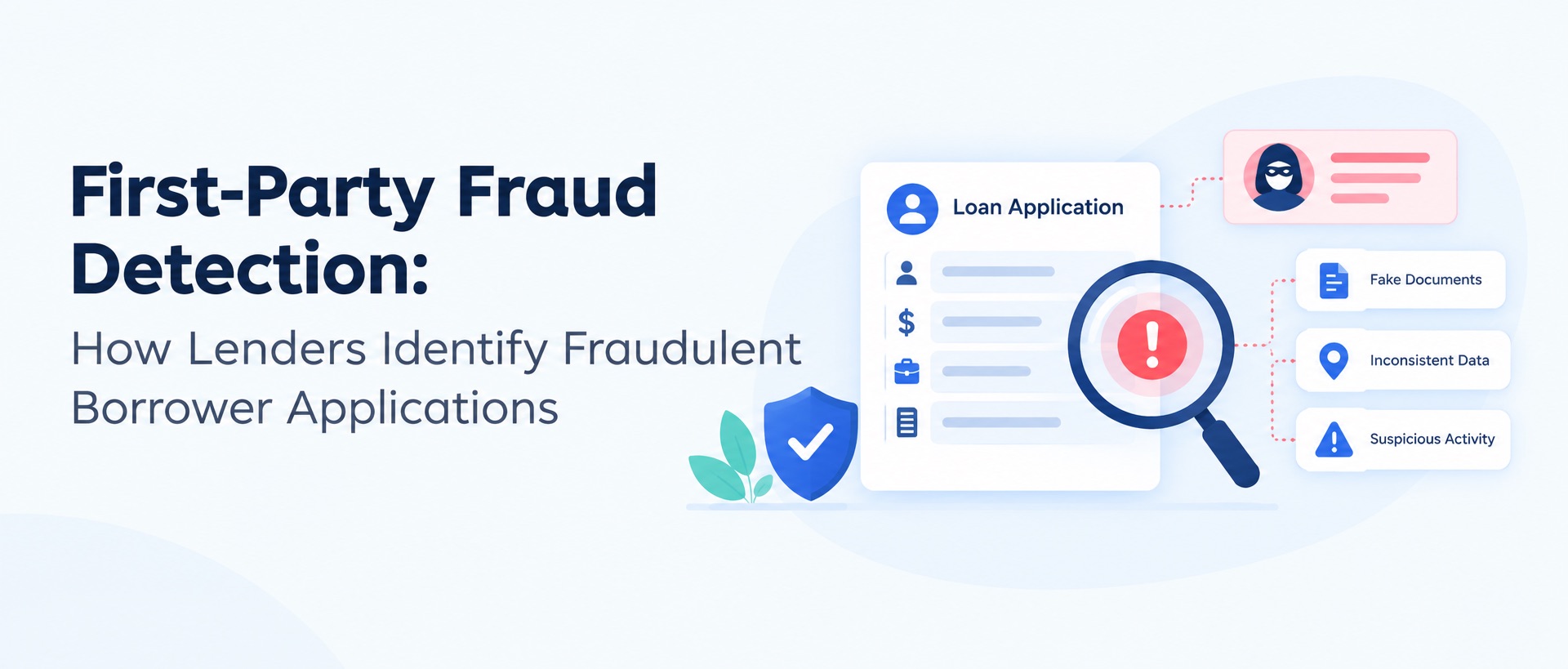
- Identity theft: The identity belongs to a real individual, but the applicant is not the person.
- Financial information fraud: Declared income or employment information does not match verified information.
- Document fraud: Payslip, bank statement, or identity document has been modified.
- Application fraud: Borrower data from previous applications are found in different applications.
- Connection between accounts or devices: Multiple identities can be linked to the same phone number, bank account, or device.
- Synthetic application fraud: An application combines real and fabricated information to create a fraudulent borrower identity.
A single check may not expose these patterns. Fraud detection becomes stronger when the lender compares information across the application rather than evaluating each field independently.
Also Read: Best Loan Management Software & Systems
Where Fraud Signals Appear Across an Online Loan Application
Fraud signals can emerge from the moment the application is submitted. The important signals usually come from four areas:
- Application Information
The lender can compare information provided during application with existing records and external data.
For example, the applicant's stated employer, income, address, phone number, or bank details may conflict with information returned by verification providers.
- Identity and Documents
Identity verification can establish whether submitted identity information is valid. But validity alone is not enough. A genuine identity document can still be used by someone who is not the legitimate owner. Similarly, a genuine payslip can be presented alongside false employment information.
This is why document and identity results need to be evaluated alongside other application data.
- Device and Digital Behaviour
Digital applications provide signals that are unavailable in many branch-based processes. Depending on the lender's setup, these can include:
- Device identifiers
- Application velocity
- Session patterns
- Repeated applications
- Connections between applications
For example, several applications using different identities but the same unusual device pattern may warrant additional investigation. A device signal alone should not determine fraud. It becomes useful when combined with stronger evidence.
- Financial Information
Income verification, bank data, credit information, and existing exposure can expose inconsistencies.
For example:
Declared income: ₹90,000
Verified income: ₹55,000
Action: Additional verification
Or:
Applicant: New customer
Bank account: Previously associated with multiple unrelated applications
Action: Fraud review
The value comes from connecting the signal to an action.
Also Read: Fraud Detection Examples
How Lenders Combine Identity, Application, Device, and Financial Signals to Detect Fraud
Fraud detection should not work as a collection of unrelated pass/fail checks. A lender needs to evaluate how the signals relate to one another.
Consider an application where:
- Identity verification passes.
- Credit history appears normal.
- Income verification passes.
- The phone number is linked to previous applications.
- The device has been used for several applications with different identities.
The applicant may still be legitimate. But the combined pattern is materially different from an application with no such connections. A lender can therefore structure the process as:
Application data → verification → fraud signals → rules → action
For example:
The important distinction is that the fraud signal does not have to make the final decision itself. It provides evidence. The lender's rules determine what happens next.
What Happens When a Loan Application Triggers Fraud Signals?
A fraud flag should change the application path. It should not simply create an alert for a fraud team while the application continues toward approval.
A practical process has three outcomes:
- Continue
The available information is consistent, and no material fraud condition has been identified. The application continues to credit assessment or approval.
- Additional Verification
There is a discrepancy, but it does not establish fraud. For example, reported income differs from the result returned by an external verification provider. The lender can request another document, run another verification check, or obtain additional information.
- Fraud Review
Multiple or material signals justify investigation. For example:
Identity verified
Income verified
Phone linked to previous applications
Device linked to multiple identities
→ Fraud review
This gives the investigator the actual reasons for the referral instead of a generic "high-risk application" label. A fraud signal is not confirmed fraud. The purpose of the review path is to investigate suspicious cases without automatically rejecting legitimate borrowers.
Fraud Detection vs. Credit Risk Assessment: What’s the Difference?
Fraud detection and credit risk assessment use some of the same information, but they answer different questions.
For example, an applicant with a low credit score but completely consistent information presents a credit-risk issue. An applicant with a strong credit history but conflicting identity information and suspicious application links presents a potential fraud issue.
One should not replace the other. Credit assessment determines whether the lender should take the financial risk. Fraud assessment determines whether the application itself can be trusted.
How Nected Helps Connect Fraud Signals to Lending Decisions?
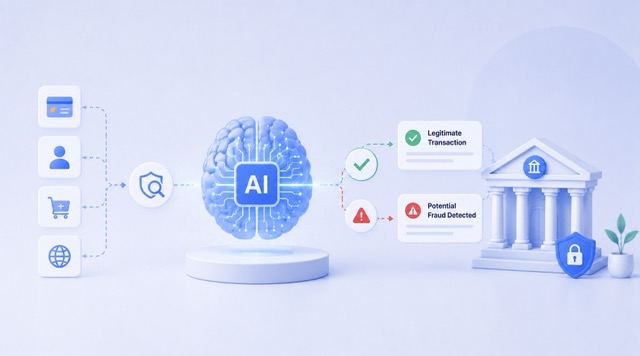
Fraud detection produces signals, but those signals still need to trigger the right action within the lending workflow. Any combination of income disparity, identity discrepancy, reapplication history, and device relationship could require different actions based on the lending institution’s guidelines.
Nected would be able to add value to an organization’s current loan and anti-fraud systems as a decisioning and workflow layer.
Fraud signals → Nected rules → lending action
For example:
Income mismatch → Additional verification
Identity mismatch → Application hold
Repeated linked applications → Fraud review
No material fraud signals → Continue processing
This allows lenders to combine external fraud signals, application data, business rules, workflows, and AI-driven outputs when determining the next action.
The fraud tools remain responsible for identifying the relevant signals, while Nected can apply the lender's configured rules to determine whether the application should continue, undergo additional verification, or move to fraud review.
This keeps fraud decision logic configurable without requiring every change to be embedded directly into the core lending application.
Conclusion
Online lending fraud detection works best when it is built into the application journey rather than added as a final check before approval.
Identity, application, device, document, income, bank, and credit signals each provide different evidence. The lender needs to connect those signals and determine whether the application should continue, undergo additional verification, or move to fraud review.
Nected can complement this process by providing a configurable decisioning and workflow layer that connects fraud signals to defined lending actions.
The goal is not to treat every unusual application as fraud. It is to use clear rules to separate legitimate exceptions from cases that require investigation while keeping fraud assessment distinct from credit risk assessment.
Frequently Asked Questions
What is online lending fraud detection?
Detecting fraud in an online loan application entails finding suspicious data, pattern, or connections in an online loan application which can imply the occurrence of fraud.
What are some of the signals that lenders watch out for?
Some of the signals include identity discrepancy, document issues, income level inconsistencies, re-application, device association, banking information, credit score information, and past application relationship.
Can a legitimate borrower trigger a fraud alert?
Yes. A shared device, unusual application pattern, or data mismatch can have a legitimate explanation. Such cases can be routed for additional verification instead of automatically rejected.
Is fraud detection the same as credit scoring?
Not really. Credit scores predict creditworthiness. Fraud detection assesses whether the application and its accompanying information seem authentic.
Should fraud checks happen before credit approval?
Where the required data is available, yes. Detecting a material fraud signal before approval allows the lender to hold or investigate the application before taking the credit exposure.
Should every fraud signal result in rejection?
No. The response should depend on the signal and its combination with other evidence. Some conditions require another verification step, while stronger patterns may require fraud investigation.
Why do lenders need configurable fraud rules?
The pattern of fraud and lending practices will vary. The ability to configure rules allows lenders to modify their threshold levels and verification process without changing the underlying lending system.
How can Nected support online lending fraud detection?
Nected can use rules on fraud detection signals and application data to decide what to do next, whether it be processing, more verification, holding the application, or reviewing the application for fraud.


.svg.webp)


.webp)