.svg)

.svg)


.png)
.webp)
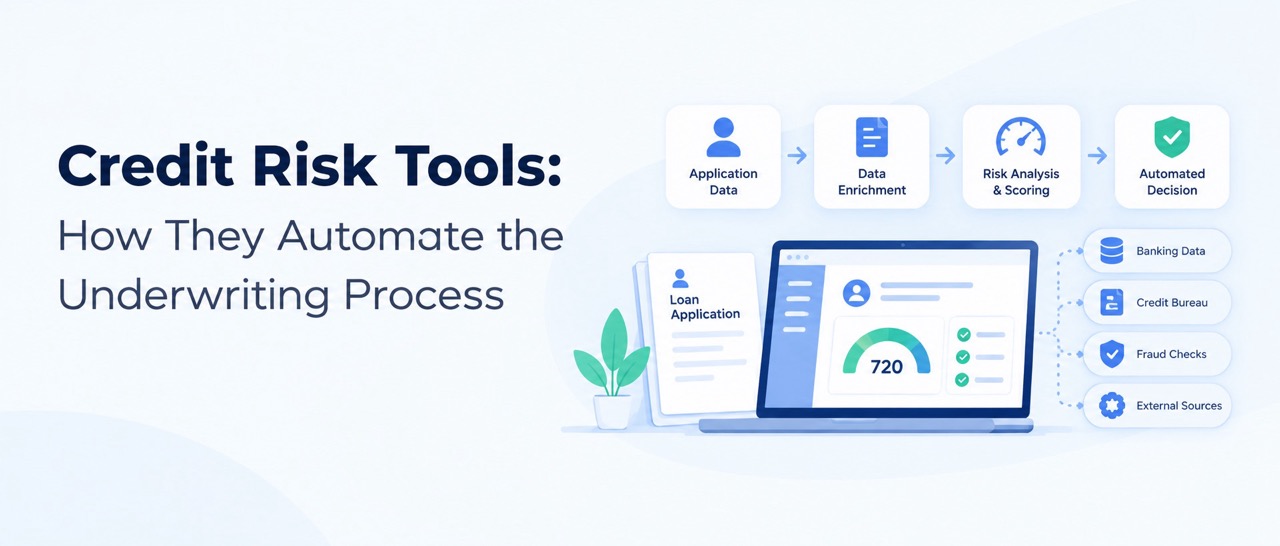
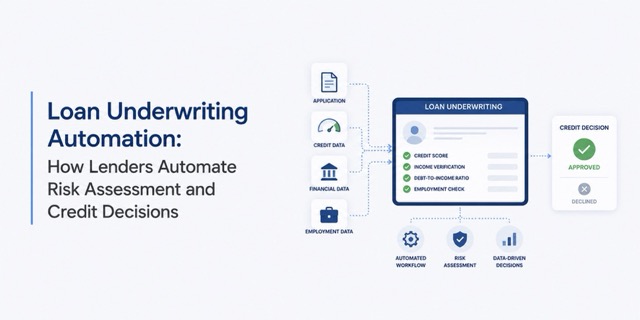
Automated underwriting is not simply about replacing a credit analyst with a score. A lending decision may require bureau data, income verification, bank transactions, fraud signals, affordability calculations, internal exposure, product rules, pricing criteria, and approval limits. The underwriting platform has to bring these inputs together and determine whether the application can proceed automatically or needs human review.
That makes platform selection a decisioning problem, not just a software comparison. This comparison focuses on how each platform handles underwriting decisions, data, integrations, policy configuration, automation, and exceptions. Since the systems tackle different segments of the underwriting stack, it all depends on how a particular lender is running its business.
Where Manual Underwriting Still Slows Lending Decisions
Manual underwriting becomes a bottleneck when underwriters spend time collecting and reconciling information that is already available digitally.
A consumer-loan underwriter, for example, may need to review the application, pull bureau information, check income, calculate affordability, verify existing exposure, review fraud results, and then determine whether the application meets policy.
The actual credit judgment may take minutes. Getting the application into a decision-ready state can take much longer.
The problem becomes larger when application volumes increase or when the lender has multiple products with different credit policies. A personal loan, auto loan, mortgage, and SME facility may all use different eligibility thresholds, verification requirements, approval authorities, and referral conditions.
Automation addresses the repeatable part of this work. It can retrieve data, calculate ratios, apply eligibility rules, run models, identify exceptions, and route applications to the appropriate approval path. The underwriter then deals with applications where the standard policy does not provide a clear answer.
That distinction matters when evaluating platforms. A system that produces a credit score but still leaves the lender to manually determine what the score means operationally does not solve the entire underwriting problem.
Also Read: Top 7 Insurance Underwriting Softwares in 2026
What an Automated Underwriting Platform Needs to Evaluate Before Approving a Loan
An underwriting platform needs access to the information that actually determines whether a lender is willing to take the credit exposure.
At minimum, that usually means combining borrower information, credit data, affordability, verification results, and the lender's own credit policy.
For a consumer loan, the process might evaluate:
- Verified income
- Existing debt and lender exposure
- Credit bureau information
- Debt-to-income or affordability measures
- Requested loan amount and term
- Product eligibility
- Fraud and identity results
- Internal customer history
- Approval authority
For an SME loan, the decision may additionally depend on bank transactions, business financials, cash flow, business age, industry, collateral, and existing business exposure. The platform also needs to distinguish between the data used to assess an application and the rules used to turn that data into a lending decision.
Suppose a lender receives a credit score of 720. That number alone does not determine approval. The lender may require a minimum score of 680, DTI below 40%, verified income above a product threshold, and exposure below a defined limit.
The underwriting system needs to evaluate those conditions together. It also needs an exception path. If income cannot be verified or the requested amount exceeds the automated approval limit, the application should not simply fail. It should be routed to the appropriate review process.
This is one of the most important differences between automated scoring and automated underwriting: underwriting must determine not only the applicant's risk but also what the lender should do with that assessment.
Also Read: Leading Providers of Underwriting Workflow Optimization Solutions
Automated Underwriting Platforms Compared: Decisioning, Data, and Integration
With those requirements in mind, the platforms can be compared based on where they sit in the underwriting stack and how much control they give lenders over decision logic.
The comparison is based on the capabilities each provider publicly describes; the platforms are not interchangeable and should be evaluated against the lender's specific product, geography, existing LOS, data providers, and underwriting policy.
5 Best Automated Underwriting Platforms for Lenders in 2026
The platforms below differ in what they automate and where they fit in the underwriting stack. A few emphasize AI-based credit risk assessment, whereas others offer broader decision-making, workflow, or data services.
Each platform is therefore evaluated based on its underwriting capabilities, decisioning flexibility, integrations, and fit with different lending workflows.
Taktile: Best for Credit Strategy and Decisioning
Taktile is one of the more directly relevant platforms when the requirement is to build and continuously change credit decision strategies.
Its Decision Engine is designed around the practical work credit teams perform: connecting data, creating decision logic, testing strategies before deployment, and monitoring how those strategies perform after they go live. Taktile supports low-code components, Python, reusable logic, backtesting, and strategy comparison.
That matters when a lender is not running one fixed underwriting policy. For example, a lender may have separate strategies for prime personal loans, near-prime borrowers, credit cards, and SME lending. Each strategy can use different bureau thresholds, affordability requirements, verification sources, risk models, and referral conditions.
Taktile is designed for this type of strategy iteration rather than simply producing a risk score.
It also supports AI-assisted decisioning while retaining human oversight, which is relevant for applications where the model can make a recommendation but the lender still needs a controlled review path.
- Best for: Banks, credit card companies, and other financial organizations that require a separate environment to develop, test, implement, and modify credit decision strategies.
- What to evaluate: Suitability of its decisioning environment to integrate with the lender’s existing LOS, data sources, and credit models.
FICO: Best for Enterprise Credit Decisioning
FICO is a different type of platform in this comparison because it combines credit analytics, rules-based decisioning, data orchestration, and origination capabilities within its broader FICO Platform.
Its current platform includes FICO Decision Modeler, which brings rules-management capabilities onto FICO Platform, alongside Originations and other decisioning capabilities.
For a large bank, this matters because underwriting may not be one isolated decision. The same institution may need to manage credit-card origination, personal loans, mortgages, auto lending, and customer-level risk using different strategies while maintaining centralized governance.
FICO's recent deployments also show this enterprise focus. Banco Santa Cruz reported reducing policy-change cycles from 90 days to 2 days after moving credit decisioning to FICO Platform. Bradesco has been using the FICO Platform to expand payroll lending, while also allowing for automated decisioning and risk management.
- Best for: Large financial firms needing to manage a wide array of credit products and complex decisioning techniques.
- What to evaluate: The extent of the implementation, current FICO capabilities, integration needs, and whether the organization needs a complete FICO solution or just the decision layer.
Scienaptic AI: Best for AI-Led Credit Underwriting
Scienaptic is more directly centered on AI-powered credit underwriting and decisioning. Its platform combines machine-learning models with business rules and can use bureau, banking, alternative, fraud, and identity data. It describes the resulting process as a decision rather than simply a score: approve or decline, amount, term, pricing, counter-offer, and adverse-action reasons.
That distinction is important for lenders. A model might determine that two borrowers have different levels of default risk. The underwriting system still needs to translate that assessment into the lender's actual policy.
For example, the lender may accept one risk band for a personal loan but require manual review for the same band on a higher-value product. Scienaptic combines its AI assessment with a business-rule layer so the lender's risk appetite can remain part of the decision.
Scienaptic also supports alternative data and cash-flow-oriented underwriting, which is particularly relevant for lenders dealing with thin-file borrowers or applicants whose traditional bureau information does not provide enough decision context.
- Best for: Banking institutions, credit unions, NBFCs, and fintech lenders who wish to make AI algorithms the core component of their lending decision-making process.
- What to evaluate: Model governance, model explainability, data needed, compatibility with current LOS, and the level of control the lender wishes to have over its underwriting process.
Nected: Best for Complex, Configurable Underwriting Logic
Nected should not be positioned as simply another underwriting model in this list. It is an all-in-one decisioning and workflow platform that lenders can use to build the underwriting layer around their existing lending systems. Its lending capabilities include configurable scoring rules, real-time data retrieval, decision tables, workflows, external integrations, automated approvals, and manual-review routing.
That makes it relevant when the lender's underwriting process involves more than one model or score.
Consider a personal-loan workflow:
Application → bureau data → income verification → affordability calculation → fraud result → credit policy → approval authority → decision
The lender may have different rules at each stage. A bureau result can determine one branch, verified income another, and the combination of loan amount and exposure can determine whether the application requires senior approval.
Nected can represent that logic through configurable decision tables and workflows rather than forcing the entire strategy into one hardcoded application flow. Its underwriting documentation specifically shows examples of combining credit score, income, loan amount, decision tables, API data, and automated routing to approval or manual review.
The bigger distinction is what happens after underwriting. The same decision layer can be used for pricing, product eligibility, fraud checks, approval routing, collections, and other lending decisions. Nected's lending platform explicitly covers originations, underwriting, collections, scoring, third-party integrations, and policy iteration.
- Best for: Lenders that need to build complex underwriting logic while also connecting that logic to broader lending workflows and existing systems.
- What to evaluate: Nected is broader than a dedicated underwriting-only platform. Its strongest fit is for lenders that want the flexibility to build specialized underwriting logic while using the same decisioning layer for other lending decisions.
Zest AI: Best for Machine-Learning-Based Underwriting
Zest AI is focused specifically on AI-powered credit underwriting and risk assessment. Its platform creates client-specific machine-learning models rather than relying only on generic credit scores. Zest says its underwriting solution supports personal loans, auto, credit cards, home equity, and SMB lending, with automated decisioning and policy optimization. This is particularly relevant when the lender's main underwriting problem is risk differentiation.
For example, a lender may already have a rules engine and LOS but find that a traditional scorecard does not adequately distinguish borrowers within a particular risk segment. The machine learning model can deliver a more precise risk assessment process that can then determine the cut-off points and underwriting policies.
Zest is also heavily focused on fair lending analysis and bias management, which becomes crucial if the machine learning algorithm affects the lending decision.
- Best for: Lenders who need the machine learning process to become a key component in the risk assessment and automated underwriting of borrowers.
- What to evaluate: Model accuracy, explainability, fairness, integration, and alignment of the model within existing loan decision-making and approval processes of the lender.
The five platforms vary in their approaches to automated underwriting, ranging from credit strategy and artificial intelligence risk assessment to enterprise decisioning and configurable workflow. The choice is thus a matter of how much control the lender needs over its data, rules, models, and approval process.
Across these approaches, one requirement remains common: underwriting decisions need to connect risk inputs with the lender's actual policies and next actions. This is where configurable decisioning becomes important.
Also Read: Top Insurance Underwriting Software List
How Nected Connects Underwriting Rules to Lending Decisions?
A credit score, bureau result, or risk model provides an important input to an underwriting decision, but it does not determine what the lender should do in every situation. The final decision can also be influenced by income, pre-existing exposure, loan size, product guidelines, limits on approvals, and meeting the criteria required for automated approval.
This is where Nected comes into play in the underwriting process. Nected gives the ability to configure the decisioning and workflow layer, which helps combine all of these variables, apply the lender’s rules to the process, and take the application to the right destination.
For instance, let us look at a personal loan application with the following set of inputs:
The applicant may meet the lender's risk criteria but still require manual approval because the requested amount exceeds the applicable approval authority. Nected can use these conditions together to determine whether the application should be approved automatically or routed for review.
The workflow can look like:
Application data → Risk and verification inputs → Nected rules → Decision → Approval / Rejection / Manual Review
This approach also allows lenders to keep different underwriting policies for different products. A personal loan, credit card, or SME facility can have its own eligibility conditions, thresholds, approval limits, and referral rules within the same decisioning layer.
Nected can also connect with external data sources and existing lending systems, so lenders can use the information already available in their underwriting process rather than rebuilding the entire application stack.
Conclusion
The right automated underwriting platform depends on what a lender needs to automate, from risk assessment and data processing to rules and approval workflows.
Nected is particularly suited to lenders that need configurable decisioning and workflow automation across these steps. Rather than replacing the existing lending stack, it can connect data, rules, and decisions within the underwriting process. The most appropriate approach in assessing the effectiveness of the platform will be carrying out a test on the system using an underwriting process.
Frequently Asked Questions
What is an automated underwriting platform?
It is software that uses borrower data, verification results, credit models, business rules, and workflows to evaluate loan applications and determine whether they should be approved, declined, or referred for review.
Is automated underwriting the same as automated credit scoring?
No. Credit scoring produces an assessment of borrower risk. Automated underwriting uses that assessment alongside policy rules, verification data, affordability, exposure, and other conditions to determine the appropriate lending action.
Which automated underwriting platform is best for lenders?
There is no single best platform for every lender. Nected is suited to configurable decisioning and workflow orchestration; Scienaptic AI and Zest AI focus heavily on AI-based credit decisioning; Ocrolus specializes in document and financial-data analysis; and Upstart focuses on AI-driven consumer lending.
Can automated underwriting work with an existing LOS?
Yes. Several platforms are designed to integrate with existing origination systems rather than replace them. Upstart, for example, offers a Credit Decision API that allows lenders to use its underwriting technology within an existing application process.
What should lenders automate first?
The first step should be to begin with repetitive activities in underwriting, including information gathering, validation, computation, eligibility evaluation, and decision criteria. Applications requiring significant judgment should remain available for human review.
Can underwriting rules be changed without changing the core lending application?
That depends on the platform architecture. The separation of decisioning capabilities from the core lending application is provided by using such technologies as Nected, which enable lenders to change decisioning criteria without changing the application's code.
How important are integrations in automated underwriting?
They are critical. An underwriting platform is only as useful as the data it can access. Lenders should verify integration with their LOS, credit bureaus, income and bank-data providers, fraud systems, document services, and downstream approval or funding systems.
Does automated underwriting eliminate human underwriters?
No. The practical objective is to automate predictable applications and route exceptions to underwriters with the relevant data and reason for referral. Complex commercial lending and policy exceptions may still require substantial human judgment.


.svg.webp)

.webp)
.webp)