.svg)

.svg)


.png)
.webp)
Credit underwriting is becoming increasingly difficult to scale using traditional scorecards and manual reviews. Borrowers now generate far more financial and behavioral data than conventional underwriting models were designed to evaluate, while lenders are expected to deliver faster decisions without increasing portfolio risk.
Machine learning (ML) addresses this challenge by identifying complex relationships across structured and alternative data sources to improve credit risk assessment. Instead of relying solely on bureau scores or predefined scorecards, ML models estimate repayment probability using a broader view of borrower behavior.
However, machine learning is only one component of modern underwriting. A credit decision also depends on lending policies, regulatory requirements, product eligibility, fraud controls, pricing logic, and human review for exception cases. As a result, financial institutions increasingly combine ML models with decision engines and workflow orchestration to build explainable and compliant underwriting processes.
This guide compares five leading machine learning providers for credit underwriting and explains where each platform fits within the underwriting technology stack.
Why Traditional Credit Underwriting Models Are Reaching Their Limits?
Traditional underwriting models were designed around structured financial information such as bureau scores, repayment history, income declarations, and existing liabilities. While these inputs remain important, they are no longer sufficient for today's lending environment.
Several challenges have exposed the limitations of conventional underwriting.
- Static scorecards struggle to adapt:
Traditional scorecards rely on predefined variables and periodically updated statistical models. As borrower behaviour, fraud patterns, and economic conditions change, these models require manual redevelopment before they reflect new risk patterns. Machine learning models continuously learn from new lending outcomes, enabling lenders to refine risk predictions without rebuilding scorecards from scratch.
- Credit history no longer tells the complete story:
Many borrowers have limited formal credit history despite demonstrating healthy financial behaviour. Freelancers, gig workers, MSMEs, first-time borrowers, and digitally native businesses often generate transaction data, banking activity, GST filings, or payment histories that provide valuable indicators of repayment capacity but remain outside traditional underwriting models. Machine learning incorporates these additional signals to produce a more comprehensive assessment of borrower risk.
- Manual underwriting creates operational bottlenecks:
Business lending often requires collecting documents, validating financial information, applying lending policies, checking fraud indicators, and reviewing multiple approval conditions before reaching a decision. As application volumes increase, manual underwriting slows decision-making and limits operational scalability. Machine learning automates the analytical component of underwriting, allowing underwriters to focus on applications requiring human judgement rather than routine risk evaluation.
- Fraud has become more sophisticated:
Digital lending has increased exposure to synthetic identities, document forgery, identity theft, and coordinated application fraud. Traditional underwriting primarily evaluates repayment risk rather than application authenticity. Machine learning models analyse behavioural signals, transaction anomalies, document inconsistencies, and historical fraud patterns to strengthen fraud detection before credit decisions are made.
- Consistency becomes difficult at scale: Manual underwriting introduces variation because lending policies may be interpreted differently across underwriters, branches, or products. While machine learning standardizes risk prediction, institutions still require configurable decision rules to ensure approvals remain consistent with lending policies and regulatory requirements.
Also Read: AI Agents for Credit Risk & Underwriting
How Is Machine Learning Changing Credit Underwriting Decisions?
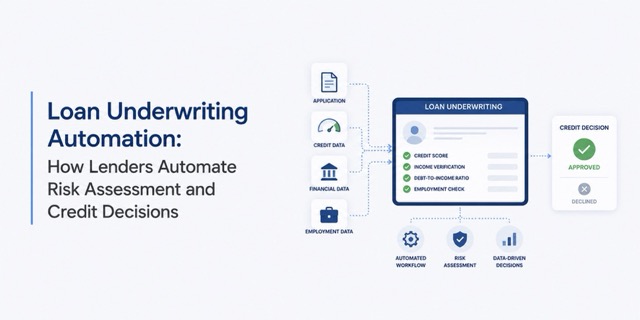
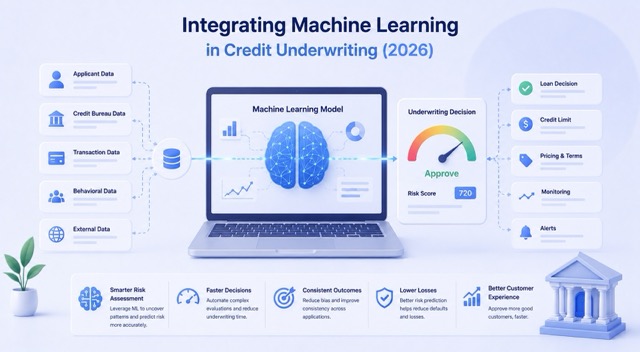
Machine learning changes underwriting by improving how lenders estimate credit risk, not by replacing the underwriting process itself. Rather than evaluating a limited number of predefined variables, ML models identify patterns across hundreds of financial, transactional, behavioural, and operational signals to estimate repayment probability.
Depending on the lender, these models may analyse:
- Bureau data
- Banking transactions
- Cash flow patterns
- GST and tax records
- Income stability
- Existing loan obligations
- Digital payment behaviour
- Business performance metrics
- Historical repayment behaviour
- Device and fraud signals
Unlike conventional scorecards, machine learning models continuously improve as new lending outcomes become available, allowing institutions to respond more effectively to changing borrower behaviour and economic conditions.
Best Machine Learning Credit Underwriting Providers at a Glance
5 Best Providers for Machine Learning Credit Underwriting in 2026
Machine learning providers don't all solve the same underwriting problem. Some specialize in predicting borrower risk, while others focus on decision orchestration, underwriting intelligence, or enterprise decision management.
Understanding where each platform fits within the underwriting lifecycle is essential before evaluating vendors.
Zest AI: Best for Explainable Machine Learning Underwriting
Zest AI focuses on improving credit risk prediction through explainable machine learning. Instead of relying on traditional scorecards, it builds predictive models capable of evaluating hundreds of borrower variables while maintaining regulatory transparency.
This makes it particularly valuable for regulated lenders that need to improve approval rates without compromising explainability or fair lending compliance.
What you can build with Zest AI
- Train machine learning models using historical lending data.
- Improve underwriting accuracy beyond traditional scorecards.
- Generate explainable risk predictions for regulatory compliance.
- Monitor model fairness, bias, and performance over time.
- Integrate ML predictions into existing underwriting and loan origination systems.
Best suited for: Banks and credit unions modernizing consumer credit underwriting.
Things to consider: Zest AI predicts borrower risk but doesn't orchestrate lending workflows, approval routing, or policy enforcement. Most organizations combine it with a decision engine or loan origination platform.
Nected: Best for Decision Orchestration Around Machine Learning Models
Machine learning models generate risk predictions, but lenders still need to determine whether a loan application satisfies underwriting policies, pricing rules, regulatory requirements, and internal approval criteria. This is where Nected fits.
Instead of building credit scoring models, Nected provides a decision orchestration layer that operationalizes machine learning within the underwriting workflow. It combines ML predictions with configurable business rules, workflow automation, compliance checks, and human approval paths to produce explainable credit decisions.
Rather than embedding lending policies inside application code, risk teams can update eligibility criteria, pricing logic, approval thresholds, or exception workflows directly through configurable rules.
What you can build with Nected
- Combine ML credit scores with underwriting policies before making lending decisions.
- Configure DTI thresholds, LTV limits, exposure limits, pricing rules, and eligibility criteria without code.
- Trigger KYC verification, fraud checks, income validation, or document requests based on predefined conditions.
- Route low-risk applications through straight-through processing while escalating policy exceptions to underwriters.
- Maintain complete audit trails showing every rule evaluated, ML prediction received, and approval decision taken.
- Integrate with loan origination systems, credit bureaus, fraud platforms, CRMs, and core banking systems.
Best suited for: Banks, NBFCs, and fintech lenders looking to operationalize machine learning models without hardcoding lending policies into their applications.
Things to consider: Nected complements machine learning platforms rather than replacing them. Institutions still require ML models or credit scoring systems to estimate borrower risk.
Scienaptic AI: Best for Alternative Data Credit Intelligence
Scienaptic AI helps lenders improve underwriting by expanding the data available for credit assessment. Alongside bureau information, its models evaluate transaction history, banking behaviour, and alternative financial signals to strengthen risk prediction.
This approach is particularly useful for borrowers with limited bureau history, where traditional underwriting models often struggle to differentiate between high- and low-risk applicants.
What you can build with Scienaptic AI
- Generate real-time ML-based credit risk assessments.
- Incorporate alternative financial data into underwriting models.
- Optimize credit limits and lending offers using predictive analytics.
- Continuously monitor borrower portfolios for emerging credit risk.
- Support explainable underwriting recommendations for risk teams.
Best suited for: Banks, NBFCs, and digital lenders seeking richer credit intelligence without rebuilding existing underwriting processes.
Things to consider: Scienaptic strengthens predictive underwriting but relies on external workflow and decision management platforms to operationalize lending decisions.
FICO Platform: Best for Enterprise Credit Decision Management
The FICO Platform extends beyond credit scoring into enterprise decision management. Large financial institutions use it to manage lending strategies across multiple products while combining analytics, business rules, optimization, and governance within centralized decision frameworks.
Its strength lies in supporting complex lending environments where multiple business units operate under different regulatory and policy requirements.
What you can build with FICO Platform
- Develop enterprise-wide underwriting and credit decision strategies.
- Combine predictive analytics with centralized business rules.
- Standardize lending decisions across products and geographies.
- Manage governance, auditability, and regulatory compliance.
- Integrate decision strategies with fraud, collections, and customer lifecycle systems.
Best suited for: Large banks with mature enterprise decision management programs.
Things to consider: FICO offers extensive capabilities but typically requires greater implementation effort and specialist expertise than modern low-code decision orchestration platforms.
Upstart: Best for Consumer Lending Underwriting
Upstart applies machine learning to consumer lending by evaluating applicants using a broader range of borrower attributes than conventional bureau-based models.
Its models help lenders assess applicants with limited credit history while automating much of the consumer underwriting process for routine lending decisions.
What you can build with Upstart
- Assess consumer loan applications using AI-driven underwriting models.
- Automate applicant verification and identity checks.
- Improve approval decisions using expanded borrower attributes.
- Reduce manual underwriting for standard consumer lending.
- Continuously refine risk models using lending outcomes.
Best suited for: Consumer lenders offering unsecured personal loans and other retail credit products.
Things to consider: Upstart primarily supports consumer lending. Institutions requiring highly configurable underwriting policies or commercial lending workflows typically need additional decision orchestration capabilities.
Also Read: AI Powered Credit Scoring for Banks
Choosing the Right Provider for Your Underwriting Strategy
The right machine learning provider depends on where you want to introduce intelligence into your underwriting process. Some platforms improve credit risk prediction, while others help automate underwriting decisions or orchestrate end-to-end lending workflows.
When evaluating providers, consider the following capabilities.
- Underwriting Complexity: Consumer lending, SME lending, and commercial lending have different underwriting requirements. Ensure the platform supports your lending products, approval workflows, and regulatory obligations.
- Explainability and Model Governance: Credit decisions must be transparent and auditable. Choose a provider that can explain model predictions, monitor model performance, and support governance requirements such as adverse action reporting and fair lending compliance.
- Decision Orchestration: Machine learning models generate risk predictions, but lenders still need to enforce lending policies, pricing rules, eligibility criteria, and approval workflows. Look for platforms that integrate predictive models with configurable decision logic rather than treating them as separate processes.
- Human-in-the-Loop Support: Routine applications can be automated, but high-value loans, policy exceptions, and borderline risk cases often require underwriter review. The platform should support configurable approval paths that combine automation with human oversight.
- Integration with Existing Lending Systems: The solution should integrate with loan origination systems, credit bureaus, KYC providers, fraud platforms, document management systems, CRMs, and core banking infrastructure to eliminate manual data exchange and duplicate processes.
From Risk Prediction to Credit Decisions: Why Machine Learning Needs Decision Workflows
Machine learning improves credit underwriting by predicting borrower risk, but a risk prediction alone cannot determine whether a loan should be approved.
Before a lending decision is made, institutions must verify eligibility, enforce underwriting policies, calculate debt-to-income (DTI) ratios, validate supporting documents, perform KYC and fraud checks, apply pricing rules, and comply with regulatory requirements. These operational decisions require business logic that extends beyond machine learning.
This is why modern lenders combine machine learning with a decision orchestration platform like Nected. Nected operationalizes machine learning by combining predictive models with configurable business rules, workflow automation, and human approval flows. This enables lenders to:
- Evaluate machine learning predictions alongside lending policies and eligibility criteria.
- Trigger KYC, income verification, fraud screening, or additional document requests based on configurable conditions.
- Route low-risk applications through straight-through processing while escalating exceptions to underwriters.
- Update lending policies without modifying application code.
- Maintain complete audit trails for every underwriting decision.
This architecture allows financial institutions to use machine learning where it delivers the most value, risk prediction, while ensuring every credit decision remains consistent, explainable, and compliant.
Conclusion
Machine learning has become an essential component of modern credit underwriting, enabling lenders to improve risk assessment, detect fraud, and evaluate borrowers using richer financial data than traditional scorecards.
However, successful underwriting depends on more than accurate predictions. Lending decisions also require policy enforcement, regulatory compliance, workflow automation, and human oversight for complex cases.
Choosing the right provider therefore depends on the role machine learning will play within your underwriting architecture. Whether your priority is predictive modeling, enterprise decision management, or decision orchestration, the most effective solutions combine machine learning with transparent, configurable decision workflows that can adapt as lending policies and regulations evolve.
Frequently Asked Questions
What is machine learning in credit underwriting?
Machine learning in credit underwriting uses predictive models to estimate borrower risk by analyzing financial, transactional, and behavioral data beyond traditional credit scoring methods.
Does machine learning replace credit underwriters?
No. Machine learning supports underwriters by improving risk assessment and automating routine evaluations. High-value loans, policy exceptions, and complex credit decisions typically remain subject to human review.
What data is commonly used in machine learning underwriting models?
Models commonly evaluate credit bureau data, banking transactions, repayment history, income, cash flows, GST and tax records, existing liabilities, business performance metrics, and fraud indicators.
How is machine learning different from a credit decision engine?
Machine learning predicts the likelihood of repayment or default. A credit decision engine applies lending policies, eligibility criteria, pricing rules, compliance requirements, and approval workflows to determine whether an application should be approved, referred, or declined.
Why do lenders combine machine learning with decision orchestration platforms?
Predictive models improve risk assessment but cannot enforce business policies or regulatory requirements. Decision orchestration platforms such as Nected combine machine learning outputs with configurable business rules, workflow automation, and human review to deliver consistent, explainable, and compliant lending decisions.


.svg.webp)