.svg)

.svg)


.png)
.webp)
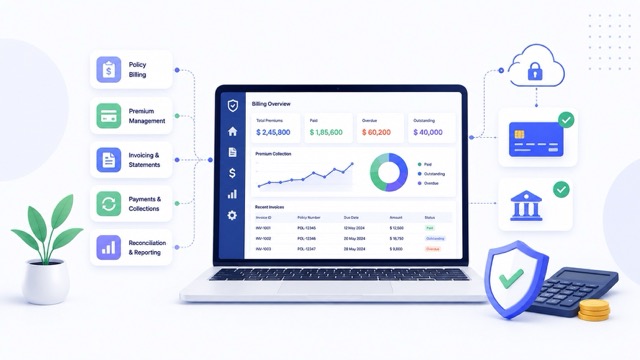
Insurance billing extends far beyond generating invoices and collecting premium payments. Every billing transaction is connected to policy issuance, endorsements, renewals, cancellations, refunds, commissions, and payment reconciliation, making billing one of the most operationally complex functions within an insurance organization.
As insurers introduce flexible payment plans, support multiple distribution channels, and expand digital payment options, billing operations become increasingly difficult to manage through fragmented systems or manual processes. Even routine policy changes can trigger premium recalculations, revised payment schedules, or billing adjustments that must remain synchronized across policy administration, finance, and customer service teams.
Modern insurance billing platforms help insurers centralize premium management by coordinating billing workflows, payment processing, collections, and financial transactions throughout the policy lifecycle. Rather than treating billing as an isolated financial process, they enable insurers to maintain consistency between policy changes and premium collection while improving operational visibility.
This article compares five leading insurance billing platforms based on the operational challenges they solve, their core capabilities, and the type of insurer they're best suited for.
Why Billing Has Become One of the Most Complex Insurance Operations
Insurance billing is rarely a straightforward payment process. Every billing transaction reflects decisions made across underwriting, policy administration, claims, finance, and customer servicing. A policy endorsement may change premium amounts, a mid-term cancellation may require refunds, missed payments can affect policy status, and renewal terms may introduce entirely new billing schedules.
As insurers expand their product portfolio, payment options, and distribution channels, coordinating these billing activities becomes increasingly complex. Premiums may be collected monthly, quarterly, annually, or through broker-managed arrangements, while regulatory requirements, taxes, commissions, and payment methods vary across products and markets.
Managing this operational complexity through disconnected systems often leads to billing inconsistencies, delayed reconciliations, manual adjustments, and increased customer service effort.
Modern insurance billing platforms help insurers coordinate these processes by maintaining billing accuracy across the policy lifecycle while integrating with policy administration systems, payment gateways, finance platforms, and customer communication channels.
Also Read: Insurance Underwriting Software
Insurance Billing Platforms Compared at a Glance
Top 5 Insurance Billing Platforms for Streamlined Premium Management
No single billing platform fits every insurer. Some platforms focus on enterprise-scale premium management, while others prioritize billing flexibility, multi-line operations, or financial integration. The following platforms are compared based on their operational capabilities, billing workflows, and the type of insurer they best support.
- Guidewire BillingCenter: Best for Enterprise Premium Management
Managing premium billing across multiple insurance products requires more than invoice generation. Insurers need to coordinate payment schedules, policy changes, collections, refunds, commissions, and financial reconciliation while maintaining consistency with policy administration.
Guidewire BillingCenter provides an enterprise billing platform that centralizes premium billing and receivables management across the policy lifecycle, helping insurers manage complex billing operations at scale.
Key capabilities:
- Premium billing management: Supports recurring billing, installment plans, renewals, endorsements, cancellations, refunds, and payment adjustments while keeping billing synchronized with policy changes.
- Receivables and collections: Helps insurers manage outstanding balances, payment tracking, collections activities, write-offs, and financial reconciliation through structured billing workflows.
- Payment processing integration: Connects with payment gateways and financial systems to support multiple payment methods while maintaining accurate transaction records.
- Policy administration integration: Synchronizes billing activities with Guidewire PolicyCenter and other insurance systems to reduce duplicate processing and maintain operational consistency.
Best suited for: Enterprise insurers managing high-volume premium billing across multiple products.
Things to consider: Organizations should evaluate implementation complexity and integration requirements when modernizing existing billing environments.
- Duck Creek Billing: Best for Flexible Billing Operations
Insurance billing requirements change as products evolve, payment preferences expand, and policyholders expect greater flexibility in how premiums are collected. Billing platforms must support these changes without disrupting existing operations.
Duck Creek Billing enables insurers to configure billing processes, payment schedules, and premium management while keeping billing operations closely aligned with policy administration.
Key capabilities
- Configurable billing plans: Supports flexible installment schedules, recurring payments, premium adjustments, and billing options across different insurance products.
- Billing lifecycle management: Manages invoice generation, payment collection, refunds, cancellations, reinstatements, and renewal billing through connected operational workflows.
- Integrated payment management: Coordinates payment processing, payment status tracking, and financial reconciliation while supporting multiple payment channels.
- API-first integration: Connects with policy administration platforms, finance systems, customer portals, payment providers, and external insurance applications.
Best suited for: Insurers looking for greater flexibility in premium billing and payment management.
Things to consider: Organizations with highly customized billing policies may require additional decision management capabilities outside the billing platform.
- Sapiens BillingPro: Best for Integrated Billing and Financial Operations
Insurance billing extends beyond collecting premium payments. Insurers also need to manage billing adjustments, collections, commissions, refunds, and financial reconciliation while keeping billing aligned with policy changes.
Sapiens BillingPro brings these activities together within a unified billing platform, helping insurers manage premium collection and financial operations across multiple insurance products.
Key capabilities:
- Comprehensive billing management: Supports invoice generation, installment plans, premium adjustments, renewals, cancellations, refunds, and policy-related billing changes throughout the policy lifecycle.
- Collections and receivables: Helps insurers manage overdue accounts, payment tracking, collections activities, and receivables while improving visibility into outstanding balances.
- Financial integration: Connects billing operations with accounting systems, payment providers, and financial reporting processes to maintain accurate reconciliation across billing transactions.
- Multi-product billing support: Enables insurers to manage billing operations across personal, commercial, and specialty insurance products from a centralized platform.
Best suited for: Enterprise insurers looking to modernize billing while improving financial visibility across insurance operations.
Things to consider: Organizations should assess integration requirements if billing processes depend on multiple legacy finance or policy administration systems.
- OneShield: Best for Unified Insurance Operations
For many insurers, billing does not operate independently. Premium collection, policy administration, underwriting, claims, and customer servicing all influence billing activities throughout the policy lifecycle.
OneShield provides a unified insurance platform where billing operates alongside other core insurance functions, helping insurers maintain consistency between policy transactions and premium management.
Key capabilities:
- Integrated billing and policy management: Coordinates billing activities with policy issuance, endorsements, renewals, cancellations, and reinstatements to reduce operational inconsistencies.
- Premium and payment management: Supports recurring billing, installment schedules, payment tracking, refunds, and financial adjustments across multiple insurance products.
- Multi-line insurance support: Enables insurers to manage billing operations for personal, commercial, and specialty insurance through a common operational platform.
- Connected insurance ecosystem: Integrates billing with underwriting, claims, finance, customer service, and reporting to provide a unified operational view.
Best suited for: Mid-sized and enterprise insurers managing multiple lines of insurance within a single operational platform.
Things to consider: Evaluate whether the platform's integrated approach aligns with your broader core insurance modernization strategy.
- Nected: Best for Configurable Billing Decisions
Insurance billing platforms manage premium calculations, invoices, collections, and payment processing. However, many billing outcomes still depend on business decisions that vary across products, customers, and regulatory requirements.
Determining whether a customer qualifies for an installment plan, when a late payment should trigger collections, whether a billing adjustment requires approval, or how payment exceptions should be handled often relies on business rules rather than billing functionality alone.
Key capabilities:
- Business rules management: Configure installment eligibility, payment validations, waiver policies, collection rules, billing approvals, and exception handling without modifying application code.
- Decision orchestration: Combine business rules, workflow logic, AI models, and external data to automate billing decisions while maintaining operational consistency.
- Workflow automation: Route payment exceptions, approval requests, failed payments, and collection activities through configurable workflows based on business policies.
- API-first integration: Integrates with Guidewire, Duck Creek, Sapiens, OneShield, payment gateways, and existing billing systems without replacing core billing infrastructure.
Best suited for: Insurers looking to make billing decisions more flexible while continuing to use their existing billing platform.
Things to consider: Nected complements billing platforms by managing the decisions around billing; it is not a replacement for premium billing or financial transaction management.
Also Read: How to Transform your Business using Insurance Automation?
Which Insurance Billing Platform Fits Your Billing Model?
Choosing a billing platform is not just about payment processing. The right platform should align with your billing complexity, product portfolio, operational processes, and long-term modernization strategy.
Before selecting a platform, evaluate where your billing operations create the most operational overhead.
- Billing Complexity: If your billing process includes multiple installment plans, premium adjustments, refunds, broker commissions, and policy-driven billing changes, choose a platform that can manage these scenarios without extensive manual intervention.
- Product Portfolio: Different insurance products often require different billing structures. Ensure the platform supports product-specific billing rules, premium schedules, and payment models while maintaining operational consistency across the portfolio.
- Integration Requirements: Billing platforms should integrate with policy administration systems, payment gateways, accounting software, CRM platforms, customer portals, and reporting tools. Strong integration capabilities reduce duplicate processing and improve financial accuracy.
- Scalability: As billing volumes grow, insurers need platforms capable of processing high transaction volumes while supporting new payment methods, additional distribution channels, and expanding product lines.
- Billing Flexibility: Insurance billing policies change over time. Payment schedules, installment options, collection policies, billing adjustments, and approval requirements should be configurable without requiring significant redevelopment.
Beyond Billing: Why Modern Insurers Need Configurable Billing Decisions
Generating invoices and processing premium payments are only part of the billing process. Every billing transaction is influenced by operational decisions that determine how premiums should be collected, when billing adjustments should be applied, and how payment exceptions should be handled.
For example, a mid-term policy endorsement may require a premium recalculation before the next invoice is generated. A missed payment may trigger a grace period for one product but initiate collections for another. Installment eligibility, late fee application, premium waivers, broker commission adjustments, and payment approvals are all driven by business policies that change over time.
As insurers introduce new products, payment options, and regulatory requirements, these decisions become increasingly difficult to manage when the underlying business logic is spread across multiple applications or embedded directly within billing systems. This is why many insurers complement their billing platforms with decision orchestration.
Instead of embedding billing policies in application code, decision orchestration centralizes the business rules that govern premium collection, installment plans, payment validations, billing approvals, collection workflows, and exception handling. This enables insurers to adapt billing policies without disrupting their existing billing infrastructure.
Nected enables insurers to orchestrate these billing decisions by combining configurable business rules, workflow automation, AI-driven insights, and external data into a unified decision layer. Rather than replacing a billing platform, it helps insurers make billing operations more adaptable while continuing to rely on their existing billing systems for premium management and financial processing.
Conclusion
Insurance billing has evolved into a critical operational function that connects policy administration, finance, customer servicing, and payment processing throughout the policy lifecycle. As insurers support more products, payment options, and distribution channels, maintaining accurate and consistent billing operations becomes increasingly challenging.
Modern insurance billing platforms help insurers manage premium collection, billing adjustments, collections, refunds, and financial reconciliation while keeping billing aligned with policy changes. Choosing the right platform depends on factors such as billing complexity, product portfolio, integration requirements, and long-term operational goals.
At the same time, many billing outcomes are determined by business policies rather than billing transactions alone. Managing these decisions through configurable rules and workflows enables insurers to respond more quickly to changing business requirements while maintaining consistent billing operations across the organization.
Frequently Asked Questions
What is an insurance billing platform?
An insurance billing platform helps insurers manage premium invoicing, payment collection, installment plans, refunds, collections, and financial reconciliation throughout the policy lifecycle. It ensures billing activities remain synchronized with policy administration and other insurance operations.
How is an insurance billing platform different from a policy administration system?
A policy administration system manages policy-related activities such as policy issuance, endorsements, renewals, cancellations, and customer records. An insurance billing platform focuses on premium management, invoicing, payment processing, collections, refunds, and billing-related financial transactions.
What features should insurers look for in an insurance billing platform?
Key capabilities include premium billing management, flexible payment plans, installment support, collections management, payment gateway integration, financial reconciliation, operational reporting, configurable billing workflows, and integration with policy administration systems.
Can insurance billing platforms integrate with existing insurance systems?
Yes. Modern billing platforms typically integrate with policy administration systems, CRM platforms, payment gateways, accounting software, customer portals, claims systems, and reporting tools to maintain consistent financial and policy information across insurance operations.
Why are configurable billing decisions important?
Many billing activities depend on business policies rather than payment processing alone. Installment eligibility, payment exceptions, billing adjustments, premium waivers, collections routing, and approval workflows change as products and business requirements evolve. Configurable decision management allows insurers to update these policies without modifying their core billing platform.
Which insurance billing platform is best?
There isn't a single platform that's right for every insurer. Enterprise insurers may prioritize platforms like Guidewire BillingCenter or Sapiens BillingPro for large-scale billing operations, while others may prefer Duck Creek Billing or OneShield based on their product mix and modernization strategy. The right choice depends on your billing complexity, integration needs, and operational model.


.svg.webp)





.webp)


.webp)

%2520(3).webp)

.webp)