.svg)

.svg)


.png)
.webp)
Managing General Agencies (MGAs) have an interesting place in the world of insurance. While traditional distributors deal primarily with selling policies, MGAs usually deal with delegated underwriting authority, broker management, policy management, carrier collaboration, and monitoring of overall portfolio performance. All submissions go through various processes before becoming bound policies; hence, the processes in MGA organizations tend to be far more connected than those in typical insurance distribution.
MGAs as they grow in terms of products offered, carrier partnerships, and brokerage networks will find it increasingly harder to connect all these efforts using separate systems. Underwriters need to access all data from submission forms; brokers need to receive their answers fast; carriers want to receive accurate reports; and policy administration staff needs consistency of information in the whole policy life cycle. Minor inefficiencies in one part of the process can lead to serious problems all over the organization.
MGA software helps to bring all these interconnected processes together. In this way, it connects underwriting, distribution, policy administration, carrier reporting, and other operational processes. Instead of dealing with isolated processes, MGA software helps organizations manage all the necessary processes involved in insurance business evaluation, issuance, servicing, and reporting.
Why MGA Operations Are More Complex Than Traditional Insurance Distribution
MGAs do more than just selling their services and policies because they are involved in almost all the activities conducted prior to and following the binding of the insurance policy. They underwrite risks under delegated authority, manage broker networks, administer policies, and remain accountable to carrier partners throughout the policy lifecycle. That operational model creates a different kind of complexity.
Every submission must be evaluated against underwriting guidelines, carrier appetite, delegated authority limits, and product-specific requirements before a decision is made. Once a policy is issued, endorsements, renewals, commissions, bordereaux reporting, and carrier reporting all become part of the same operational chain.
The challenge isn't performing these activities individually, it's keeping them connected.
A policy endorsement may change premium calculations, broker commissions, reporting data, and policy records simultaneously. A revised underwriting guideline can affect submission handling across every broker and product the MGA manages. As the number of carrier programs and distribution partners grows, coordinating these dependencies manually becomes increasingly difficult.
This is why many MGAs outgrow disconnected spreadsheets and email-driven processes. Growth isn't limited by underwriting expertise, it is limited by how efficiently operational information moves across underwriting, policy administration, distribution, and carrier reporting.
How Software Connects Underwriting, Distribution, Policy Administration, and Carrier Reporting
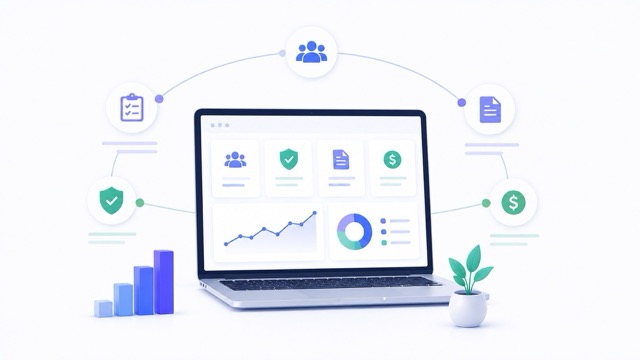
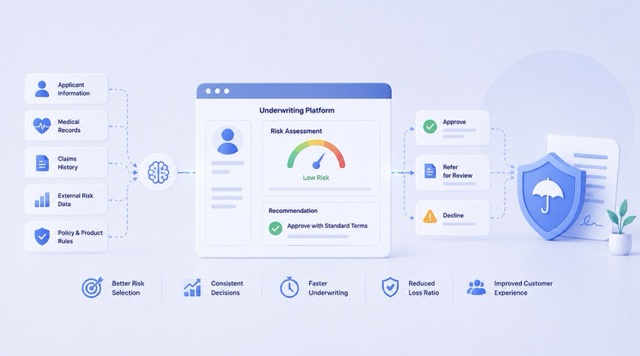
An MGA's operations don't stop at underwriting. Every submission moves across underwriting, broker management, policy administration, and carrier reporting, with each function relying on the same operational data. When these processes run in separate systems, small inconsistencies quickly become delays, duplicate work, and reporting issues.
The software used by MGAs ensures that there is an integrated operation platform where information flows seamlessly through the policy cycle to ensure that teams work in a uniform operation perspective as opposed to having different records.
- Submission and Underwriting
All underwriting is dependent on information provided in the submission process. Software for MGAs integrates all the necessary information related to the broker, supporting documents, risk information, and underwriting notes in one platform. This reduces the amount of time needed for collection of information in order to carry out the underwriting process.
- Broker and Distribution Management
Brokers operate way beyond the submission processes in terms of product access, commissions, submission tracking, and communication. The integrated platform makes it possible for brokers and in-house teams to get a glimpse of policy activity without the need to use emails and manual tracking systems.
- Policy Administration
After underwriting, there is the endorsement, renewal, cancellation and other policy management processes which must synchronize with the information available in the underwriting record keeping.
- Carrier Reporting
Reporting is one of an MGA's core responsibilities under delegated authority. Software consolidates underwriting, policy, and financial data into a single operational view, making bordereaux, premium reporting, and portfolio reporting significantly easier to prepare while reducing manual reconciliation.
Rather than supporting individual departments, software connects the operational activities that define an MGA. As submission volumes, carrier programs, and broker networks grow, this shared operational foundation becomes essential for maintaining consistency across the business.
Also Read: Top 7 Insurance Underwriting Softwares
Where Manual Coordination Breaks Down as MGAs Grow?
Most MGAs don't struggle because underwriting becomes more complex. They struggle because every new submission, broker, carrier program, and policy transaction increases the amount of coordination required across the business.
In the early stages, email, spreadsheets, and shared documents are often enough to manage submissions and broker communication. However, as the number of these volumes increase, people end up spending more time keeping track of information rather than working on their tasks.
The submission information gets scattered through emails and spreadsheets. The underwriters have to check up for the missing documents instead of assessing the risk. The brokers inquire about the status of the submission or endorsement due to lack of visibility into that process.
Carrier reporting is usually where these issues become most visible. Since reports depend on accurate underwriting, policy, commission, and premium data, even small discrepancies can trigger hours of manual reconciliation before information is ready to be shared with carrier partners.
These challenges rarely appear overnight. They surface gradually through slower turnaround times, duplicated effort, reporting delays, and increasing reliance on experienced employees to keep disconnected processes aligned. At that stage, growth is no longer constrained by underwriting capacity. It's constrained by how efficiently operational information moves across the organization.
What to Look for in Software for MGAs?
No two MGAs operate the same way. While some work with niche commercial programs featuring highly specific underwriting, others have relationships with multiple carriers within a variety of lines of business. The correct software solution should take this into account rather than trying to make all programs fit into one workflow.
Instead of looking at feature lists, assess the software’s ability to facilitate your MGA’s daily operations and scalability.
- End-to-End Operational Connectivity
An MGA's work doesn't happen in isolated departments. Submission data, underwriting decisions, policy servicing, and carrier reporting all rely on the same operational information. Software should keep these functions connected so teams aren't reconciling data across multiple systems after every transaction.
- Flexibility of Workflows
Carriers’ guidelines, underwriting policies, and product restrictions are always changing. The software should be flexible enough to allow configuring workflows and operational processes as changes are implemented without extensive re-development.
- Managing Brokers & Carriers
A good relationship with brokers can be achieved only through visibility. The software should make managing onboarding, products, submissions, commission, and communication easier while allowing carriers to see relevant operational information when necessary.
- Compatibility with Existing Systems for Insurance Operations
Most MGAs have policy administration systems, document management tools, external data sources, and financial apps. Integration of the software with these existing systems will help eliminate redundant data entry and ensure constant information flow.
- Visibility of Operations
With the growth of the MGA, the visibility of operations starts to become as important as executing the operations themselves. The ability to oversee the submission pipeline, underwriting cycle, broker’s performance, referral volume, and carriers’ reports from one operational dashboard is essential.
Why Modern MGA Operations Depend on Configurable Business Decisions?
Managing submissions, policies, and carrier reporting is only part of an MGA's responsibility. Equally important are the operational decisions that determine how every submission moves through the business.
Should a risk be accepted within delegated authority or referred to a senior underwriter? Is a broker authorized to sell a particular product? Is an endorsement pre-approved before processing? Does a renewal renew automatically or goes back to underwriting? Such decisions are determined by the evolving policies of doing business as the carrier agreements and products evolve.
Many MGAs still implement such a logic within their application code, in spreadsheets, or using manual underwriting guides. Such an approach works fine for smaller environments but does not scale well. Even changing a referral policy or adding broker rights could lead to updates throughout many different systems, which results in delays even for such trivial policy modifications.
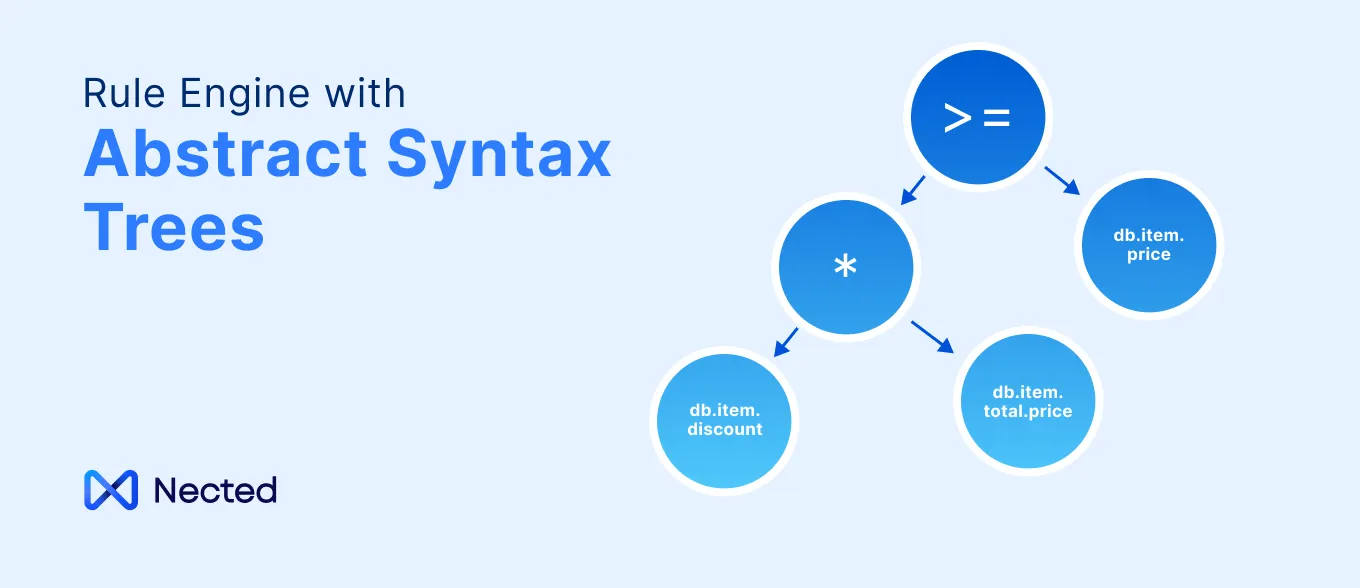
Configurable decision logic helps in this situation as it allows to decouple business policies from systems implementing them and centralize underwriting rules, referral criteria, product eligibility, approval limits, and broker permissions, updating them independent of the actual systems used.
Nected implements this idea by providing the decision orchestration layer, including business rules, workflows, AI models, and external data sources. The Nected Decision Layer helps MGAs in adapting to new business and carrier requirements, not replacing core underwriting or policy administration platforms.
Conclusion
Managing General Agencies operate at the intersection of underwriting, distribution, policy administration, and carrier relationships. Unlike typical insurance distributors, MGAs must coordinate various operations that directly impact the quality of underwriting, policy management, compliance needs, and investment portfolio performance.
With an increase in submissions and growth in carrier programs, disconnected operations become harder to control. Operations that are not linked are inefficient, costly, slow, and subject to errors, thus hindering the ability of an MGA to scale up.
Modern insurance software solutions for MGAs create an integrated working platform for underwriting, brokers management, policy management, and carrier reporting throughout the entire insurance process. Equally important, customizable business rules allow MGAs to modify their processes as they evolve their products or carriers.
For MGAs that wish to scale up without increasing operational complexity, modernization should not be confined to digitization of separate operations. It's about building operational consistency across every stage of the business.
Frequently Asked Questions
What is software for MGAs?
The software for MGAs allows Managing General Agencies to handle the underwriting process, broker management, policy administration, carrier reporting, and workflow from one single platform.
How does MGA software differ from ordinary insurance agency software?
While ordinary insurance agency software focuses on the policy selling and management process, MGA software focuses on a much larger range of tasks such as delegated underwriting, policy administration, carrier reporting, broker management, and portfolio management.
What are the essential features for software for MGAs?
Some of the key features include submission management, underwriting workflow management, broker management, policy administration, carrier reporting, insurance systems integration, document management, operational reporting, and workflow management.
Why do MGAs need special software?
Since MGAs handle operational functions that go beyond just insurance distribution, it becomes necessary for them to have special software which takes care of their complex insurance operations.
Can MGA software integrate with existing insurance platforms?
Yes. Many current MGA platforms are able to connect to the policy administration systems, CRM software, document management systems, payment systems, external data providers, and carrier systems to ensure that the company operates in a connected manner.
Why are business rules configurable for MGAs?
The operational policies of the MGA firm keep changing due to changes in the agreements with carriers, underwriting policies, insurance policies, and regulations. By having business rules separate from the application code, the company can update the business rules easily.


.svg.webp)




.webp)
.webp)
%2520(3).webp)
.webp)