.svg)

.svg)



.png)
.webp)
Digital lending requires not only speed in the loan decision process but also accurate risk evaluation, fraud detection, adherence to lending policies, and regulatory requirements, while providing a good customer experience.
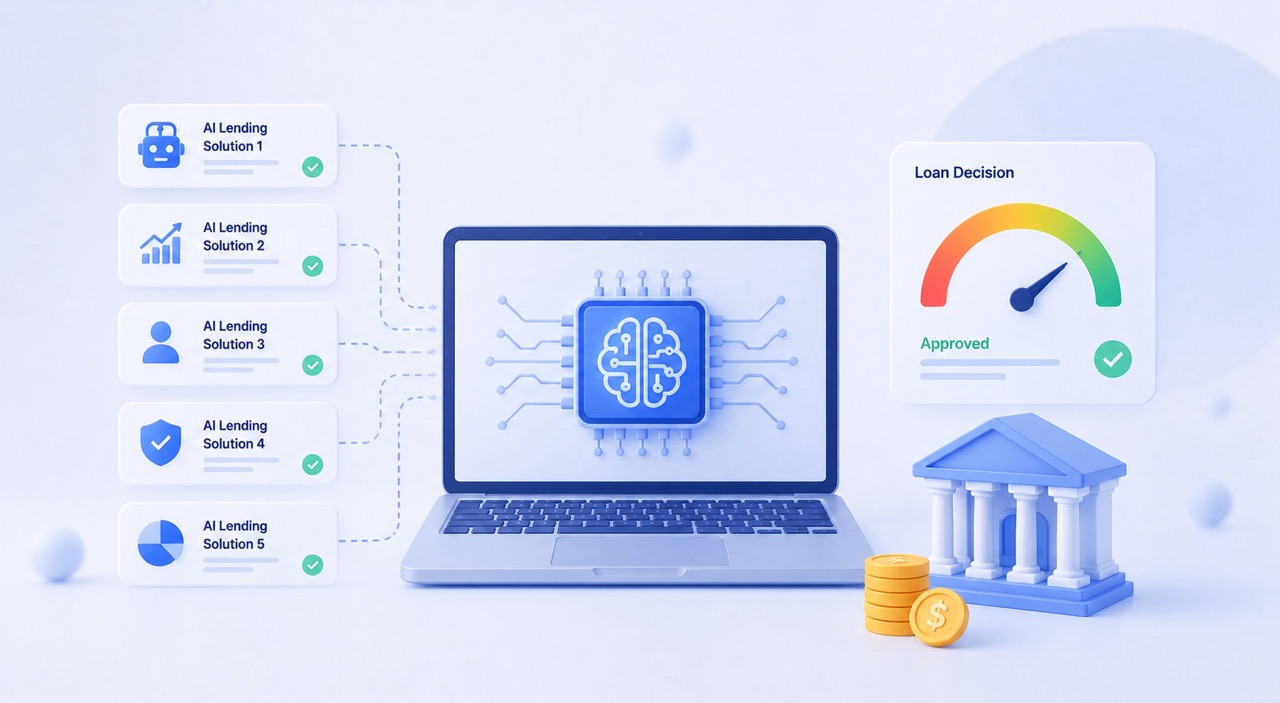
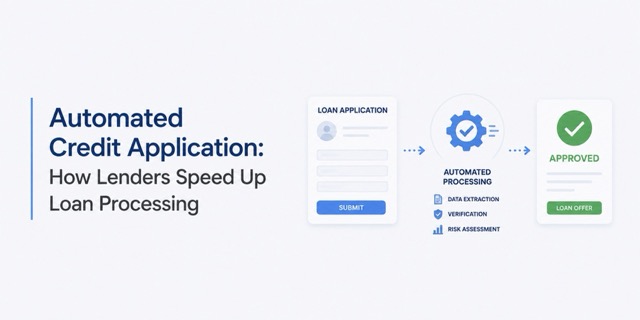
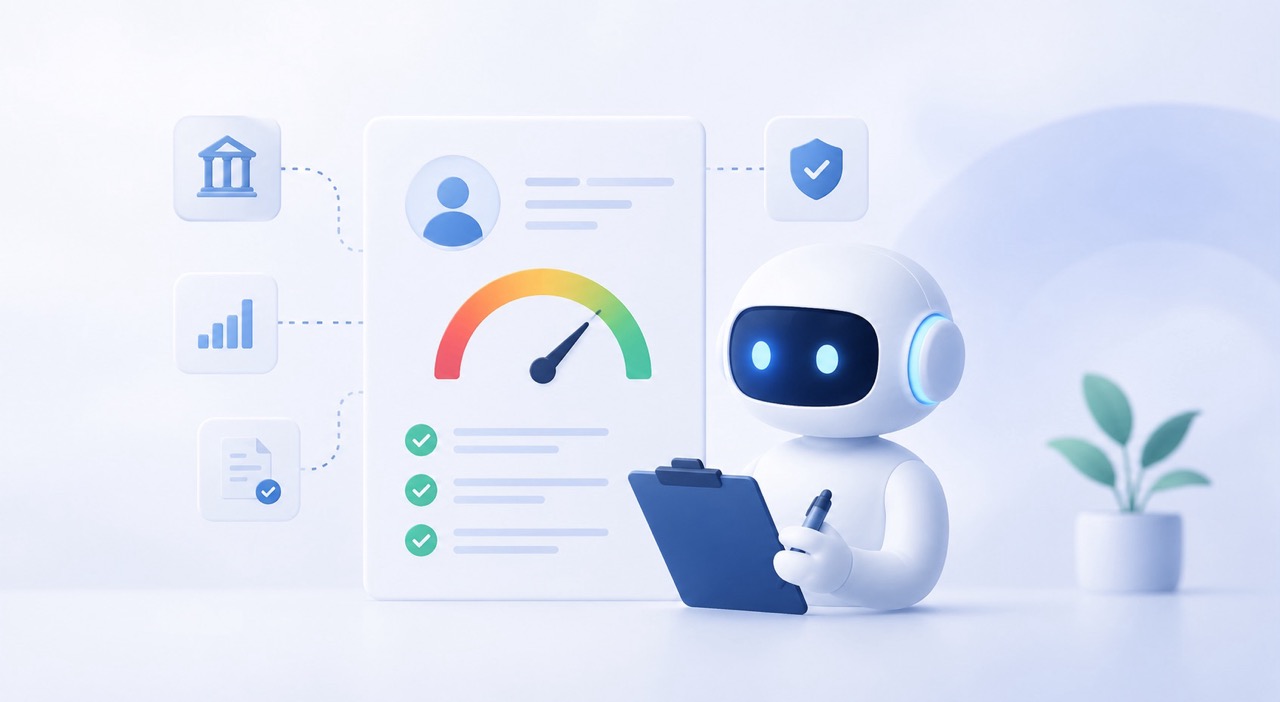
The existing static scorecards and manual underwriting processes have difficulties meeting those needs. The AI lending solutions help here through improving risk assessment, automating underwriting processes, and making decisions faster using machine learning and more data sources.
However, there is one more important thing to remember in a regulated environment: AI is not the only component in the loan approval process. There are also business rules, compliance requirements, product eligibility, and many other factors that should be taken into consideration. For this reason, modern lenders use decision orchestration systems alongside AI solutions.
This guide will discuss five best AI lending solutions and the main criteria to choose one.
Why Lending Teams Are Replacing Traditional Lending Systems with AI
The way lenders evaluate borrowers has changed significantly over the past decade. While traditional underwriting focused primarily on bureau scores and financial statements, today's lending decisions require a broader assessment of borrower behavior, operational risk, fraud signals, and regulatory requirements.
Several factors are driving this shift.
- Growing demand for faster credit decisions: Digital-first borrowers expect loan approvals within minutes rather than days. Manual underwriting workflows that rely on document reviews, spreadsheet analysis, and sequential approvals struggle to deliver this level of responsiveness, particularly during periods of high application volume.
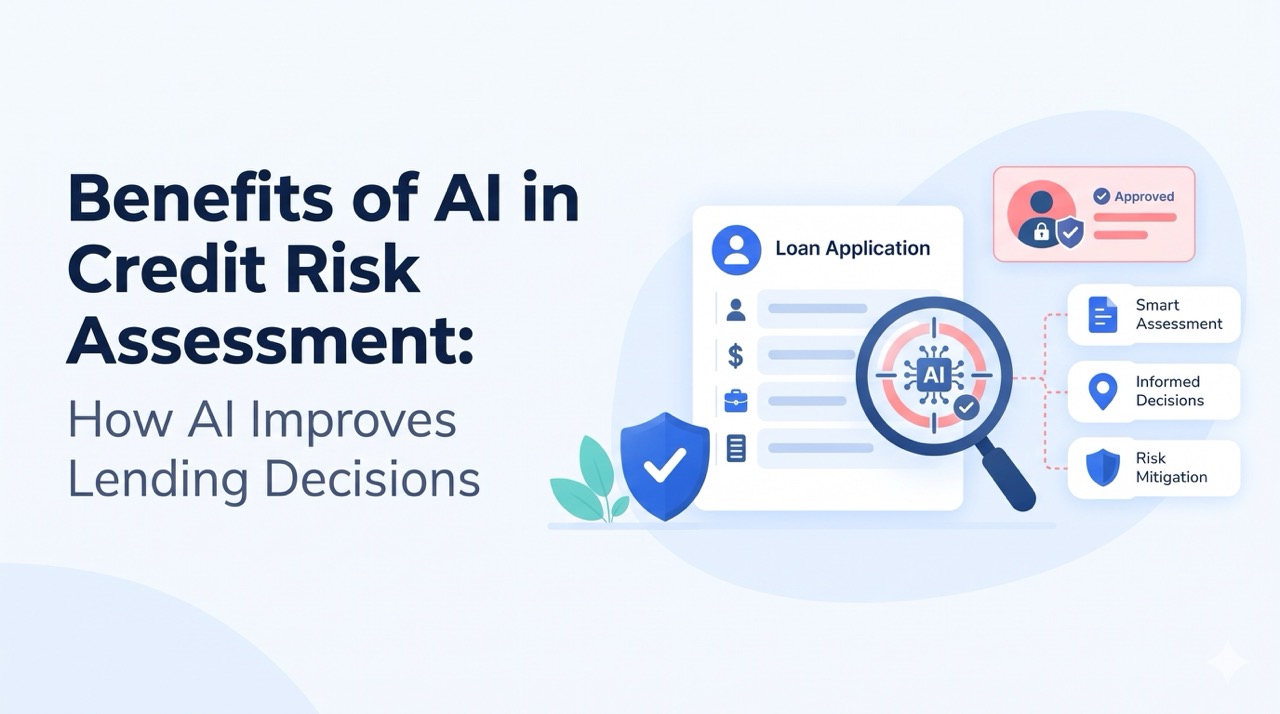
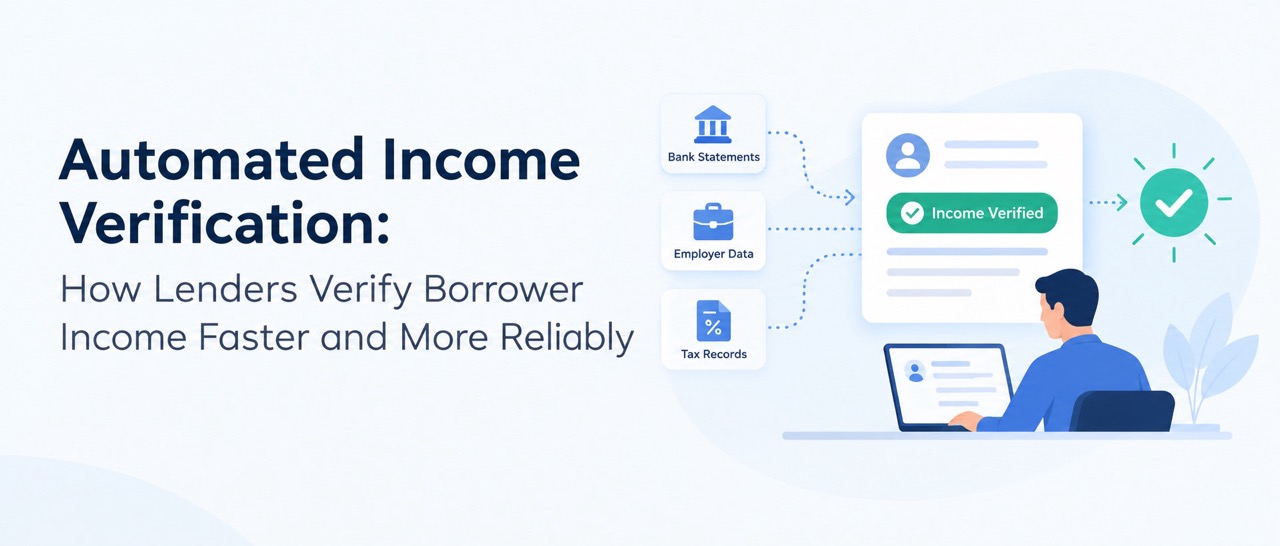
AI accelerates the initial stages of underwriting by automating document extraction, validating applicant information, estimating repayment risk, and identifying potential fraud before applications reach underwriters.
- Better risk assessment using richer data: Traditional credit scoring models primarily evaluate historical repayment behavior. While valuable, they often provide an incomplete picture of borrowers with limited credit history or rapidly changing financial circumstances. AI models incorporate a much broader range of inputs, including:
- Banking transactions
- Cash flow patterns
- GST and tax records
- Income consistency
- Existing loan obligations
- Digital payment behavior
- Business performance indicators
- Alternative financial data
This enables lenders to assess borrower risk more accurately while expanding responsible lending opportunities.
- Stronger fraud prevention: Application fraud has become increasingly sophisticated. Identity theft, synthetic identities, forged documents, and coordinated application fraud are difficult to detect using traditional rule-based systems alone.
Modern AI lending platforms combine anomaly detection, behavioral analytics, document intelligence, and device intelligence to identify suspicious applications before funds are disbursed. High-risk applications are automatically escalated for manual investigation instead of proceeding through standard approval workflows.
- More consistent lending decisions: Manual underwriting can produce inconsistent outcomes because different reviewers may interpret lending policies differently.
AI-supported decisioning standardizes risk evaluation, while business rules ensure every application is assessed against the same eligibility criteria, exposure limits, pricing policies, and compliance requirements. This improves governance without removing human judgment from complex lending decisions.
- Improved operational efficiency: As lending volumes increase, expanding underwriting teams alone is rarely sustainable. Automation reduces repetitive work such as document validation, bureau lookups, policy evaluation, and application routing. Underwriters spend less time gathering information and more time reviewing high-value or exception cases that require professional judgment.
- Supporting Human-in-the-Loop Decision Making: Contrary to popular perception, banks rarely allow AI to approve or reject loans independently. Instead, AI serves as a decision-support capability within a broader underwriting workflow. It predicts repayment risk, identifies fraud signals, and recommends actions, while business rules determine policy compliance and human underwriters review applications that fall outside predefined thresholds.
This hybrid approach balances operational efficiency with regulatory compliance, explainability, and responsible lending practices.
Also Read: Best Loan Origination Software
Best AI Lending Solutions at a Glance
5 Best AI Lending Solutions in Fintech
AI lending solutions address different parts of the lending process. Some focus on AI-based risk assessment, while others specialize in underwriting automation, decision orchestration, fraud detection, or enterprise credit decisioning. Choosing the right solution depends on the lending problem you're trying to solve.
The following platforms are compared based on their core capabilities, ideal use cases, and where they fit within the modern lending stack.
1. Nected: Best for AI-Powered Lending Decision Orchestration
Most AI lending platforms stop after generating a credit risk score. However, approving a loan involves much more than predicting the likelihood of default. Lenders must enforce eligibility policies, validate supporting documents, perform fraud checks, determine pricing, comply with regulatory requirements, and decide whether an application should be approved automatically or routed to an underwriter.
Nected addresses this operational layer of lending by acting as a decision orchestration platform. Instead of replacing existing AI models, it combines AI-generated risk scores with configurable business rules, workflow automation, and human approval flows to produce explainable lending decisions.
This allows lenders to separate decision logic from application code, making underwriting policies easier to update as regulations, products, or risk appetite evolve.
Key capabilities
- Configure eligibility rules, DTI thresholds, exposure limits, pricing rules, and approval criteria without code.
- Combine AI risk scores with deterministic business rules before making lending decisions.
- Trigger additional KYC, income verification, fraud screening, or document collection based on configurable conditions.
- Route exception cases to underwriters while allowing eligible applications to move through straight-through processing.
- Maintain complete audit trails showing the data evaluated, rules executed, and approval path followed.
- Integrate with loan origination systems, credit bureaus, fraud platforms, CRMs, and core banking systems through APIs.
Best suited for: Banks, NBFCs, digital lenders, and fintech companies that need configurable lending workflows rather than just AI scoring.
Things to consider: Nected is a decision orchestration platform, not a predictive credit scoring model. It complements existing AI models by operationalizing lending decisions.
2. Zest AI: Best for Explainable AI Credit Underwriting
Zest AI focuses on improving credit underwriting by replacing traditional scorecards with machine learning models capable of evaluating hundreds of borrower attributes simultaneously. Rather than relying only on bureau scores, its models identify complex relationships across borrower data to improve credit risk prediction.
A key differentiator is explainability. Financial institutions operating in regulated environments must justify lending decisions, particularly when applications are declined. Zest AI provides model explainability and governance capabilities that help lenders understand the variables influencing each prediction while supporting fair lending requirements.
Key capabilities
- Build and deploy machine learning models that predict borrower credit risk beyond traditional scorecards.
- Generate explainable risk predictions to support adverse action notices, model governance, and regulatory compliance.
- Improve underwriting accuracy by evaluating hundreds of borrower variables simultaneously.
- Monitor model performance, fairness, and drift over time to maintain lending quality.
- Integrate AI risk predictions into existing loan origination and underwriting systems.
Best suited for: Banks and credit unions modernizing consumer credit underwriting while maintaining regulatory explainability.
Things to consider: Zest AI focuses on predictive underwriting models. Workflow automation, policy orchestration, and approval routing typically require separate decision management platforms.
3. Upstart AI Lending Platform: Best for Digital Consumer Lending
Upstart combines AI-driven risk assessment with a digital lending platform designed primarily for unsecured consumer loans. Its underwriting models evaluate applicants using a broader set of variables than traditional bureau-based scoring, allowing lenders to assess borrowers who may not fit conventional credit profiles.
The platform is designed to reduce manual underwriting for routine consumer lending while maintaining portfolio performance through continuous model improvement.
For lenders focused on high-volume personal lending, this helps improve approval rates without relying exclusively on traditional credit history.
Key capabilities
- Assess consumer loan applications using AI models trained on a broad range of borrower attributes.
- Automate applicant verification, identity checks, and fraud screening during loan origination.
- Generate real-time lending recommendations to accelerate consumer loan approvals.
- Support digital lending workflows for high-volume personal lending operations.
- Continuously improve underwriting performance using historical lending outcomes and repayment data.
Best suited for: Financial institutions offering personal loans, auto refinancing, and consumer credit products.
Things to consider: Upstart is optimized for consumer lending use cases. Institutions with complex commercial lending policies or highly customized approval workflows may require additional decision orchestration capabilities.
4. Scienaptic AI: Best for Real-Time Credit Decision Intelligence
Scienaptic AI extends traditional underwriting by combining bureau information with banking transactions, behavioral data, and alternative financial signals to generate real-time lending recommendations.
Instead of simply predicting default risk, the platform continuously evaluates borrower information to improve approval decisions, optimize credit limits, and expand lending opportunities for customers with thin or limited credit histories.
Many financial institutions use Scienaptic to improve financial inclusion without materially increasing portfolio risk.
Key capabilities
- Generate AI-driven credit risk assessments using bureau, transaction, and alternative financial data.
- Improve approval decisions for borrowers with limited or thin credit histories.
- Optimize credit limits and lending offers based on changing borrower behaviour.
- Continuously monitor borrower portfolios to identify emerging credit risk.
- Deliver explainable lending recommendations that support underwriting and compliance teams.
Best suited for: Banks, NBFCs, and digital lenders seeking richer credit decision intelligence.
Things to consider: Scienaptic primarily strengthens risk assessment. Lending policies, workflow automation, and approval governance typically remain outside the platform.
5. FICO Platform: Best for Enterprise Decision Management
While widely recognized for the FICO Score, the FICO Platform is fundamentally an enterprise decision management solution. Large financial institutions use it to build and manage decision strategies across lending, fraud management, collections, customer onboarding, and account management.
Rather than focusing solely on AI models, FICO enables organizations to combine analytics, business rules, optimization strategies, and governance frameworks into enterprise-scale decision workflows.
Its flexibility makes it suitable for complex lending environments where multiple products, regulatory requirements, and business units must operate under centralized governance.
Key capabilities
- Design and manage enterprise lending strategies using configurable decision rules and analytics.
- Combine predictive models, business policies, and optimization strategies within a unified decision framework.
- Standardize lending, fraud, collections, and customer decisioning across business units.
- Maintain governance through centralized decision management, auditability, and policy controls.
- Integrate decision strategies with enterprise banking systems and existing risk infrastructure.
Best suited for: Large banks and financial institutions with mature enterprise decisioning environments.
Things to consider: The platform offers extensive customization but generally involves longer implementation cycles, specialist expertise, and greater operational complexity than modern low-code decision platforms.
Also Read: How to Launch Lending Program Quickly
How to Choose the Right AI Lending Solution for Your Organization?
Not all AI lending solutions solve the same problem. Before evaluating vendors, identify which part of your lending process you want to improve: credit risk assessment, underwriting, fraud detection, decision orchestration, or end-to-end loan processing.
When comparing solutions, evaluate them against the following criteria:
- Alignment with Your Lending Use Case
Some platforms specialize in consumer lending, while others are better suited for commercial lending, SME financing, or enterprise banking. Choose a solution that aligns with your lending products, regulatory environment, and underwriting complexity.
- Explainability and Regulatory Compliance
Credit decisions must be transparent and auditable. The platform should explain how recommendations are generated, maintain decision logs, and support compliance with lending regulations and fair lending requirements.
- Configurable Decision Logic
Lending policies change frequently. Look for platforms that allow business teams to configure eligibility rules, pricing policies, approval thresholds, and exception workflows without modifying application code.
- Human-in-the-Loop Workflows
AI should support underwriters, not replace them. The platform should automatically route high-risk, high-value, or policy exception cases for manual review while automating routine lending decisions.
- Integration with Existing Systems
The solution should integrate seamlessly with loan origination systems, core banking platforms, credit bureaus, KYC providers, fraud detection services, CRMs, and document management systems to avoid creating operational silos.
Why AI Alone Isn't Enough for Lending Decisions?
AI models can predict borrower risk, but they cannot make end-to-end lending decisions.
A loan approval depends on more than a risk score. Lenders must evaluate product eligibility, enforce underwriting policies, calculate debt-to-income (DTI) ratios, apply pricing rules, perform KYC and fraud checks, validate supporting documents, and comply with regulatory requirements. These decisions require business logic that goes beyond AI predictions.
This is why modern lenders combine AI with a decision orchestration like Nected. Nected allows financial institutions to operationalize AI by combining predictive models with configurable business rules, approval workflows, and human review.
With Nected, lenders can:
- Evaluate AI risk scores alongside eligibility, pricing, and underwriting rules.
- Trigger KYC, document verification, or fraud checks based on predefined conditions.
- Route policy exceptions and high-risk applications to underwriters while automating routine approvals.
- Configure lending policies without modifying application code.
- Maintain a complete audit trail for every decision to support governance and regulatory compliance.
This approach enables banks, NBFCs, and fintech lenders to automate routine lending decisions while ensuring every approval remains consistent, explainable, and compliant with internal policies and regulatory requirements.
Conclusion
AI is reshaping how financial institutions assess credit risk, detect fraud, and improve underwriting efficiency. However, the most effective lending platforms do more than generate risk scores, they operationalize lending decisions.
The right solution depends on your organization's lending products, regulatory requirements, and technology landscape. While AI strengthens risk prediction, decision orchestration ensures every application is evaluated against business policies, compliance requirements, and approval workflows before a final decision is made.
For banks, NBFCs, and fintech lenders, combining AI with configurable decision logic and human oversight creates a lending process that is faster, more consistent, and easier to govern at scale.
Frequently Asked Questions
What is an AI lending solution?
An AI lending solution uses machine learning to improve credit risk assessment, fraud detection, and underwriting by analyzing borrower data beyond traditional credit scoring models.
Can AI approve loans without human intervention?
In regulated lending, fully autonomous approvals are uncommon. Most institutions use AI to assess risk while business rules and human underwriters handle policy exceptions, high-value applications, and complex credit decisions.
How is AI lending different from traditional underwriting?
Traditional underwriting relies on predefined scorecards and manual reviews. AI lending incorporates multiple data sources and predictive models to improve risk assessment, while decision engines automate policy enforcement and workflow routing.
What should lenders look for in an AI lending platform?
Key considerations include explainable AI, configurable business rules, integration with existing lending systems, human-in-the-loop workflows, auditability, and regulatory compliance.
Why do lenders need a decision engine alongside AI?
AI predicts borrower risk but doesn't enforce lending policies or regulatory requirements. A decision engine combines AI outputs with business rules, approval workflows, and compliance checks to produce consistent and explainable lending decisions.


.svg.webp)


.webp)


.webp)
.webp)