.svg)

.svg)
.webp)


.png)
.webp)
Most teams don't realize they have an orchestration problem until something breaks mid-pipeline at 2 AM. A job finishes, triggers the next step, but the dependency wasn't ready. Data gets processed out of order. The retry logic fires five times. Nobody gets alerted.
That's not an automation problem. That's an orchestration problem.
Workflow orchestration tools exist to handle exactly this — sequencing tasks, managing dependencies, handling failures, and giving you visibility into what's running and what isn't. This guide covers the top 10 tools available in 2026, what they're actually good at, and where they fall short.
Nected sits at the top of this list as the overall best — not because it's the oldest or most famous, but because it handles the combination of rule-based logic, real-time triggers, and visual workflow management better than anything else at its price point.
What is Workflow Orchestration?
Workflow orchestration is the process of coordinating multiple tasks, services, or systems so they execute in the right order, at the right time, with proper error handling.
Think of it as traffic control — not just moving cars, but making sure the right cars move at the right time, and stopping everything safely when there's an accident.
It's different from just "running scripts" or "setting up automations." Orchestration implies:
- Tasks have dependencies on each other
- Failures need to be caught and handled
- Execution needs to be monitored and logged
- Retries and fallbacks need to happen automatically
Workflow Orchestration vs Workflow Automation
This distinction trips up a lot of teams. They buy an automation tool, then wonder why it can't handle complex dependency chains.
Simple rule of thumb: if your workflow has steps that depend on other steps completing first — use orchestration, not automation.
Why Businesses Need Workflow Orchestration Tools
Scalability — as pipelines grow, manually managing task order becomes impossible. Orchestration tools handle hundreds of concurrent jobs without human intervention.
Dependency management — task B can't run until task A completes. Orchestration tracks this automatically. Teams underestimate how quickly this gets messy without tooling.
Error handling — what happens when a step fails? Good orchestration tools retry, alert, and skip downstream tasks that would fail anyway. Bad ones just silently stop.
Monitoring — you need to know what ran, when it ran, and whether it succeeded. Execution history and alerting aren't optional in production.
Key Features to Look for in Workflow Orchestration Tools
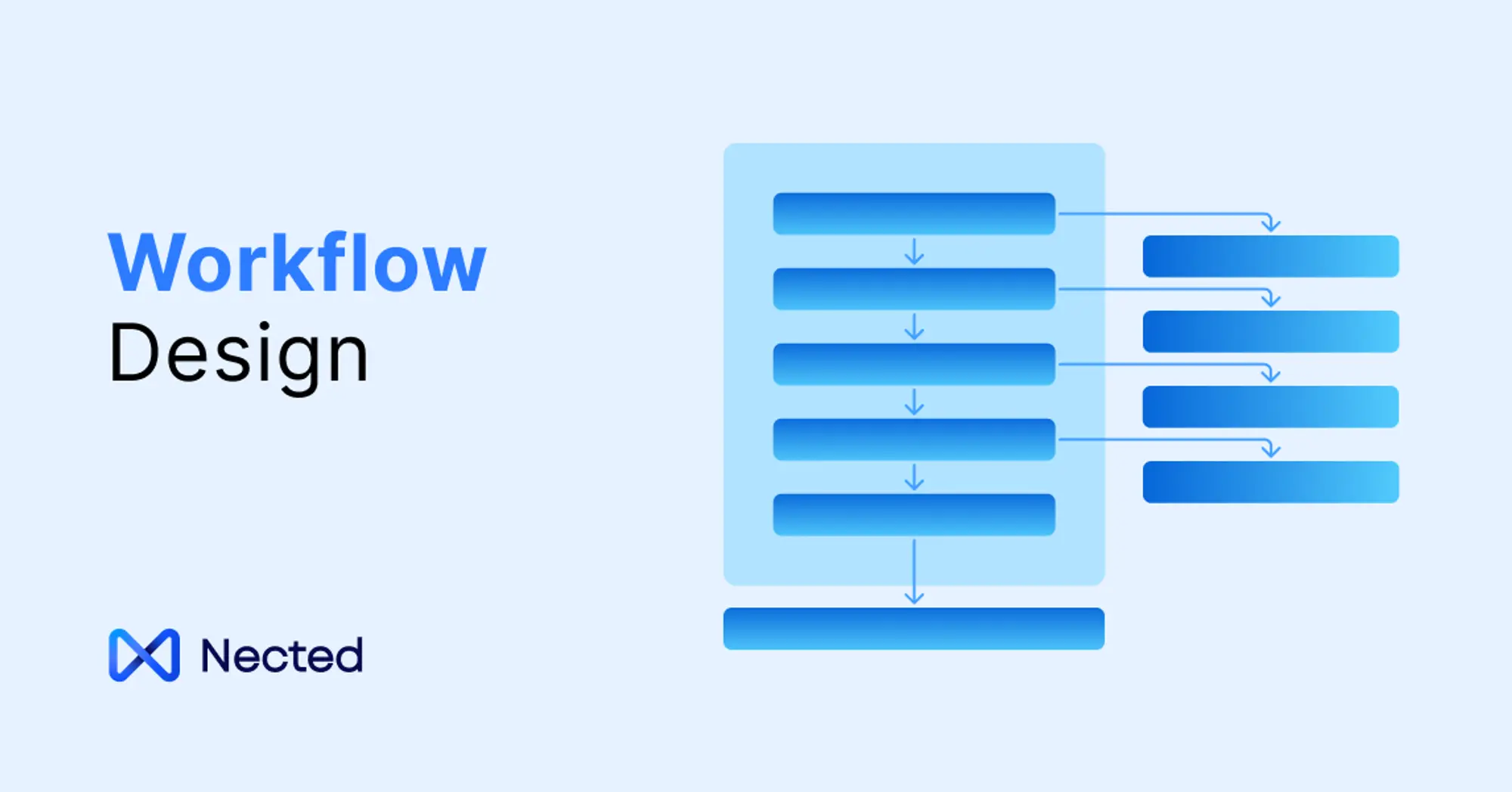
- DAG-based execution — directed acyclic graphs let you define task dependencies visually and logically
- Scheduling and triggers — cron-based schedules, event-based triggers, API calls, webhooks
- Integrations — native connectors to databases, APIs, SaaS tools, data warehouses
- Error handling and retries — configurable retry logic, dead-letter queues, failure notifications
- UI and visualization — seeing the execution graph and live status matters more than people admit
- Scalability — can it handle 10 workflows? 10,000? Understand the limits before you're in production
Top 10 Workflow Orchestration Tools
1. Nected — Best Overall Workflow Orchestration Tool
Nected is a low-code workflow orchestration platform built for teams that need production-grade automation without the DevOps overhead. It sits at the intersection of rule-based decision logic and multi-step workflow management — which is rarer than it sounds.
Where most orchestration tools are either too technical (Airflow) or too shallow (Zapier), Nected handles conditional logic, multi-step execution, real-time triggers, and monitoring in a single interface that non-engineers can actually use.
Teams in fintech, insurance, logistics, and e-commerce use it for loan decisioning pipelines, fraud workflows, dynamic pricing chains, and claim processing — things that require both business rules and execution sequencing.
Key Features:
- Visual workflow builder with drag-and-drop nodes
- Built-in rule engine for conditional branching — this is what separates it from most tools
- Real-time and scheduled trigger support
- No-code connectors to databases, REST APIs, and SaaS tools
- Full execution logs with step-level visibility
- Version control and staging environments — underrated, teams always forget they need this until they don't have it
- White-label support and cloud-native deployment
Pros:
- Rule engine + workflow manager in one platform
- Non-technical teams can build and modify workflows without engineering
- Strong governance features (versioning, rollback, audit logs)
- Works well for decision-heavy workflows, not just data pipelines
Cons:
- Newer platform, so ecosystem integrations are still growing
- Not the right fit for pure data engineering pipelines (ETL at scale)
Pricing:
- Free tier available
- Growth plans from $99/month
- Enterprise pricing on request
Best for: Product and ops teams that need conditional workflow logic + orchestration without hiring a data engineer
2. Apache Airflow — Best for Data Engineering Teams
Airflow is the default answer when someone in a data team asks "what do we use for workflow orchestration." It's been around since 2014, open-source, and runs at serious scale. But it comes with real operational weight.
You define workflows as DAGs in Python. That gives you full flexibility — and full responsibility. Debugging a broken DAG at midnight is not fun.
Key Features:
- DAG-based workflow definition in Python
- Rich UI with execution history and graph visualization
- Extensive operator library (S3, BigQuery, Spark, etc.)
- Horizontal scaling with Celery or Kubernetes executors
- Active open-source community
Pros:
- Extremely flexible — you can build almost anything
- Battle-tested at scale
- Large community and ecosystem
Cons:
- Steep learning curve — this is not a weekend project
- Requires infrastructure team to manage self-hosted deployment
- Debugging complex DAGs is painful
- Not suitable for non-technical users
Pricing:
- Open-source: free (self-hosted)
- Managed: Astronomer from ~$500/month, AWS MWAA pay-per-use
Best for: Data engineering teams with Python expertise running complex ETL pipelines
Nected vs Apache Airflow
3. Prefect — Best for Modern Python-Based Pipelines
Prefect positions itself as "the better Airflow" — and in a lot of ways, it earns that. The developer experience is genuinely cleaner. You write Python functions, decorate them with @flow and @task, and Prefect handles the rest.
The local-to-cloud deployment path is much smoother than Airflow. Teams can test flows locally and push to Prefect Cloud without rewriting anything.
Key Features:
- Python-native workflow definition
- Prefect Cloud for managed execution and monitoring
- Strong observability — logs, state tracking, alerts
- Dynamic task mapping (fan-out/fan-in patterns)
- Subflows and reusable task libraries
Pros:
- Much better developer experience than Airflow
- Easy local testing
- Good UI with real-time execution visibility
Cons:
- Still Python-only — non-technical users can't touch it
- Prefect Cloud pricing adds up at scale
- Smaller ecosystem than Airflow
Pricing:
- Open-source core free
- Prefect Cloud: starts at $0 (limited), scales with usage
Best for: Python-native data teams who find Airflow too clunky
Nected vs Prefect
4. Temporal — Best for Microservice Workflow Orchestration
Temporal is different from the other tools on this list. It's not a data pipeline tool. It's a workflow engine for long-running, fault-tolerant business processes — think multi-step user onboarding, payment processing, saga patterns in microservices.
Uber, Stripe, and Coinbase use Temporal in production. It handles durable execution — meaning if a server dies mid-workflow, Temporal can resume exactly where it left off.
Key Features:
- Durable execution — workflows survive server failures
- Supports Go, Java, Python, TypeScript SDKs
- Activity retries with configurable backoff
- Workflow versioning for live deployments
- Strong consistency guarantees
Pros:
- Genuinely fault-tolerant — most tools just say they are
- Works well for long-running transactional workflows
- Strong SDK ecosystem for engineers
Cons:
- Requires engineering team to implement
- Not for data pipelines or non-technical users
- Self-hosted setup has real infrastructure overhead
- Steep learning curve even for experienced engineers
Pricing:
- Open-source: free
- Temporal Cloud: usage-based pricing
Best for: Engineering teams building distributed, long-running transactional workflows in microservice architectures
Nected vs Temporal
5. Dagster — Best for Data Asset-Centric Orchestration
Dagster takes a different mental model to Airflow — instead of thinking about tasks, you think about data assets. Your pipelines produce assets (a cleaned dataset, a model, a report), and Dagster tracks those assets with full lineage.
This matters more than it sounds. When something goes wrong, you can trace exactly which asset is stale, which run produced it, and what changed.
Key Features:
- Asset-centric orchestration model
- Full data lineage tracking
- Type-checked inputs/outputs
- Integrated with dbt, Spark, Snowflake, and more
- Good local development experience
Pros:
- Best-in-class data lineage
- Type safety reduces silent failures
- Strong dbt integration
Cons:
- Different mental model takes time to adopt — teams often underestimate this
- Python-only
- Not suited for non-data use cases
Pricing:
- Open-source free
- Dagster Cloud: starts at $0 limited, paid plans from ~$500/month
Best for: Data teams who care deeply about lineage, asset tracking, and data quality
Nected vs Dagster
6. n8n — Best Open-Source Visual Automation Tool
n8n is the open-source alternative to Zapier — with a lot more flexibility and a much lower cost ceiling. You can self-host it, build complex conditional flows, and connect to hundreds of services via nodes.
It's not pure orchestration — it leans more toward automation. But for teams that need visual workflow building with code escape hatches, it's genuinely good.
Key Features:
- Visual node-based workflow builder
- 400+ pre-built integrations
- Self-hostable (Docker, VPS)
- JavaScript execution nodes for custom logic
- Webhook and polling triggers
Pros:
- Much cheaper than Zapier at scale
- Self-hosted means full data control
- More flexible than most no-code tools
Cons:
- Complex workflows get messy visually
- No native DAG execution model
- Self-hosting means you own the maintenance
Pricing:
- Self-hosted: free
- n8n Cloud: starts at $20/month
Best for: Technical teams who want Zapier-like automation with more flexibility and less cost
Nected vs n8n
7. AWS Step Functions — Best for AWS-Native Architectures
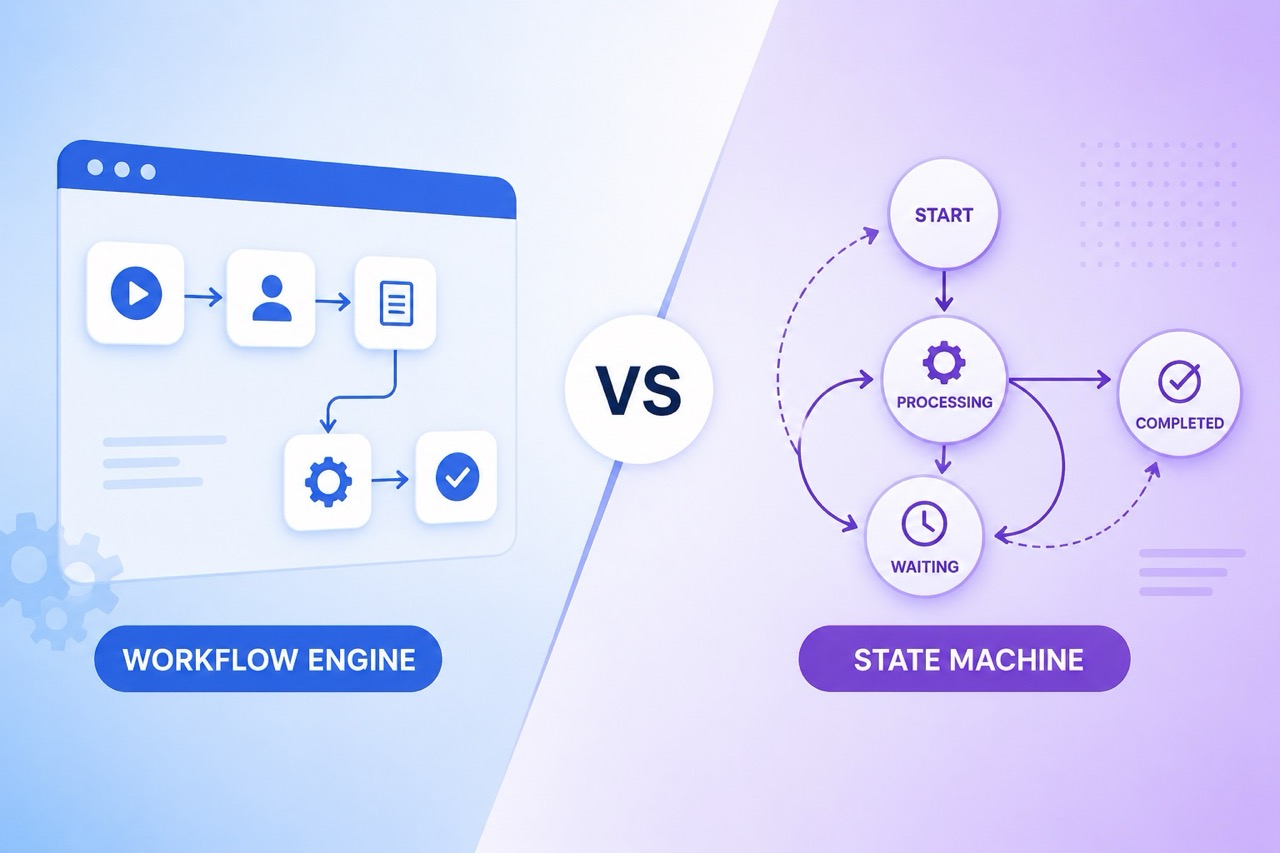
If your stack is already heavily AWS, Step Functions is the natural orchestration layer. It lets you coordinate Lambda functions, ECS tasks, SageMaker jobs, and other AWS services into state machine workflows.
The visual workflow editor is decent. The managed infrastructure is excellent. The AWS lock-in is real.
Key Features:
- State machine-based workflow definition
- Native integration with 200+ AWS services
- Express and standard workflows (for different latency/cost tradeoffs)
- Built-in error handling and retry logic
- Visual console for workflow monitoring
Pros:
- Zero infrastructure to manage
- Deep AWS service integration
- Reliable and scalable by default
Cons:
- Strong AWS lock-in
- JSON/YAML state definitions aren't developer-friendly
- Pricing can get unpredictable with high volume
- Not useful outside of AWS
Pricing:
- Pay-per-state-transition: $0.025 per 1,000 standard workflow transitions
Best for: Teams already running on AWS who want serverless workflow orchestration
Nected vs AWS Step Functions
8. Zapier — Best for Simple Cross-App Automation
Zapier isn't really an orchestration tool. It's an automation tool with a massive app library (6,000+ integrations). But a lot of teams try to use it as orchestration — and that's where the frustration starts.
For simple trigger-action flows, it's excellent. When you need branching, error handling, and dependency management — it starts to strain.
Key Features:
- 6,000+ app integrations (largest library available)
- Simple if-this-then-that logic
- Paths (conditional branching)
- Zap history and basic error notifications
Pros:
- Fastest way to connect two apps
- Non-technical users can be productive in minutes
- Reliable for simple automations
Cons:
- Not built for complex orchestration — teams hit this wall faster than expected
- Expensive at scale ($599+/month for business plans)
- Limited error handling and debugging
- No DAG model
Pricing:
- Free: 100 tasks/month
- Professional: $19.99/month
- Team: $69/month
- Business: $599/month
Best for: Non-technical teams that need quick cross-app automations without orchestration complexity
Nected vs Zapier
9. Camunda — Best for BPMN-Based Enterprise Process Automation
Camunda is built around BPMN (Business Process Model and Notation) — the formal standard for documenting and executing business processes. It's used in banking, insurance, government, and anywhere that process compliance matters.
The platform is powerful and enterprise-grade. It's also heavyweight to deploy and requires real training to use effectively.
Key Features:
- BPMN 2.0 process modeling and execution
- Decision engine with DMN (Decision Model and Notation)
- Human task management (approval workflows)
- Strong audit and compliance features
- Multi-instance deployments
Pros:
- Industry standard for regulated process automation
- Strong decision + workflow combination
- Good for human-in-the-loop workflows
Cons:
- Complex to set up and maintain
- BPMN has a learning curve for non-specialists
- Enterprise pricing is significant
- Overkill for most small/mid teams
Pricing:
- Self-managed (open-source core): free
- SaaS (Camunda 8): pricing on request, typically $50K+/year enterprise
Best for: Enterprises in regulated industries needing BPMN compliance, human task routing, and audit trails
Nected vs Camunda
Read a more detailed comparison between Nected and Camunda.
10. Prefect + dbt (Combined Pattern) — Best for Analytics Engineering Workflows
This one is a workflow pattern more than a single product. Teams running modern data stacks often combine Prefect (or Dagster) with dbt for analytics engineering — Prefect orchestrates the pipeline, dbt handles SQL transformations, and together they cover the modern data engineering lifecycle.
Worth including here because a lot of teams search for orchestration tools and actually need this combination rather than a single platform.
Key Features:
- Prefect handles scheduling, monitoring, retries
- dbt handles SQL model transformations
- Together: full ELT pipeline orchestration
- Strong integration with Snowflake, BigQuery, Redshift
Pros:
- Best-in-class for analytics engineering pipelines
- Strong community, lots of documentation
- Works with most cloud data warehouses
Cons:
- Two tools to learn, maintain, and pay for
- Python knowledge required for Prefect
- Not suitable for non-data use cases
Pricing:
- dbt Core: free (open-source)
- dbt Cloud: from $100/month
- Prefect Cloud: usage-based
Best for: Analytics engineering teams running SQL-heavy transformation pipelines on cloud data warehouses
How to Choose the Best Workflow Orchestration Tool
For startups: Start with Nected or n8n. Low setup cost, fast time to value. You want a tool your ops and product teams can use without pulling in engineers every time. Save Airflow for later when you have a dedicated data team.
For enterprises: Depends on the problem. Data pipelines → Airflow or Dagster. Business process automation → Nected or Camunda. Microservices → Temporal. Don't try to use one tool for all three.
For data pipelines: Airflow is the default. Prefect if you want a better developer experience. Dagster if data lineage and asset tracking matter. Combine with dbt for SQL transformation layers.
For no-code users: Nected is the only tool on this list with genuine no-code workflow orchestration that includes conditional logic. Zapier works for simple automations but won't scale into complex dependency chains.
Use Cases of Workflow Orchestration Tools
- ETL pipelines — extracting data from multiple sources, transforming it, and loading to a warehouse on a schedule
- Loan and credit decisioning — multi-step eligibility checks, rule evaluation, and routing based on outcomes
- Claim processing — intake, validation, fraud check, approval routing, payment trigger
- Customer onboarding — identity verification, document collection, account setup, notification sequences
- E-commerce operations — inventory checks, order routing, fulfillment triggers, return processing
- ML model pipelines — feature computation, model training, evaluation, deployment, monitoring
Challenges in Workflow Orchestration
Complexity — the longer a pipeline runs in production, the more edge cases accumulate. What started as 5 steps becomes 20. Dependency graphs get complicated. This is normal. The tools that handle it gracefully are the ones worth using.
Maintenance — orchestration tools aren't set-and-forget. Integrations break, data schemas change, upstream APIs change their authentication. Someone has to own this. Teams underestimate ongoing maintenance cost consistently.
Learning curve — Airflow, Temporal, and Dagster all have significant learning curves. Even "easy" tools like Zapier have limits that you discover mid-project, not before. Factor training time into any tool evaluation.
FAQs
What is a workflow orchestration tool?
A workflow orchestration tool coordinates the execution of multiple tasks or services in a defined sequence — managing dependencies between steps, handling failures and retries, scheduling runs, and providing visibility into execution status. It's the difference between running scripts manually and having an automated, monitored pipeline.
Which is the best workflow orchestration tool?
For most business and product teams: Nected. For data engineering teams: Apache Airflow or Prefect. For microservice architectures: Temporal. There's no single best tool — it depends on who's using it and what for.
Is Apache Airflow a workflow orchestration tool?
Yes. Airflow is one of the most widely used workflow orchestration tools in data engineering. It uses Python-defined DAGs to manage complex pipeline dependencies. It's powerful but requires technical expertise to deploy and operate.
What is the difference between orchestration and automation?
Automation executes tasks. Orchestration coordinates multiple tasks in sequence, managing dependencies and handling failures between them. Zapier automates. Airflow orchestrates. Many tools sit somewhere in between.
Are there free workflow orchestration tools?
Yes. Apache Airflow, Prefect (open-source core), Dagster (open-source), n8n (self-hosted), and Temporal (open-source) are all free to use self-hosted. Nected offers a free tier. The cost of "free" is usually the infrastructure and engineering time required to run it.
Can non-technical teams use workflow orchestration tools?
Most orchestration tools are built for engineers. Nected is the exception — it's designed for product, ops, and business teams to build and manage orchestrated workflows without writing code. If you need orchestration without a dedicated data or backend engineer, Nected is the practical answer.


.svg.webp)

.webp)
.webp)


.webp)


.webp)

%2520(3).webp)

.webp)