Credit risk assessment has always depended on the quality of the information available to lenders. The challenge is that modern lending applications can involve far more data than a credit team can review manually: credit history, income, existing liabilities, transaction activity, application details, and other borrower signals.
Traditional risk assessment methods can still work well for straightforward applications, but they become harder to scale when lenders need to evaluate more data, identify changing risk patterns, and make decisions consistently across large application volumes.
AI will enable lenders to use these signals, detect patterns that could be difficult to see manually, and enhance the assessment process for credit risk of credit. However, it should be clear that AI does not automatically make a credit decision superior. The quality of AI depends on validation, interpretation, and linkage with credit policy.
Why Traditional Credit Risk Assessment Is Falling Short
Traditionally, credit risk assessment would depend on credit bureau data, pre-defined scorecards, financial data, and rules which have been formed through the experience of lending. This method is still valuable since it provides lenders with a standardized way of assessing the borrower.
It becomes a problem if there is greater variety in the available data and the lending process must adapt to more complex risk patterns.
Let’s consider two examples of people having similar credit scores: one of them has stable income, regular transaction history, and little current exposure; the second has acquired several new credit lines recently, and there was a noticeable change in his financial behavior. The only thing that traditional scoring can give is not enough context.
Context can be added manually, but this will increase the time of assessment of a greater number of variables in each case of thousands of loan applications.
This creates three practical limitations:
- Large volumes of data: Credit teams cannot manually examine every relevant signal with the same depth.
- Complex risk patterns: Relationships between income, debt, transaction behavior, and credit activity may not be obvious from individual fields.
- Changing borrower behavior: Historical rules may not capture emerging patterns as effectively when borrower behavior or lending conditions change.
This does not suggest that the conventional method of credit scoring should be ignored. Instead, they require a mechanism that enables them to process more data without deviating from their credit policies in the final evaluation. This is where AI plays a role.
How Does AI Improve Credit Risk Assessment?
The most important way in which AI is useful for credit risk assessment is that it helps in the analysis of data on borrowers in large quantities.
This means that rather than analyzing each individual input, AI enables the detection of patterns between different inputs and uses them to determine the risks.
Examples of some inputs used for risk assessments are:
Income + existing liabilities + credit history + recent credit activity + transaction behavior → risk assessment
AI can analyze these inputs together rather than relying on a single threshold or score.
1. Identifying Risk Patterns Across More Data
Artificial intelligence can analyze large amounts of information about borrowers and their accounts in order to determine which combinations of variables have greater or smaller repayment risks.
One variable alone does not convey much meaning. An increase in one’s debts, for example, does not necessarily mean that there is some increased risk involved. When this is combined with low income and high utilization, though, then risk increases.
2. Supporting Faster Risk Assessment
AI can process borrower information much faster than a manual review of the same data.
This will help reduce the time required for preparing the application form for credit analysis, especially if the lender receives many applications.
The benefit is not simply speed. Faster analysis can also allow the lender to use more relevant information before the credit decision is made.
3. Improving Risk Differentiation
This is because not all individuals with the same credit scores have the same risk characteristics. Artificial intelligence allows lenders to find more patterns from the data and be able to separate those applicants who may appear similar through a simple scoring system.
For instance, even though two borrowers have the same bureau scores, it does not necessarily mean that their debt profiles, income stability, and borrowing trends are alike.
4. Supporting More Consistent Assessments
The manual review depends on the amount of data available to an analyst as well as the way in which the data is analyzed.
The AI model will analyze data using a consistent approach in every application, which makes the process more consistent when dealing with many similar cases.
It should be noted that consistency is not always the equivalent of correctness. The model should still be controlled and validated.
5. Detecting Changes in Borrower Risk
The risk level of credit is not always static after evaluation of the application process. Income, debts, payment behaviors, and credit activities may change a person’s risk level.
AI helps lenders to detect these changing signs and recognize certain patterns that should be considered for reevaluation of the loan application use case.
These benefits explain why AI is becoming useful in credit risk assessment. The next question is where these capabilities actually fit into the lending process.
How AI Benefits Small Business Credit Risk Assessment
Small business credit assessment can be more difficult than consumer credit assessment because lenders often need to evaluate the business's financial performance alongside its existing obligations and, depending on the product, the owner's credit profile. Revenue can fluctuate, cash flow can be seasonal, and financial information may come from multiple sources.
AI can assist lenders to look at all these variables collectively and not in isolation. For instance, a small business that has: ₹ 20 lakhs revenue per year + existing loans + seasonal cash flows + borrowing history
Just looking at revenue will not determine the ability of this company to take on any more loans. The AI system can look at all these financial data points together.
- Analyzing Cash Flow Beyond Revenue
A firm could be making healthy revenues but still be lacking in cash flows after expenses and existing debt payments.
AI can make an analysis of transaction and financial information for recognizing patterns in cash flows, recurring costs, debts, and repayment capabilities. It offers much more context to lenders than just revenues.
- Assessing Different Business Profiles
Small businesses do not all operate in the same way. A seasonal retailer, restaurant, professional services firm, and manufacturing business can have very different revenue and cash-flow patterns.
AI can help lenders evaluate these patterns using a broader set of financial signals rather than applying the same interpretation to every business.
- Bringing Multiple Financial Signals Together
Credit appraisal of small businesses may use revenues of the business, bank dealings, past debts, credit record, financial records, and loan amount required.
The AI can examine these factors and give an insight on risk which will be taken into account along with the lending institution’s credit policy.
This makes AI particularly useful where small-business financial information is varied and the lender needs more context than a single credit score or threshold can provide.
Where Is AI Used Across the Credit Risk Assessment Process?
AI does not have to replace the entire credit risk assessment process. Its role can vary depending on the stage of lending and the type of risk being evaluated.
- Application and Data Analysis
At the outset of the process, AI could assess information from the application as well as information from various sources. This would consist of the applicant’s income, employment details, liabilities, credit history, transactions, and other such information as approved by the lender. The objective of this is to extract risk-based intelligence from the raw information.
- Income and Affordability Assessment
AI can help analyze income patterns, recurring transactions, liabilities, and other financial information used to assess affordability.
In the case of income, for instance, instead of solely relying on the stated amount per month, the evaluation can look at the stability of the income and how current responsibilities influence the ability to repay by the borrower. This information is then put into use in the lending criteria.
- Credit Risk Prediction
It is here that the prediction is made of the occurrence of the credit event based on the information obtained about the client.
The outcome gained from this process could be a risk score, probability, classification, or any other sort of output from the model. The outcome is important, although not necessarily the final lending decision.
- Portfolio and Ongoing Risk Monitoring
AI can also be used after origination to identify changes in borrower behavior or portfolio-level risk patterns.
For example, changes in repayment behavior, utilization, or other financial indicators may signal a need for closer monitoring. This creates a broader use of AI: it can support risk assessment not only when a loan is originated but also as borrower risk changes over time.
- Fraud and Credit Risk Signals
Fraud risk and credit risk are different questions, but their signals can sometimes be evaluated alongside each other.
A suspicious application may require fraud review even when its credit profile appears acceptable. On the other hand, a borrower could also be high risk regarding repayments but show no signs of fraud whatsoever. Separation between the two outcomes will allow creditors not to take a signal of fraud from AI as an alternative to assessing credit risks.
All these phases include the application of AI as a tool to obtain and process the risk data. The lending system still needs to determine how that information should affect eligibility, approval, pricing, or manual review. That decision layer is where configurable business logic becomes important.
How Nected Helps Turn AI Risk Insights Into Credit Decisions
AI can produce a risk score, probability, classification, or other model output. But lenders still need to decide what that output means for a particular credit product and application.
For example, a lender might define:
AI risk score + DTI + loan amount + product rules → credit action
While one model could suggest higher risk, the right thing to do in such a situation would depend on the strategy of the lender. One product could require manual intervention above a certain risk level, while another could need a different eligibility criterion.
The Nected platform can help by using AI risk models by adding the decisioning and workflow layer to implement these business rules over the model output and lending information.
For example:
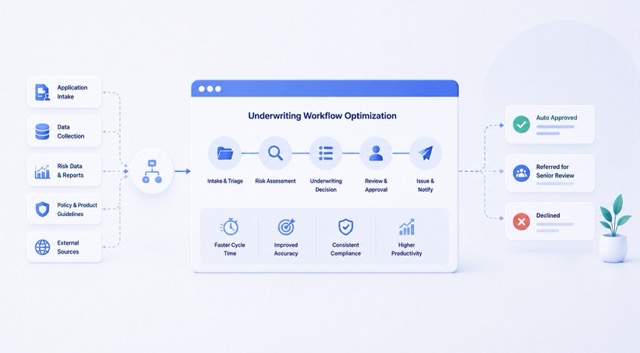
Risk score within approved range + DTI within limit → Continue processing
Risk score above threshold → Credit review
Risk score acceptable + loan amount exceeds approval authority → Senior review
Risk model result unavailable → Additional verification or manual assessment
This separates two related but different responsibilities:
- AI model: analyzes borrower data and produces a risk insight.
- Nected: applies the lender's configured rules to that insight and determines the next workflow action.
This can be useful when credit policies change independently of the underlying AI model. A lender may change a risk threshold, approval limit, or referral condition without rebuilding the entire lending application.
The result is not AI making every lending decision automatically. It is a workflow where AI provides risk intelligence and configurable decision logic determines how that intelligence is used within the lender's policy.
Conclusion
The advantages of AI in credit risk assessment arise from its capability to process a higher volume of information about the borrower, detect patterns among various indicators, help conduct risk assessment in a shorter period of time, and give more consistent results.
However, AI risk prediction is just a portion of lending processes. The lending institution also needs to have clear credit policies, set criteria for approval, exception procedures, and proper human assessment of cases that don't comply with the standard criteria.
Nected can facilitate the use of AI-based credit risk assessment by linking predictions from the model and information about the borrower to customizable credit policies and actions.
The practical goal is not to remove human judgment from credit risk assessment. It is to use AI where it adds analytical value and connect those insights to a decision process that lenders can control and adapt.
FAQs
What are the main benefits of AI in credit risk assessment?
It helps lenders to assess more amounts of borrowers' information, recognize patterns between multiple risk factors, make assessments faster, maintain consistency in decision-making, and detect changes in borrowers' risks.
How does AI improve traditional credit risk assessment?
The AI will be studying the correlation between various signals for the borrowers and not relying only on thresholds from the different parameters or scoring components.
Can AI replace traditional credit scoring?
Not necessarily. The use of artificial intelligence in assessing the creditworthiness of consumers is important since it can supplement credit scores and other methods that have been in place for quite some time now.
Can AI make credit decisions automatically?
AI can be used for automated decisioning, but it does not need to make a decision alone. Model results can be used by lenders together with their credit policies and other rules.
What data can AI use for credit risk assessment?
Depending on the lending use case and applicable requirements, AI may analyze credit history, income, liabilities, transaction information, repayment behavior, application data, and other approved financial signals.
How does AI help with ongoing credit risk monitoring?
AI will be able to analyze changes in borrowing behavior, debt, usage, and other relevant metrics to detect changes in borrower or portfolio risk post-origination.
How does Nected fit into AI-based credit risk assessment?
Nected can enhance the use of AI systems with customizable credit policies and workflow that can be applied to risk information provided by the AI system, along with other lending information, to decide what should happen with the application.