


Policy administration has moved way past simply issuing and renewing insurance policies. In today’s business world, insurers must deal with several insurance products, sales channels, regulations, endorsements, renewals, and customer interactions within an increasingly advanced technology environment.
With insurers becoming more sophisticated in running their businesses, the need for efficient policy management systems arises. Having the right system enables insurers to effectively manage the policy lifecycle, innovate with new insurance products, and ensure consistency in all customer interactions.
This article aims at comparing five top insurance policy management systems with respect to the problems they solve, capabilities, and target customers.
Why Policy Management Has Become the Foundation of Digital Insurance Operations
Every insurance transaction begins with a policy. Whether it is the creation of a policy, endorsement processing, premiums collection, policy renewals or validating coverage for a claim, all downstream activities hinge on the availability of accurate and current policy information.
Insurers who have their policy data spread across several systems experience delays in service, inconsistencies in underwriting, reconciliations and increased operating costs. With evolving products and changing client expectations towards digital interactions, the challenges faced become more difficult to handle.
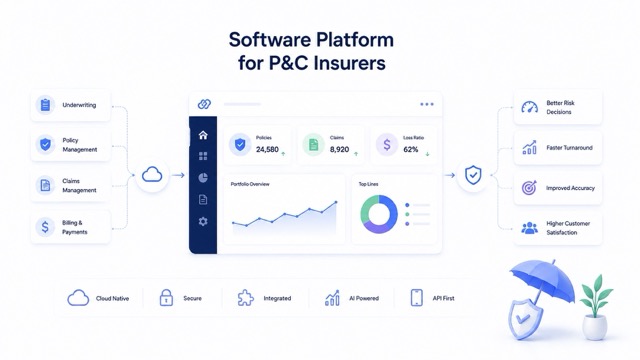
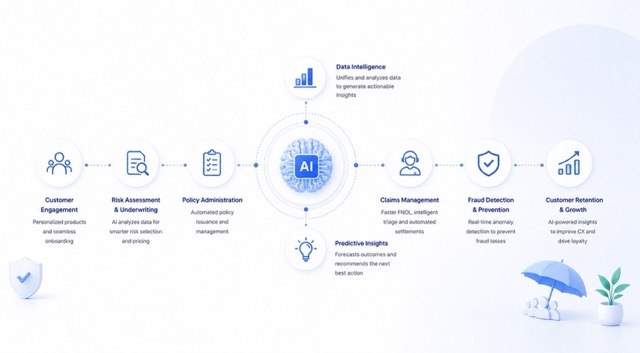
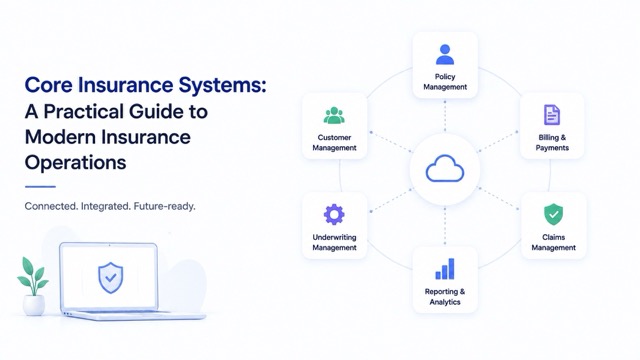
Current policy management solutions offer the ability to consolidate the policy lifecycle where an insurer can manage their product configuration, policy issuance, endorsements, renewals, cancellations and servicing through one platform. The insurer will no longer see policy administration as a back-office activity but rather as the backbone which links underwriting, billing, claims, customer portal and third-party integration.
For an insurer looking to embark on digital transformation, policy management is not just a means of managing policy data but a reliable solution for every process in the policy lifecycle.
Also Read: AI Powered Credit Scoring for Banks
What Separates a Modern Policy Management System from a Traditional Core Insurance Platform?
Not every policy management system offers the same level of operational flexibility. Whereas classic core platforms primarily ensure the maintenance of policy documentation and transactions, contemporary platforms enable quick changes in products, API-based integrations, and digital policy servicing.
Before comparing the vendors, take into account the following capabilities.
- Flexible Product Configuration: It is impossible not to change insurance products. The contemporary platform should enable the introduction of new products, modifications in the coverage, conditions of policy and its price without redevelopment.
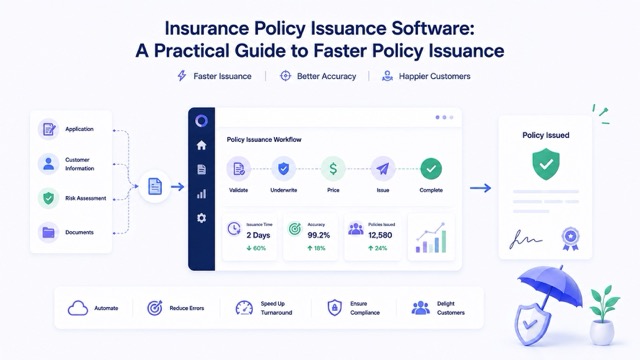
- Policy Lifecycle Management: The platform should cover all the stages of policy lifecycle from quoting and issuing to endorsements, renewals, cancellations, reinstatement, and policy servicing with one operational workflow.
- API First Integration: Policy management systems are unlikely to work separately. They have to be integrated with underwriting, billing, claims, payment gateway, document management, CRM systems and other regulatory reporting tools through well-designed APIs.
- Multi-channel Policy Servicing: Customers want to manage their policies online, using web portals, mobile applications, brokers or agents. Contemporary platforms have to ensure the servicing regardless of the channel chosen by the customer.
- Configurable Business Rules: Many policy transactions are conditioned with approval rules, eligibility criteria, referrals, validation. Platforms supporting configurable business rules will react quicker to the changes in products, regulations, internal policies.
Also Read: Insurance Underwriting Software
Insurance Policy Management Systems Compared at a Glance
Top 5 Insurance Policy Management Systems
No single policy management system is the right choice for every insurer. Some platforms are designed to replace legacy core systems, while others prioritize product configuration, multi-line policy administration, or operational flexibility.
The following platforms are compared based on the insurance operations they support, their core capabilities, and the type of insurer they're best suited for.
- Guidewire PolicyCenter: Best for Enterprise Policy Administration
Enterprise insurers often manage multiple policy administration systems across personal, commercial, and specialty lines of business. As products expand and regulations evolve, maintaining consistent policy servicing becomes increasingly difficult.
Guidewire PolicyCenter provides a centralized policy administration platform that supports the complete policy lifecycle, helping insurers standardize policy issuance, servicing, renewals, and endorsements across multiple insurance products.
Key capabilities:
- Complete policy lifecycle management: Manage quoting, policy issuance, endorsements, renewals, cancellations, reinstatements, and policy servicing from a single platform.
- Flexible product configuration: Configure insurance products, coverage options, deductibles, endorsements, and rating structures without rebuilding the entire application.
- Integrated underwriting support: Keep policy administration connected with underwriting workflows, ensuring policy changes align with underwriting decisions.
- Open API ecosystem: Integrate with claims, billing, CRM, payment gateways, document management systems, and external data providers.
Best suited for: Large insurers modernizing enterprise policy administration.
Consider before choosing: Enterprise implementations typically require significant migration planning and integration with existing insurance systems.
2. Duck Creek Policy: Best for Product Agility
Insurers frequently update products to respond to regulatory requirements, market demand, and changing customer expectations. When every policy change requires development effort, product launches become slower and operational costs increase.
Duck Creek Policy helps insurers manage policy administration while making product configuration faster and more flexible. It enables business teams to update products and policy rules with less dependency on engineering resources.
Key capabilities:
- Low-code product configuration: Configure coverage options, policy rules, eligibility criteria, endorsements, and pricing structures with minimal custom development.
- Policy lifecycle management: Support policy issuance, renewals, endorsements, cancellations, and servicing through configurable workflows.
- Integrated rating capabilities: Maintain premium calculations and pricing logic alongside policy administration for greater consistency.
- API-first architecture: Connect with billing platforms, customer portals, payment providers, document management systems, and third-party insurance services.
Best suited for: Insurers that regularly launch or update insurance products.
Consider before choosing: Organizations with complex underwriting or approval logic may need a separate decision management platform.
3. OneShield: Best for Multi-Line Policy Management
Managing separate policy administration systems for personal, commercial, and specialty insurance creates duplicated processes and inconsistent servicing. OneShield provides a unified platform that allows insurers to manage multiple lines of business through a common policy administration system.
By combining policy administration with underwriting, billing, and claims, insurers can reduce operational silos while maintaining product-specific workflows.
Key capabilities:
- Multi-line policy administration: Manage personal, commercial, and specialty insurance products through one platform while supporting product-specific policy workflows.
- Integrated underwriting and billing: Keep policy servicing aligned with underwriting decisions and premium management throughout the policy lifecycle.
- Flexible product management: Configure policy products, coverage options, endorsements, and business rules without extensive redevelopment.
- Open integrations: Connect with external claims systems, payment platforms, customer portals, and document management solutions.
Best suited for: Mid-sized and enterprise insurers managing multiple insurance products.
Consider before choosing: Review integration capabilities if your existing ecosystem includes specialized third-party insurance applications.
4. Sapiens: Best for End-to-End Insurance Operations
Many insurers operate separate systems for policy administration, claims, billing, and customer servicing. Sapiens brings these operational functions together, helping insurers modernize multiple insurance processes through a unified platform.
Rather than focusing only on policy administration, Sapiens supports the broader insurance lifecycle while allowing insurers to modernize in phases.
Key capabilities:
- Comprehensive policy administration: Manage policy issuance, endorsements, renewals, cancellations, and servicing across multiple insurance products.
- Integrated insurance operations: Connect policy management with underwriting, claims, billing, and customer servicing to improve operational consistency.
- Digital servicing capabilities: Support self-service portals for policyholders, agents, and brokers across multiple channels.
- API-ready integrations: Connect with payment systems, regulatory services, CRMs, analytics platforms, and external insurance applications.
Best suited for: Enterprise insurers modernizing multiple operational functions together.
Consider before choosing: Evaluate implementation scope carefully if only policy administration, not the broader insurance ecosystem—is being modernized.
5. Nected: Best for Decision Automation Across Policy Operations
A policy management system manages policy transactions, but many policy decisions still depend on business rules. Determining whether a policy qualifies for straight-through issuance, whether an endorsement requires approval, or whether additional documents should be requested often relies on logic spread across multiple applications.
Nected complements existing policy management systems by centralizing these business rules into a configurable decision layer. Instead of modifying application code whenever underwriting guidelines, approval policies, or compliance requirements change, insurers can update decision logic independently while continuing to use their existing policy platform.
Key capabilities
- Business rules management: Configure policy eligibility, approval rules, validation logic, and document requirements without modifying core applications.
- Decision orchestration: Combine business rules, external data, AI models, and workflows to automate policy-related decisions consistently.
- Approval and exception handling: Automatically route endorsements, policy exceptions, and high-risk transactions based on predefined business rules.
- API-first integration: Integrate with Guidewire, Duck Creek, OneShield, Sapiens, and other policy administration systems without replacing existing infrastructure.
Best suited for: Insurers looking to automate policy decisions while retaining their existing policy management platform.
Consider before choosing: Nected enhances policy management by automating operational decisions, it is not a replacement for a core policy administration system.
Also Read: How to Transform your Business using Insurance Automation?
Which Policy Management System Fits Your Insurance Operating Model?
The right policy management system depends on the operational challenges you're trying to solve, not simply the number of features a platform offers. Before evaluating vendors, identify where your policy operations create the most friction.
- Product Complexity: If your business frequently launches new products or updates coverage, endorsements, or pricing, prioritize platforms that support flexible product configuration with minimal development effort.
- Policy Lifecycle Requirements: Evaluate whether the platform can manage the complete policy lifecycle, including issuance, endorsements, renewals, cancellations, reinstatements, and servicing, without relying on multiple systems.
- Integration Strategy: Policy management systems should integrate seamlessly with underwriting, claims, billing, payment gateways, document management platforms, CRM systems, and external data providers. Strong API capabilities reduce integration effort and improve operational consistency.
- Scalability: As your product portfolio and customer base grow, the platform should support higher transaction volumes, multiple lines of business, and changing regulatory requirements without requiring significant architectural changes.
- Business Rule Flexibility: Many policy transactions depend on eligibility rules, approval workflows, and compliance checks. Look for platforms that allow these rules to be updated without modifying the core application.
Where Even the Best Policy Management Systems Need Decision Automation
The policy management platform deals with the policy record and the lifecycle of events, although most policy decisions are made based on business rules outside the platform, including eligibility checks, endorsement, document validation, and straight-through processing for issuing policies.
This is how Nected compliments the policy management systems. By integrating all the business rules, the logic and workflow of decisions, Nected helps insurers automate all the policy decisions with consistent governance throughout policy issuance, endorsements, renewals, and servicing. Business rules change, and therefore decisions change without having to change the underlying policy management system.
Insurers that are in the process of upgrading their policy process find that using a policy management platform along with decision orchestration gives them more flexibility than the core policy administration alone.
Conclusion
Policy management systems play a central role in how insurers issue, service, and renew policies. The ideal platform will help with the entire lifecycle of the policies and be adaptable enough to evolve as products, regulations, and customers change.
Guidewire PolicyCenter, Duck Creek Policy, OneShield, and Sapiens cater to the diverse needs of policy administration such as enterprise modernization, product agility, and multi-line business. Each of these will be ideal depending on your operating model, integration approach, and modernization priorities.
With all the modernization happening in the insurance space, most insurers are also implementing decision orchestration, which involves automated approval processes and consistent business rules. When put together, policy management and decision automation become an adaptive infrastructure.
Frequently Asked Questions
What is a policy management system?
A policy management system assists insurers in managing all aspects of the entire policy life cycle, which include policy creation, endorsements, renewals, cancellations, reinstatements, and policy servicing.
How is a policy management system different from core insurance software?
Policy management forms a part of core insurance software. While core software can contain features like claims processing, billing, and underwriting, policy management software only provides policy-related services.
Which features should an insurer seek in a policy management system?
Flexible product configuration, management of the entire policy life cycle, integration using APIs, multi-channel servicing, business rule configurability, and scalability in terms of future operational expansion.
Does a policy management system integrate with existing insurance applications?
Yes. Almost all modern software includes APIs to integrate with underwriting, claims, billing, payments, CRM, document management, and other third-party software.
Why is decision automation essential for policy management?
Most of the policies management activities rely on certain business rules, which require decision automation in order to streamline these activities and allow faster product or regulation changes.