


Insurance distribution has changed significantly over the last decade. Carriers and MGAs no longer rely on a single sales channel to acquire and service business. Broker networks, independent agents, bancassurance partnerships, digital aggregators, embedded insurance, affinity programs, and direct-to-consumer channels now operate simultaneously, each with different onboarding processes, commission models, product access rules, and compliance requirements.
Managing these channels has become increasingly difficult using traditional policy administration systems alone. While core insurance platforms remain responsible for policy issuance and servicing, they were never designed to coordinate channel performance, partner governance, distribution workflows, incentive management, and customer journeys across a growing distribution ecosystem.
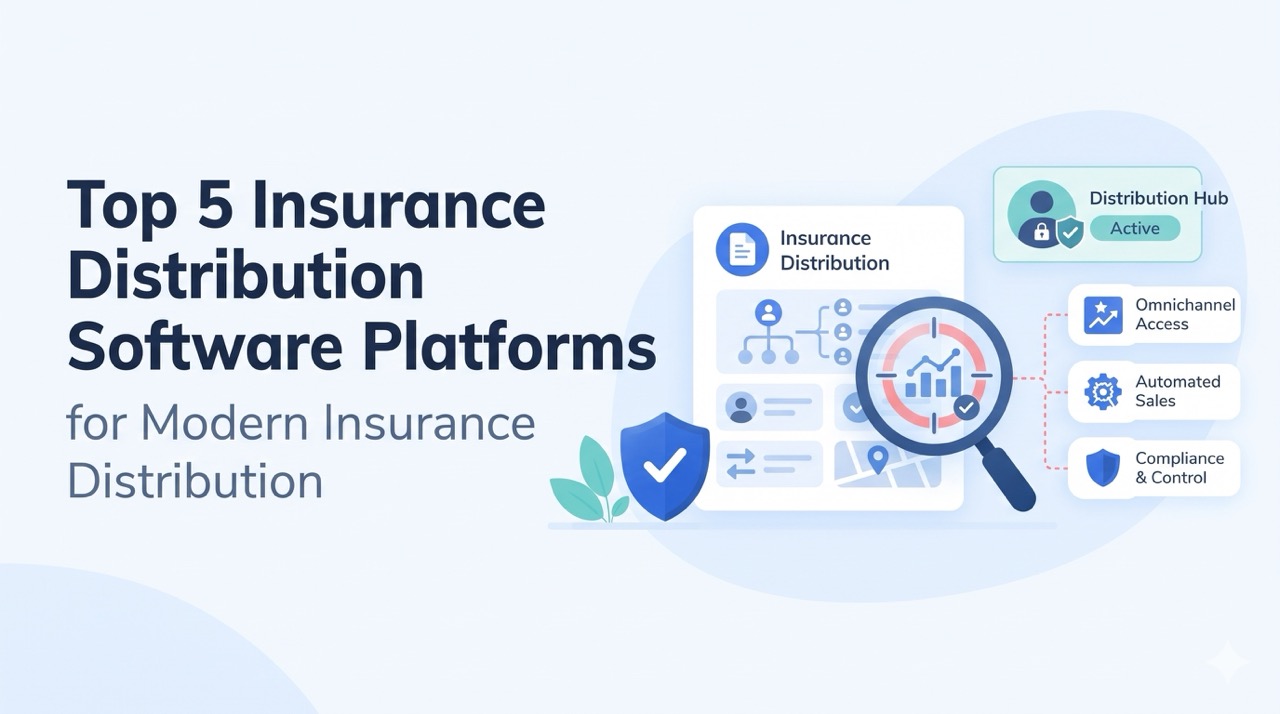
Insurance distribution software fills this operational gap by helping insurers manage how products move through different sales channels while maintaining visibility, governance, and consistency across the distribution lifecycle.
In this guide, we've evaluated leading insurance distribution platforms based on their channel management capabilities, scalability, integration approach, workflow flexibility, and suitability for modern insurance distribution strategies.
Why Has Insurance Distribution Become the Most Complex Part of the Insurance Value Chain?
Insurance distribution is no longer limited to selling policies through agents or brokers. Today, insurers manage multiple distribution models simultaneously, each operating with different products, commercial agreements, regulatory obligations, and customer journeys.
A single insurer may distribute personal lines through independent agents, commercial products through brokers, embedded insurance through digital partners, and specialized programs through MGAs. Each channel requires different onboarding processes, pricing structures, commissions, approval workflows, and servicing models.
The complexity doesn't come from supporting more channels; it comes from managing them consistently.
Distribution teams must ensure that partners only access authorized products, commissions follow contractual agreements, referrals reach the appropriate underwriting teams, regulatory documentation is complete, and customer experiences remain consistent regardless of the acquisition channel.
Many insurers still coordinate these activities across policy administration systems, spreadsheets, CRM platforms, commission engines, partner portals, and manual operational processes. As new partners and products are introduced, maintaining visibility across the entire distribution network becomes increasingly difficult.
Digital distribution has accelerated this challenge. Embedded insurance, API-driven partnerships, online aggregators, and self-service customer journeys require insurers to launch and modify distribution models much faster than traditional technology delivery cycles allow.
As a result, distribution has become one of the most operationally dynamic areas of insurance. Success depends not only on expanding channels but also on maintaining governance, operational consistency, and partner performance as the distribution ecosystem continues to evolve.
Also Read: Insurance Underwriting Software
What Modern Insurance Distribution Platforms Must Support Beyond Policy Sales?
Managing policy sales is only one responsibility of a distribution platform. Modern insurers also need to govern partner relationships, control product access, monitor distribution performance, and coordinate operational processes across multiple channels.
Below are the core capabilities insurers should evaluate when comparing insurance distribution software.
- Multi-Channel Distribution Management
The platform should support brokers, agents, bancassurance partners, MGAs, embedded insurance providers, aggregators, and direct digital channels from a unified operational environment while allowing each channel to follow its own distribution model.
- Partner Onboarding and Governance
Managing distribution partners extends beyond registration. Platforms should support onboarding workflows, licensing validation, product authorization, contractual agreements, commission structures, and ongoing compliance throughout the partner lifecycle.
- Product Distribution Control
Different partners often sell different products under different commercial agreements. Distribution software should manage product availability, regional restrictions, underwriting permissions, and channel-specific distribution rules without creating operational complexity.
- Operational Visibility
Distribution leaders need visibility into partner productivity, quote conversion, policy issuance, channel performance, commission activity, and operational bottlenecks through a single operational view instead of consolidating information across multiple systems.
- Integration Across the Insurance Ecosystem
Distribution platforms should integrate with policy administration systems, CRM platforms, underwriting systems, identity providers, payment gateways, and external partner applications to maintain consistent operational data throughout the distribution lifecycle.
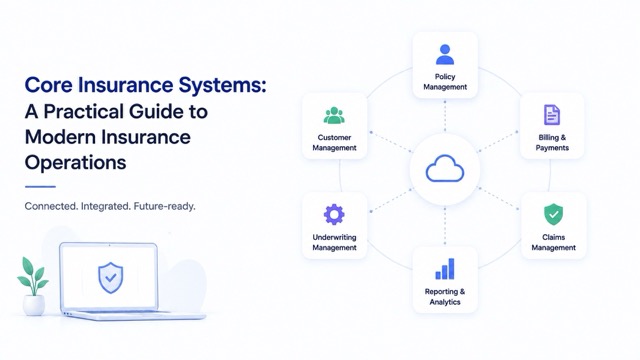
Rather than acting as another policy administration system, modern distribution software serves as the operational layer that connects insurers, distribution partners, and customers while supporting increasingly diverse distribution strategies.
How We Evaluated These Insurance Distribution Platforms
Rather than comparing feature lists, we evaluated each platform based on the operational capabilities that matter most to insurers managing multi-channel distribution. Our evaluation considered the following criteria:
- Distribution Channel Management: How effectively the platform supports agents, brokers, bancassurance partners, embedded insurance providers, aggregators, and direct sales channels from a single operational environment.
- Product and Distribution Flexibility: The ability to launch new insurance products, manage partner-specific offerings, configure commissions, and adapt distribution workflows without extensive redevelopment.
- Workflow and Operational Automation: How well the platform supports onboarding, quotation, referrals, approvals, document collection, commissions, and partner servicing throughout the distribution lifecycle.
- Integration with Core Insurance Systems: The ease of integrating with policy administration systems, claims platforms, CRM applications, payment systems, identity providers, and third-party distribution ecosystems without disrupting existing operations.
- Scalability: Whether the platform can support growing partner networks, expanding product portfolios, increasing transaction volumes, and new digital distribution models while maintaining operational performance.
- Enterprise Readiness: Deployment flexibility, security, governance, compliance capabilities, API maturity, vendor ecosystem, and suitability for enterprise-scale insurance organizations.
Also Read: How to Transform your Business using Insurance Automation?
Insurance Distribution Software Compared at a Glance
Modern insurance distribution depends on more than partner onboarding and policy sales. Insurers also need to manage product availability, commission structures, underwriting referrals, partner eligibility, digital distribution channels, and operational governance across an increasingly diverse distribution ecosystem.
The platforms below were evaluated based on their support for distribution management, workflow flexibility, integration capabilities, scalability, and enterprise readiness.
Top Insurance Distribution Software Platforms in 2026
There is no single insurance distribution platform that fits every insurer. Some platforms are designed as extensions of broader core insurance suites, while others specialize in intermediary management, partner engagement, or operational decision-making.
The following platforms were selected based on their maturity, enterprise adoption, distribution capabilities, integration flexibility, and ability to support increasingly complex insurance distribution ecosystems.
Guidewire Distribution Management
Best for: Property & Casualty insurers standardized on the Guidewire ecosystem
Guidewire Distribution Management is best viewed as an extension of the broader Guidewire operating model rather than an independent distribution application. Its value comes from keeping distribution activities closely connected with policy administration, underwriting, billing, and customer data, allowing insurers to manage producer relationships without creating separate operational silos.
For insurers already running Guidewire InsuranceSuite, this tight integration simplifies how agencies are onboarded, products are distributed, and producer activities are governed across the policy lifecycle. Instead of synchronizing information between multiple systems, distribution teams work within the same operational ecosystem used by underwriting and policy operations.
This approach is particularly valuable for carriers prioritizing operational consistency over standalone distribution capabilities. However, organizations with heterogeneous technology environments or independent distribution systems may find its greatest strengths tied to the broader Guidewire platform.
Duck Creek Distribution Management
Best for: Insurers modernizing digital distribution alongside configurable insurance operations
Duck Creek approaches distribution with a strong emphasis on configuration rather than customization. As insurers expand into digital channels, embedded insurance, affinity partnerships, and evolving agency models, operational processes often change more quickly than traditional development cycles can accommodate.
Duck Creek enables insurers to configure distribution workflows, partner relationships, and product delivery while maintaining alignment with policy administration and underwriting processes. This flexibility makes it particularly attractive for insurers introducing new products or expanding into new distribution channels where operational models continue to evolve.
Rather than treating distribution as an isolated function, Duck Creek positions it as part of a broader digital insurance platform capable of supporting continuous operational change.
Sapiens DistributionPro
Best for: Insurers and MGAs managing large intermediary ecosystems
Unlike platforms primarily centered around policy administration, Sapiens DistributionPro focuses on the operational complexity of intermediary management. It is particularly well suited for insurers whose distribution success depends on coordinating large broker networks, independent agencies, wholesalers, or MGA partnerships.
Its strengths lie in managing intermediary hierarchies, commission structures, partner performance, and operational governance across diverse distribution relationships. This makes it especially relevant for organizations where the operational challenge is not simply selling insurance, but coordinating thousands of external distribution partners with different contractual, regulatory, and commercial arrangements.
For insurers operating intermediary-heavy distribution models, this specialized focus can provide greater operational visibility than broader insurance platforms.
Majesco Distribution Management
Best for: Enterprise insurers building omnichannel distribution strategies
Majesco's approach reflects the changing nature of insurance distribution, where customers increasingly move between digital experiences and human advisors before purchasing a policy. Rather than treating agents, brokers, bancassurance partners, embedded insurance providers, and direct channels as separate operational models, the platform supports them as part of a connected distribution ecosystem.
This makes Majesco particularly valuable for insurers seeking to modernize customer engagement while maintaining operational consistency across multiple distribution channels. Its close alignment with the broader Majesco insurance platform also enables organizations to connect distribution with policy administration, billing, customer engagement, and analytics as part of larger modernization initiatives.
For insurers pursuing enterprise-wide transformation rather than isolated distribution improvements, this integrated approach provides greater long-term operational flexibility.
Nected
Best for: Insurers that need configurable business decisions across distribution operations
Most insurance distribution platforms are designed to manage operational processes such as partner onboarding, product distribution, commissions, and producer relationships. However, the business decisions governing those processes are often embedded deep within application code, custom integrations, or multiple disconnected systems.
For example, determining whether a broker can sell a product may depend on licensing status, geography, product eligibility, carrier agreements, channel strategy, or underwriting guidelines. Commission calculations may vary by partner tier, campaign, or line of business. Embedded insurance partnerships often introduce entirely different eligibility and routing requirements. These operational policies change frequently, yet updating them often requires application changes across multiple systems.
Nected addresses this layer of insurance distribution. Instead of functioning as another distribution management platform, it acts as a decision orchestration layer where insurers can centralize distribution rules, workflows, AI-driven decisions, and external data integrations. This enables business teams to adapt partner eligibility, product access, referral logic, commission policies, and routing decisions without redesigning existing distribution applications.
For insurers operating multiple distribution channels, this separation between operational workflows and business decision logic provides significantly greater agility as products, partners, and regulatory requirements continue to evolve.
Also Read: Top 5 Insurance Automation Software
Choosing the Right Platform for Your Insurance Distribution Strategy
The right distribution platform depends less on the number of features it offers and more on how well it supports your distribution model, operational processes, and existing technology ecosystem.
Before selecting a platform, insurers should evaluate how distribution operates across their organization, not just how policies are sold. The following considerations can help narrow the right choice.
- Existing Core Insurance Systems: If your organization already uses a core insurance suite such as Guidewire, Duck Creek, Majesco, or Insurity, choosing a distribution platform within the same ecosystem can reduce integration complexity and accelerate implementation.
- Distribution Model: Different platforms are optimized for different distribution strategies. Organizations with large broker networks, agency channels, embedded insurance partnerships, or bancassurance models should evaluate how well each platform supports their primary channel while remaining flexible enough to accommodate future expansion.
- Operational Flexibility: Distribution processes rarely remain static. Product launches, commission models, partner agreements, and regulatory requirements continue to evolve. Platforms that support configurable workflows and operational processes are generally better positioned to accommodate ongoing business change.
- Integration Requirements: Distribution platforms should connect seamlessly with policy administration systems, underwriting platforms, CRM applications, commission engines, payment systems, identity providers, and partner portals. Strong integration capabilities reduce duplicate processes and improve operational consistency across the insurance ecosystem.
- Scalability: As insurers expand into new markets, products, and partnerships, distribution operations become increasingly complex. Evaluating how well a platform supports higher transaction volumes, additional distribution partners, and evolving digital channels is essential for long-term success.
Beyond Distribution Management: Why Modern Insurance Channels Need Configurable Distribution Decisions
Managing insurance distribution isn't just about onboarding partners or issuing policies; it's about controlling the decisions that govern how distribution operates. Product eligibility, broker access, commission structures, referral routing, and partner-specific rules often vary across channels and change frequently as products, partnerships, and regulations evolve.
While most distribution platforms automate these processes, the underlying business rules are often hardcoded or scattered across multiple systems, making even routine policy changes dependent on development cycles.
Nected complements insurance distribution platforms by acting as a decision orchestration layer. It enables insurers to centrally manage distribution rules, workflows, AI models, and external data integrations, allowing business teams to update partner eligibility, product access, referral logic, and commission policies without modifying core distribution applications.
Conclusion
Insurance distribution has evolved into one of the most operationally demanding areas of the insurance value chain. Managing brokers, agents, digital partners, embedded insurance programs, commissions, product access, and regulatory requirements requires far more than a system for selling policies.
The platforms compared in this guide each address different distribution needs. Some are best suited for insurers already invested in a specific core insurance ecosystem, while others focus on intermediary management or omnichannel distribution. Selecting the right platform depends on how your organization distributes insurance today, how quickly those channels are expected to evolve, and how well the platform integrates with your existing technology landscape.
As distribution strategies become increasingly dynamic, insurers should also consider how easily operational policies, such as partner eligibility, commission structures, product access, and referral criteria, can be adapted without extensive redevelopment. The ability to evolve distribution decisions alongside distribution technology is becoming just as important as the platform itself.
Frequently Asked Questions
What is insurance distribution software?
Insurance distribution software helps insurers manage how insurance products are sold through brokers, agents, MGAs, bancassurance partners, embedded insurance providers, aggregators, and direct digital channels. It supports partner management, distribution workflows, commissions, product access, and operational visibility across the distribution lifecycle.
How is insurance distribution software different from a policy administration system?
A policy administration system manages policy issuance, endorsements, renewals, billing, and policy servicing. Insurance distribution software focuses on managing distribution channels, partner relationships, product availability, commissions, onboarding, and operational processes before and after policy sales.
What features should insurers prioritize when evaluating distribution platforms?
Rather than comparing feature lists, insurers should evaluate support for multi-channel distribution, partner lifecycle management, configurable workflows, commission management, API integrations, operational reporting, and compatibility with their existing core insurance systems.
Which insurance distribution platform is best?
There is no single platform that fits every insurer. Organizations already using Guidewire, Duck Creek, Majesco, or Insurity often benefit from staying within the same ecosystem, while insurers with complex intermediary networks may prioritize stronger broker and commission management capabilities. The right choice depends on your distribution strategy, technology landscape, and long-term modernization goals.
Can insurance distribution software support embedded insurance and digital partnerships?
Yes. Most modern enterprise distribution platforms support API-driven distribution models, embedded insurance partnerships, digital intermediaries, and self-service customer journeys. The level of flexibility, integration, and partner management capabilities varies by platform.
Is distribution software enough to manage changing distribution rules?
Not always. Distribution platforms manage operational workflows, but insurers also need to adapt business rules such as partner eligibility, commission policies, product access, approval thresholds, and referral criteria. Managing these decisions separately helps organizations respond more quickly to changing products, partner agreements, and regulatory requirements.