


Claim denials, deductions, documentation gaps, coding errors, pre-authorisation issues, and repeated insurer or TPA follow-ups can delay hospital revenue. In our country, a claim can encounter problems at several stages, from eligibility and pre-authorisation to documentation, billing, submission, query resolution, and final settlement.
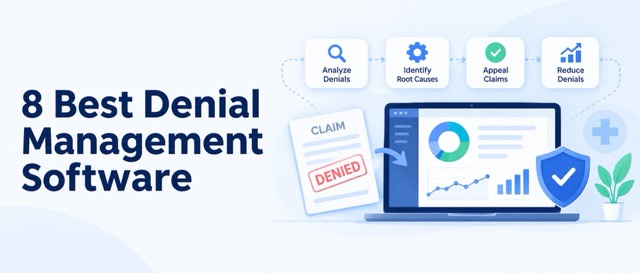
Denial management software helps hospitals move beyond manual follow-up. Depending on the platform, it can identify denial risks before submission, validate documentation, track rejected or queried claims, automate follow-ups, analyse denial causes, and improve recovery.
The platforms below cover different parts of this process. Some are purpose-built for healthcare claims and denial prevention, others provide broader revenue-cycle management, and some focus on claims infrastructure or revenue integrity.
Why Hospitals Need Denial Management Software
Our hospitals deal with multiple insurers, TPAs, claim formats, authorisation processes, and documentation requirements. This creates several points where avoidable revenue leakage can occur.
- TPA and insurer coordination: Pre-authorisations, queries, approvals, claim status, and settlement often require coordination across different payer workflows.
- Pre-authorisation issues: Missing approvals, incorrect details, delayed enhancements, or mismatches between treatment and authorisation can affect settlement.
- Documentation gaps: Missing discharge summaries, investigation reports, invoices, prescriptions, or supporting clinical records can result in queries or denials.
- Coding and billing errors: Incorrect coding, incomplete documentation, or inconsistencies between clinical records and billing can make claims harder to adjudicate.
- Package and policy-rule mismatches: Package rates, room-rent limits, exclusions, sub-limits, tariffs, and payer-specific conditions can result in deductions.
- Claim deductions: Hospitals may receive less than the billed amount without having a structured way to identify, categorise, and challenge the shortfall.
- Manual denial follow-ups: Teams may rely on spreadsheets, email, phone calls, and individual payer portals to manage outstanding claims.
- Delayed reimbursement: Poor visibility into claim status, queries, and settlement can keep receivables outstanding for longer.
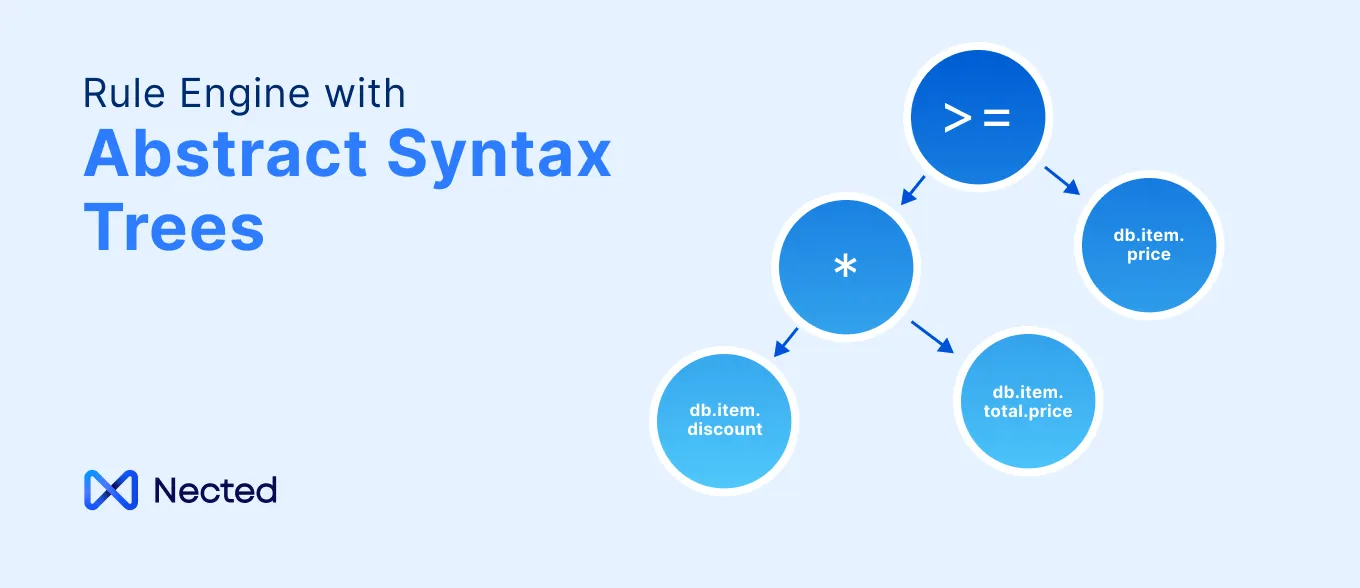
Also Read: Rule Engine for Healthcare: Transforming Medical Decision-Making
How We Evaluated Denial Management Software
We compared these platforms based on the capabilities that directly affect claim leakage, denial prevention, and recovery in hospital revenue cycles.
- Pre-Submission Denial Prevention: Whether the platform can validate claims before submission, including eligibility, authorisation, documentation, coding, package, and payer-specific requirements.
- Denial and Claim Workflow: How the platform handles queries, rejected claims, deductions, appeals, resubmissions, follow-ups, and settlement tracking after submission.
- Payer, TPA, and HMIS Connectivity: Whether it can connect with hospital HMIS/EHR systems and support the APIs, insurer/TPA workflows, and healthcare claims infrastructure required for day-to-day operations.
- Revenue Intelligence and Automation: Whether it can identify recurring denial patterns, prioritise high-value claims, automate checks or follow-ups, and give teams visibility into the causes of revenue leakage.
- India Healthcare Fit: How well the platform fits Indian hospital workflows, including support for ABDM, NHCX/HCX, insurer and TPA processes, and India-specific claim requirements where applicable.
The List at a Glance
Also Read: How Decision Engines Reduce Service Errors
ValiClaim
ValiClaim is built specifically around preventing healthcare claim denials before submission. Its workflow scores claims before they are filed and checks documentation, coding, and policy-related issues that could affect approval. It also supports payer-query resolution and audit-ready discharge documentation.
The key distinction is its pre-claim focus. Instead of making denial recovery the starting point, ValiClaim puts risk detection before submission and combines claim scoring with document and denial intelligence. Its platform is also positioned for India's health stack, including ABDM and NHCX.
Key features:
- Pre-claim scoring: Scores claims for approval risk before submission.
- Documentation intelligence: Detects missing or incomplete claim documentation.
- Denial and query management: Classifies denial issues and supports payer-query handling.
Pros:
- Strong prevention focus: Designed around identifying denial risks before claims are filed.
- India-specific positioning: Built around ABDM/NHCX and Indian healthcare workflows.
- Combines claim and document intelligence: Connects pre-submission validation with document processing and denial handling.
Cons:
- Narrower than full RCM: Its core positioning is claim-denial prevention rather than the complete hospital revenue cycle.
- Integration required: Hospitals still need to connect it with existing HIS, EMR, billing, and claims systems.
- Specialised platform: Organisations looking for broader enterprise process automation may need additional systems.
Nimblefin Proworksz
Nimblefin Proworksz is an end-to-end RCM platform for Indian hospitals, covering the claim lifecycle from pre-authorisation and submission through queries, denials, appeals, and reconciliation. Its architecture combines these workflows with AI models for denial-risk prediction, document completeness, coding optimization, and settlement forecasting.
Unlike a platform focused only on denial prevention, Proworksz treats denial management as one part of the wider earnings-to-cash process. It also positions its integrations around Indian HMIS, insurer and TPA workflows, ABDM, HCX, and NHCX.
Key features:
- End-to-end claim lifecycle: Covers pre-authorisation, submission, queries, denials, appeals, and reconciliation.
- Predictive denial scoring: Uses a dedicated denial-risk model to identify claims likely to face problems.
- Claim document and coding intelligence: Checks documentation and supports coding optimisation before submission.
Pros:
- Covers prevention and recovery: Hospitals can manage both pre-submission risks and post-denial activities.
- Built for Indian RCM: Integrates with Indian insurer, TPA, HMIS, ABDM, HCX, and NHCX workflows.
- Single RCM workflow: Reduces the need to manage separate systems for different stages of the claim lifecycle.
Cons:
- Broader implementation scope: Deploying an end-to-end RCM platform involves more process and integration work than adding a single decision layer.
- More than denial management: Hospitals looking only for denial analytics may not need its wider RCM functionality.
- Data dependency: Predictive models and automated checks depend on the quality and completeness of hospital claim data.
Also Read: Automate Your Healthcare Business With Efficient BPM
Caladrius Health AI Studio
Caladrius Health AI Studio takes an AI-native RCM approach, covering eligibility verification, pre-authorisation, claim submission, denial management, and payment reconciliation. Its platform combines revenue intelligence with automated workflows and positions ABDM and NHCX integration as part of its India deployment model.
Its differentiation is the attempt to apply AI across multiple points of the revenue cycle rather than limiting automation to a denial worklist. The platform also uses built-in evaluations and benchmarks to measure its AI-driven workflows.
Key features:
- Eligibility and pre-authorisation automation: Automates checks before claims progress through the RCM cycle.
- AI-based claim validation: Uses AI to identify and correct issues before they become downstream revenue problems.
- Denial and payment workflows: Extends from denial management through payment reconciliation.
Pros:
- AI across the RCM cycle: Covers multiple revenue-cycle stages rather than only denial handling.
- Prevention and resolution: Addresses claim issues both before submission and after denial.
- Built for Indian healthcare: Positions ABDM and NHCX as part of its India architecture.
Cons:
- Broad RCM footprint: May be more functionality than required for hospitals seeking only denial management.
- AI depends on underlying data: Automation quality is affected by the accuracy and completeness of claims and hospital data.
- Compliance status needs attention: The platform currently describes some ABDM/NHCX compliance milestones as in progress, so hospitals should verify the status relevant to their deployment.
Drapto
Drapto approaches denial management from a revenue-integrity perspective. Instead of starting when an insurer rejects a claim, it looks for financial leakage earlier in the patient journey, such as room-rent caps, eligibility and sub-limits, missed notification windows, package unbundling, tariff differences, and documentation deficiencies.
Its model uses auditable claim-risk rules and prioritises work based on risk multiplied by financial exposure, rather than simply ranking claims by probability of denial. This makes it particularly relevant where the objective is to prevent predictable deductions and identify which claims have the largest financial impact.
Key features:
- Claim-risk rules: Applies defined rules to admission, policy, coding, billing, and settlement conditions.
- Revenue-at-risk prioritisation: Prioritises claims based on risk and financial exposure.
- Deduction analysis: Separates settlement issues into predictable, contractual, and unexplained categories.
Pros:
- Moves prevention upstream: Checks risks from admission through billing instead of waiting for final denial.
- Financial exposure focus: Helps teams prioritise high-value leakage rather than only high-probability denials.
- Auditable rules: Uses deterministic, explainable claim-risk rules rather than presenting the scoring as a black-box AI model.
Cons:
- Revenue-integrity focus: It is more specialised around leakage and deductions than full claim lifecycle management.
- Requires rule calibration: Drapto states that its rules need historical decided claims for calibration.
- NHCX transmission is not included: Drapto states that it builds and validates FHIR R4 bundles, while transmission depends on the hospital's NHA onboarding.
Also Read: Claims Management System Software: A Practical Guide to Modern Insurance Claims Operations
Nected
Nected is a general-purpose decision automation platform, rather than a healthcare-specific denial management product. For a hospital, it can sit alongside an existing HMIS, claims application, or RCM platform and externalise frequently changing decision logic such as eligibility checks, policy validation, claim conditions, and exception routing.
Its architecture is based on Decision Tables, RuleSets, APIs, data connections, and workflows. A claims application can send patient, payer, treatment, package, or documentation data to the decision layer, receive an outcome such as ready to submit, missing information, or manual review, and then trigger the next workflow action. It also supports testing, staging, versioning, and rollback for rule changes.
Key features:
- Decision Tables and RuleSets: Handles multi-condition claim and policy logic without embedding every rule in application code.
- API-based decisioning: Allows existing claims or HMIS applications to call the decision layer.
- Rule-to-workflow automation: Routes exceptions or triggers actions based on the decision returned.
Pros:
- Separates business rules from application releases: Useful when payer or policy rules change frequently.
- Fits existing architecture: Can be added as a decision layer instead of replacing the hospital's claims system.
- Controlled rule lifecycle: Supports testing, versioning, and rollback of decision logic.
Cons:
- Not a healthcare claims platform: It does not provide native payer/TPA claims infrastructure or a complete denial-management lifecycle.
- Rules must be defined by the organisation: The platform does not automatically know a hospital's payer contracts or denial rules.
- Depends on surrounding systems: HMIS, claims data, identity, monitoring, and other enterprise components remain outside the decision layer.
Vitraya
Vitraya focuses on the hospital-to-insurer/TPA claims workflow, with a portal for submitting cashless claims, checking documentation before submission, tracking claim status, and communicating on queries. Its system connects with insurer and TPA systems through APIs and HCX.
Its other differentiator is automated claim adjudication. Vitraya describes a sequence of specialised agents that extract information from claim documents, apply policy conditions such as benefits, limits, waiting periods and exclusions, and return an approve, query, or reject decision with supporting evidence.
Key features:
- Pre-submission checks: Flags missing documents and claim information before submission.
- Policy-based adjudication: Evaluates claims against benefits, limits, exclusions, waiting periods, and tariffs.
- Live claim tracking: Provides status, query, and decision visibility through the claims workflow.
Pros:
- Strong payer connectivity: Designed around insurer and TPA claim interactions.
- Pre-submission validation: Targets documentation gaps before they become payer queries.
- HCX/API connectivity: Connects hospital claims workflows with payer infrastructure.
Cons:
- Claims-centric scope: It is more focused on claim submission and adjudication than broader hospital revenue analytics.
- Network dependency: Payer coverage depends on the insurers and TPAs connected to the platform.
- Not a complete internal RCM stack: Hospitals may still need separate systems for broader billing, A/R, and revenue-cycle operations.
ClaimsLens
ClaimsLens treats hospital insurance claims as a governed financial workflow, covering eligibility, pre-authorisation, claim assembly, documentation validation, NHCX submission, settlement, reconciliation, and follow-up. It is designed to work with the HMIS a hospital already uses rather than requiring a rip-and-replace implementation.
The technical differentiator is its integration model. ClaimsLens supports API, database, HL7, and document-capture routes for connecting to existing hospital systems, including legacy environments. Its insurance module then provides claim-level tracking and executive views such as denial patterns, ageing, revenue-at-risk, and recovery.
Key features:
- Full insurance claim lifecycle: Tracks claims from eligibility and pre-auth through settlement and reconciliation.
- HMIS integration: Supports API, database, HL7, and document-capture integration paths.
- NHCX and claims visibility: Supports NHCX submission with claim tracking, denial analysis, and revenue-at-risk reporting.
Pros:
- Works with existing HMIS: Designed to add the insurance workflow without replacing the core hospital system.
- Strong India infrastructure fit: Built around ABDM/NHCX and Indian insurance workflows.
- Operational and financial visibility: Connects claim-level tracking with CFO-oriented revenue and recovery reporting.
Cons:
- Broader than denial management: Covers the entire insurance claim lifecycle rather than focusing only on denial resolution.
- Integration still matters: Legacy and modern connection options reduce disruption but still require access to hospital data.
- Potential functional overlap: Hospitals with mature insurance-claim modules may need to assess which existing functions ClaimsLens would replace or augment.
Tech Mahindra Healthcare RCM
Tech Mahindra approaches denial management as part of a broader healthcare RCM and managed-services model, rather than as a standalone denial-management application. Its provider-services portfolio includes claims and denial management, autonomous coding, A/R collections, payment posting, ERA/EFT processing, credit-balance management, and appeals.
The platform/service model is therefore suited to organisations looking to combine technology with operational RCM support. Its denial-management offering also includes predictive insights and targeted workflows for identifying denial risks and resolving existing issues.
Key features:
- Claims and denial operations: Covers claim processing, denial resolution, and appeals.
- Autonomous coding: Uses NLP and machine learning to improve coding accuracy and documentation quality.
- A/R and payment operations: Extends into collections, payment posting, ERA/EFT, and credit-balance workflows.
Pros:
- Broad RCM coverage: Connects denial management with coding, claims, payments, and A/R.
- Technology plus operations: Suitable for organisations looking for managed RCM capabilities alongside automation.
- Enterprise scale: Better suited to complex healthcare operations than a narrowly scoped denial tool.
Cons:
- Heavier implementation model: More appropriate for organisations with substantial RCM operations than small teams seeking a focused denial tool.
- Broader than denial management: Organisations needing only configurable denial rules may be adopting more capability than required.
- Managed-service orientation: Organisations wanting complete ownership of an in-house denial workflow should evaluate the operating model carefully.
Denial Management Software vs. Manual Denial Follow-Up
Manual denial follow-up is mainly reactive, while denial management software can help identify risks earlier and organise the recovery process. Here are the key differences:
Bottom Line
The right denial-management software depends on where revenue leakage occurs. ValiClaim and Drapto focus strongly on prevention and revenue integrity, Nimblefin and Caladrius cover broader RCM automation, while Vitraya and ClaimsLens focus on hospital claims and payer infrastructure. Tech Mahindra is better suited to large organisations looking for broader RCM operations and managed services.
For hospitals that already have claims infrastructure but need a configurable layer for rules-based validation, decisioning, and workflow automation, Nected can complement the existing stack rather than replace a dedicated denial-management system.
FAQs
What is the best denial management software in India?
There is no single best option for every hospital. The right platform depends on whether the priority is denial prevention, end-to-end RCM, revenue integrity, claims infrastructure, or managed RCM operations.
What does denial management software do?
It helps hospitals identify, track, prioritise, resolve, and prevent claim denials. Depending on the platform, this can include pre-submission checks, documentation validation, denial classification, payer queries, appeals, follow-ups, reconciliation, and root-cause analysis.
How does denial management software prevent claim denials?
It moves validation earlier in the claim lifecycle. Software can check eligibility, documentation, authorisation details, coding, payer conditions, and other claim requirements before submission, giving teams an opportunity to correct issues.
Can denial management software integrate with hospital HMIS?
Yes, depending on the platform. Common integration approaches include APIs, databases, HL7, document capture, and healthcare exchange infrastructure. For example, ClaimsLens supports API, database, HL7, and document-capture integration with existing hospital environments.
Does denial management software support TPA claims?
Healthcare claims platforms can support TPA workflows for pre-authorisation, claim submission, queries, status tracking, and settlement. However, hospitals should verify the actual insurer and TPA coverage supported by the platform before implementation.
What should Indian hospitals look for in denial management software?
Prioritise pre-submission validation, insurer/TPA connectivity, documentation checks, denial classification, claim tracking, reconciliation, auditability, HMIS integration, and support for relevant ABDM/NHCX workflows.
Can AI predict healthcare claim denials?
Yes. Predictive models can identify claims with a higher probability of denial using historical claims, documentation, coding, payer behaviour, and other signals. Hospitals should also check whether the platform provides an actionable reason for the prediction rather than only a risk score.
Can business rules automate healthcare claim decisions?
Yes. Rules can automate checks such as eligibility, documentation requirements, policy conditions, package validation, claim routing, and exception handling. This is particularly useful when the rules change frequently and need to be maintained separately from the core claims application.