

Every underwriting decision influences the overall health of an MGA's portfolio. While individual submissions are assessed one at a time, the risks that matter most, exposure concentration, deteriorating loss ratios, broker performance, and capacity utilization, only become visible when viewed across the portfolio.
As MGAs expand into new products, territories, and carrier programs, relying on periodic reports is no longer enough to understand how risk is evolving. Portfolio performance can change long before quarterly reviews highlight a problem, leaving underwriters and portfolio managers reacting instead of intervening early.
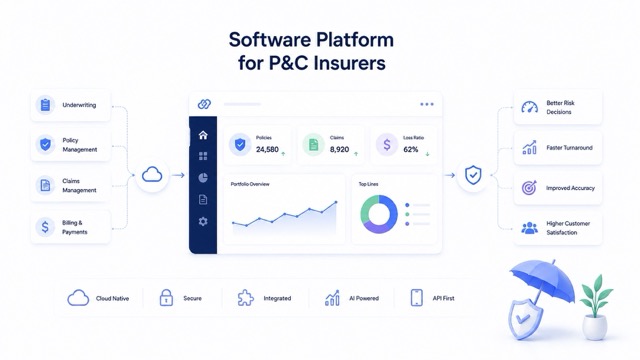
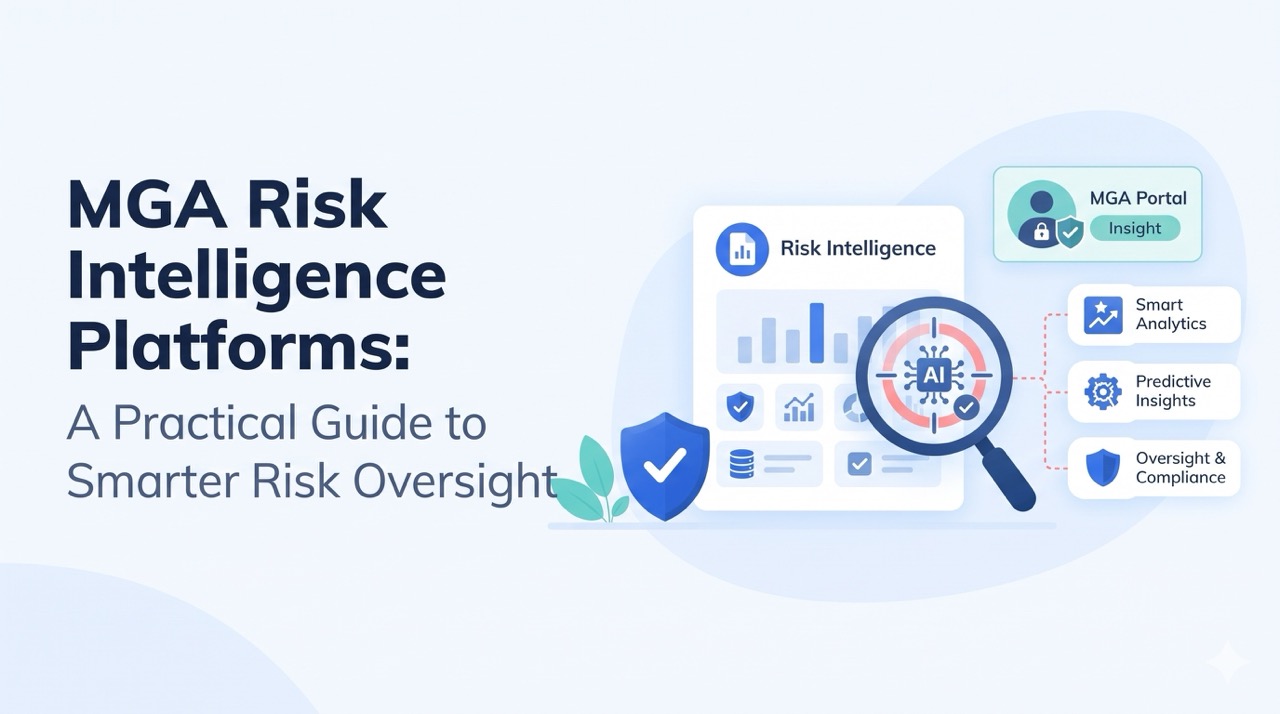
MGA risk intelligence platforms address this challenge by continuously monitoring underwriting, exposure, claims, and portfolio performance to provide a more complete view of portfolio health. Rather than replacing underwriting systems, they help MGAs identify emerging trends, monitor accumulation risk, and make better portfolio-level decisions as business conditions change.
Why MGAs Need Continuous Portfolio Visibility Instead of Point-in-Time Risk Assessment?
Every submission receives an underwriting decision, but portfolio risk isn't created by individual submissions alone. It emerges from the combined effect of thousands of policies written over time.
A commercial property submission may fit underwriting appetite on its own. However, if similar risks continue to be written within the same geography, industry, or catastrophe zone, the overall portfolio can gradually become overexposed, even though every individual underwriting decision appeared reasonable.
This is one of the biggest differences between underwriting and risk intelligence. Underwriting determines whether a single risk should be accepted. Risk intelligence evaluates whether the portfolio is evolving in a way that remains commercially sustainable.
Without continuous visibility, MGAs often rely on monthly or quarterly portfolio reviews to identify concentration risks, deteriorating broker performance, increasing claims frequency, or declining profitability. By the time these trends appear in reports, underwriting decisions have already influenced the portfolio, making corrective action significantly more difficult.
Continuous portfolio visibility enables teams to identify these patterns much earlier.
Instead of reviewing static reports, portfolio managers can monitor how exposure changes across products, regions, brokers, industries, carrier programs, and insured values as new business is written. This allows underwriting strategy to evolve alongside portfolio performance rather than waiting for periodic reporting cycles.
For MGAs operating under delegated authority, this level of oversight also supports stronger governance. Carrier partners increasingly expect evidence that portfolio performance is being actively monitored, not simply reviewed after reporting periods have ended.
Ultimately, better risk oversight isn't about collecting more data. It's about understanding how underwriting decisions accumulate across the portfolio, and identifying changing risk patterns before they become portfolio problems.
Also Read: Top 7 Insurance Underwriting Softwares
How MGA Risk Intelligence Platforms Connect Exposure, Performance, and Underwriting Signals?
Portfolio risk isn't driven by a single metric. An MGA may see strong premium growth while exposure becomes concentrated in one geography, or stable loss ratios while submission quality gradually declines. Looking at these indicators in isolation makes it difficult to understand how the portfolio is actually changing.
Risk intelligence platforms solve this by bringing together different operational signals into a single portfolio view. Instead of analyzing underwriting, exposure, and performance separately, they help MGAs understand how these factors influence one another and where intervention may be required.
- Exposure Monitoring: Every new policy changes the portfolio's exposure profile. Risk intelligence platforms track how risk accumulates across regions, industries, catastrophe zones, insured values, and carrier programs, enabling MGAs to identify concentration risks before they exceed internal limits or delegated authority thresholds.
- Portfolio Performance: Premium growth alone doesn't indicate a healthy portfolio. Monitoring loss ratios, claims frequency, renewal retention, broker performance, and product profitability together helps MGAs determine whether growth is improving portfolio quality or increasing long-term risk.
- Underwriting Signals: Changes in underwriting activity often provide the earliest indication of shifting portfolio conditions. Higher referral volumes, increasing exceptions, lower acceptance rates, or declining submission quality can signal changes in market conditions or risk appetite well before they appear in financial or claims reports.
Where Traditional MGA Reporting Falls Short for Risk Monitoring?
Most MGAs already have access to portfolio reports. The challenge is that these reports explain what has happened, not what is changing.
Monthly bordereaux, claims reports, and portfolio summaries provide valuable operational insights, but they're designed for retrospective analysis. By the time they reveal growing exposure in a catastrophe zone, declining broker performance, or worsening loss ratios within a product, those trends have already influenced the portfolio.
Another challenge is fragmented data. Underwriting, claims, policy administration, and broker performance often reside in separate systems, making it difficult to build a timely, portfolio-wide view without manual analysis.
Risk intelligence platforms address this by continuously connecting operational and portfolio data, enabling MGAs to detect emerging risks earlier and respond before they become larger portfolio issues.
How Risk Intelligence Supports Capacity Management, Pricing, and Portfolio Governance?
Portfolio visibility only creates value when it influences underwriting strategy. The purpose of risk intelligence isn't simply to identify trends, it's to help MGAs decide where to grow, where to slow down, and where underwriting practices need to change.
Rather than waiting for portfolio reviews, teams can use continuously updated risk intelligence to make operational decisions while new business is still being written.
- Capacity Management: Carrier capacity is finite, and delegated authority often comes with exposure limits across products, regions, or classes of business. Risk intelligence helps MGAs monitor how quickly capacity is being utilized and identify growing concentrations before underwriting limits are exceeded. This allows teams to rebalance portfolios proactively instead of restricting new business after thresholds have already been reached.
- Pricing Strategy: Pricing decisions shouldn't rely solely on individual submission characteristics. Portfolio-level trends, such as rising claims frequency, deteriorating loss ratios, or worsening performance within a specific segment, often indicate that pricing assumptions need to be reviewed. Risk intelligence provides the broader context required to adjust pricing strategies based on portfolio performance rather than isolated risks.
- Portfolio Governance: Maintaining delegated authority requires continuous oversight of portfolio performance. Risk intelligence enables MGAs to monitor exposure concentrations, broker quality, underwriting consistency, and carrier-specific portfolio performance through a single operational view. This strengthens internal governance while providing carrier partners with greater confidence that portfolio performance is being actively managed.
Portfolio Risk Intelligence vs Submission-Level Underwriting: Understanding Their Different Roles
Risk intelligence and underwriting are closely related, but they solve different problems. Confusing the two often leads MGAs to invest heavily in improving individual underwriting decisions while overlooking how those decisions affect the portfolio over time.
Underwriting determines whether an individual risk fits current underwriting guidelines. Risk intelligence assesses whether the combined outcome of those underwriting decisions continues to align with the MGA's portfolio objectives, carrier commitments, and risk appetite.
An MGA may consistently make sound underwriting decisions while still developing undesirable portfolio concentrations. Similarly, portfolio intelligence may identify deteriorating performance within a particular broker, product, or region, prompting changes to underwriting guidelines before further exposure accumulates.
Viewed together, underwriting and risk intelligence create a continuous feedback loop. Underwriting shapes the portfolio, while portfolio intelligence provides the insight needed to refine future underwriting decisions.
Also Read: Best Risk Management Tools & Software
Why Risk Intelligence Needs Configurable Business Decisions to Drive Action?
Identifying portfolio trends is only the first step. The real value of risk intelligence lies in how quickly those insights can influence underwriting and operational decisions.
If portfolio monitoring shows growing exposure within a catastrophe-prone region, deteriorating broker performance, or increasing claims frequency for a product line, those findings need to translate into operational changes. Otherwise, the portfolio continues evolving under the same conditions that created the issue in the first place.
Many MGAs still rely on manual interventions to respond. Underwriting teams circulate updated guidelines, spreadsheets are revised, approval processes change, and individual systems are modified over time. While these approaches can work, they often introduce delays and inconsistencies, particularly when multiple carrier programs operate under different underwriting requirements. This is where configurable business decisions become important.
Instead of embedding underwriting policies and operational rules across different applications, MGAs can centralize the decision logic that governs how business is processed. Referral criteria, broker permissions, product eligibility, approval thresholds, exposure limits, and workflow routing can all be updated as underwriting strategy evolves without requiring extensive application changes.
As a result, portfolio intelligence moves beyond reporting. Emerging risk patterns can directly influence how new submissions are evaluated, how referrals are routed, or when additional governance controls are applied, creating a continuous feedback loop between portfolio oversight and day-to-day operations.
Nected supports this approach through a decision orchestration layer that allows MGAs to manage business rules, workflows, AI models, and external data independently of their core insurance systems. Rather than replacing underwriting or policy administration platforms, it enables organizations to operationalize portfolio insights more quickly by making business decisions easier to configure as carrier requirements, underwriting strategies, and market conditions evolve.
Conclusion
For MGAs, effective risk oversight extends beyond evaluating individual submissions. It requires continuous visibility into how underwriting decisions influence the overall portfolio and the ability to respond before emerging trends become larger operational challenges.
Risk intelligence platforms help connect exposure, underwriting activity, portfolio performance, and governance into a single operational view, enabling teams to monitor concentration risks, manage carrier capacity, evaluate portfolio health, and support more informed underwriting strategies.
However, visibility alone is rarely enough. As portfolios evolve, underwriting policies, approval criteria, and operational workflows must evolve alongside them. Organizations that combine portfolio intelligence with configurable decision-making are better positioned to adapt to changing market conditions, carrier expectations, and portfolio dynamics without increasing operational complexity.
Frequently Asked Questions
What is an MGA risk intelligence platform?
An MGA risk intelligence platform provides continuous visibility into portfolio exposure, underwriting performance, claims trends, and operational risk. Rather than evaluating individual submissions, it helps MGAs monitor the overall health of their portfolio and identify emerging risks before they significantly affect performance.
How is risk intelligence different from underwriting?
Underwriting focuses on assessing whether an individual submission should be accepted, declined, or referred. Risk intelligence evaluates the combined impact of thousands of underwriting decisions, helping MGAs monitor exposure concentrations, portfolio performance, broker quality, and capacity utilization over time.
Why isn't periodic reporting enough for portfolio oversight?
Traditional reporting summarizes historical performance, often after portfolio conditions have already changed. Continuous risk intelligence enables MGAs to identify emerging trends while business is still being written, allowing underwriting and portfolio strategies to adapt earlier.
How does risk intelligence support carrier relationships?
Risk intelligence helps MGAs monitor portfolio performance against delegated authority, exposure limits, and carrier-specific requirements. This improves governance, supports more consistent portfolio management, and provides greater transparency during carrier reporting and portfolio reviews.
What should MGAs look for in a risk intelligence platform?
Beyond dashboards and reporting, MGAs should look for platforms that connect underwriting, exposure, claims, and portfolio performance while enabling actionable insights. Integration with existing insurance systems, real-time portfolio monitoring, configurable reporting, and the ability to support operational decision-making are all key capabilities.